
Imagine stealing $600 million from a bank vault, but instead of cash, you steal digital tokens that are visible to everyone on Earth. Now imagine trying to spend that money without anyone noticing where it came from. That is the exact problem North Korea faces when it steals cryptocurrency. For years, hackers linked to the Kim regime have siphoned billions from exchanges and DeFi protocols. But stolen crypto is like blood in water; if you don't clean it, everyone knows where you've been swimming. This is where cryptocurrency mixing services, also known as crypto tumblers, become critical tools for state-sponsored theft.
You might think blockchain transparency makes money laundering impossible. After all, every transaction is recorded forever. The reality is more nuanced. While the ledger is public, the link between a real-world identity and a wallet address can be broken. Mixing services exploit this gap by shuffling coins so thoroughly that tracing them back to their source becomes statistically improbable. For North Korea, these services aren't just privacy tools; they are essential infrastructure for funding its nuclear program and evading international sanctions.
The Mechanics of Digital Obfuscation
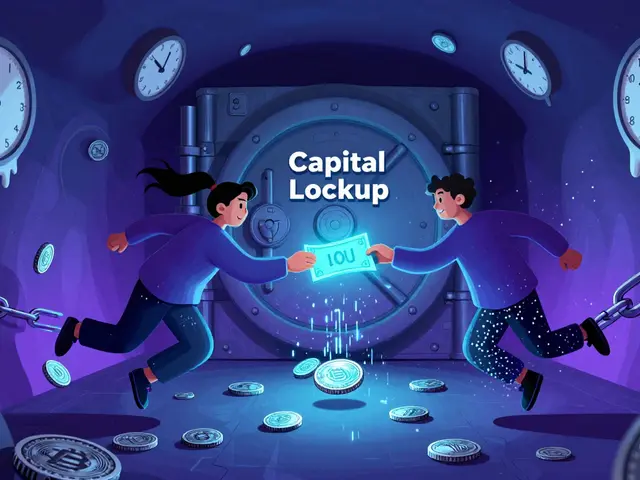
To understand why mixers matter to Pyongyang, you first need to grasp how they work. Think of a mixer as a giant, chaotic coin jar. You drop in your marked bills. Other people do the same. The operator shakes the jar violently. Then, you reach in and pull out bills of the same value. They aren't your original bills, and no one can prove which bill was yours originally. In crypto terms, users send Bitcoin or Ethereum to a pool. The service aggregates these funds, processes them through complex algorithms, and sends equivalent amounts to new, unrelated addresses.
This process breaks the direct chain of custody. If North Korean hackers send stolen Ether to a mixer, and then withdraw it to a fresh wallet, the connection to the hack is severed. The fee for this service typically ranges from 1% to 3%, a negligible cost compared to the risk of having assets frozen by global regulators. There are two main types of these services: centralized and decentralized. Centralized mixers are run by companies that hold your coins temporarily. Decentralized mixers use smart contracts to automate the shuffle without trusting a human operator. Both serve the same goal: making dirty money look clean.
Why North Korea Needs Clean Crypto
North Korea operates under some of the strictest financial sanctions in history. Traditional banking channels are largely closed off. When the Lazarus Group, a cyber-espionage unit believed to be tied to the Reconnaissance General Bureau, hacks an exchange, they don't get US dollars. They get tokens. To buy oil, luxury goods, or weapons components, they need to convert those tokens into fiat currency or usable assets. But if they try to sell directly on a major exchange, compliance bots flag the transaction immediately. The funds get frozen before they ever hit the bank account.
Mixing solves this liquidity crisis. By routing stolen funds through multiple layers of obfuscation, North Korean entities can move value across borders without triggering automated alerts at regulated exchanges. It’s not just about hiding the theft; it’s about enabling commerce. Without mixers, the billions stolen in recent years would remain locked in digital prisons, useless to the regime that stole them.

The Rise of Tornado Cash and Regulatory Backlash
For a long time, centralized mixers were the go-to solution. Services like Blender.io and Sinbad.io dominated the landscape. However, law enforcement eventually caught up. The US Department of Justice indicted operators of these platforms, arguing they facilitated money laundering. As regulators tightened the screws, the market shifted toward decentralized alternatives. Tornado Cash emerged as the most prominent example. Unlike its predecessors, Tornado Cash runs on code, not trust. Users deposit fixed amounts of ETH into smart contracts and withdraw from different addresses, breaking the link automatically.
| Feature | Centralized Mixers | Decentralized Mixers |
|---|---|---|
| Custody | Operator holds funds | Smart contract holds funds |
| Trust Model | High (trust the operator) | Low (trust the code) |
| Regulatory Risk | High (easily shut down) | Medium (harder to ban) |
| Privacy Level | Depends on operator honesty | Cryptographically guaranteed |
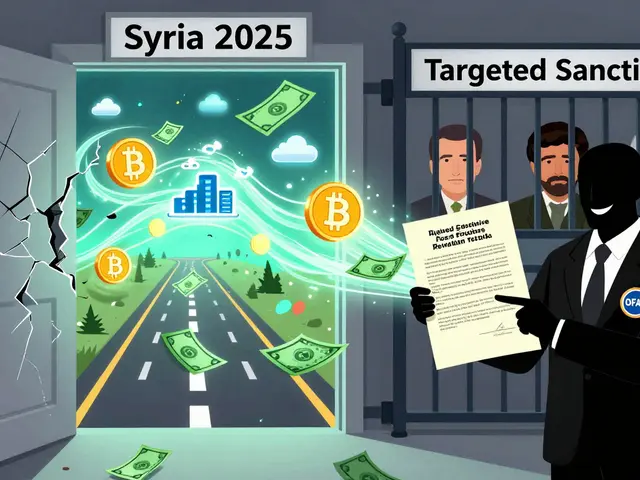
When the Treasury Department sanctioned Tornado Cash in 2022, citing its use by the Lazarus Group to launder over $7 billion, it signaled a major shift. Governments realized that banning specific websites wasn't enough. They had to target the protocol itself. Yet, because Tornado Cash is open-source and runs on Ethereum, it continues to operate despite legal challenges. This resilience makes it particularly attractive to state actors who cannot rely on traditional banks.
Detecting the Untraceable: Blockchain Analytics
If mixers are so effective, why do we know North Korea uses them? Enter blockchain analytics firms like Chainalysis and Elliptic. These companies treat the blockchain like a crime scene. They don't just look at transactions; they look at patterns. Even after mixing, certain behaviors give away the game. For instance, if a large amount of "clean" ETH appears in a new wallet shortly after a known hack, analysts can infer a connection based on timing and volume.
Furthermore, North Korean tactics often involve bridging chains. Hackers might steal Ethereum, swap it for Bitcoin via a decentralized exchange, mix the Bitcoin, and then bridge it to another network like Solana or Avalanche. Each hop adds complexity. Analysts map these paths, creating "risk scores" for wallets. If a wallet interacts with a sanctioned entity like Tornado Cash, it gets flagged. Exchanges then refuse to serve users associated with those flags. It’s an arms race: mixers evolve to hide better, and analytics tools evolve to see deeper.

The Human Cost of Sanctions Evasion
We often view these stories through the lens of tech and finance, but the stakes are geopolitical. The billions laundered through mixers fund missile tests and military expansion. Every successful wash brings resources closer to the regime's goals while keeping ordinary citizens isolated from the global economy. The effectiveness of these services raises ethical questions too. Should developers be liable if their code is used by dictators? Is privacy a fundamental right, or does it enable tyranny?
Currently, the trend is toward stricter enforcement. The EU’s Markets in Crypto-Assets (MiCA) regulation and updated FATF guidelines require virtual asset service providers to identify customers behind every transaction. This means even if you use a mixer, the final destination-where you cash out-must comply with KYC (Know Your Customer) rules. If North Korea wants to spend its crypto, it eventually has to touch the regulated world, and that’s where the trap snaps shut.
Future Outlook: Will Mixers Survive?
As of 2026, the battle between anonymity and accountability shows no signs of ending. New technologies like zero-knowledge proofs offer stronger privacy guarantees, making it harder for outsiders to verify transactions without compromising data. Meanwhile, central banks are exploring CBDCs (Central Bank Digital Currencies), which could theoretically eliminate the need for private mixers by offering built-in privacy controls. But until those systems mature, crypto mixers remain a vital lifeline for those operating outside the Western financial order.
For investors and compliance officers, the takeaway is clear: assume that any large, sudden movement of crypto assets has been scrubbed. Don't trust the surface-level trail. Look for anomalies in timing, cross-chain movements, and interaction with high-risk protocols. The technology designed to protect individual privacy has inadvertently become a tool for state-level deception, reshaping how we understand money in the digital age.
What is a cryptocurrency mixer?
A cryptocurrency mixer, or tumbler, is a service that blends funds from multiple users to obscure the origin of transactions. By pooling coins and redistributing them to new addresses, it breaks the direct link between the sender and receiver on the blockchain, enhancing privacy.
Why does North Korea use crypto mixers?
North Korea uses mixers to launder cryptocurrency stolen through hacking operations. Since blockchain transactions are transparent, mixers help disguise the illicit origin of funds, allowing the regime to convert stolen assets into usable currency without triggering immediate freezes by international regulators.
Are crypto mixers illegal?
The legality varies by jurisdiction. In the US, certain centralized mixers have been sanctioned or shut down for facilitating money laundering. Decentralized protocols like Tornado Cash face legal battles regarding whether code itself can be sanctioned. Using a mixer isn't always illegal, but failing to report income generated from mixed coins can be.
How do analysts track mixed coins?
Analysts use heuristics and machine learning to detect patterns. They look for timing correlations between hacks and withdrawals, unusual transaction sizes, and interactions with known high-risk addresses. While mixers break direct links, statistical analysis can often reconstruct probable paths.
What is the difference between centralized and decentralized mixers?
Centralized mixers are run by companies that take custody of your funds, requiring trust in the operator. Decentralized mixers use smart contracts to automate the process without holding user funds, reducing counterparty risk but potentially facing different regulatory hurdles.






adam veikkanen
September 9, 2026 AT 19:20It is not enough to simply mix the coins. The exit strategy matters more than the entry point because exchanges still require KYC for fiat conversion.
Rishi Mehta
September 10, 2026 AT 02:59This is absolutely heartbreaking and infuriating at the same time!! We are watching our hard earned money disappear into black holes while dictators play games with code that no one understands. It feels like the entire global financial system is a joke played on us common people who actually follow the rules. Why do we even bother paying taxes when billions can just vanish into thin air through some smart contract loophole? I feel sick thinking about the human cost behind every single transaction that gets washed clean. The arrogance of these regimes is unmatched and they know exactly how to exploit the gaps in our laws. We are living in a dystopian nightmare where privacy is weaponized against the very citizens it was supposed to protect. It makes me want to scream into the void because nobody seems to care until it hits their own wallet. This isn't just finance this is moral decay wrapped in blockchain technology. I am so angry right now that I can barely type this out without shaking. We need real solutions not just more regulations that come too late. The world is broken and crypto is just another symptom of a disease we refuse to treat properly. Please someone tell me I am not crazy for feeling this way about digital tokens.
Michael Rubin
September 12, 2026 AT 01:49I appreciate the detailed breakdown of the mechanics. It helps clarify why centralized services were easier targets for regulators compared to decentralized protocols. The distinction between custody models is particularly useful for understanding the regulatory landscape.
Kathryn Haber
September 13, 2026 AT 02:49is privacy truly a right or just a privilege for those with enough capital to hide their sins? we build these systems to escape surveillance but end up creating shadows where power concentrates unseen. the ledger remembers everything yet forgets everyone. its a paradox of transparency and obscurity that defines our current era. we chase freedom through code only to find new chains forged by algorithms. perhaps the true cost of anonymity is the loss of accountability which erodes the social fabric we rely on. we are all swimming in data yet drowning in ignorance of each others motives. the machine hums while humanity sleeps. we must ask ourselves what kind of society emerges from such opaque foundations. do we value truth or convenience more deeply. the answers lie not in the tech but in our collective soul.
Emerson Droguet
September 14, 2026 AT 16:20I would suggest considering the implications of zero-knowledge proofs further as they offer a potential middle ground. Could you elaborate on how these technologies might integrate with existing compliance frameworks?
Eugene McGrath
September 15, 2026 AT 16:11Typical liberal nonsense trying to sanitize state-sponsored theft. These mixers are basically money laundering for communist thugs who hate American values. If we didn't have stupid open borders and weak sanctions enforcement these pirates wouldn't be able to cash out anywhere. We need to shut down every single DEX and force everyone onto regulated rails. Stop crying about privacy when it's just hiding war crimes. USA needs to flex harder and stop letting foreign entities dictate our financial sovereignty. Jargon-heavy posts like this just confuse the average taxpayer who pays for all this mess anyway. Get it together and enforce the law or lose the dollar dominance.
Robert Brabham
September 17, 2026 AT 13:49You think this is about North Korea? Wake up. The biggest users of mixers aren't hackers, they're central banks preparing for CBDC rollouts. They need plausible deniability before they track every penny you spend. The narrative is being spun to make us accept total surveillance as 'security'. Don't fall for the distraction. The real enemy isn't Pyongyang, it's the Fed wanting to program your money.
Sonya Kirkwood
September 18, 2026 AT 10:44The timing of the Tornado Cash sanctions was suspiciously aligned with major geopolitical shifts. It wasn't just about cleaning money; it was about controlling the flow of information itself. Every transaction is a data point, and whoever controls the metadata controls reality. The 'cleaning' process is merely a smokescreen for deeper integration into the global surveillance grid. We are being conditioned to accept opacity as normal while our own visibility increases. The pattern suggests a coordinated effort to eliminate true anonymity before it becomes standard practice. Do not trust the official narratives regarding these technological advancements. They serve a purpose beyond mere regulation.
Charlotte Richardson
September 19, 2026 AT 00:56Thank you for sharing this insightful perspective. It is wonderful to see such clear explanations of complex topics. I hope this discussion continues to grow and help more people understand the nuances involved.