You just got a DM from someone claiming they turned $500 into $5,000 in a week using Koindex a crypto trading platform that promises high returns with minimal risk. The website looks sleek, the charts are moving, and the support agent is incredibly responsive. But before you wire your savings over, pause. If you're reading this, you likely have a nagging feeling that something isn't right. That instinct is probably correct.
Here is the hard truth: Koindex (operating primarily as koindextradeoptions.com) fails almost every legitimacy test that major industry watchdogs use. It doesn't appear on CoinGecko's trusted lists, lacks regulatory licenses from top-tier bodies like the SEC or FCA, and has been flagged by multiple fraud databases. This isn't just another "new" exchange finding its footing; it exhibits classic signs of a fraudulent operation designed to harvest deposits rather than facilitate genuine trading.
| Feature | Koindex (koindextradeoptions.com) | Legitimate Standard (e.g., Coinbase/Kraken) |
|---|---|---|
| Regulatory License | None verified; claims non-existent "International Financial Services Commission" | SEC, FCA, MiCA, or MAS registered |
| Trust Score/Rankings | Absent from CoinGecko, Forbes, and CoinDesk rankings | High Trust Score (9-10/10) on CoinGecko |
| Proof of Reserves | No public audit or on-chain proof available | Regular Merkle Tree proofs published |
| Withdrawal Fees | Hidden "verification fees" often demanded at withdrawal | Transparent maker/taker fees (e.g., 0.1%) |
| Customer Support | Email bounces; no live chat or phone support | 24/7 human support via chat/email/phone |
The Red Flags You Can't Ignore
Why do so many people fall for platforms like Koindex? Usually, it's because the interface mimics professional tools. Koindex uses a cloned version of the MetaTrader 4 interface, which looks familiar to anyone who has traded forex or stocks. But looking good doesn't mean being real. Let's break down the specific technical and operational failures that mark Koindex as high-risk.
First, look at the domain history. The site koindextradeoptions.com was registered recently, through Privacy Protect LLC. While privacy protection is common, combining it with a lack of social media presence and no verifiable corporate address is a warning sign. More importantly, traffic analysis shows that nearly 97% of visitors come from suspicious referral domains known for distributing scam links. Legitimate exchanges build organic traffic through brand recognition and marketing campaigns, not just shady backlinks.
Second, there is the issue of volume. Koindex advertises millions in daily trading volume. However, blockchain explorers tell a different story. When researchers checked the deposit addresses associated with Koindex against Bitcoin and Ethereum blockchains, they found virtually zero activity matching the claimed volume. This suggests the numbers on the screen are internal database entries, not actual market trades. You aren't trading against the market; you're playing a game where the house controls the scoreboard.
How the "Pig Butchering" Scam Works Here
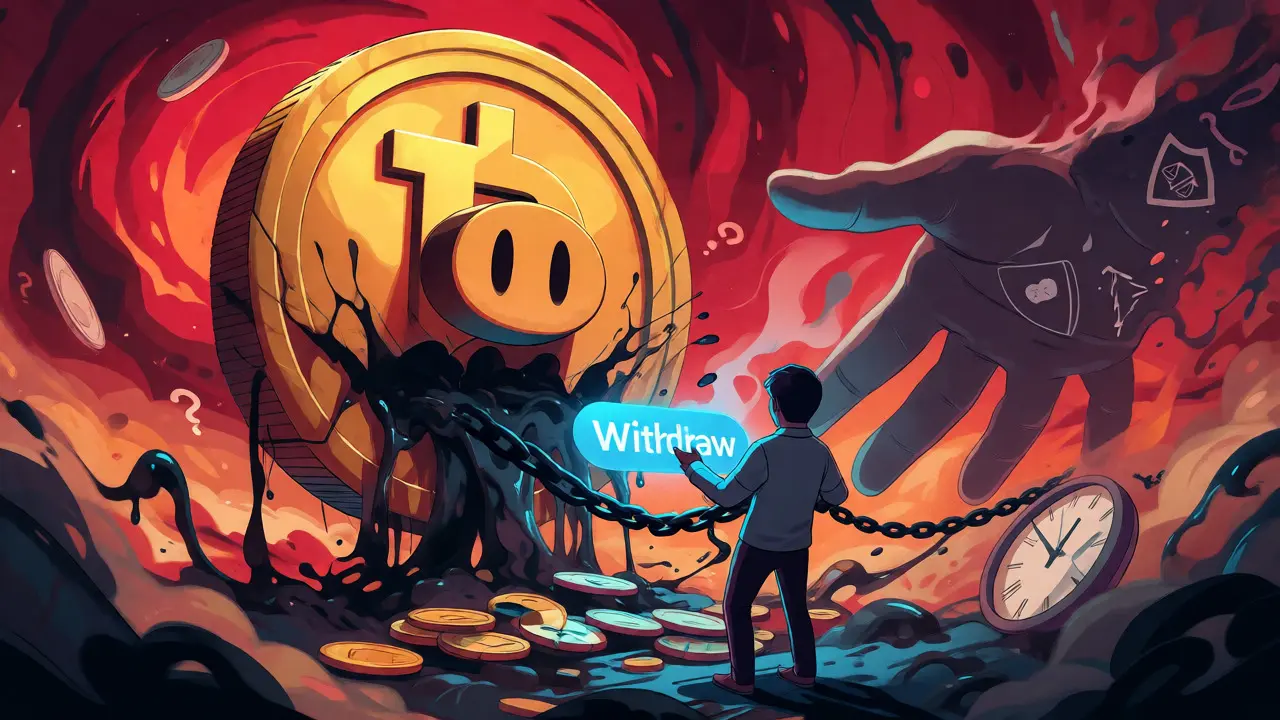
If you've already deposited money, you might be experiencing a pattern that security experts call "pig butchering." In this scenario, the scammer fattens up the victim with small wins. You deposit $100, trade, and withdraw $120 easily. This builds trust. Then, you deposit $1,000. You see your balance grow to $1,500. You try to withdraw, but suddenly, there's a problem.
- The Verification Fee Trap: Koindex users report being asked to pay a "tax," "verification fee," or "unlocking charge" to process larger withdrawals. Legitimate exchanges deduct fees from your balance; they don't ask you to send more money to get your own money out.
- The Ghost Support Team: Once you push back on these fees, customer support becomes unresponsive. Emails sent to [email protected] often bounce back or go unanswered for weeks.
- The Shill Effect: Online forums may show positive reviews, but close inspection reveals many are posted by accounts created solely to promote the platform. Real user complaints about withdrawal blocks are far more numerous.
This tactic aligns with data from the FBI's Internet Crime Report, which noted a significant rise in crypto investment scams where victims lose an average of $15,300. The psychological hook is powerful because the initial success feels real. But remember: if the platform isn't connected to real liquidity providers, those profits are fictional.
Regulatory Status: Where Is the License?
In the world of finance, regulation is your safety net. It ensures that if an exchange goes bankrupt, there are protocols for handling assets. Koindex claims to be regulated by the "International Financial Services Commission." A quick check reveals that this specific entity does not exist as a recognized global regulator. It sounds similar to Belize's IFSC, but it is a distinct, likely fabricated name designed to confuse investors unfamiliar with regulatory bodies.
Compare this to established players:
- Coinbase: Registered with the US SEC and operates under strict state-by-state licensing.
- Kraken: Holds licenses in multiple jurisdictions and provides regular Proof of Reserves audits.
- Binance: Operates under various international frameworks and maintains high transparency regarding its reserves.
Koindex appears on the UK Financial Conduct Authority (FCA) Warning List. The FCA explicitly states that entities on this list are not authorized to provide financial services in the UK. This means if Koindex disappears tomorrow, you have no legal recourse within the UK, and likely nowhere else, since they lack physical offices or registered agents in major financial hubs.
Real User Experiences
What happens when real people try to leave Koindex? The stories are consistent across Reddit threads, Trustpilot (where reviews are sparse), and specialized crypto forums. One common narrative involves a user who invested Bitcoin. They saw their portfolio value double on the dashboard. Excited, they attempted to withdraw half. The system displayed a message requiring a 20% "security deposit" to release funds. After paying this extra amount via a new wallet address, the withdrawal still didn't process. Instead, they were told they needed to pay another fee for "processing delays." This cycle continues until the victim runs out of money or realizes the trap.
Another red flag is the lack of integration with other legitimate services. Major exchanges offer API access for bots, connect with hardware wallets like Ledger and Trezor, and allow fiat transfers via bank wires or SEPA. Koindex typically restricts deposits to crypto-only transfers from personal wallets, making it harder to trace the flow of funds and easier for the operator to disappear with the coins.

Safe Alternatives to Consider
If you want to trade crypto without the anxiety of wondering if your money will vanish, stick to platforms with proven track records. Here are three solid options depending on your needs:
- Coinbase: Best for beginners. It has a user-friendly interface, strong regulatory compliance in the US, and insurance on digital assets held in custody. The fees are higher, but the peace of mind is worth it for smaller portfolios.
- Kraken: Ideal for intermediate traders. It offers advanced charting tools, margin trading, and staking options. Kraken is famous for its security record-it has never been hacked in its history-and provides detailed proof-of-reserves.
- CEX.IO: A good middle ground for those wanting lower fees than Coinbase but better support than offshore exchanges. It supports a wide range of cryptocurrencies and offers a debit card for spending crypto directly.
All these alternatives have transparent fee structures. You know exactly what you'll pay before you click "buy." There are no surprise "verification fees" when you try to cash out.
Final Verdict: Should You Use Koindex?
Based on the evidence, Koindex is not a reliable cryptocurrency exchange. It lacks regulatory oversight, hides behind anonymous domain registration, and employs withdrawal tactics characteristic of Ponzi schemes. The "high returns" advertised are likely unsustainable and artificial.
If you haven't deposited yet, skip it. Your capital is safer in a self-custody wallet or a regulated exchange. If you have already deposited, try withdrawing immediately. If they demand extra fees to release your funds, stop sending money. Document all communications and consider reporting the incident to local authorities or online scam databases like ScamAdviser.
Is Koindex a scam?
Yes, Koindex exhibits multiple characteristics of a scam, including a lack of regulatory licenses, absence from reputable exchange rankings, and user reports of blocked withdrawals requiring additional fees. It is listed on several fraud watchlists.
Does Koindex have a valid license?
No, Koindex does not hold a valid license from major regulatory bodies like the SEC, FCA, or MiCA. Its claim of regulation by the "International Financial Services Commission" refers to a non-existent or unrecognized entity.
Why can't I withdraw my money from Koindex?
Many users report being asked to pay "verification" or "unfreezing" fees to process withdrawals. This is a common tactic in fake exchanges to extract more money from victims before cutting off contact.
Are the trading volumes on Koindex real?
Likely not. Blockchain analysis shows little to no on-chain activity corresponding to the high trading volumes displayed on the Koindex dashboard, suggesting the volume is simulated internally.
What should I do if I lost money on Koindex?
Stop sending additional funds. Contact your bank or credit card provider to dispute charges if possible. Report the scam to relevant authorities like the FTC or IC3.gov. Recovery rates for crypto scams are low, so prevention is key.