
Buying your first Bitcoin can feel like trying to assemble IKEA furniture without the manual. You worry about losing money, getting hacked, or simply not understanding what you’re looking at on a screen full of red and green numbers. This is exactly the problem Luno was built to solve. Founded in 2013 by Marcus Swanepoel and Timothy Stranex, this platform isn’t trying to be the most feature-rich exchange on the planet. Instead, it focuses on making cryptocurrency accessible, safe, and legally compliant for people in emerging markets who are just starting out.
If you live in South Africa, Nigeria, Malaysia, or parts of Southeast Asia, you’ve likely heard of Luno. With over 12 million users globally as of early 2025, it’s become a go-to gateway for millions. But is it the right choice for you? Do its fees eat into your profits? And how does it stack up against giants like Coinbase or Binance? We dug into the data, user reviews, and current features to give you a straight answer, no fluff included.
What Exactly Is Luno?
Luno is a global cryptocurrency exchange and digital wallet provider headquartered in London with strong operational roots in Africa and Asia. Unlike some platforms that only let you trade coins, Luno acts as both a custodial wallet and a trading hub. This means they hold your keys (mostly) so you don’t have to manage complex private keys yourself, which is a huge relief for beginners. Their primary mission has always been regulatory compliance. While other exchanges got kicked out of countries because they ignored local laws, Luno worked hard to get licensed. Today, it operates legally in 10 regulated jurisdictions, including South Africa under the FSCA and Indonesia under BAPPEBTI.
The platform supports five major cryptocurrencies: Bitcoin (BTC), Ethereum (ETH), Litecoin (LTC), Ripple (XRP), and Bitcoin Cash (BCH). You won’t find meme coins like Dogecoin or newer tokens here. That limitation is intentional. By keeping the list short, Luno ensures high liquidity and security for each asset, rather than offering hundreds of low-volume coins that might disappear overnight.
Security: Can You Trust Them With Your Money?
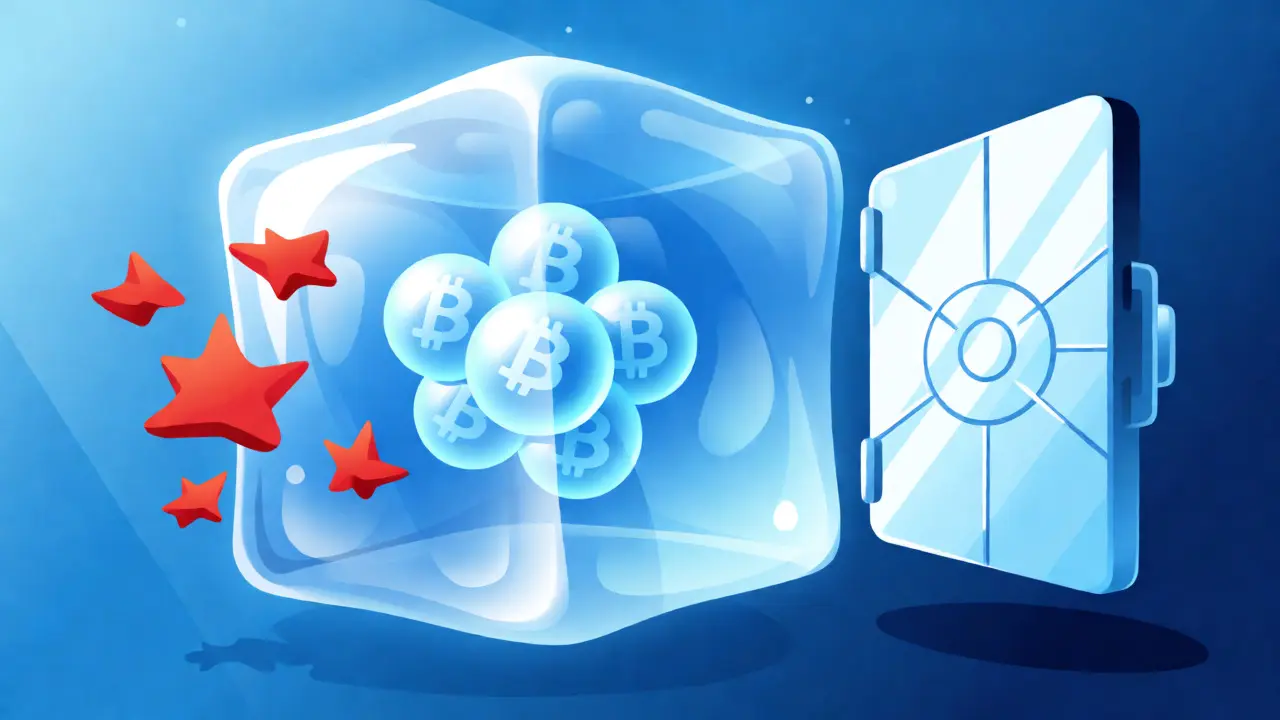
When you hand over your cash, you want to know it’s safe. Luno takes a "deep freeze" approach to security. About 95% of customer funds sit in cold storage-offline servers that hackers can’t touch from the internet. The remaining 5% needed for daily transactions lives in hot wallets protected by multi-signature technology. This means moving money requires multiple approvals, specifically involving BitGo, a qualified institutional custodian. If one key is compromised, the money doesn’t move.
On the user side, mandatory two-factor authentication (2FA) is required for all accounts. You can use SMS or an authenticator app, though the latter is more secure. Biometric login (fingerprint or face ID) is available on their mobile apps, which are rated 4.7/5 on both iOS and Android stores. For those worried about technical glitches, the system requirements are reasonable: Android 8.0+ or iOS 14.0+. There’s no need for a supercomputer; if your phone can run Instagram, it can run Luno.
Fees and Costs: The Real Price of Convenience
This is where many users get tripped up. Luno’s pricing structure depends entirely on how you buy. If you use the "Instant Buy" button-which is tempting because it’s fast-you pay a fixed fee ranging from 1.5% to 3.5%. Yes, that’s higher than some competitors. A verified user on Capterra noted that transferring crypto out of Luno can sometimes cost significantly more than using Binance, where fees might be under 1%.
However, if you switch to the "Exchange" view, the fees drop dramatically. Here, Luno uses a maker-taker model. Makers (those placing limit orders) pay 0.1%, while takers (those buying immediately at market price) pay 0.2%. For small, casual purchases, the convenience of Instant Buy is worth the extra percent. For larger trades, learning to use the Exchange interface saves real money.
| Feature | Luno (Instant Buy) | Luno (Exchange) | Coinbase (Standard) | Binance (Spot) |
|---|---|---|---|---|
| Buy Fee | 1.5% - 3.5% | 0.2% (Taker) | 1.49% - 3.99% | 0.1% |
| Sell Fee | 1.5% - 3.5% | 0.1% (Maker) | 1.49% - 3.99% | 0.1% |
| Withdrawal Speed | Fast (Local Bank) | Standard | Varies | Varies |
| Best For | Beginners / Small Buys | Active Traders | US Users | Low-Cost Trading |
User Experience: Simple but Limited
The interface is undeniably clean. When you log in, you see your balance, a big "Buy/Sell" button, and a simple chart. It’s designed for someone who doesn’t care about candlestick patterns or volume indicators. According to Luno’s own data, 82% of new users complete their first transaction within 24 hours. That’s a testament to how intuitive the design is.
But simplicity comes with trade-offs. Advanced traders will miss stop-limit orders, trailing stops, and futures trading. These aren’t available. Also, selling your entire wallet balance requires manual entry-you can’t just click "Sell All." In a survey by Coincub, 37% of users flagged this as annoying. If you’re used to one-click liquidations on other platforms, this feels archaic.
Customer support is another mixed bag. They offer 24/7 chat support with an average response time of 18 minutes, which is decent. However, email responses can take 24-48 hours. During market crashes, when everyone is panicking, waiting two days for an email reply can feel like an eternity.

Who Should Use Luno?
Luno shines brightest for beginners in specific regions. If you are in South Africa, for example, direct bank integrations allow withdrawals to same-bank accounts in as little as 15 minutes. That speed is critical when volatility hits. In Nigeria, despite regulatory hurdles, Luno remains a trusted name for those who managed to onboard before restrictions tightened.
It’s also great for dollar-cost averaging (DCA). The recurring purchase feature lets you set up automatic buys starting at just $1. This removes the emotional stress of timing the market. You buy every week or month, regardless of price. Over years, this strategy often beats trying to pick tops and bottoms.
Conversely, if you are an active trader looking to leverage your positions, or if you want to farm yield on obscure altcoins, Luno will frustrate you. Its product suite is stagnant compared to rivals. While competitors added dozens of new coins in 2024, Luno added only one. If you need Solana or Cardano, you’ll need a second account elsewhere.
Key Takeaways
- Regulatory Safety: Fully licensed in 10 jurisdictions, making it safer than unregulated offshore exchanges.
- Beginner Friendly: The easiest way to buy Bitcoin in Africa and SE Asia with minimal technical knowledge.
- Fee Awareness: Avoid "Instant Buy" for large amounts; use the Exchange tab to cut fees by half.
- Limited Assets: Only 5 major coins supported. Not suitable for altcoin enthusiasts.
- Fast Local Withdrawals: Excellent banking integration in key markets like South Africa.
Is Luno safe to use?
Yes, Luno employs robust security measures including multi-signature wallets and keeping 95% of funds in offline cold storage. They partner with BitGo, a professional custodian, for additional security layers. Mandatory 2FA adds another barrier against unauthorized access.
Why are Luno fees considered high?
The perceived high fees apply primarily to the "Instant Buy" feature, which charges between 1.5% and 3.5% for convenience. If you use the standard Exchange interface with limit orders, fees drop to 0.1% (maker) or 0.2% (taker), which is competitive with other major exchanges.
Can I withdraw money quickly from Luno?
In supported countries like South Africa, withdrawals to local banks can process in as little as 15 minutes. In other regions, it may take 1-3 business days depending on the local banking infrastructure and verification status.
Does Luno support DeFi or staking?
No, Luno is primarily a centralized exchange focused on buying and holding. It does not currently offer native staking rewards or decentralized finance (DeFi) protocols directly within the app. You would need to transfer assets to a different platform for those activities.
How many cryptocurrencies does Luno support?
As of 2025, Luno supports five major cryptocurrencies: Bitcoin (BTC), Ethereum (ETH), Litecoin (LTC), Ripple (XRP), and Bitcoin Cash (BCH). Availability may vary slightly by country due to local regulations.



Emmanuel Ogbomo
September 1, 2026 AT 22:04Living in Lagos, the regulatory landscape here is a nightmare. Luno staying licensed while others vanished was actually the main reason I stuck with them for years.
It’s not about the tech; it’s about knowing your bank won’t freeze your account because some offshore exchange got banned. For us in emerging markets, compliance isn't a feature, it's survival.
Matthew O'Neill
September 3, 2026 AT 15:58The article completely glosses over the opportunity cost of using a custodial exchange with such limited asset diversity. You are paying a premium for 'safety' that is largely illusory when you consider the lack of self-custody options and the inability to access DeFi protocols directly.
By restricting users to only five assets, Luno effectively creates a walled garden that stifles financial innovation and prevents users from participating in the broader crypto ecosystem. This is a fundamental design flaw for anyone who understands market dynamics beyond simple spot trading.
Furthermore, the fee structure on Instant Buy is predatory for retail investors who do not understand the maker-taker model. It exploits information asymmetry, where less sophisticated users pay significantly more for the same underlying asset exposure.
If you are serious about wealth preservation in this asset class, relying on a centralized entity with a stagnant product roadmap is a strategic error. The lack of staking rewards means you are suffering from real yield erosion while holding idle capital.
Competitors like Binance or even Coinbase offer vastly superior liquidity depth and advanced order types that allow for better risk management through stop-losses and limit orders.
Luno’s interface may be clean, but simplicity often masks incompetence in feature development. They have failed to adapt to the maturing needs of their user base, remaining stuck in a beginner-focused mindset while the market evolves.
The withdrawal speeds mentioned are anecdotal at best and do not reflect the systemic risks associated with centralized custody during periods of high network congestion.
Mandatory 2FA via SMS is also considered a security vulnerability by modern standards, yet they still promote it as a primary security layer alongside app-based authentication.
Ultimately, choosing Luno is a decision to prioritize convenience over optimization, which is rarely the correct choice for long-term capital allocation strategies.
You are essentially renting space in a digital vault rather than owning your financial destiny, and that comes with significant counterparty risk that the review fails to adequately highlight.
The comparison table shows fees dropping to 0.1%, but achieving those rates requires active engagement that defeats the purpose of a 'beginner-friendly' platform.
In conclusion, Luno serves a specific niche but fails to provide the comprehensive toolset required for serious cryptocurrency investment in 2026.
liam & the bees
September 5, 2026 AT 05:14Ah, don't be too hard on them, Matthew! 😊
I’ve seen so many folks in my community get overwhelmed by complex interfaces. Luno works wonders for people just starting out. The peace of mind from having local support and clear regulations is worth every cent for beginners.
It’s all about finding what fits your journey. If you’re happy with BTC and ETH, why complicate things? Keep spreading the good vibes!
Edward Ogunfolaju
September 6, 2026 AT 14:18Stop letting fear dictate your moves! If you're sitting on cash, you're losing money to inflation every single day!
Luno might not have everything, but it gets you IN the game fast. That speed matters when the market moves!
Don't overthink the fees if you're just starting. Get exposed, learn the ropes, then optimize later!
Action beats analysis paralysis any day of the week. Go buy some Bitcoin now!
Laine Van Sickle
September 6, 2026 AT 22:17ugh i hate how complicated crypto always seems to be. luno looks ok i guess but i dont trust exchanges. i tried one once and lost my password and couldnt get back in for weeks. total nightmare. i think i’ll just stick to gold bars under my mattress. safer and no red numbers to stress me out.
Ashwin Bhandurge
September 7, 2026 AT 10:16Think about the bigger picture here.
Crypto is not just about trading; it’s about reclaiming sovereignty over your finances. Even if Luno is limited, it opens a door for millions who were previously excluded from the global financial system.
Every small step toward adoption is a victory. We must encourage these gateways because they build the foundation for future mass adoption.
Do not dismiss them for lacking features; appreciate them for providing access. Access is the first step toward empowerment.
Keep learning, keep growing, and remember that today’s beginner is tomorrow’s expert. 🌟
Liam Grimes
September 7, 2026 AT 17:13yeah its pretty decent for starters. i used it last year when i first bought btc. the instant buy fees r annoying tho, def use the exchange tab if u can.
support took a bit but they sorted my kyc issue eventually. its safe enough imo, havent had any hacks or weird stuff happen. just dont expect to trade solana there lol.