Blockchain Security: Protect Your Crypto from Scams, Hacks, and Fraud
When you hold crypto, you’re not just owning a number—you’re responsible for blockchain security, the system of practices, tools, and protocols that protect digital assets from theft, fraud, and unauthorized access. Also known as crypto safety, it’s what stops hackers from draining your wallet, scammers from tricking you into sending funds, and shady platforms from vanishing with your money. Unlike banks, there’s no customer service line to call if you get hacked. If you send crypto to the wrong address or connect your wallet to a fake site, it’s gone for good.
Decentralized exchange security, the safety measures that protect users on platforms like Uniswap or PancakeSwap where you trade directly from your wallet. Also known as DEX safety, it’s not about who’s running the platform—it’s about how you use it. Most breaches don’t happen because the code is broken. They happen because users click on fake airdrop links, enter their seed phrases on phishing sites, or trust exchanges with no audits or reviews—like Horizon Dex, ko.one, or BITEXBOOK, which show up in our posts as high-risk platforms with zero transparency. You can’t trust a platform just because it says it’s "decentralized." Real security means knowing how to verify a site, spotting fake tokens, and never sharing your private keys.
KYC compliance, the process of verifying your identity to meet legal requirements and reduce fraud on crypto platforms. Also known as identity verification, it’s become the line between survival and shutdown for exchanges. When regulators crack down—like in the Philippines, where $150 million in assets got frozen, or in the U.S. and EU, where no-KYC exchanges like KuCoin got forced out—it’s because they’re trying to stop money laundering. But compliance isn’t just for big companies. If you’re using a platform that doesn’t ask for ID, you’re taking on more risk. The same goes for fake airdrops: VDV VIRVIA, AFEN Marketplace, and Ariva (ARV) claims are all scams that prey on people who think free tokens are risk-free. They’re not. They’re designed to steal your wallet access.
Blockchain security isn’t a feature you turn on. It’s a habit. It’s checking if a token has real liquidity before buying. It’s knowing that ElonDoge and Moonft have no team, no utility, and no future. It’s understanding that a 12-year prison sentence for trading crypto in Bangladesh isn’t about the tech—it’s about unregulated money flows. It’s realizing that even if a platform looks legit, if there are no user reviews, no security audits, or no clear team behind it, you’re playing Russian roulette with your funds.
What you’ll find in these posts isn’t theory. It’s real cases: Cuban citizens using crypto to survive sanctions, Indian users bypassing taxes with stablecoins, and everyday people losing everything to fake airdrops and unregulated exchanges. This isn’t about being tech-savvy. It’s about being smart. And if you’re reading this, you’re already one step ahead.
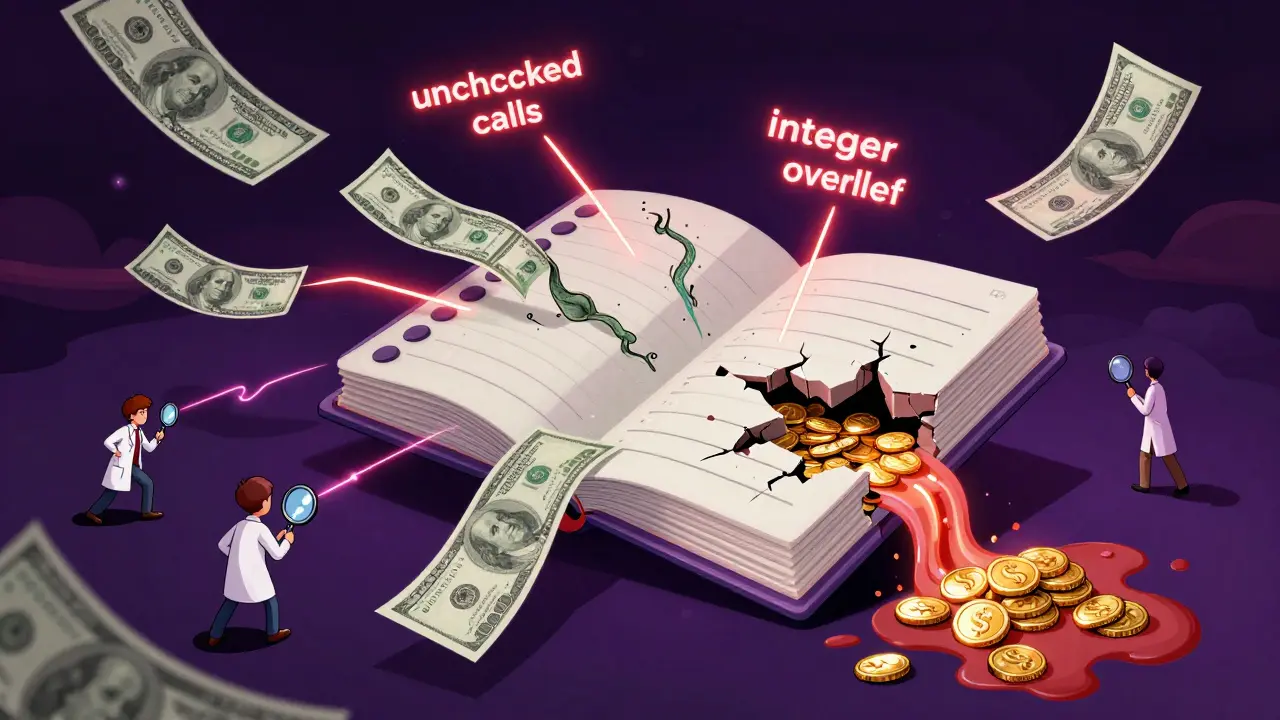
Code Review Best Practices for Blockchain: How to Prevent Million-Dollar Bugs
Blockchain code review prevents million-dollar exploits by catching logic flaws before deployment. Learn the essential practices, tools, and checklists used by top security teams to secure smart contracts and core nodes.

Top Smart Contract Auditing Firms in 2025
Top smart contract auditing firms in 2025 include CertiK, ConsenSys Diligence, OpenZeppelin, Cyfrin, SlowMist, and Hashlock. Each offers unique strengths in security, speed, and expertise for DeFi, NFTs, and blockchain apps.
Recent Post
-

How Sharding Improves Blockchain Scalability
Dec, 28 2025