DeFi Exchange: How Decentralized Trading Works and What to Watch For
When you trade crypto on a DeFi exchange, a platform that lets users swap digital assets directly without a central company controlling the process. Also known as a decentralized exchange, it runs on smart contracts—self-executing code on blockchains like Ethereum or Binance Smart Chain. Unlike traditional platforms, you keep control of your wallet and keys, which means no one can freeze your funds or demand your ID. This shift isn’t just technical—it changes who holds power in crypto.
DeFi exchanges rely on smart contracts, automated programs that handle trades, liquidity pools, and fees without human intervention. They’re powered by liquidity pools, collections of crypto locked in by users who earn fees in return. Think of it like a shared jar where everyone adds money, and when someone takes out Bitcoin or Ethereum, they pay a small fee that gets split among the contributors. This is how platforms like Uniswap and SushiSwap keep trading alive without order books or customer service teams.
But here’s the catch: no middleman also means no safety net. If a smart contract has a bug, your money can vanish—no chargebacks, no help desk. That’s why users in places like India, Cuba, and North Macedonia turn to DeFi exchanges: not just for freedom, but because traditional banks won’t touch them. Yet the same freedom attracts scammers. Fake DEXs like Horizon Dex and ko.one look real but have no code, no users, and no audits. You can’t trust a platform just because it says "decentralized."
Knowing the difference between a real DeFi exchange and a ghost site comes down to three things: does it have live trading volume? Are its contracts publicly audited by firms like CertiK or OpenZeppelin? And can you find real user reports—not just fake testimonials? The posts below cover exactly that. You’ll see how everyday people use DEXs to bypass restrictions, why some tokens vanish overnight, and how to spot a scam before you connect your wallet. Whether you’re new to swapping tokens or you’ve been burned before, this collection gives you the facts—not the hype.
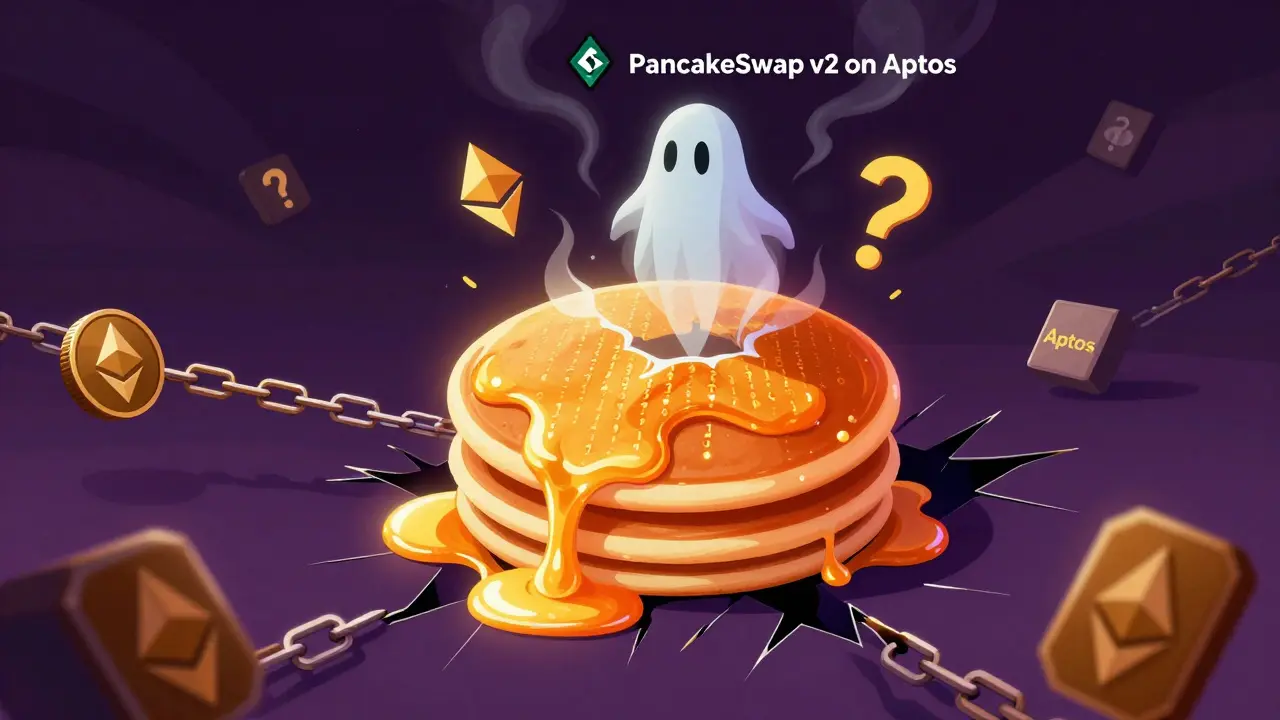
PancakeSwap v2 on Aptos: What You Need to Know (Spoiler: It Doesn't Exist)
PancakeSwap v2 does not exist on Aptos. This review clarifies what PancakeSwap actually is, why it's not on Aptos, and what real DeFi options you have on Aptos instead - with no scams or false promises.
PancakeSwap v2 on Linea: Low-Cost DeFi Exchange Review for 2025
PancakeSwap v2 on Linea offers ultra-low gas fees and fast trades for retail crypto users. Learn how it compares to BSC and other DEXs, its pros and cons, and whether it's worth using in 2025.
Recent Post
-
How to Calculate Yield Farming Returns in DeFi
Jan, 29 2026