Sanctions and Crypto: How Global Restrictions Shape Crypto Use Today
When governments impose sanctions and crypto, restrictions on financial transactions that block access to traditional banking systems for certain individuals, entities, or nations. Also known as financial sanctions, these measures are meant to pressure regimes, stop terrorism funding, or punish violations of international law. But crypto doesn’t care about borders or bank holidays. It moves fast, stays anonymous, and often slips through the cracks—making it both a tool for evasion and a target for regulators.
Look at places like India, a country where crypto adoption exploded despite heavy taxes and unclear rules, or Bangladesh, where rumors of 12-year prison sentences for trading crypto are widespread but legally shaky. People there aren’t ignoring sanctions—they’re adapting. They use stablecoins to send money across borders, trade on P2P platforms, and bypass centralized exchanges that enforce KYC. Meanwhile, in Turkey, a ban on crypto payments in 2021 didn’t stop trading—it just pushed it underground and forced platforms to adapt. The same pattern repeats in North Macedonia, the Philippines, and beyond: when official channels are locked, crypto finds a backdoor.
But it’s not all evasion. Regulators are catching up. The Philippine SEC, froze $150 million in assets from unlicensed exchanges in 2025, hitting everyday users who trusted platforms with no oversight. No-KYC exchanges like KuCoin and BitMEX got shut down globally. Auditing firms like CertiK and OpenZeppelin became essential because even decentralized projects now need to prove they’re not being used for money laundering. Sanctions and crypto aren’t just a battle—they’re a reset. The old model of anonymous, unregulated trading is fading. The new one demands transparency, even if it’s buried in smart contracts and Layer 2 networks.
What you’ll find below isn’t just a list of articles. It’s a map of how real people, real governments, and real crypto projects are navigating this tension. From fake airdrops pretending to be sanctioned projects, to exchanges that vanished overnight, to tokens with zero liquidity that somehow still trade—this collection shows you what’s real, what’s risky, and what’s just noise. You won’t find theory here. You’ll find what’s happening right now, in the shadows and on the surface, as the world tries to control something it can’t fully stop.
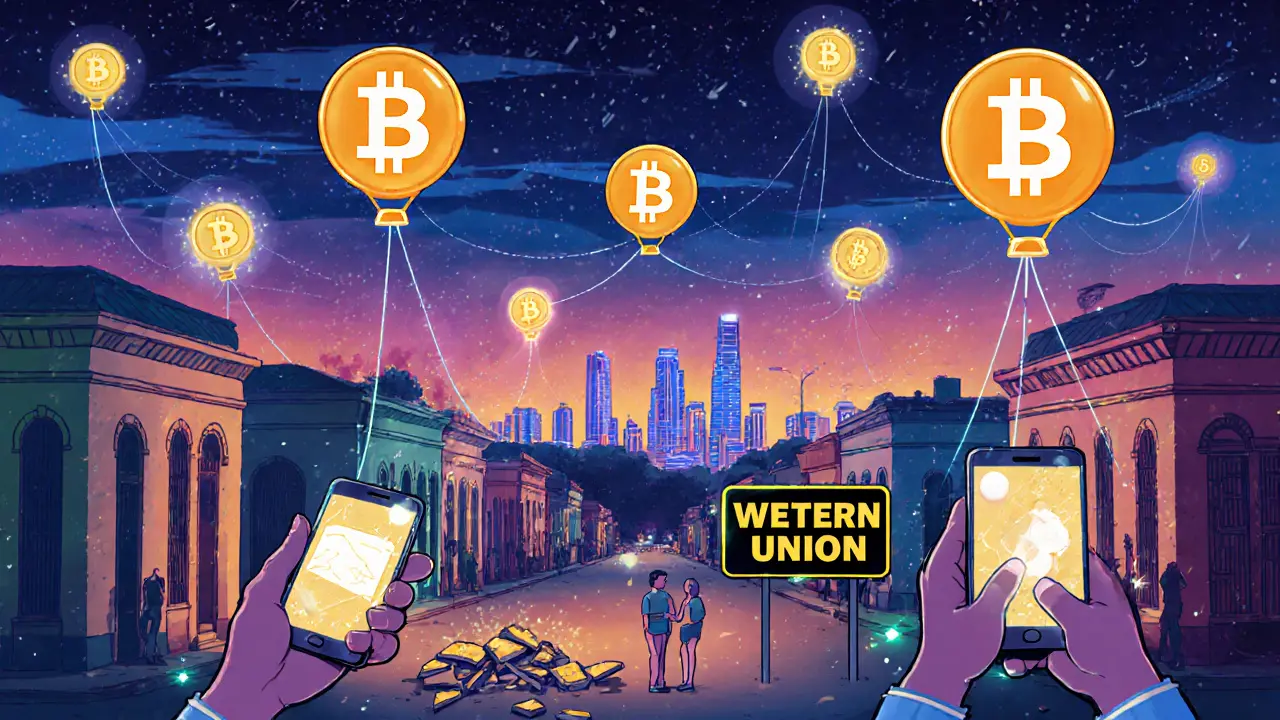
How Cubans Are Using Crypto Despite Government Restrictions
Cuba legalized cryptocurrency to bypass U.S. sanctions that cut off access to banks and remittance services. Now, over 100,000 Cubans use Bitcoin and Ethereum to send money, buy goods, and survive economically - all under a strict government-regulated system.
Recent Post
-

Stablecoins: How They Solve Crypto Volatility
Sep, 19 2025