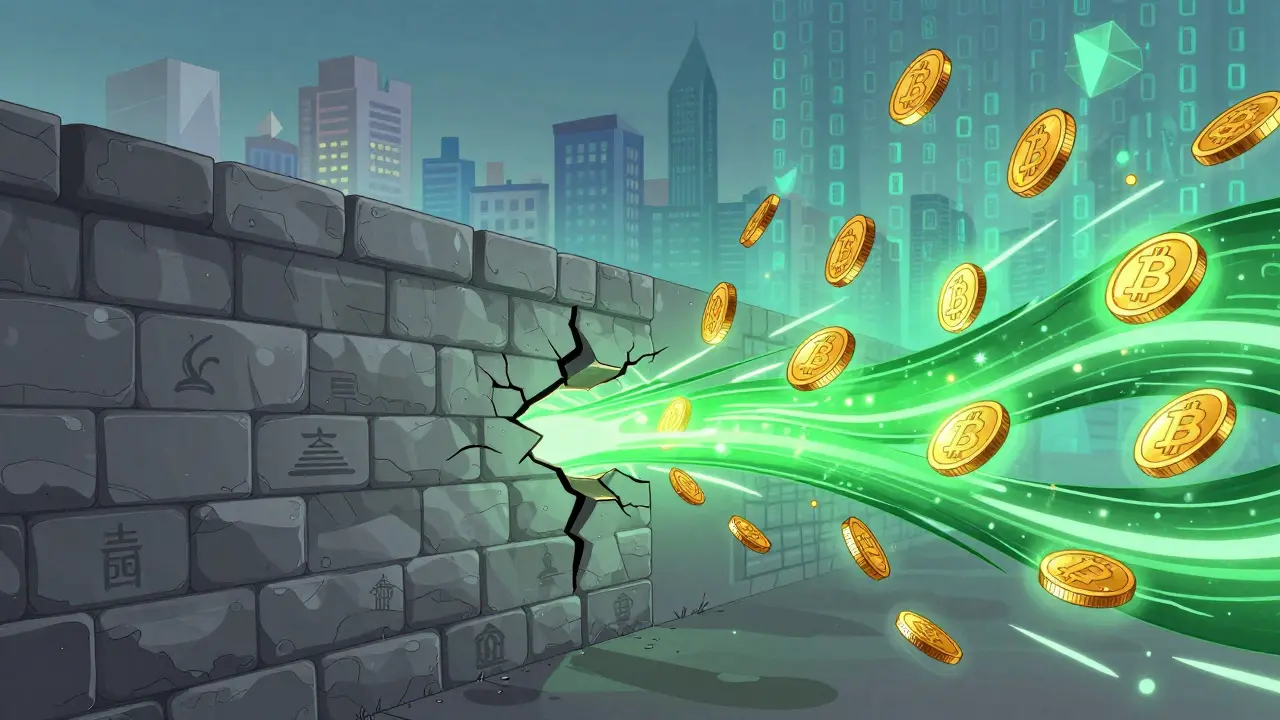
Bangladesh is living a contradiction. The government has declared a total ban on cryptocurrency, yet millions of people are using it every day. In fact, despite the strict laws, Bangladesh holds a respectable spot in global crypto adoption rankings for 2025. This isn't just about rebels breaking rules; it's about ordinary people finding ways to send money home and protect their savings when traditional banks fall short.
You might wonder how this happens. If crypto is illegal, how do we measure adoption? And why does it keep growing? The answer lies in the gap between official policy and economic reality. Let's look at the numbers, the methods, and the reasons behind this underground boom.
The Numbers Behind the Ban
First, let's clear up the confusion about where Bangladesh stands globally. You'll see different numbers depending on who you ask, but they all point to the same trend: significant usage.
| Metric | Data Point | Source/Context |
|---|---|---|
| Verified Crypto Users | 3.1 million | CoinLaw 2025 Data |
| Global Adoption Rank | #35 | CoinLedger May 2025 Report |
| Historical Peak Rank | #13-15 | Chainalysis Historical Indices |
| Primary Use Case | Remittance via Stablecoins | User Behavior Analysis |
According to CoinLaw, a leading research firm tracking crypto adoption metrics, there are now 3.1 million verified crypto users in Bangladesh. That is a massive number for a country with a population of roughly 170 million. It means nearly 2% of the entire population is actively engaging with digital assets, even if they have to hide it from the authorities.
Why the difference in rankings? CoinLedger places Bangladesh at #35 globally in their May 2025 report. Chainalysis, another major data provider, has historically seen Bangladesh rank much higher, sometimes around #13 or #15. These variations depend on how each organization defines "adoption." Some count active wallet transactions, while others look at exchange sign-ups or peer-to-peer trading volume. Regardless of the exact rank, the presence of millions of users proves that the ban is not stopping demand.
Why People Ignore the Law
If you live in Bangladesh, you know that sending money across borders is expensive and slow. Traditional banking channels charge high fees, and currency fluctuations can eat into your hard-earned cash. This is where cryptocurrency steps in.
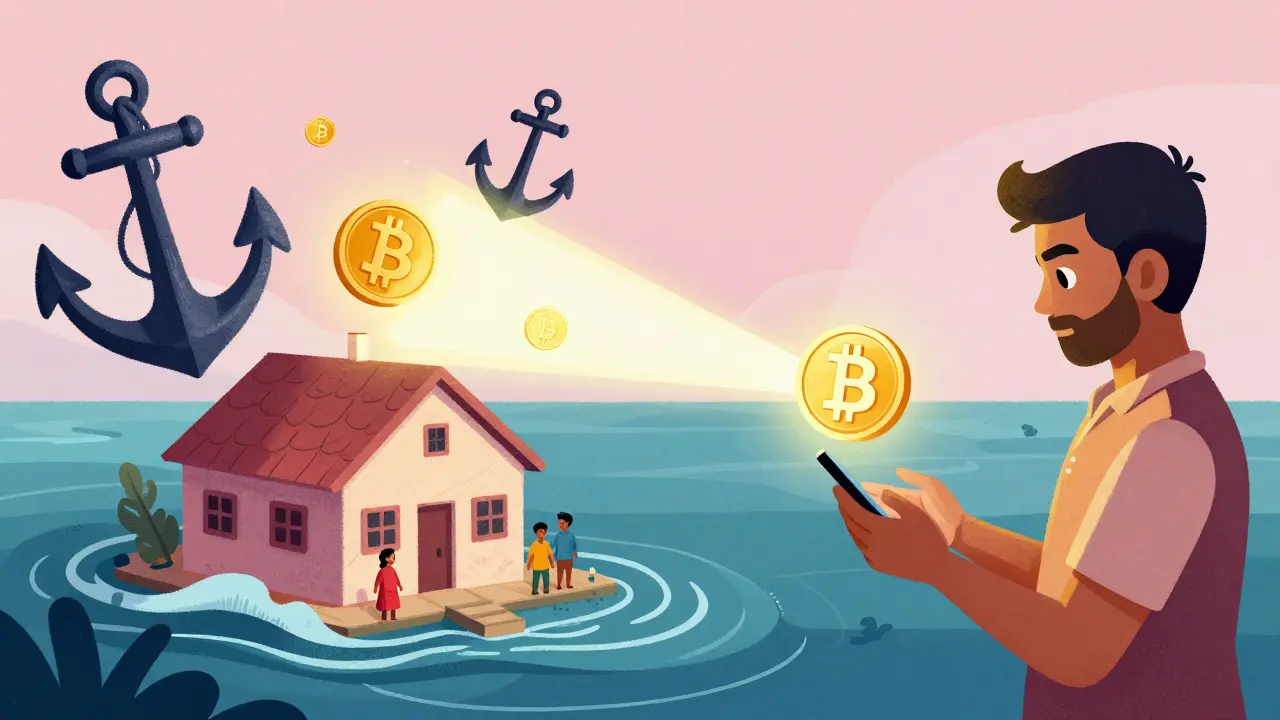
The primary driver for crypto adoption in Bangladesh is not speculation. Most people aren't buying Bitcoin hoping it will go to the moon. They are using stablecoins, cryptocurrencies pegged to the value of fiat currencies like the US Dollar. Specifically, tokens like Tether (USDT) allow workers abroad to send money to their families in Dhaka or Chittagong instantly and with minimal fees.
Consider the story of Rashed, a construction worker in Dubai. He sends $500 home every month. Through traditional banks, he loses $20 in fees and unfavorable exchange rates. Using a stablecoin transfer, he might lose less than $2, and his family receives the equivalent value immediately. For millions of Bangladeshi families relying on remittances, this utility is worth the risk of using an unregulated service.
This pattern mirrors trends in other emerging markets. In Pakistan, which ranks third globally in adoption with an index of 0.619, over 5.4 million new users joined in 2025 alone. Like Bangladesh, Pakistan has faced regulatory hurdles, yet freelance payments and cross-border earnings drove massive growth. When the traditional financial system fails to provide affordable access, people find alternatives.
How It Works Underground
So, how do 3.1 million people use crypto when it's banned? The infrastructure is informal but effective. Since local exchanges cannot operate legally, users rely on international platforms and peer-to-peer (P2P) networks.
- International Exchanges: Many users create accounts on global platforms that accept users from Bangladesh, often using VPNs to bypass IP restrictions. These platforms offer basic compliance checks, which explains the "verified" status of many users.
- Peer-to-Peer Trading: P2P marketplaces allow individuals to buy and sell crypto directly. One person pays via bKash or Nagad (local mobile financial services), and the other releases the crypto. This method keeps the transaction off formal banking ledgers.
- Hybrid Wallets: Similar to Cambodia's Bakong digital wallet, some users utilize hybrid solutions that bridge traditional finance with crypto, though these are less common in Bangladesh due to stricter enforcement.
The reliance on P2P trading creates a shadow economy. It’s risky because there is no consumer protection. If a seller scams you, you have nowhere to go. However, the community trust mechanisms within these groups often act as a deterrent against fraud. Reputation matters more than legal recourse.
Regional Context: South Asia's Crypto Boom
Bangladesh doesn't exist in a vacuum. Its adoption story is part of a larger South Asian trend. The Asia-Pacific region saw a 69% expansion in crypto ownership in 2025, according to the Coinpedia Global Crypto Adoption Report. Neighboring countries are setting examples that influence behavior.
India leads the pack with an adoption index of 1.000. While India also faces regulatory scrutiny, its tech-savvy population and large freelance workforce drive immense usage. Pakistan follows closely. Bangladesh sits in the middle, constrained by its complete ban but fueled by similar economic pressures: inflation, currency devaluation, and the need for financial inclusion.
Even countries with complex regulations, like Cambodia, maintain strong engagement through innovative tools. This regional pressure suggests that isolationist policies may become harder to enforce as neighbors integrate crypto into their economies. If your neighbor can easily pay for goods with digital assets, the temptation to do the same grows.
Risks and Realities
It is crucial to acknowledge the dangers. Using crypto in a banned environment carries legal risks. The government can freeze bank accounts linked to suspicious transactions, and users have no legal recourse if they are scammed. Additionally, the lack of regulation means prices can be volatile on local P2P markets, detached from global trends.
However, the persistence of 3.1 million users indicates that the perceived benefits outweigh the risks. For many, the alternative-losing significant portions of income to banking fees-is unacceptable. This necessity-driven adoption is different from speculative bubbles. It is rooted in survival and efficiency.
What Comes Next?
The future of crypto in Bangladesh depends on whether the government chooses to crack down harder or adapt. History shows that bans rarely eliminate demand; they just push it underground. As long as remittances remain a critical part of the economy, and as long as traditional banks charge high fees, crypto will remain relevant.
We may see a shift toward more regulated frameworks in the coming years. Other nations have moved from prohibition to licensing, realizing that taxation and oversight are better than black markets. Until then, Bangladesh will continue to punch above its weight in global adoption rankings, proving that technology often outpaces legislation.
Is cryptocurrency completely illegal in Bangladesh?
Yes, the Bangladesh Bank and government have issued circulars banning all cryptocurrency transactions, mining, and trading. Financial institutions are prohibited from facilitating any crypto-related activities. However, enforcement is challenging, and millions of citizens still engage in underground usage.
Why is Bangladesh ranked high in crypto adoption despite the ban?
Bangladesh ranks high because of high demand for remittance solutions. Workers abroad use stablecoins to send money home cheaply and quickly. This practical utility drives adoption regardless of legal restrictions, leading to millions of verified users on international platforms.
How do people in Bangladesh buy crypto safely?
Users typically rely on Peer-to-Peer (P2P) platforms where they trade directly with other individuals using local payment methods like bKash. Others use international exchanges with VPNs. There is no "safe" legal way, so users must exercise extreme caution to avoid scams and legal trouble.
Which cryptocurrencies are most popular in Bangladesh?
Stablecoins, particularly Tether (USDT), are the most popular. They offer stability against the volatile Bangladeshi Taka and low transaction fees for remittances. Bitcoin and Ethereum are also used but primarily for investment or larger transfers rather than daily utility.
Will the government lift the crypto ban soon?
There are no immediate signs of a full lift. However, as regional neighbors like India and Pakistan navigate regulatory frameworks, Bangladesh may eventually consider a licensed approach to capture tax revenue and control capital flight, rather than maintaining a purely prohibitive stance.
Joshua Alcover
May 28, 2026 AT 07:25The epistemological framework of this article fundamentally misrepresents the ontological status of sovereign monetary policy. By conflating illicit capital flight with 'adoption,' one engages in a category error that ignores the juridical primacy of the state. The so-called 'verified users' are merely statistical artifacts of unregulated P2P networks, which lack the institutional backing required for legitimate financial integration. Furthermore, the reliance on stablecoins like USDT is not a testament to innovation but rather a symptom of systemic failure within the traditional banking sector, exacerbated by poor governance. It is imperative that we recognize that any economic activity existing outside the purview of state-sanctioned regulatory bodies is, by definition, extralegal and therefore devoid of social legitimacy. The narrative of 'empowerment' is a rhetorical device used to obscure the reality of tax evasion and money laundering. We must not allow pseudo-intellectual justifications for criminal behavior to dilute our understanding of national security and economic stability.
Craig Swanson
May 29, 2026 AT 21:46Look, I get the frustration with high fees, but breaking the law isn't the answer, man! 🛑 You're putting your family at risk for a few bucks saved. There has to be a better way to handle remittances without going underground. Let's talk about legal alternatives or pushing for reform instead of encouraging illegal activity. Safety first, always. 🙏
Bill Gunn
May 30, 2026 AT 17:54Yo, Joshua, you sound like a robot from a dystopian novel! 🤖📚 Chill out with the big words. Meanwhile, Craig, while safety is key, sometimes people have no choice when the system fails them. 💸
I've seen friends in Dhaka use P2P because banks charge 10% just to move $100. That's robbery! 🚫💰 Crypto isn't perfect, but it's a lifeline for many. Imagine sending money instantly to your mom without losing half of it to fees. That's real utility. 🌍✨
Also, the stats are wild-3.1 million users? That's huge! 📈 It shows people vote with their wallets. If the government wants to stop it, they need to fix the banking sector, not just ban tech. Regulation > Prohibition. Always. 🧠💡
What do you think about the rise of stablecoins specifically? Are they safer than Bitcoin for daily use? 🤔🪙
Dana Rapoport
May 31, 2026 AT 06:08Bill makes a valid point about the necessity driving adoption. When traditional systems fail the most vulnerable, alternative solutions emerge organically. This is not necessarily rebellion, but survival. The philosophical implication here is that laws must reflect reality, not dictate it. If the law prohibits what people desperately need, the law becomes obsolete. We should focus on how to integrate these tools safely rather than condemning those who use them. Empathy for the worker in Dubai is crucial here. His desire to support his family is noble, regardless of the method. The system should adapt to serve him, not punish him. Silence on this issue only perpetuates inequality. We must listen to the voices of those excluded from the formal economy. Their experiences are data points we cannot ignore. Change requires understanding, not judgment. Let us consider the human element behind every transaction. Technology is neutral; its impact depends on context. Bangladesh’s situation highlights a global disconnect between policy and practice. Bridging this gap is essential for true progress. Ignoring the underground economy ignores millions of lives. We need dialogue, not division. The future of finance is decentralized, whether we like it or not. Adaptation is inevitable. Resistance is futile. Let us embrace the change with caution and care. Education is the key to safe adoption. Let us learn together.
Hadleigh Edwards
June 1, 2026 AT 14:54I really appreciate the detailed breakdown of the regional context provided in the article, especially regarding India and Pakistan, because it helps to contextualize the Bangladeshi experience within a broader South Asian trend of digital financial inclusion despite regulatory headwinds, which suggests that the underlying drivers of adoption are structural economic factors such as inflation, currency devaluation, and the high cost of cross-border remittances rather than mere speculative enthusiasm or technological novelty, and furthermore, the persistence of such a large user base indicates a deep-seated demand for efficient value transfer mechanisms that the current traditional banking infrastructure simply cannot meet due to inefficiencies and lack of accessibility, thereby creating a vacuum that cryptocurrency fills effectively even if it operates in a legal gray area, and this dynamic is likely to continue evolving as neighboring countries begin to implement more nuanced regulatory frameworks that could potentially influence Bangladesh's stance in the future, leading to a possible shift from prohibition to regulation as the government realizes the potential tax revenue and economic benefits of integrating these digital assets into the formal economy rather than trying to suppress an already entrenched underground market, which would ultimately benefit both the citizens seeking financial inclusion and the state seeking greater economic control and transparency, thus highlighting the importance of adaptive policy-making in the face of rapid technological advancement and changing consumer behaviors in the global financial landscape.
mark valmart
June 3, 2026 AT 08:58honestly just tired of hearing 'it's illegal so don't do it' when the banks are charging insane fees anyway. people will find a way.