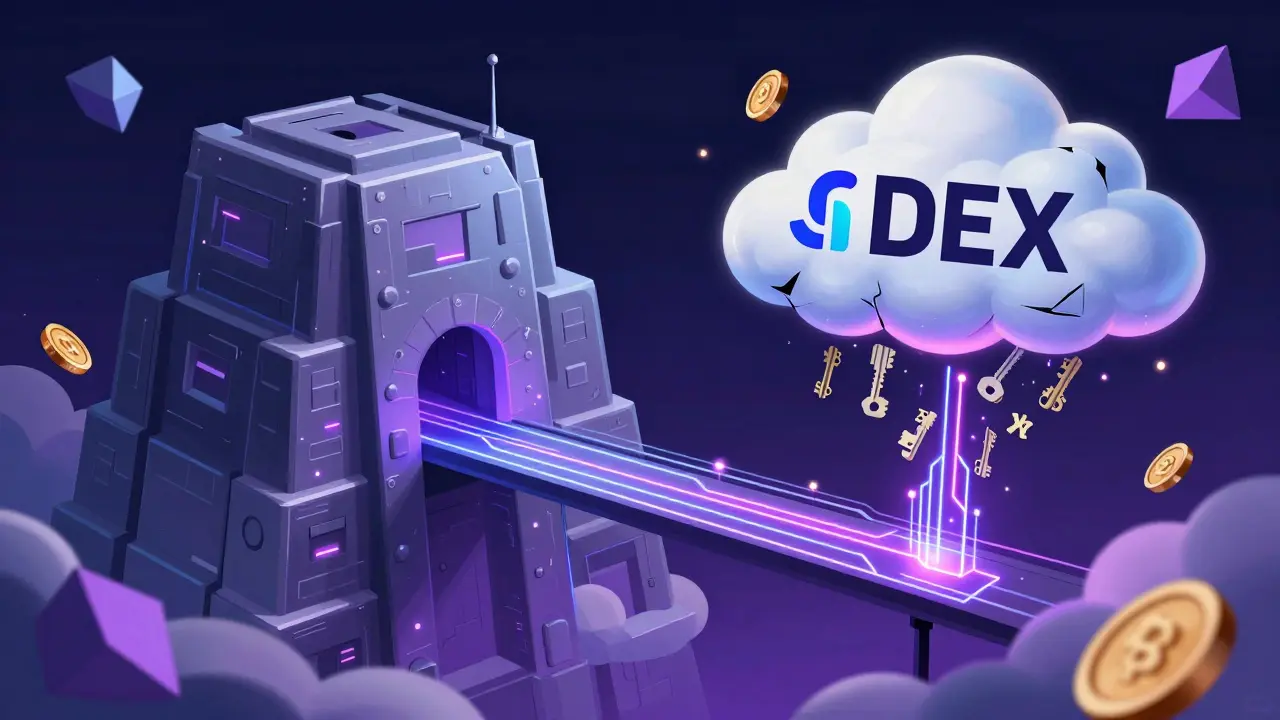
Most people think they have to choose between two extremes when trading crypto. You either go with a centralized exchange (CEX) like Binance for speed and fancy tools, but you give up control of your keys. Or, you use a decentralized exchange (DEX) like Uniswap to keep your assets safe in your own wallet, but you deal with slow speeds, high gas fees, and the constant fear of "front-running" where bots jump ahead of your trade.
IDEX is a hybrid liquidity decentralized exchange that blends a traditional order book model with an automated market maker (AMM). Essentially, it tries to kill two birds with one stone: giving you the professional trading experience of a CEX while letting you keep your funds in your own pocket. If you've ever wondered if you can have professional-grade limit orders without trusting a company with your life savings, this is where IDEX fits in.
Quick Summary: Is IDEX Right for You?
Before we get into the weeds, here is the deal with IDEX in a nutshell:
- Best for: Traders who want a non-custodial setup but need advanced order types (like limit orders) and high execution speed.
- The Big Win: You keep 100% ownership of your assets; the exchange never touches your coins.
- The Tech: Uses a hybrid approach-matching trades off-chain for speed and settling them on-chain for security.
- The Trade-off: While it's faster than a standard DEX, it still requires a bit more technical knowledge than a simple "buy and hold" app.
How the Hybrid Engine Actually Works
The biggest headache with standard DEXs is that every single action has to be recorded on the blockchain immediately. On a busy day on Ethereum, this means paying $50 in gas just to swap some tokens, only for the trade to fail because someone else's transaction was processed first. IDEX solves this by separating the matching from the settlement.
Think of it like a restaurant. The waiter takes your order and the kitchen prepares the food (off-chain matching). This happens instantly. You only pay the bill once the meal is served (on-chain settlement). Because the trades are matched off-chain, IDEX can handle tens of thousands of orders per second with latency under 1 millisecond. This means you aren't fighting bots for the best price, and you don't waste money on failed transactions.
To make this even smoother on Ethereum, they use Optimistic Rollups, which is a Layer-2 scaling solution that bundles transactions together to reduce fees while still relying on the main Ethereum network for final security. This is a game-changer for anyone tired of paying exorbitant network fees for small trades.
Comparing IDEX to the Giants
It is easier to understand IDEX when you see it standing next to the typical options. Most traders choose between the "Trust the Company" model and the "Trust the Code" model. IDEX attempts a middle ground.
| Feature | Centralized (CEX) | Standard DEX (AMM) | IDEX (Hybrid) |
|---|---|---|---|
| Asset Control | Exchange holds keys | User holds keys | User holds keys |
| Trade Speed | Instant | Slow (Block time) | Very Fast (Off-chain) |
| Order Types | Advanced (Limit/Stop) | Basic (Swaps) | Advanced (Limit/Stop) |
| Gas Costs | Low/Internal | High / Volatile | Reduced (via L2) |

The Role of the IDEX Token
The IDEX Token is more than just a coin you hope goes up in price; it's the fuel for the platform's ecosystem. If you're just trading, you might not need it. But if you want to be part of the infrastructure, it's essential.
For instance, if you hold at least 10,000 IDEX tokens, you can operate lightweight nodes. This means you're helping the network stay decentralized and secure while earning rewards for your trouble. It turns the exchange from a service you use into a network you help run. Additionally, the token allows for staking and governance, giving you a say in how the platform evolves.
From a market perspective, the token can be volatile. While some analysts project long-term growth reaching over $1.00 in the coming decade, others warn that the price often fluctuates based on market speculation rather than the actual utility of the exchange. As of recent data, the market cap sits around $26 million, suggesting there is still plenty of room for growth if user adoption scales.
Security: Why "Non-Custodial" Matters
We've all seen the headlines about big exchanges collapsing or getting hacked, taking millions of user funds with them. That usually happens because the exchange is custodial-they hold your private keys. If their central server is breached, your money is gone.
IDEX is Non-Custodial, meaning the exchange never takes possession of your private keys or your assets. Your funds stay in your wallet until the very second the trade is settled on the blockchain. If IDEX's servers were to disappear tomorrow, your funds would still be safe in your wallet. This architecture essentially removes the "honeypot' effect that attracts hackers to centralized platforms.
Beyond fund security, IDEX protects you from "sandwich attacks." In many DEXs, a bot can see your pending transaction and place its own trade right before yours to drive the price up, then sell immediately after. Because IDEX uses guaranteed sequencing in its off-chain engine, it prevents these predatory tactics, ensuring you get the price you actually agreed to.

Current Support and Future Roadmap
Right now, IDEX is heavily integrated with Ethereum and Binance Smart Chain (BSC). These are the two biggest playgrounds for DeFi, so the liquidity is generally strong. However, they aren't stopping there. A confirmed integration with Polkadot is on the horizon, which will open up cross-chain trading opportunities.
Looking forward, the team is pushing toward leverage trading. Adding the ability to trade with borrowed funds on a decentralized platform is a massive technical challenge, but if they pull it off, it will attract a whole new wave of professional speculators who currently refuse to use DEXs because they lack these tools.
Potential Pitfalls to Watch Out For
No platform is perfect. While the hybrid model is great, you should keep a few things in mind:
- Learning Curve: If you're used to the simplicity of Coinbase, the idea of connecting a wallet and managing gas for settlement might feel overwhelming.
- Liquidity Variance: While the AMM helps, some niche pairs might still have more slippage than you'd find on a giant CEX like Binance.
- Token Volatility: Don't confuse the success of the IDEX platform with the price of the IDEX token. One can thrive while the other fluctuates wildly due to market trends.
Is IDEX really decentralized?
Yes, in the ways that matter most. While the trade matching happens on a fast, off-chain engine to avoid lag, the actual ownership and settlement of funds happen on the blockchain. You maintain full control of your private keys, which is the core definition of a decentralized, non-custodial exchange.
How does IDEX prevent front-running?
IDEX uses a centralized matching engine that provides guaranteed sequencing. Unlike standard DEXs where miners can reorder transactions in a block to profit, IDEX executes orders in the exact sequence they are received, blocking bots from jumping the line.
What are the benefits of the IDEX token?
The token is used for staking rewards, governance, and operating lightweight nodes (if you hold 10,000+ tokens). This allows users to help secure the network and earn a passive income based on the platform's activity.
Can I use limit orders on IDEX?
Yes. Unlike many AMM-based DEXs that only allow for immediate swaps, IDEX's order book model allows you to set specific prices at which you want to buy or sell, giving you much more control over your trading strategy.
Which blockchains does IDEX support?
Currently, IDEX is available on Ethereum and Binance Smart Chain (BSC). They have also announced plans for integration with Polkadot to expand their cross-chain capabilities.
Next Steps for New Traders
If you're ready to try out IDEX, don't just dump all your funds in at once. Start by setting up a secure wallet (like MetaMask) and funding it with a small amount of ETH or BNB to cover your initial settlement fees. Spend some time exploring the order book-try placing a small limit order to see how the off-chain matching feels compared to a standard swap.
If you encounter issues with trade execution, check your wallet's gas settings. Since settlement happens on-chain, a sudden spike in network congestion can sometimes slow down the final step of your trade, even if the match happened instantly.






Sarah Fisher
April 24, 2026 AT 18:46The shift toward hybrid models reflects a deeper human desire for both autonomy and efficiency. It is fascinating how we try to balance the purity of decentralization with the practical needs of a fast-paced market.
Larry Yang
April 25, 2026 AT 18:49imagining people actually think a "hybrid" model fixes the fundemental flaw of trustless trading is just cute. its basically a CEX with extra steps and more lag. totaly mid tier tech at best.
Greg Reynolds
April 27, 2026 AT 02:18The claim that it eliminates the honeypot effect is technically misleading. While the keys stay with the user, the matching engine is still a centralized point of failure that can be manipulated or go offline, which creates a different kind of risk that most beginners ignore.
Alex Wan
April 28, 2026 AT 15:30OH MY GOODNESS!! This is exactly the kind of इनोवेशन we need to bring more people into the fold!! I am just so thrilled to see these barriers coming down for everyone
It is truly a monumental leap for the entire community and I cannot wait to see how we all grow together in this space!!
Guy Bianco
April 29, 2026 AT 17:24It is important to remember that the learning curve can be daunting for some. Please feel free to take your time with the setup process. ☺
Robert Mosolygo
April 30, 2026 AT 09:11You all are blind. The "off-chain matching" is just a black box where the devs can manipulate the order flow before it ever hits the chain. It's a perfect setup for a rug pull or a controlled price manipulation scheme by the elites. Don't be fooled by the fancy L2 terminology; it's just a curtain to hide the magic tricks they're playing with your money.
Sara Ellis
May 2, 2026 AT 08:59just use it or dont it is all just numbers in the air anyway lol
Tony Gurley-Ward
May 3, 2026 AT 22:33While everyone is arguing about the tech, I'm just here for the chaotic dance of the IDEX token price. It's like a rollercoaster designed by a caffeinated squirrel. Truly a whimsical way to gamble your savings while pretending it's "infrastructure"!
Gary Lingrel
May 4, 2026 AT 15:51imagine promoting this without mentioning the ethical void of speculative trading 🙄 the greed in this thread is just palpable and honestly quite depressing if you think about the real world for one second