
Is it legal to mine cryptocurrency in Nigeria? The short answer is yes, but the long answer involves a maze of banking blocks, new federal laws, and steep compliance costs. If you are planning to set up mining rigs or operate a mining farm in Lagos, Abuja, or anywhere else in the country as of late 2025, you need to understand that while the act of mining itself isn't banned, the ecosystem around it has changed drastically.
The days of operating completely under the radar are over. With the passage of the Investments and Securities Act (ISA) 2025 and the looming Nigeria Tax Administration Act (NTAA) 2026, the government has moved from ambiguous silence to strict oversight. You can mine, but you must do so within a tightly regulated framework that demands licensing, anti-money laundering (AML) compliance, and significant capital reserves.
The Legal Status of Crypto Mining in 2025
Let’s clear up the biggest misconception first: Cryptocurrency mining is not explicitly illegal in Nigeria. There is no specific law that says "thou shalt not mine." However, the regulatory environment treats digital assets as securities, which changes everything about how you can operate.
Under the Investments and Securities Act (ISA) 2025, passed earlier this year, virtual assets are legally defined as securities. This means that if your mining operation interfaces with any exchange services, offers mining-as-a-service, or deals with users who want to cash out, you fall under the jurisdiction of the Securities and Exchange Commission (SEC). The SEC now has the power to register and license all virtual asset business models.
This shift is crucial. Previously, miners operated in a grey area where they could buy hardware, plug it in, and sell profits via peer-to-peer (P2P) channels without much direct interference. Now, Section 357 of the ISA 2025 mandates licensing for any Virtual Asset Service Provider (VASP). If you are running a commercial mining operation, you are likely considered a VASP because you are facilitating the creation and potential trading of these assets.
| Requirement | Governing Body | Key Detail |
|---|---|---|
| Licensing | SEC | Mandatory for VASPs; includes paid-up capital and fidelity bonds. |
| Banking Access | CBN | Banks can only service licensed crypto businesses. |
| Taxation | FIRS / NTAA | Effective 2026; heavy fines for non-compliance. |
| AML/KYC | NFIU / EFCC | Strict identity verification and transaction monitoring required. |
The Banking Blockade: CBN’s Role
You cannot talk about crypto in Nigeria without mentioning the Central Bank of Nigeria (CBN). Since February 2021, the CBN has issued directives prohibiting financial institutions from facilitating cryptocurrency transactions. For years, this was the single biggest headache for miners. How do you pay for electricity? How do you buy ASIC miners? How do you move your profits?
In late 2023, the CBN lifted some of these restrictions, allowing banks to service *licensed* crypto businesses. This was a game-changer. It created a pathway for legitimate operations. However, the catch remains: you must be licensed by the SEC first. If you are an unlicensed miner trying to open a corporate bank account to manage your mining pool revenues, you will likely face rejection. Banks are terrified of penalties and will often err on the side of caution, freezing accounts associated with crypto activity unless you have clear documentation proving your SEC compliance.
This forces many small-scale miners to rely on decentralized finance (DeFi) solutions and P2P exchanges like Binance P2P or local platforms such as Quidax and Busha. While this bypasses the banking block, it introduces other risks, including higher fees, slower settlement times, and exposure to fraud.
New Licensing Rules Under the SEC
The SEC has been aggressive in implementing its Digital Assets Rules 2022, reinforced by the ISA 2025. By late 2024, the commission awarded its first provisional licenses to major exchanges like Quidax and Busha. This sets a precedent for what miners should expect.
To get licensed, you aren’t just filling out a form. The requirements are substantial:
- Paid-up Capital: You need significant liquid capital to prove financial stability.
- Fidelity Bonds: Insurance against employee theft or fraud.
- Local Presence: You must be registered as a Nigerian corporation with a physical office and local management.
- Compliance Infrastructure: Robust AML and KYC systems must be in place before you even start mining.
For a solo miner with a few GPUs in their living room, these rules might seem irrelevant. But if you are scaling up to a warehouse with hundreds of machines, you are a business entity. The SEC expects you to register. Failure to do so puts you at risk of having your operations shut down and facing severe legal consequences.
Taxation Changes: The NTAA 2025 Impact
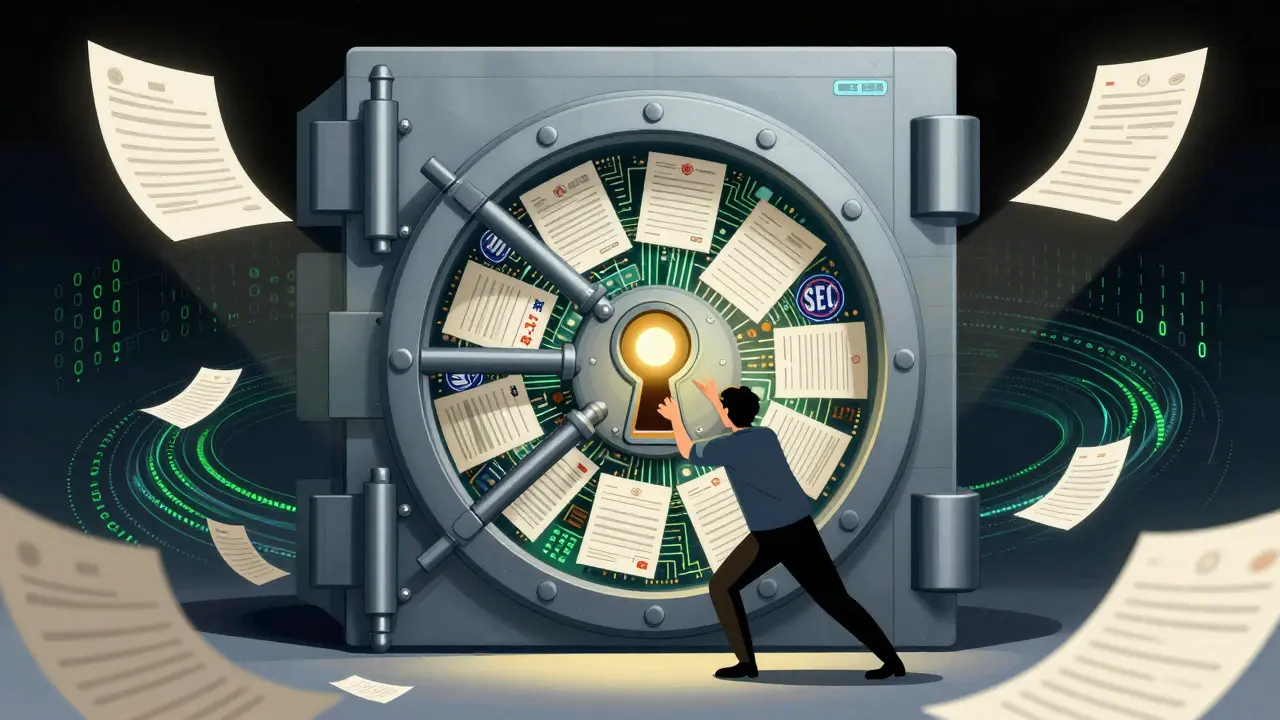
If licensing wasn’t enough, the tax man is coming. The Nigeria Tax Administration Act (NTAA) 2025, signed into law in June 2025, is set to take full effect in 2026. This legislation targets Virtual Asset Service Providers directly.
Here is the scary part: the penalties for non-compliance are steep. If you fail to comply with reporting and tax obligations, you face an initial fine of ₦10 million (approximately $6,693) in the first month. For every subsequent month of default, another ₦1 million ($669) is added. On top of that, the SEC can suspend or revoke your license, effectively killing your business.
This means you need to track every satoshi mined. You need to calculate gains, report them accurately, and pay taxes accordingly. The era of hiding crypto income is ending. The government has enhanced tools to combat fraud, including access to telecom records for investigations, making it harder to stay off the grid.
Infrastructure Challenges: Power and Profitability
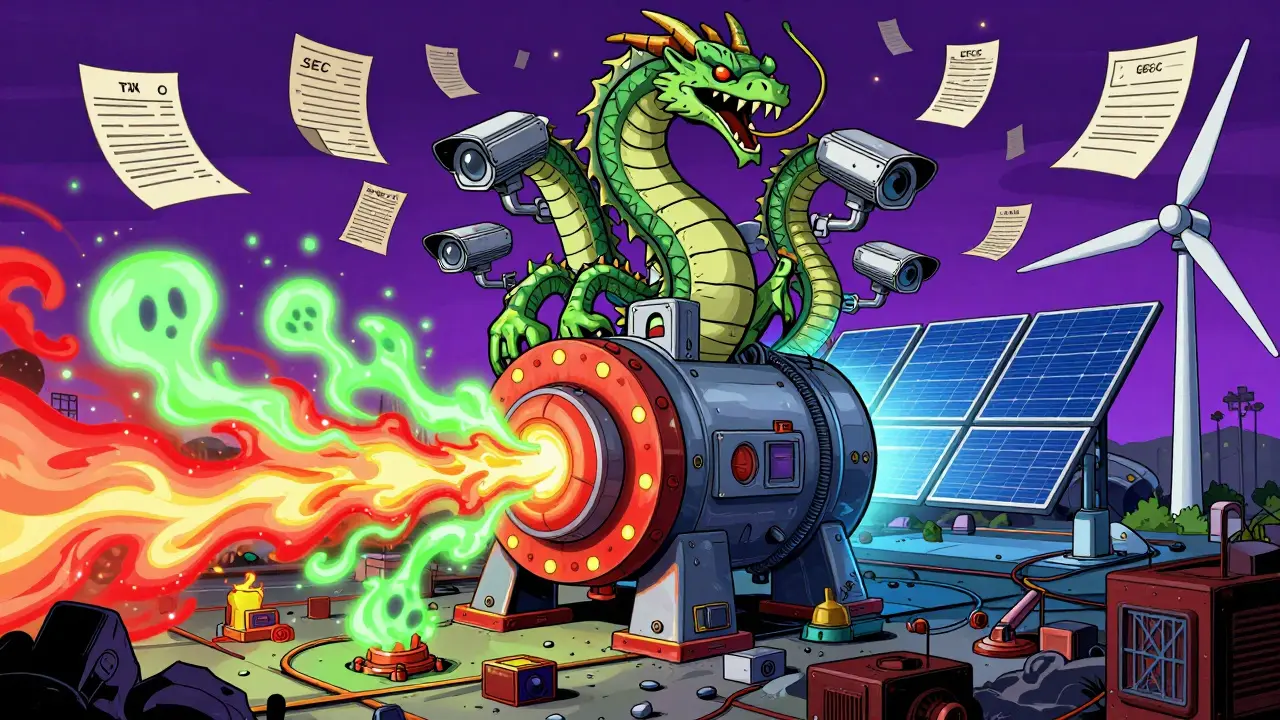
Even if you navigate the legal minefield, there is the practical issue of running the hardware. Nigeria faces well-documented infrastructure challenges, particularly regarding electricity. High costs and sporadic power supply make large-scale mining difficult.
Many miners spend a disproportionate amount of their revenue on diesel generators to keep their ASICs running when the national grid fails. This eats into profit margins significantly. Compare this to countries like Canada or Kazakhstan, which offer abundant, cheap energy and clearer regulatory paths. In Nigeria, you are competing against global giants with better resources.
To remain profitable, Nigerian miners are increasingly looking into renewable energy solutions or locating farms in areas with more stable power grids. Some are also exploring hybrid models where they provide cooling services or data center capabilities alongside mining to maximize utility.
Enforcement and Coordination
The regulatory bodies are no longer working in silos. The SEC is coordinating closely with the Economic and Financial Crimes Commission (EFCC) and the Nigerian Financial Intelligence Unit (NFIU). This multi-agency approach means that if you violate AML laws, you aren’t just dealing with the SEC; you could find yourself under criminal investigation by the EFCC.
The National Anti-Money Laundering Act has been amended to cover virtual assets. This adds another layer of scrutiny. Every transaction, especially large ones, is monitored. If your mining pool receives funds from suspicious sources, or if you fail to verify the identities of partners and clients, you are liable.
Future Outlook for Miners
Despite the hurdles, Nigeria remains one of the largest crypto markets in the world. Between July 2024 and June 2025, Nigerians moved an estimated $92.1 billion in digital assets. This demand drives innovation. The government’s stance is shifting from rigid caution to measured acceptance, driven by the potential economic benefits of blockchain technology.
The National Blockchain Policy 2023 aims to enhance efficiency, transparency, and trust across sectors. While it doesn’t specifically regulate mining, it signals a broader embrace of the underlying technology. For miners, the key is compliance. Those who invest in proper licensing, robust compliance frameworks, and sustainable energy solutions will thrive. Those who try to fly under the radar will likely be caught by the tightening net of the ISA 2025 and NTAA 2026.
Is it illegal to mine Bitcoin in Nigeria?
No, mining Bitcoin itself is not explicitly illegal. However, operating a commercial mining business requires compliance with the Securities and Exchange Commission (SEC) regulations under the Investments and Securities Act (ISA) 2025. You must obtain the necessary licenses and adhere to anti-money laundering laws.
Can I use my regular bank account for crypto mining profits?
Generally, no, unless your mining business is fully licensed by the SEC. The Central Bank of Nigeria (CBN) restricts banks from servicing unlicensed crypto businesses. Licensed entities can access banking services, but unlicensed miners often have to rely on P2P platforms or decentralized finance options.
What are the penalties for non-compliance with crypto laws in Nigeria?
Under the Nigeria Tax Administration Act (NTAA) 2025, non-compliant Virtual Asset Service Providers face an initial fine of ₦10 million, plus ₦1 million for each month of continued default. Additionally, the SEC can suspend or revoke licenses, and the EFCC may pursue criminal charges for money laundering violations.
Do individual hobbyist miners need a license?
The regulations primarily target Virtual Asset Service Providers (VASPs) and commercial operations. However, the line between hobbyist and commercial can be blurry. If you are mining at scale or offering services to others, you likely need a license. Small-scale personal mining is less scrutinized but still subject to general tax and AML laws.
How does the ISA 2025 affect crypto miners?
The ISA 2025 classifies virtual assets as securities, bringing them under SEC oversight. This means mining operations that interact with exchanges or provide services must register, meet capital requirements, and implement strict compliance measures. It brings clarity but also increases the cost and complexity of doing business.



Bill Gunn
June 1, 2026 AT 08:11Hey everyone! 👋 Just wanted to drop a quick note here. This is some seriously heavy reading, but it's exactly the kind of clarity we've been waiting for in the crypto space. The shift from 'wild west' to regulated market is inevitable, and Nigeria is just leading the charge on this front. 🚀💼
Rosie Morris
June 1, 2026 AT 17:47i mean its kinda scary how much they wanna tax us now lol. like seriously? ten million naira fine? that is insane for someone who just wants to mine a bit on the side. feels like they are trying to crush the small guys instead of helping them grow. 😩
Craig Swanson
June 1, 2026 AT 21:12Look, I get the frustration, but you can't just ignore the law because it's inconvenient. If you're running a commercial operation, you are a business period. The SEC isn't playing around anymore. You either adapt and get licensed or you get shut down. It's not personal, it's regulatory compliance. Stop complaining about the rules and start learning how to play by them. That's how you survive in this industry.
kamal ifrani
June 3, 2026 AT 02:51Typical western ignorance. You think this is about 'fairness'? No. This is about control. The government sees the money flowing out and wants a cut. They don't care about your 'small scale' mining hobby. They see a VASP and they want to squeeze every kobo out of it. It's predatory taxation disguised as regulation. The moral bankruptcy of these institutions is staggering. They ban banks from serving you, then fine you for not paying taxes through those same banned channels. It's a trap. A complete scam designed to enrich the elite while crushing the innovators. Wake up people.
Joe Clements
June 5, 2026 AT 01:19I hear where you're coming from, Kamal. It definitely feels like a double bind when the banking restrictions are still so tight. It must be incredibly stressful for miners who are trying to do things legally but find themselves blocked at every turn. I really hope the new licensing process becomes smoother soon so that legitimate businesses aren't penalized for the system's inefficiencies. It's a tough spot to be in.
lorna erni
June 6, 2026 AT 08:25OH PLEASE! Don't give me that 'predatory' nonsense. Regulations exist for a reason! Do you want your investment stolen by scammers? Do you want your country's financial system collapsed by money launderers? NO! We need structure! We need safety! If you can't handle the paperwork, stay out of it! It's not hard to fill out a form! Get over yourselves!
saradee dee
June 7, 2026 AT 17:52Oh my goodness, Lorna, please calm down! Everyone is just trying to understand the new rules. It is very confusing with all the different agencies involved. I am just worried that the high costs will push people away completely. Maybe we should focus on how to make it easier for small miners? Like, maybe there could be a simpler license for home users? It would be so much better if we could all work together to find a solution that helps everyone. Drama doesn't help anyone here!
stalin brian
June 8, 2026 AT 00:34hey saradee i totally agree with u on the drama part. but honestly the biggest issue isnt just the paper work its the power supply. u cant run asics on diesel generators and expect to make profit unless ur selling gold. have u looked into solar setups in northern nigeria? might be worth exploring that angle instead of fighting the sec right now.
Hadleigh Edwards
June 9, 2026 AT 23:13It is truly fascinating to observe the intricate dance between technological innovation and governmental oversight, isn't it? While some may view the stringent regulations imposed by the Securities and Exchange Commission and the looming tax implications under the Nigeria Tax Administration Act as mere bureaucratic hurdles, one must consider the broader perspective of economic stability and international integration. The fact that virtual assets are now classified as securities under the Investments and Securities Act of 2025 signifies a maturation of the market, moving away from the chaotic anonymity of the past towards a more transparent and accountable future. Although the initial capital requirements and fidelity bonds may seem daunting to the individual enthusiast, they serve as a crucial filter that ensures only serious, financially stable entities participate in the ecosystem, thereby protecting the average consumer from fraud and insolvency. Furthermore, the collaboration between the SEC, EFCC, and NFIU demonstrates a unified front against illicit activities, which ultimately benefits the legitimate miner by reducing competition from bad actors who previously operated without consequence. Therefore, rather than viewing these changes as obstacles, we should embrace them as necessary steps toward a sustainable and globally recognized cryptocurrency infrastructure in Nigeria.
Dana Rapoport
June 11, 2026 AT 19:13The philosophical implication here is significant: freedom requires responsibility. Compliance is the price of admission to the formal economy.