Pakistan Crypto Volume Calculator
How Small Trades Add Up
Based on the article's data: 40 million users trading approximately $7,500 annually each equals $300 billion in volume.
Stablecoin Savings Calculator
Calculate how much value is preserved using USDT against rupee devaluation
Results
Enter your numbers to see calculations based on Pakistan's crypto market data
Pakistan doesn’t have a national cryptocurrency exchange. It doesn’t have legal banking access for crypto. And yet, in 2025, Pakistanis traded over $300 billion in digital assets - more than Japan, Germany, or Canada. How? The answer isn’t in government policy. It’s in necessity.
Why Pakistan’s Crypto Market Exploded
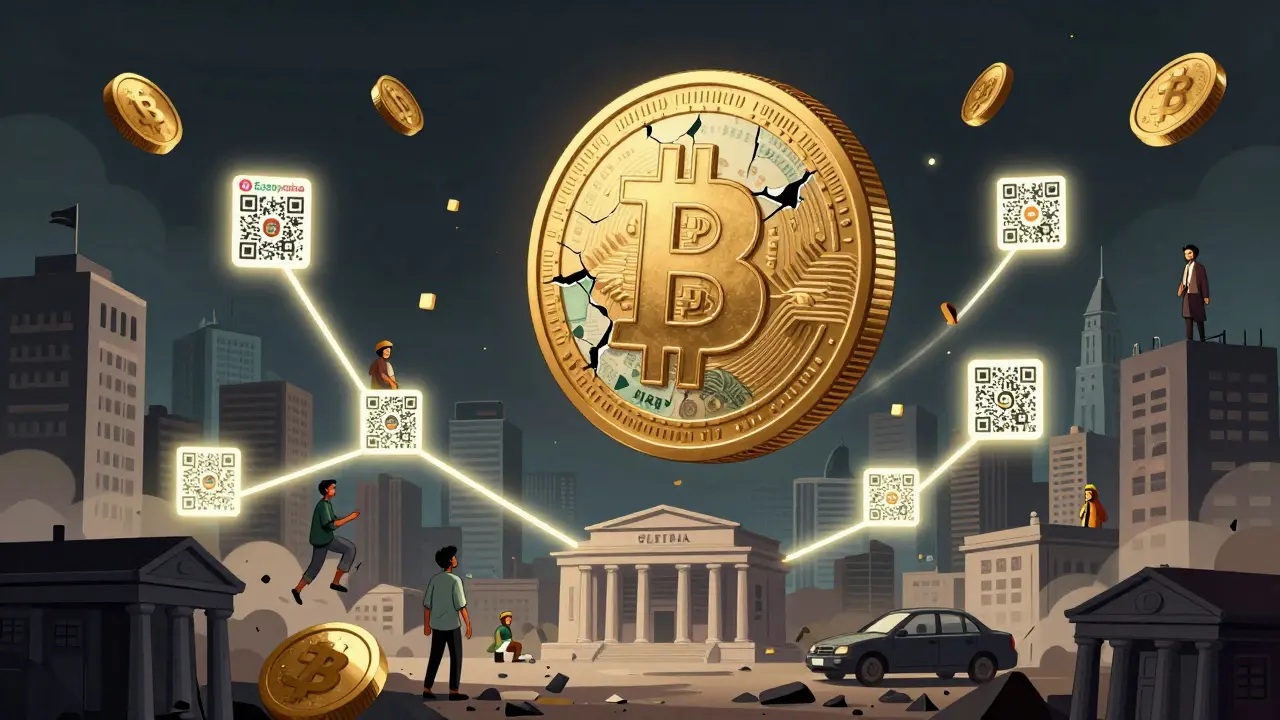
In 2018, the State Bank of Pakistan banned banks from handling crypto transactions. The move was meant to stop money laundering and protect the rupee. Instead, it forced millions into the shadows - and into innovation. People didn’t stop trading. They just found new ways. Mobile wallets like Easypaisa and JazzCash became the new bank branches. Traders used them to send and receive Pakistani rupees in exchange for Bitcoin, Ethereum, or USDT. No bank account? No problem. All you needed was a phone, a QR code, and trust in a local seller. By 2025, over 40 million Pakistanis held some form of cryptocurrency. That’s nearly 20% of the country’s population. And it’s not just urban tech workers. Teachers, drivers, tailors, and farmers are buying crypto through WhatsApp groups and local marketplaces. For many, it’s the only way to preserve savings as the rupee loses value - over 50% against the dollar since 2020.The $300 Billion Figure: What It Really Means
The $300 billion number sounds unbelievable. But it’s not just exchange data. It’s peer-to-peer trades, over-the-counter deals, and informal swaps that never touch a regulated platform. CoinMarketCap tracks only centralized trades. The real volume? Much bigger. Think of it like this: if 40 million people each trade $7,500 worth of crypto per year, you hit $300 billion. That’s not out of reach. In fact, it’s conservative. Many traders do multiple trades a week. A single user might buy $500 in USDT on Monday, send it to a friend in Dubai for a freelance payment, then convert it back to rupees on Friday to pay rent. That’s three trades in five days - and it counts as $1,500 in volume. The Global Crypto Adoption Index 2025 ranked Pakistan third in the world - behind only India and Vietnam. Why? Because adoption isn’t about how many people use exchanges. It’s about how many use crypto to live. Pakistanis use it to get paid, send money home, and save. That’s real economic activity.What People Are Buying - And Why
Bitcoin is the most popular. Not because it’s flashy. Because it’s trusted. It’s the digital gold people turn to when inflation hits 35%. But the real workhorse? USDT - Tether. It’s a stablecoin pegged to the U.S. dollar. When the rupee drops overnight, people buy USDT. They hold it. They use it to pay for international services. They send it to relatives abroad. When the rupee recovers, they sell. It’s not speculation. It’s survival. Ethereum is growing fast too. Not for trading. For DeFi. Pakistani freelancers use Ethereum-based platforms to receive payments from clients in the U.S. and Europe without waiting weeks for wire transfers. One developer in Lahore told me he gets paid in ETH, converts it to USDT via a local P2P seller, and uses that to pay his staff in rupees. All in under 20 minutes. No bank delays. No fees.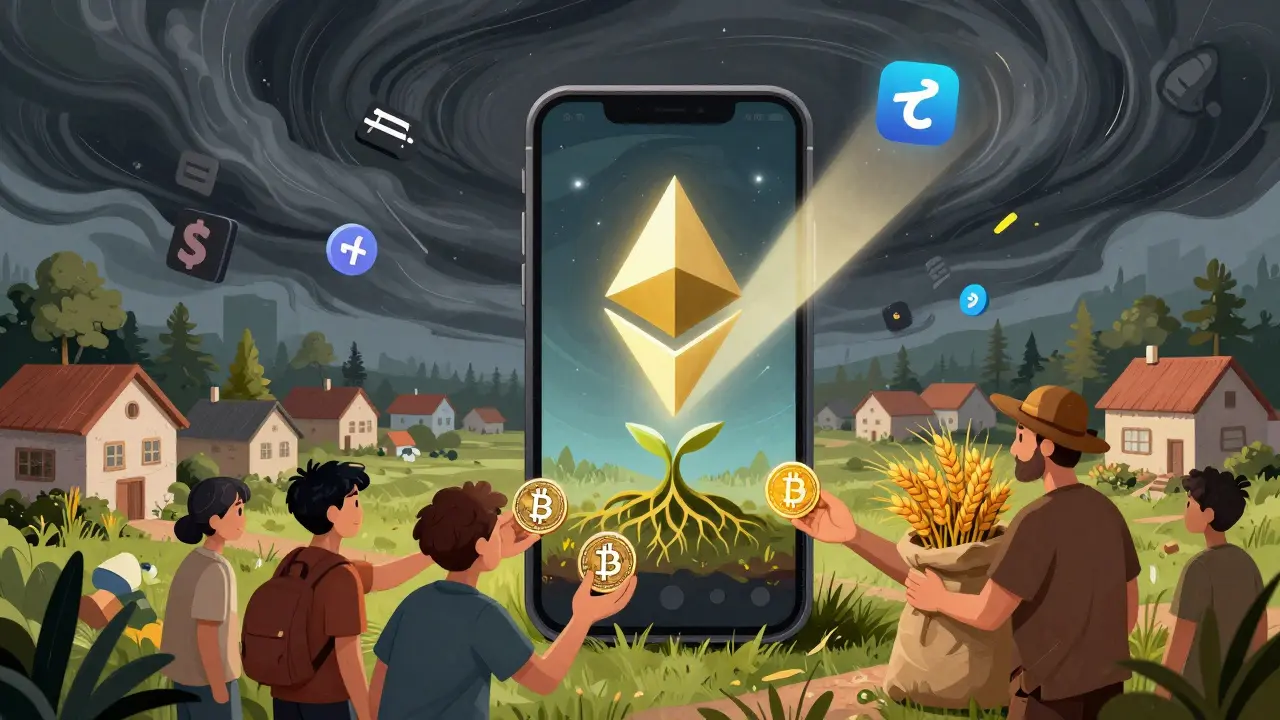
How the System Works Without Banks
There’s no official crypto exchange in Pakistan. So traders use international platforms like Binance, Bybit, and KuCoin - but only to deposit. Withdrawals? Not possible without a local bank link. Instead, they use P2P marketplaces. On Binance P2P, you search for sellers offering USDT in PKR. You pick one with a 98% rating. You pay them via JazzCash. They release the crypto. Done. No ID verification. No paperwork. Just trust and speed. This system works because of mobile money infrastructure. JazzCash and Easypaisa have over 120 million registered users. That’s more than the entire banking system. Crypto traders didn’t build a new system. They hacked the existing one. Even the government noticed. In 2024, Pakistan allocated 2,000 megawatts of electricity - enough to power a small country - to Bitcoin mining operations. Not because they approved crypto. But because they saw the economic value. Miners are paying for power with dollars earned from selling Bitcoin. That’s foreign currency flowing into the economy - something the central bank desperately needs.The Regulatory Tightrope
The government still calls crypto illegal. But it’s not enforcing the ban. Why? Because cracking down would mean shutting down 40 million people’s livelihoods. It would mean blocking freelance income from the U.S., UK, and UAE. It would mean forcing people back into poverty. Instead, officials are quietly studying models from Nigeria, Vietnam, and the UAE. There are rumors of a national digital asset framework in the works - one that could legalize crypto exchanges, tax trading, and even create a state-backed stablecoin. Some analysts believe Pakistan might become the first Muslim-majority country to launch a Bitcoin reserve fund - using mined BTC as a sovereign asset. It sounds far-fetched. But when your currency is collapsing and your youth are turning to crypto to survive, radical ideas become practical.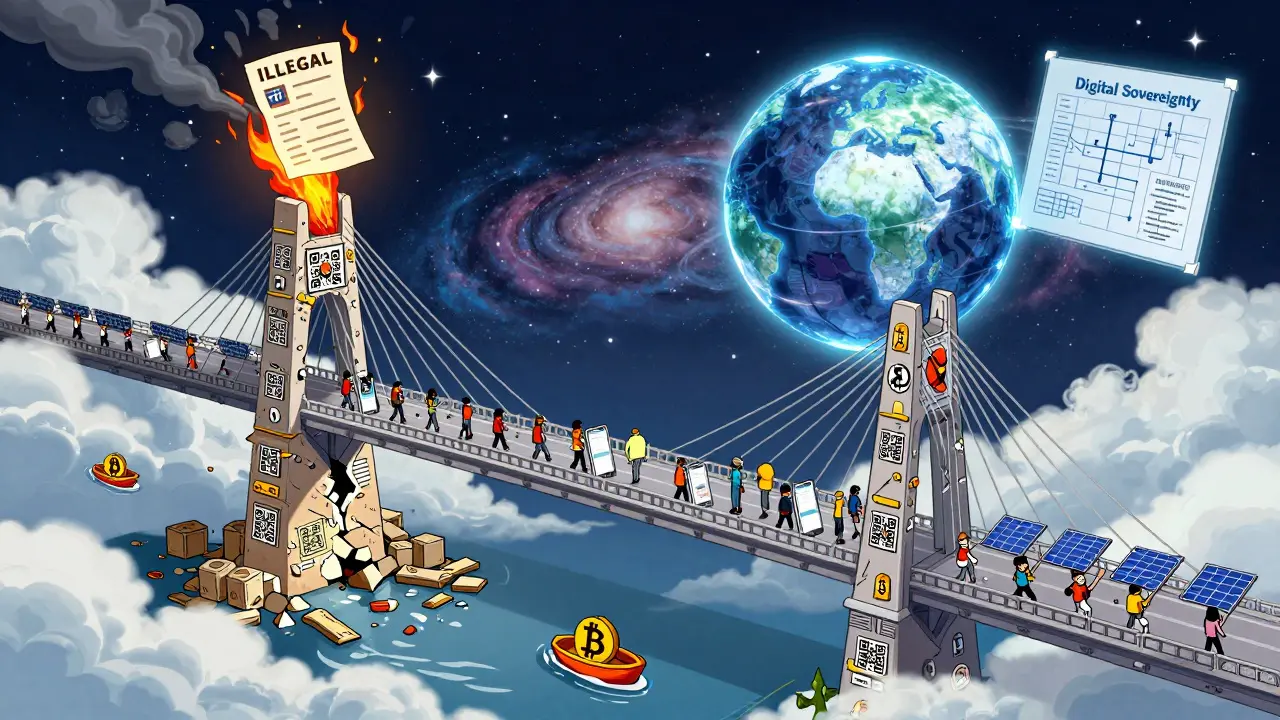

Lynne Kuper
December 12, 2025 AT 14:19Let me get this straight - a country with banking restrictions just out-innovated the entire Western financial system using WhatsApp and QR codes? 😏 Honestly, I’m more impressed than I am shocked. This isn’t crypto speculation. This is survival engineering at its finest.
Imagine if the U.S. banned banks from handling Bitcoin - would we build the same underground economy? Or would we just complain about ‘regulatory uncertainty’ and go back to our 401(k)s?
Pakistanis didn’t wait for permission. They built a parallel economy with zero infrastructure support. That’s not just clever. That’s revolutionary.
And the best part? No one’s asking for a grant. No one’s lobbying Congress. They’re just trading. Every day. Like clockwork.
I’ve seen ‘financial inclusion’ reports from the World Bank. None of them look like this. This is organic. Real. Unstoppable.
Also, USDT as a lifeline? Genius. It’s not about making money. It’s about not losing everything. That’s the most human use of crypto I’ve ever seen.
Someone needs to make a documentary on this. Like, ASAP.
Bridget Suhr
December 14, 2025 AT 05:25so like… pakistanis just hacked finance? lol. i mean, i knew crypto was wild but this is next level. no banks, no rules, just phones and trust. kinda beautiful in a chaotic way. also, 40 million people using crypto like grocery money? that’s not a trend, that’s a revolution. 🤯
Ike McMahon
December 15, 2025 AT 23:40USDT is the real MVP here. Not Bitcoin. Not Ethereum. USDT. It’s the only stable thing in a collapsing economy. People aren’t trading for profit - they’re trading to keep their families fed. That’s the quiet power of crypto.
Also, JazzCash and Easypaisa being the backbone? That’s infrastructure we never talk about. Mobile money > banks in this case.
Joey Cacace
December 17, 2025 AT 15:34It is truly remarkable, and indeed profoundly inspiring, to observe how a population, constrained by institutional exclusion, has ingeniously co-opted decentralized technologies to restore autonomy, dignity, and economic agency.
The P2P architecture, rooted in trust networks and mobile interoperability, represents not merely an alternative financial system - but a new social contract.
One cannot help but admire the resilience, adaptability, and quiet ingenuity displayed by millions of ordinary citizens who, without fanfare, have redefined financial inclusion.
May this serve as a clarion call to regulators worldwide: innovation does not wait for permission. It only waits for understanding.
Sarah Luttrell
December 17, 2025 AT 16:30Oh wow, look at the third-worlders and their ‘crypto revolution’ 🤡
Let me guess - they’re also using WhatsApp to send Bitcoin to their cousins so they can buy ramen noodles? How cute. We in the West have ETFs and SEC filings. You have QR codes and hope.
At least we don’t have to trade with strangers in parking lots to pay our rent. #FirstWorldProblems #CryptoIsNotAFreedomMovementItsAFantasy
PRECIOUS EGWABOR
December 19, 2025 AT 10:18Okay but let’s be real - if you’re using crypto because your currency is collapsing, you’re not ‘innovating.’ You’re desperate. And desperation doesn’t make you smart. It makes you vulnerable.
Scams are everywhere. People lose life savings to Telegram bots. This isn’t financial freedom - it’s financial chaos with better marketing.
Also, ‘$300 billion’? That’s just noise. Half of it is people trading the same $500 back and forth 600 times. Accounting isn’t math. It’s magic.
Taylor Farano
December 19, 2025 AT 16:50‘Pakistan became a $300B crypto hub’ - sure, Jan. And the moon is made of cheese. That number is inflated by 300% because they’re counting every single P2P transfer like it’s a new transaction.
One person buys $500 USDT, sells it to their cousin, who sells it to their neighbor, who sells it to their auntie - that’s one $500 movement counted as $1,500. That’s not volume. That’s double-counting with extra steps.
Also, mining using 2,000 MW? That’s not ‘economic value.’ That’s the government paying for electricity with dollars they don’t have, while people in Lahore are still paying $0.20/kWh to keep their phones alive.
This isn’t innovation. It’s a house of cards held together by WhatsApp and wishful thinking.
Kathryn Flanagan
December 21, 2025 AT 06:32Let me break this down simply, because I know some folks are confused. So imagine you live in a place where the money you earn today is worth less tomorrow. Your salary buys less. Your savings disappear. You can’t send money to your family abroad because banks won’t help.
Now imagine someone gives you a phone. You open an app. You scan a QR code. You give someone rupees. They give you crypto. You hold it. You use it to pay for stuff online. You send it to your brother in Canada. He turns it into dollars. You just bypassed the whole broken system.
It’s not magic. It’s not a scam. It’s just… people figuring it out. No fancy degrees. No Wall Street. Just a phone and a need.
And yeah, there are scams. Of course there are. But that doesn’t mean the whole thing is fake. It just means people are learning. Like how we learned to drive. Or use the internet. Or pay bills online.
This isn’t about being rich. It’s about not being broke. And that’s something we can all understand.
amar zeid
December 22, 2025 AT 18:55As someone from India, I see striking parallels. Our own informal crypto networks emerged after RBI’s banking restrictions in 2018. P2P trades via UPI, Telegram groups, and local cash dealers - the mechanics are nearly identical.
What Pakistan demonstrates is not an anomaly, but a universal pattern: when formal systems fail, decentralized alternatives emerge organically. The role of mobile money infrastructure cannot be overstated - it is the silent enabler.
That said, I am concerned about the lack of consumer protection. The absence of KYC and dispute resolution mechanisms leaves traders exposed. While I admire the resilience, I urge policymakers to recognize this as a structural reality, not a threat to be suppressed.
India’s upcoming CBDC framework should study this model. Not to replicate it, but to learn how to coexist with it.