
You might have come across a platform called Needyex is a purported cryptocurrency exchange that claims to offer digital asset trading services and wondered if it is a safe place to put your money. When you're dealing with volatile assets and the risk of permanent loss, a quick search for a review is the smartest move you can make. However, the results for this specific platform are deeply concerning.
The short answer is: there is no verifiable evidence that Needyex is a legitimate business. In the world of crypto, silence from the industry is a loud warning. If a platform doesn't appear in major tracking databases or regulatory filings, it's usually because it doesn't actually exist as a legal entity. Before you deposit a single Satoshi, let's look at why this platform triggers every red flag in the book.
The Red Flags: Where is Needyex?
When we evaluate a trading platform, the first step is checking the industry's "phone books." Legitimate exchanges are tracked by entities that monitor liquidity, volume, and user trust. We checked the most authoritative sources, and the results were a total void.
- CoinGecko, which tracks over 670 active exchanges, has no record of Needyex.
- CoinMarketCap, another industry gold standard tracking nearly 600 platforms, shows nothing.
- The Blockchain Association's security trackers have zero mentions of the platform.
Why does this matter? Because a real exchange needs liquidity. They need other traders and market makers to function. A platform that isn't listed on these sites effectively doesn't exist in the global crypto ecosystem. It's like trying to find a major city on a map and discovering it's not there-either the map is wrong, or the city is a ghost town.
Regulatory Void and Legal Risks
Operating a crypto exchange isn't just about writing code; it's about legal compliance. In the U.S., any platform facing American users must register as a Money Services Business with the Financial Crimes Enforcement Network known as FinCEN, a bureau of the U.S. Department of the Treasury . Out of the nearly 200 active registrations for exchanges, Needyex is nowhere to be found.
The same pattern holds true in Europe. Under the MiCA (Markets in Crypto-Assets) regulations, the European Securities and Markets Authority (ESMA) maintains a strict register of approved exchanges. Needyex isn't on that list either. When a platform ignores basic regulatory requirements, it means your funds have zero legal protection. If the site disappears tomorrow, you have no government agency to turn to for recovery.

Comparing Needyex to Legitimate Exchanges
To understand what a real exchange looks like, it helps to compare the "invisible" nature of Needyex with industry leaders. Legitimate platforms provide a transparent trail of security and solvency.
| Feature | Needyex | Established Exchanges (e.g., Coinbase, Kraken) |
|---|---|---|
| Regulatory Registration | None Found | Registered with FinCEN/FCA/ESMA |
| Proof of Reserves | Not Provided | Monthly public attestations |
| Security Audits | None | Regular audits by CertiK/OpenZeppelin |
| Industry Listings | Absent | Listed on CoinMarketCap/CoinGecko |
| Cold Storage Proof | Unknown | Publicly disclosed (e.g., 98% offline) |
How to Spot a "Ghost" Exchange Scam
If you're interacting with Needyex or a similar platform, you might see a high rating on a review site. Be careful. Scammers often use artificial inflation to lure victims. According to 2024 reports from the FTC, scam exchanges often have nearly perfect 4.8+ star ratings, but the reviews are generic. They say things like "Great platform!" or "I made so much money!" without mentioning specific transaction IDs, platform versions, or actual technical issues.
Real reviews on communities like Reddit's r/CryptoCurrency are messy. They talk about 14-hour customer support delays or specific bugs in the mobile app. If a platform's reviews seem too perfect, it's a sign that the feedback is fake. In 2024, Chainalysis found that 68% of exchange fraud cases involved unregistered platforms, with victims losing an average of $1,850. This isn't just a "bad service" issue; it's a theft issue.
The Danger of "New" and "Unverified" Platforms
You might think, "Maybe it's just a new startup that hasn't been listed yet." While that's possible, it's an incredibly dangerous gamble. Industry experts, including leaders from CipherTrace, warn that any exchange lacking transparent security practices should be treated as high-risk. Specifically, the lack of a "Proof of Reserves" (PoR) is a massive red flag. PoR is a method where an exchange proves they actually hold the assets they claim to have for their users.
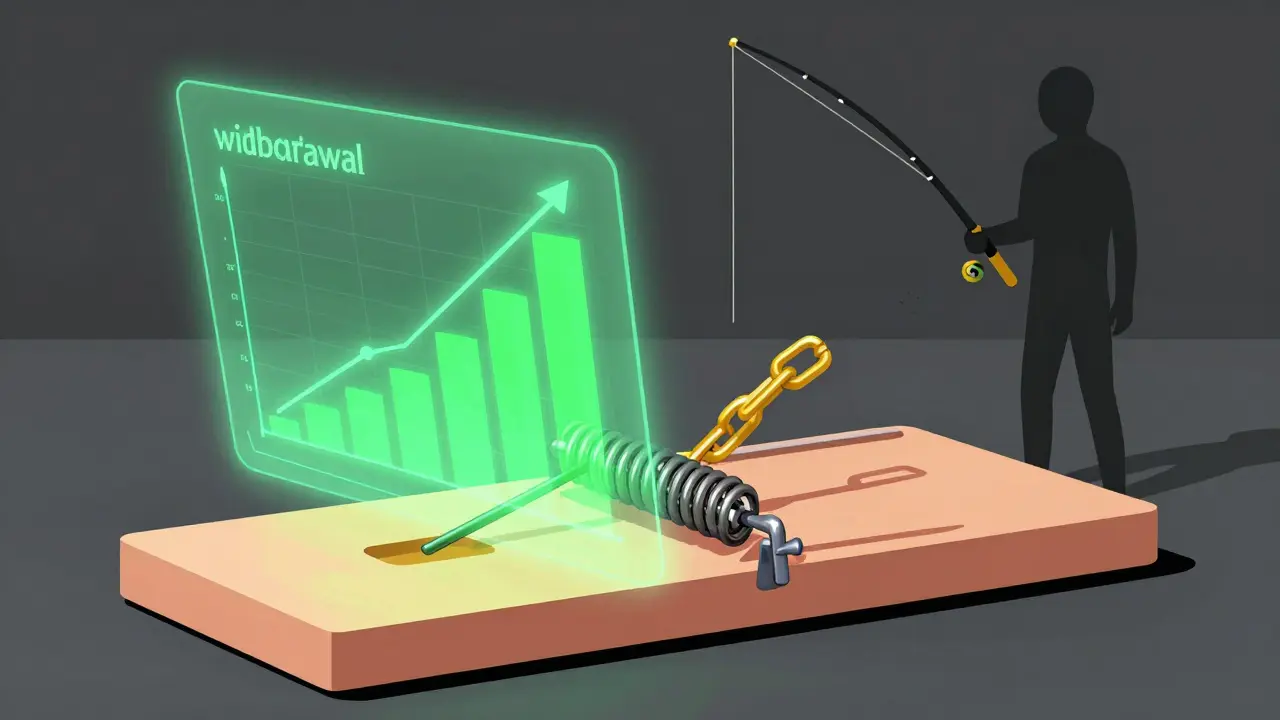
Without this, you are essentially giving your money to a stranger and hoping they don't run away with it. Most scam operations use a simple tactic: they let you deposit money and even show you a "fake" dashboard where your balance grows. But the moment you try to withdraw your funds, they will demand a "withdrawal fee," a "tax payment," or an "account verification deposit." This is a classic psychological trap to steal even more money from you.
Safe Alternatives for Trading
Instead of risking your capital on an unverified site, stick to platforms that have a proven track record of security and transparency. If you are looking for a place to trade, prioritize those that use hardware security keys for two-factor authentication, as this has been shown to reduce account takeovers significantly compared to SMS-based methods.
Always look for platforms that implement cold storage-meaning the vast majority of funds are kept offline and away from hackers. When you choose an exchange, check their security section for a list of third-party audit firms. If they can't name a reputable firm that has vetted their code, keep your money in your own private wallet.
Is Needyex a legitimate crypto exchange?
Based on all available industry data as of 2026, there is no evidence that Needyex is a legitimate exchange. It is not listed on CoinGecko, CoinMarketCap, or any regulatory registries like FinCEN or ESMA. You should assume it is a high-risk platform or a scam.
What should I do if I already deposited money into Needyex?
Try to withdraw your funds immediately without depositing any more money. If the platform asks for a "fee" or "tax" to release your funds, do not pay it; this is a common tactic to steal more money. Document all transactions and report the incident to the FTC or your local financial authorities.
How can I verify if a crypto exchange is real?
Check three things: 1. Is it listed on CoinGecko or CoinMarketCap? 2. Does it have a registration with a national regulator (like the SEC, FCA, or FinCEN)? 3. Does it provide verifiable Proof of Reserves or independent security audits from firms like CertiK?
Why do some reviews for Needyex look positive?
Scam platforms often use fake reviews and bot accounts to create a false sense of trust. These reviews are usually generic and lack specific details about transactions, version numbers, or genuine user grievances.
What is Proof of Reserves (PoR)?
Proof of Reserves is a transparent accounting practice where an exchange provides evidence (often via cryptographic proofs) that they hold the assets they owe to their customers, ensuring they aren't operating a fractional reserve system.





Sean Mitchell
April 14, 2026 AT 17:06Absolutely catastrophic! To think that people are actually falling for these ghost platforms in this day and age is simply an affront to human intelligence! It is a tragedy of epic proportions!
Sandeep Bhoir
April 15, 2026 AT 06:42Oh yeah, because trusting a random website with your life savings is such a revolutionary strategy. Truly a masterclass in financial planning.
Luke George
April 15, 2026 AT 18:12The lack of FinCEN registration is a given, but you're ignoring the deeper layers. These sites are often just front-ends for larger state-sponsored operations designed to harvest biometric data and wallet addresses for future targeted attacks. They don't even need your money if they can map out your entire digital footprint and link it to your real-world identity through these fake KYC processes. It's all part of the same centralized control grid meant to phase out true anonymity. Just follow the money and you'll see it leads back to the same shadow entities that run the traditional banking systems they pretend to disrupt.
Thomas Jewett
April 16, 2026 AT 03:54It is an absolute disgrace that we allow these foreign scammers to target americans who work hard for there money and the government just sits back and lets it happen while we are the ones upholding the entire global economy with our blood sweat and tears and frankly any person who is stupid enough to use a site without a license is just as bad as the scammer because they are promoting a culture of laxity that undermines the very foundations of our great nation's financial integrity and we need to start banning these domains with extreme prejudice before more patriots lose there retirement funds to some offshore bot farm in a country that hates us!
Michael Harms
April 17, 2026 AT 15:40Thanks for the heads up! It's always a good idea to double check things before jumping in. We're all learning here!
Ian Chait
April 18, 2026 AT 19:02Typical fiaut-driven ponzi. If you ain't checkin the on-chain data for wallet clustering, you're basically just donating to the cabal. This is pure social engineering mixed with a basic liquidity trap, probably run by some shell company in a tax haven to avoid the gaze of the crown. The sheer audacity of these low-tier scams is almost impressive in its simplicity.
Anna Grealis
April 20, 2026 AT 13:39totall scam. obvious.
Adam Mann
April 21, 2026 AT 19:00I really appreciate how you laid this out because a lot of people coming from different backgrounds or countries might not know about FinCEN or ESMA, and it's so important that we help each other navigate this wild west of crypto so that everyone has a fair shot at success without getting ripped off by these bad actors who just want to take advantage of the hopeful. It takes a lot of patience to research all these red flags, but providing this kind of roadmap really helps the community grow in a healthy way where we prioritize safety and transparency over get-rich-quick schemes that only end in heartbreak for families who can't afford to lose a single cent.