
Remember when you could just sign up for a crypto exchange and start trading immediately? Those days are mostly gone. In 2026, the regulatory net has tightened significantly. Major platforms that once allowed anonymous trading have largely complied with strict Know Your Customer (KYC) laws. But if you value your privacy or simply want to avoid the hassle of uploading passport photos, there is still a way. You just need to understand where the non-KYC options live now.
The landscape has shifted from centralized platforms hiding in the shadows to decentralized protocols operating openly on public blockchains. The core question isn't just "where can I trade without ID?" but rather "what am I giving up in terms of security and convenience?" This guide breaks down the current reality of non-KYC trading, the tools you need, and the hard limits you will hit.
What Are Non-KYC Crypto Exchanges?
Non-KYC crypto exchanges are platforms that allow users to trade digital assets without submitting personal identification documents like passports, driver's licenses, or proof of address. Historically, these were often centralized websites that operated in legal gray areas. Today, the term primarily refers to two distinct categories: Decentralized Exchanges (DEXs) and a shrinking list of centralized exchanges that offer limited unverified tiers.
The driving force behind this demand is privacy. Many users feel uncomfortable sharing sensitive biometric data with corporate entities that may suffer data breaches. Others seek financial sovereignty, wanting to control their funds without intermediaries freezing their accounts. However, it is crucial to understand that "non-KYC" does not mean "lawless." It means the platform itself does not collect your identity. The blockchain, however, records every transaction permanently.
The Two Types of Non-KYC Platforms
To navigate this space safely, you must distinguish between how these platforms operate. They function very differently regarding risk and user experience.
1. Decentralized Exchanges (DEXs)
Decentralized Exchanges are peer-to-peer marketplaces built on blockchain technology that facilitate trades directly between users via smart contracts, without a central intermediary holding funds. Examples include Uniswap and SushiSwap.
When you use a DEX, you connect your own cryptocurrency wallet (like MetaMask or Trust Wallet) to the protocol. You never deposit funds into the exchange's custody. Instead, you approve transactions that swap tokens directly on the blockchain. Because there is no company to regulate, there is no one to ask for your ID. This is the most robust form of non-KYC trading available today.
2. Centralized Exchanges with Limited Tiers
Some centralized exchanges still allow basic operations without full verification, though these limits shrink regularly due to pressure from regulators like the Financial Action Task Force (FATF). For instance, platforms like MEXC or BingX might allow small deposits or trades without KYC, but withdrawal limits are often low, and fiat currency pairs are usually inaccessible. These platforms carry higher risk because they hold your funds and can shut down or freeze accounts at any time.
How to Use a Decentralized Exchange (Step-by-Step)
If you want true privacy, a DEX is your best option. Here is how you actually do it in 2026:
- Set Up a Self-Custody Wallet: Download a reputable wallet app such as MetaMask or Rabby Wallet. Write down your seed phrase on paper and store it securely. Never share this phrase with anyone.
- Fund Your Wallet: Buy cryptocurrency (like Ethereum or Solana) on a centralized exchange where you have completed KYC, then send it to your self-custody wallet. Alternatively, use a peer-to-peer service or Bitcoin ATM if available in your region.
- Connect to the DEX: Visit the official website of a DEX like Uniswap. Click "Connect Wallet" and select your wallet provider. You will see a prompt in your wallet extension to confirm the connection. This does not cost money.
- Select Your Trade Pair: Choose the token you want to sell and the token you want to buy. Set your slippage tolerance (usually 0.5% to 1% for stable pairs).
- Execute the Swap: Review the transaction details. Click "Swap" and confirm the transaction in your wallet. You will pay a gas fee (network transaction fee) to process this on the blockchain.

The Hidden Costs and Risks of Non-KYC Trading
Privacy comes with a price tag, both literal and figurative. Before you dive in, consider these critical factors:
- Gas Fees: On networks like Ethereum, transaction fees can be high during peak times. Using Layer 2 solutions like Arbitrum or Optimism, or alternative chains like Solana, can reduce these costs significantly.
- Slippage: If you trade large amounts or obscure tokens, the price might change between the time you click swap and when the transaction confirms. You might receive less than expected.
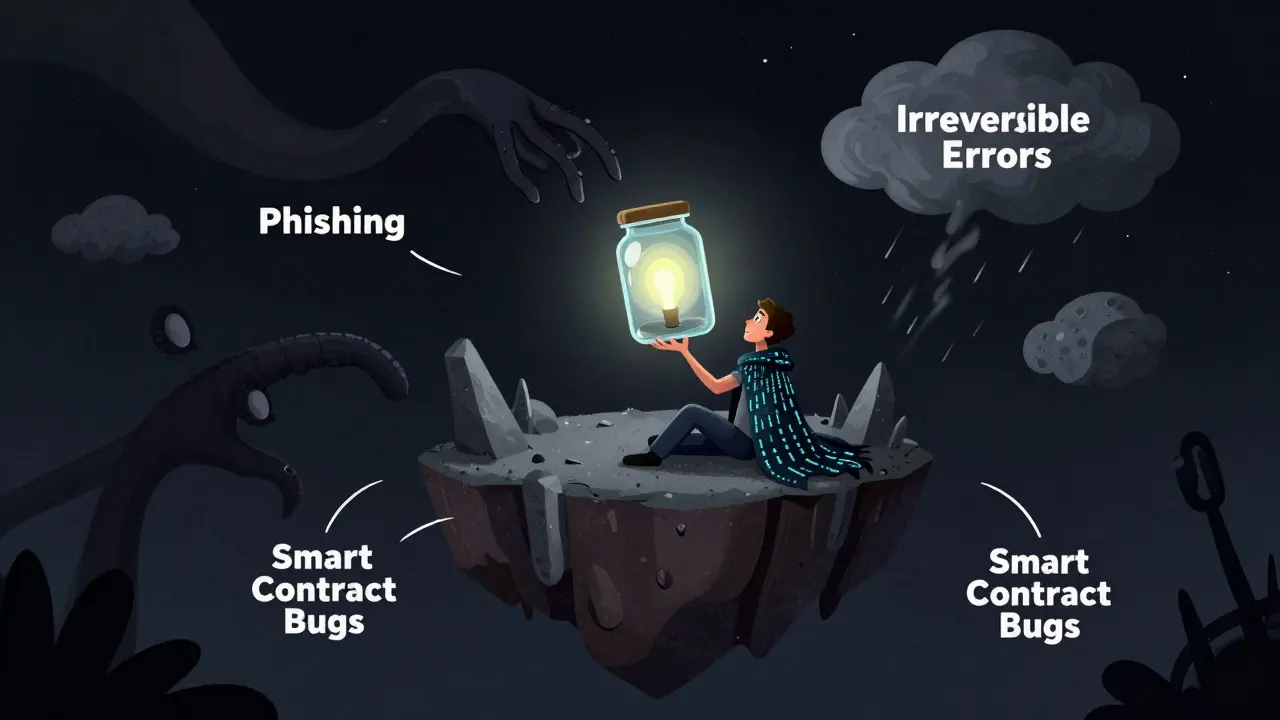
- Smart Contract Risk: DEXs rely on code. While major protocols are audited, bugs can exist. Always verify contract addresses before interacting with them.
- No Customer Support: If you send funds to the wrong address or lose your seed phrase, there is no help desk. The transaction is irreversible.
- Scams and Phishing: Fake DEX websites and malicious wallet extensions are common. Always bookmark official sites and double-check URLs.
The Fiat Problem: Why You Can't Fully Escape KYC
Here is the hard truth that many privacy advocates ignore: **You cannot easily convert crypto to cash without touching a KYC-compliant entity.**
You can trade Bitcoin for Ethereum on Uniswap anonymously. You can swap Ethereum for USDC on SushiSwap without showing ID. But what happens when you want to buy groceries with that USDC?
To get dollars, euros, or yen into your bank account, you must interact with the traditional financial system. Banks, credit card processors, and even most crypto ATMs are required by law to perform KYC checks. If you try to cash out large amounts through peer-to-peer methods, you risk being flagged by payment processors. The DEX step only pushes the KYC requirement further down the pipeline; it does not eliminate it entirely.
| Feature | Centralized Exchange (CEX) | Decentralized Exchange (DEX) |
|---|---|---|
| KYC Requirement | Mandatory for most features | None |
| Custody of Funds | Exchange holds your funds | You hold your funds |
| Liquidity | High (deep order books) | Variable (depends on pools) |
| Fiat On-Ramp | Direct integration (bank cards, wires) | Indirect (requires third-party services) |
| Security Risk | Hack of exchange, frozen accounts | Smart contract bugs, user error |
| User Experience | Simple, familiar interface | Technical, requires wallet management |
Regulatory Landscape in 2026
The era of completely unregulated crypto trading is over. As of 2026, global regulators are coordinating more closely. The European Union's MiCA regulation treats Over-the-Counter (OTC) desks as Crypto-Asset Service Providers (CASPs), requiring strict compliance. In the United States, the IRS continues to push for data collection, making it difficult for centralized platforms to remain non-KYC.
This pressure has forced many former non-KYC giants, such as KuCoin and OKX, to implement mandatory verification. The remaining non-KYC options are almost exclusively decentralized protocols. Even these face scrutiny, with some jurisdictions attempting to block access to DEX frontends or sanction specific smart contract addresses.
For users, this means increased responsibility. You are solely liable for reporting gains and losses. There will be no Form 1099 sent to you automatically. Tax evasion using non-KYC exchanges is risky because blockchain analysis firms can trace transactions back to identifiable entities if you ever interact with a KYC-compliant service.
Best Practices for Privacy-Conscious Traders
If you decide to use non-KYC exchanges, follow these guidelines to protect yourself:
- Use Layer 2 Networks: Trade on Arbitrum, Optimism, or Polygon to save on gas fees and increase speed.
- Verify Contract Addresses: Always copy token addresses from official sources like CoinMarketCap or Etherscan. Do not click links from social media.
- Start Small: Test with small amounts to ensure you understand the process before moving significant capital.
- Secure Your Seed Phrase: Store it offline. Never take a screenshot or save it in a cloud document.
- Be Aware of Geoblocking: Some DEX interfaces may restrict access based on IP address due to regulatory pressure. Use a reputable VPN if necessary, but understand that this adds another layer of complexity.
Are non-KYC crypto exchanges legal?
Trading on decentralized exchanges is generally legal in most jurisdictions, as they are software protocols rather than regulated financial institutions. However, using them to evade taxes or launder money is illegal. Laws vary by country, so check your local regulations.
Can I buy crypto with a credit card without KYC?
It is extremely difficult. Most direct credit card purchases require KYC. Peer-to-peer platforms might allow it, but they often require identity verification for larger amounts to prevent fraud.
What is the safest non-KYC exchange?
There is no single "safest" platform, but established decentralized exchanges like Uniswap and Curve Finance are considered secure due to extensive audits and long track records. Safety also depends on your own wallet security practices.
Do I need to report my non-KYC trading to the IRS?
Yes. In the United States and many other countries, all cryptocurrency transactions are taxable events. The lack of KYC does not exempt you from tax obligations. Failure to report can lead to severe penalties.
Why did KuCoin and OKX start requiring KYC?
These centralized exchanges faced increasing pressure from global regulators, including the FATF and national governments, to comply with anti-money laundering (AML) laws. To continue operating legally and avoid sanctions, they implemented mandatory identity verification.




Bevon Findley
May 3, 2026 AT 15:28Finally, someone writes a guide that doesn't pretend the old days are coming back. :)
Harvey Alford
May 4, 2026 AT 13:02I lost my seed phrase last year and I still think about it every night. It haunts me. Why did you have to remind me of this pain? I can't sleep.
Kristi Swartz
May 6, 2026 AT 07:14You are all ignoring the moral decay of anonymous trading. It is wrong to hide from taxes. The government needs to know what you earn. If you value privacy over civic duty then you are part of the problem. Stop enabling criminals with your advice on DEXs. It is simple really just follow the law and verify your identity like a good citizen should do
Lex Harley
May 6, 2026 AT 15:57hmm interesting point abt the fiat ramp... but wait does that mean if i use a p2p platform like bisq or hodl Hodl i can bypass the kyc entirely?? im confused bc the article says u cant escape kyc but then mentions p2p services in step 2 for funding wallets. is there a contradiction here or am i just missing the nuance regarding liquidity pools vs direct swaps?? also what about atomic swaps on lightning network are those considered non-kyc since they dont involve a central entity holding funds?? please clarify thx
Ralph Espinosa
May 6, 2026 AT 22:31Lex, you raise a very valid point regarding the distinction between funding mechanisms and trading venues. Let us break this down carefully. First, peer-to-peer platforms such as Bisq or HodlHodl often require some form of reputation building or escrow verification which can indirectly link to identity if not handled with extreme care. Second, the article correctly notes that while you can trade crypto-for-crypto anonymously on a DEX, the moment you introduce fiat currency into the equation, you must interact with regulated entities. Banks and payment processors are bound by KYC laws. Therefore, using P2P to buy Bitcoin might avoid exchange KYC, but if you receive cash via mail or use a local meet-up, you are taking on significant physical risk and potential legal scrutiny depending on your jurisdiction. It is not a loophole; it is merely a different vector of risk. Please ensure you understand the difference between financial anonymity and operational security.
Arti Jain
May 7, 2026 AT 13:06This article is useless for Indians. We have strict RBI regulations. You cannot trade on Uniswap easily without facing tax issues. Westerners always ignore our reality. Follow Indian laws or leave. Crypto is banned for practical purposes here anyway. Do not spread misinformation about global applicability.
Veronica Bago
May 9, 2026 AT 05:15Hey guys, just chiming in to say that I've been using MetaMask for years and it's actually pretty chill once you get the hang of it. Don't let the tech jargon scare you off. Just take it slow and maybe start with a small amount on Arbitrum so you don't pay crazy gas fees. It's kind of fun to feel like you're hacking the system a bit, even if you're just buying coffee money. Stay safe out there!
Alex Mazonowicz
May 10, 2026 AT 23:27You can do this!!! Believe in yourself and your ability to manage your own keys. The future is bright for self-custody enthusiasts. Keep learning and keep trading safely. You got this! :) :)