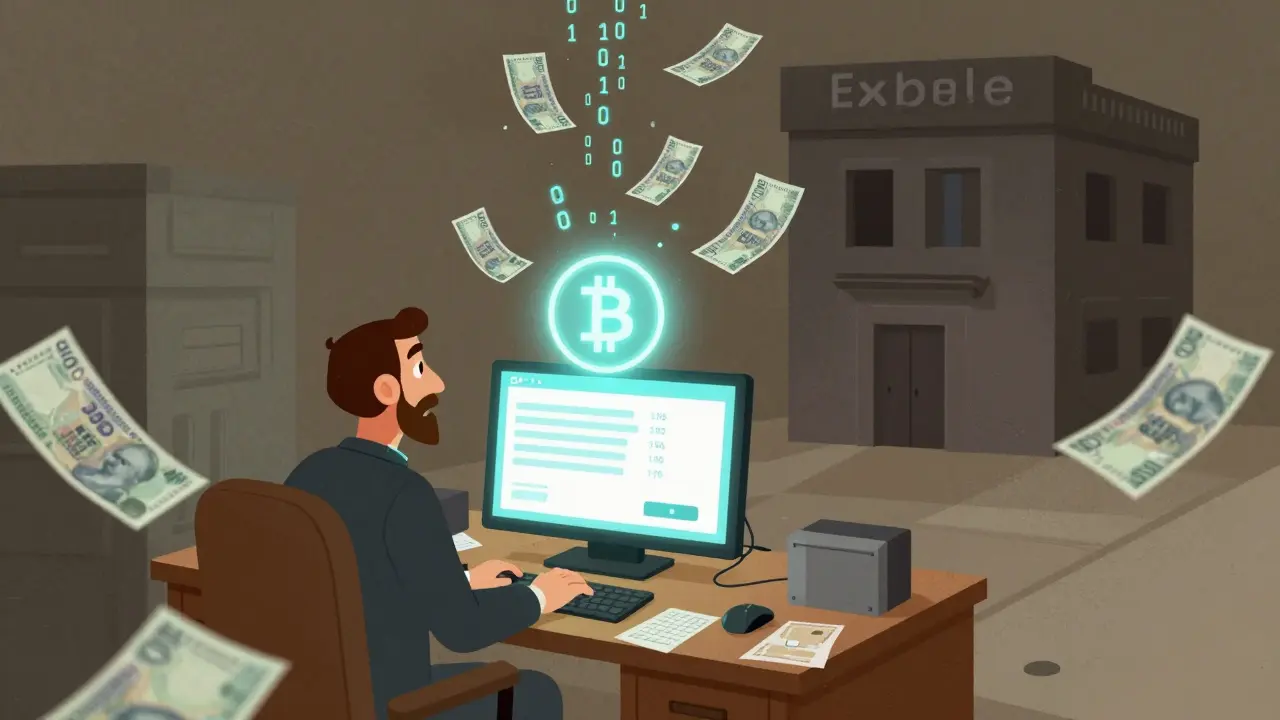
Coinzo Fee Calculator
Calculate Your Trading Fees
See how Coinzo's low fees compare to competitors when trading BTC/TRY
If you're in Turkey and looking to buy Bitcoin or trade other cryptocurrencies with Turkish Lira (TRY), you’ve probably heard of Coinzo. It’s not a household name like Binance or Coinbase, but for locals, it’s one of the few exchanges that lets you deposit TRY directly - no P2P, no third-party intermediaries. But is it safe? Is it fast? And does it still hold up in late 2025? Let’s cut through the noise.
What Coinzo Actually Offers
Coinzo isn’t trying to be the biggest crypto exchange in the world. It’s built for one thing: making it easy for Turkish users to trade crypto using their local currency. That’s it. No flashy marketing, no global expansion plans you’ll see on Binance’s blog. Just a clean, functional platform that connects Turkish bank accounts to Bitcoin and a few other coins.You won’t find hundreds of altcoins here. The selection is tight - mostly BTC, ETH, and a handful of top tokens. But if you’re trading BTC/TRY, Coinzo has decent liquidity. According to CryptoCompare’s September 2025 data, it handles about 0.03% of global BTC/TRY volume. That might sound tiny, but in Turkey’s fragmented market, it’s enough to get orders filled without big slippage.
The interface is all in Turkish. There’s no English option. That’s a dealbreaker if you don’t speak the language. But if you do, the layout is straightforward: buy, sell, order book, trade history. No complex charts, no derivatives, no margin trading. It’s designed for spot trading only - simple, not sophisticated.
Fees That Actually Beat the Competition
This is where Coinzo stands out. Most global exchanges charge 0.25% or more for taker trades. Coinzo charges 0.20%. That’s 20% lower. And if you’re the one placing limit orders (makers), you pay just 0.10% - half the taker rate. That’s a rare discount you won’t find on Coinbase (0.60%) or even Kraken’s standard tier.Withdrawals are cheaper too. Sending Bitcoin out of Coinzo costs 0.0005 BTC. Compare that to the global average of 0.0008 BTC - Coinzo saves you 40% on network fees. For frequent traders, that adds up fast.
But here’s the catch: you can’t deposit with a credit card. No PayPal. No Apple Pay. The only way to fund your account is through Turkish bank transfers. That means you need an active Turkish bank account and familiarity with online banking. If you’re new to crypto and expect to swipe your Visa, you’ll be stuck.
Security? We Don’t Know Much
This is the biggest red flag.Coinzo doesn’t publish details about its security practices. No cold storage percentages. No insurance fund. No third-party audit reports. Nothing. That’s not normal for a regulated exchange - and Coinzo isn’t regulated. The Capital Markets Board of Turkey issued guidelines in 2024, but as of October 2025, no exchange, including Coinzo, has received full licensing. That puts users in a gray zone. Your funds are on the platform, and there’s no official safety net.
There’s also no mobile app. You can only trade via browser. That’s outdated in 2025. Most exchanges have polished iOS and Android apps with push notifications, biometric login, and two-factor authentication built in. Coinzo doesn’t. You’re stuck with a desktop experience that feels like it hasn’t changed since 2021.
Customer Support and User Experience
User feedback is scarce. Cryptogeek lists only one verified review - a 3/5 rating from January 2025. The user said: “Good for TRY deposits but interface feels outdated compared to global exchanges.” That’s about it.Reddit threads mention Coinzo in passing. One user said customer support was slow. Another said withdrawals were reliable. That’s it. No big complaints. No big praise. Just quiet, steady operation.
Support channels? Email and a basic Turkish FAQ. No live chat. No phone line. No 24/7 help desk. If you run into an issue after hours, you’re on your own. That’s risky if you’re trading large amounts or dealing with time-sensitive orders.
Who Is This Exchange For?
Coinzo isn’t for everyone. If you’re in the U.S., Europe, or anywhere outside Turkey, you can’t use it. Even if you could, the lack of English and absence from global platforms like CoinGecko or CoinMarketCap makes it invisible to most international traders.But if you’re a Turkish citizen who wants to:
- Deposit and withdraw in TRY without using P2P
- Pay lower fees than global exchanges
- Trade BTC/TRY with decent liquidity
- Not care about advanced features or a mobile app
Then Coinzo still makes sense. It’s not glamorous. It’s not flashy. But it does one thing well: connects Turkish banks to crypto.
The Big Risks
Here’s what keeps experts worried:- No license: Turkey’s regulatory environment is shifting. If the government cracks down, unlicensed exchanges could be shut down overnight.
- Competition is rising: Binance and Bybit now offer direct TRY deposits. Why stick with Coinzo when giants offer more coins, better apps, and global trust?
- No transparency: No security audits, no public team, no roadmap. It feels like a black box.
- Zero global presence: If something goes wrong, there’s no international community to rally behind you. No Reddit threads, no Twitter outcry - just silence.
Analyst Sarah Chen from CryptoInsight Weekly summed it up in August 2025: “Exchanges focused on single-fiat corridors like Coinzo face sustainability challenges as global players expand local payment integrations.”
She’s right. Coinzo’s advantage - TRY support - is disappearing. Binance launched TRY deposits in September 2025. Now users have a choice: a local, low-fee, but risky platform… or a global giant with better security and features.
Final Verdict: Use It - But Carefully
Coinzo isn’t going away tomorrow. It’s still operating. Trades are clearing. Withdrawals are happening. The fees are low. The interface works.But it’s a high-risk, low-reward play. If you’re comfortable with the lack of regulation, the absence of a mobile app, and the fact that your money sits on an unlicensed platform - then go ahead. It’s one of the few clean ways to trade TRY for BTC in Turkey.
But if you want security, support, or future-proofing? Look elsewhere. Binance, Bybit, or even local P2P platforms like Paribu (which is licensed) are safer bets.
Coinzo is a tool for a specific job. Don’t treat it like your main exchange. Use it for quick TRY-to-BTC trades, then move your coins to a wallet or a more established platform. Keep your funds safe. Don’t leave them on Coinzo longer than you need to.
Quick Summary
- Best for: Turkish residents who want to trade BTC with TRY
- Worst for: International users, beginners, or anyone wanting mobile access
- Fees: 0.20% taker, 0.10% maker - among the lowest in the market
- Deposits: Bank transfer only (TRY)
- Withdrawals: 0.0005 BTC for Bitcoin - 40% below global average
- Security: No public details, no license, no insurance
- App: None
- Support: Email and Turkish FAQ only
- Alternatives: Binance (TRY support), Bybit (TRY support), Paribu (licensed)
Is Coinzo a safe crypto exchange?
No, not by global standards. Coinzo isn’t licensed by Turkey’s Capital Markets Board, and it doesn’t publish any security details like cold storage usage, insurance, or audit reports. While it’s still operating and users report reliable withdrawals, there’s no official safety net for your funds. Treat it as a temporary tool, not a long-term storage solution.
Can I use Coinzo if I’m not in Turkey?
No. Coinzo only accepts Turkish Lira (TRY) deposits via Turkish bank transfers. The platform is entirely in Turkish, and registration requires a Turkish ID. Even if you try to sign up from abroad, you won’t be able to fund your account or complete KYC.
Does Coinzo have a mobile app?
No. Coinzo only offers a web-based trading interface. There’s no iOS or Android app. That’s a major drawback in 2025, as even small exchanges now have functional mobile apps with push notifications and biometric login. You’re locked to your computer.
What cryptocurrencies can I trade on Coinzo?
Coinzo focuses on major coins with high demand in Turkey. You can trade Bitcoin (BTC), Ethereum (ETH), and a few others like USDT and XRP - but the selection is limited, probably under 20 coins. It doesn’t offer hundreds of altcoins like Binance or Kraken. If you’re looking for niche tokens, this isn’t the place.
Why are Coinzo’s fees so low?
Coinzo targets Turkish traders who are sensitive to fees and have limited options. By keeping fees low - 0.20% for takers, 0.10% for makers - it competes on price rather than features. It also avoids the overhead of global compliance, marketing, and app development, which lets it pass savings to users. But this model only works as long as it doesn’t have to compete with giants like Binance offering the same low fees and more.
Should I use Coinzo instead of Binance?
Only if you’re strictly trading BTC/TRY and want the absolute lowest fee. Binance now supports direct TRY deposits and offers far more coins, a mobile app, better security, and global reputation. Coinzo’s only real advantage is slightly lower fees and a simpler interface. But Binance is licensed in Turkey, has 100x more users, and is less likely to vanish overnight. For most people, Binance is the safer, more future-proof choice.





miriam gionfriddo
December 4, 2025 AT 16:00This exchange is a walking disaster waiting to happen. No license? No app? No insurance? And you’re telling me people are leaving their life savings here?? 😭 I’ve seen rug pulls with better transparency. Coinzo feels like a 2017 ICO website with a Turkish flag slapped on it. If your crypto is on Coinzo, you’re not investing-you’re donating to a mystery box.
Kenneth Ljungström
December 5, 2025 AT 20:12Honestly? I get why people use it. 😅 I’m not in Turkey, but my cousin is and he swears by it for quick BTC/TRY swaps. Low fees, no P2P drama, and it just works. Yeah, no app sucks, and yeah, the security stuff is sketchy-but if you’re only holding a few hundred bucks and moving it out fast? It’s not the worst option. Just don’t sleep with your keys on it. 🛑
Brooke Schmalbach
December 7, 2025 AT 08:09Let’s be brutally clear: Coinzo is a regulatory time bomb wrapped in a 2015-era UI. The fee advantage is a mirage-Binance now matches it, and they’ve got liquidity, compliance, and a mobile app that doesn’t look like it was coded by a high schooler in 2021. The fact that this platform doesn’t even publish its team is criminal. No cold storage disclosures? No audits? No transparency? That’s not ‘local’-that’s predatory. This isn’t a tool for Turkish traders-it’s a trap for the uneducated. If you’re using this in 2025, you’re either desperate or dangerously naive. And don’t even get me started on the ‘quiet operation’ narrative. Silence isn’t reliability-it’s absence of accountability.
Joe West
December 7, 2025 AT 09:05For what it’s worth, I’ve used Coinzo a few times for small TRY-to-BTC trades. The interface is clunky, but it’s reliable-deposits hit within 10 minutes, withdrawals go through without drama. Yeah, no app is annoying, and yeah, I’d never keep more than a few hundred bucks there. But if you’re in Turkey and want to skip P2P scams or inflated rates on local exchanges? This is the cleanest option left. Just treat it like a vending machine: use it, grab your BTC, and walk away. Don’t make it your home. Also, the fee difference adds up fast if you’re trading weekly. 0.10% maker fee? That’s a steal.
Richard T
December 7, 2025 AT 11:08Anyone else notice how Coinzo’s whole pitch is ‘we’re simple’? That’s code for ‘we don’t care about innovation.’ Binance’s TRY deposit came in September 2025 and already has 10x the volume. Coinzo’s only edge is lower fees-but if you’re trading small amounts, that’s pennies. The real issue? No mobile app in 2025 is a death sentence. I don’t care how ‘local’ you are-people want to check their portfolio on the bus, not at their desk. And the silence around security? That’s not ‘low-key,’ it’s cowardly. This isn’t a niche platform-it’s a relic. And relics get buried.