
Have you ever searched for "Saddle crypto exchange" only to find yourself staring at a confusing dashboard of liquidity pools instead of a simple buy-and-sell interface? You are not alone. Many new users stumble upon Saddle Finance, which is often mistaken for a traditional centralized exchange like Binance or Coinbase. The reality is quite different. Saddle is not a place where you deposit funds and click buttons to trade Bitcoin for Ethereum. It is a decentralized finance (DeFi) protocol built specifically for efficient stablecoin swaps and cross-chain bridging.
If you clicked on this title expecting a standard review of a trading platform with customer support, KYC verification, and fiat deposits, you need to pause. Using Saddle like a traditional exchange will lead to frustration and potential loss of funds. Instead, this guide breaks down what Saddle actually is, how it works, and whether it fits your specific needs as a crypto user in 2026.
What Is Saddle Finance Really?
To understand Saddle, you first have to unlearn the concept of a centralized exchange. A traditional exchange acts as an intermediary. They hold your money, match your buy orders with sell orders from other people, and charge a fee for the service. Saddle operates on a completely different model known as an Automated Market Maker (AMM).
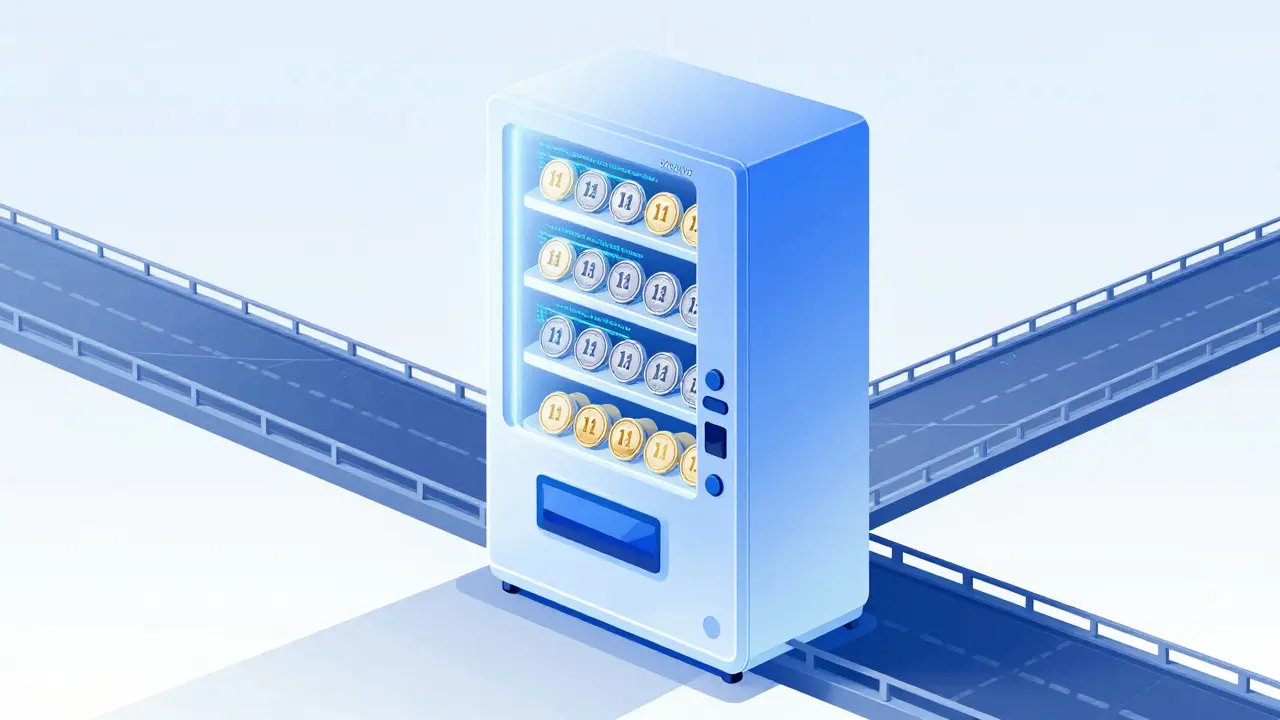
Saddle Finance is a smart contract-based DeFi protocol that specializes in low-slippage swaps for correlated assets, primarily stablecoins. Think of it less like a stockbroker and more like a highly efficient vending machine. When you want to swap one asset for another, you interact directly with a pool of funds locked in a smart contract, not with another person. This removes the middleman but also removes the safety net of a customer support team.
The protocol was designed to solve a specific problem: slippage. When you trade volatile assets like Bitcoin against Ethereum, the price can change significantly during the transaction, causing you to get a worse rate than expected. Stablecoins, however, are pegged to the same value (usually $1). Swapping USDC for DAI should theoretically be a 1:1 trade. Saddle optimizes these trades to ensure minimal loss, making it a favorite among yield farmers and arbitrageurs rather than casual traders.
Security: How Your Funds Are Protected
In the world of DeFi, security is not about two-factor authentication on a login page. It is about code integrity and governance. Since Saddle does not hold your private keys, there is no central server to hack in the traditional sense. However, the smart contracts themselves must be secure.
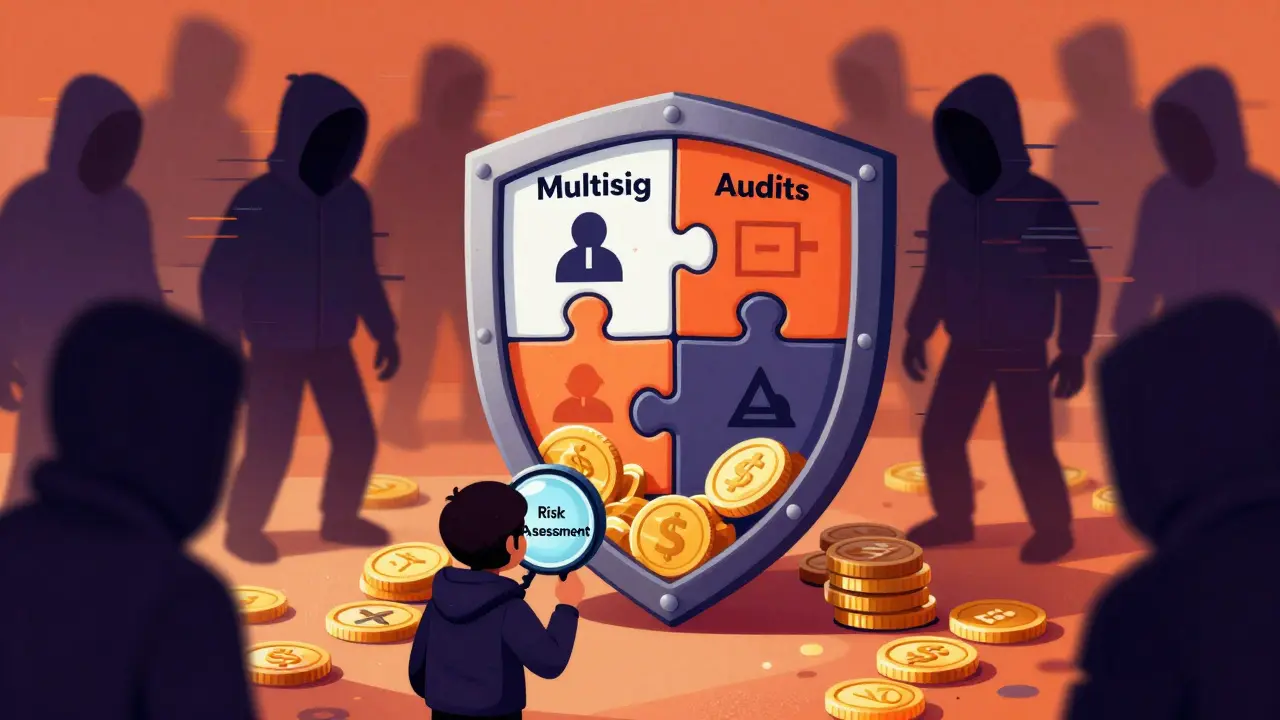
Saddle employs a robust multisig security model. Administrative control over the protocol is managed through a Gnosis Safe multisignature wallet that requires multiple authorized signatories to approve any critical changes. This means that no single developer can unilaterally drain the treasury or alter critical parameters. Key signatories include prominent figures in the ecosystem such as Mariano Conti, Sam Kazemian, and others who have been vetted by the community. This distributed control mechanism is a significant safeguard against insider threats.
Furthermore, the protocol maintains a comprehensive bug bounty program. If a white-hat hacker discovers a vulnerability in the smart contracts that manage user deposits, they can report it for a reward. The payout is calculated as the lower of 10% of the total possible exploit value or 5 million SDL tokens. This incentivizes external security experts to constantly audit the code, adding a layer of protection beyond internal reviews. However, keep in mind that this bounty covers only smart contract vulnerabilities, not issues with the web interface or front-end bugs.
Risk Assessment: Not All Assets Are Created Equal
One of the most overlooked aspects of using Saddle is its rigorous asset evaluation framework. Unlike some DeFi protocols that allow anyone to create a pool with risky, unaudited tokens, Saddle conducts thorough risk assessments before accepting assets into its liquidity pools.
The protocol evaluates potential assets based on three main criteria:
- Smart Contract Maturity: They look at the age of the contract and its adoption level. High transaction volumes and long-standing history indicate robustness.
- Counterparty Risk: This is crucial for stablecoins. Does the asset rely on a third-party oracle? Is it backed by real-world assets that could default? Centralized tokens carry inherent risks if the issuing company fails.
- Technical Implementation: The code must meet high standards for efficiency and safety.
If an asset presents significant risks across these parameters, it is rejected. This strict curation helps protect user funds and maintains the stability of the pools. For example, you will rarely see obscure, newly launched meme coins on Saddle because they fail these maturity and risk checks. This makes Saddle a safer environment for large-scale stablecoin operations compared to more permissive AMMs.
Trading Experience: Slippage and Fees
When you use Saddle, you are interacting with liquidity pools. The primary benefit here is reduced slippage. Slippage is the difference between the expected price of a trade and the executed price. In volatile markets, slippage can eat into your profits. Because Saddle focuses on correlated assets (like USDT, USDC, DAI, and FRAX), the algorithm ensures that swaps happen with minimal deviation from the 1:1 parity.
Fees on Saddle are generally lower than on general-purpose AMMs like Uniswap for stablecoin pairs. This is because the specialized algorithm requires less capital to facilitate large trades without moving the price. Liquidity providers earn fees from these swaps, creating a sustainable revenue stream for those who lock their funds into the pools. However, remember that impermanent loss is still a risk if the assets in the pool diverge in value, though this is rare for true stablecoins.
Comparison: Saddle vs. Traditional Exchanges
To help you decide if Saddle is right for you, let’s compare it directly with a typical centralized exchange (CEX).
| Feature | Saddle Finance (DeFi) | Centralized Exchange (e.g., Binance) |
|---|---|---|
| Custody | You hold your own keys (non-custodial) | Exchange holds your funds (custodial) |
| KYC Required | No | Yes |
| Primary Use Case | Stablecoin swaps, yield farming | General trading, fiat on-ramp |
| Security Model | Smart contracts, multisig, audits | Internal security, cold storage |
| User Support | Community-driven, no direct support | Dedicated customer service team |
| Accessibility | Requires Web3 wallet (MetaMask, etc.) | Web browser or mobile app |
This table highlights why confusion arises. If you want to buy Bitcoin with a credit card, Saddle is useless. If you already have crypto in a self-custody wallet and want to swap stablecoins efficiently, Saddle is superior.
Who Should Use Saddle?
Saddle is not for everyone. It is best suited for users who already understand the basics of blockchain technology. Here are the ideal personas for this protocol:
- Yield Farmers: Users who provide liquidity to pools to earn trading fees and potentially SDL token rewards.
- Arbitrageurs: Traders who exploit small price differences between exchanges. Saddle’s low slippage makes it efficient for moving large amounts of stablecoins.
- Privacy-Conscious Users: Those who prefer non-custodial solutions and do not want to undergo identity verification (KYC).
- Advanced DeFi Participants: Individuals comfortable managing their own private keys and understanding gas fees.
If you are a beginner who has never used a Web3 wallet, started with a centralized exchange first. Learn how to buy and store crypto safely before venturing into DeFi protocols like Saddle.
Potential Risks and Limitations
While Saddle has strong security measures, DeFi always carries inherent risks. Smart contract bugs, while rare due to audits, are never impossible. Additionally, the broader industry context shows that hackers stole billions in 2023, often targeting operational weaknesses or user errors rather than breaking cryptography.
Users must be vigilant about phishing attacks. Always verify the URL of the Saddle interface. Scammers often create fake websites that look identical to the real protocol. Once you connect your wallet to a malicious site, they can drain your funds. Another risk is bridge failures. Since Saddle supports cross-chain bridging, you are exposed to the security of the underlying bridge infrastructure. If a bridge is compromised, assets can be lost.
Finally, regulatory uncertainty remains a factor. As governments worldwide tighten rules around DeFi, protocols may face pressure to implement compliance measures. While Saddle currently operates without KYC, this landscape could shift in the coming years.
Conclusion: Verdict on Saddle Finance
Saddle Finance is a legitimate, well-secured DeFi protocol, but it is definitely not a traditional crypto exchange. It excels at providing efficient, low-slippage swaps for stablecoins and offers a safe environment for liquidity provision thanks to its rigorous asset screening and multisig governance. If you are looking for a platform to buy crypto with a bank transfer, look elsewhere. But if you are an experienced user seeking to optimize stablecoin transactions within the DeFi ecosystem, Saddle is a powerful tool worth exploring.
Is Saddle Finance a centralized exchange?
No, Saddle Finance is not a centralized exchange. It is a decentralized finance (DeFi) protocol that operates via smart contracts on the blockchain. Users retain custody of their funds through their own wallets, unlike centralized exchanges where the platform holds the assets.
Do I need to complete KYC to use Saddle?
No, Saddle Finance does not require Know Your Customer (KYC) verification. As a decentralized protocol, it allows anyone with a compatible Web3 wallet to access its services anonymously, provided they comply with local laws regarding DeFi usage.
How does Saddle ensure security?
Saddle uses a Gnosis Safe multisig wallet for administrative control, requiring multiple signatories to approve changes. It also runs a bug bounty program offering up to 5 million SDL tokens for reported vulnerabilities. Additionally, assets are rigorously vetted for smart contract maturity and counterparty risk before being added to pools.
Can I buy Bitcoin with USD on Saddle?
No, you cannot buy Bitcoin with USD directly on Saddle. It is a swap protocol for existing crypto assets, primarily focused on stablecoins. To get crypto onto Saddle, you would first need to purchase it on a centralized exchange or peer-to-peer platform and then transfer it to your self-custody wallet.
What is the SDL token used for?
The SDL token is the governance and utility token of the Saddle Finance protocol. It is used for voting on protocol upgrades, receiving rewards for providing liquidity, and participating in the bug bounty program. Holding SDL aligns user interests with the long-term health of the ecosystem.





Samara McCallum
May 10, 2026 AT 18:42it's funny how we pretend these protocols are just 'tools' when they're really just mirrors reflecting our own greed back at us
you say it's not an exchange but does that matter if the end result is still trying to turn digital air into something real?
robert Whitehead
May 11, 2026 AT 00:50Let me stop you right there because this article is dangerously misleading for anyone who doesn't already have a PhD in blockchain architecture. You claim Saddle is 'safe' because of multisig? That is laughable. Multisig wallets have been compromised repeatedly throughout history, and relying on a handful of 'vetted' individuals like Mariano Conti or Sam Kazemian is essentially placing your life savings in the hands of unelected oligarchs who can theoretically rug pull you if they decide to collude. The bug bounty program is a band-aid on a bullet wound. Smart contract audits are not guarantees; they are merely snapshots in time that become obsolete the moment new attack vectors emerge. Furthermore, your comparison to centralized exchanges ignores the fundamental lack of recourse in DeFi. On Binance, if you lose your funds due to a glitch, you have a support ticket. On Saddle, you have a smart contract that will execute exactly as written, even if that execution drains your wallet because you approved a malicious interface. Calling this 'superior' for stablecoin swaps is ignoring the catastrophic risk of bridge failures which are the weakest link in this entire ecosystem. Do not be fooled by the marketing speak.
Mike S
May 12, 2026 AT 16:29Oh wow, look at Robert Whitehead here with his big words and bigger ego. 'PhD in blockchain architecture'? Please. I've seen more competence from a script kiddie on Discord. You think multisig is weak? Try explaining why Uniswap hasn't collapsed under its own weight then. And don't get me started on your little rant about 'unelected oligarchs'. It's open source code, genius. If you don't like it, fork it. But sure, keep whining about customer support while you sit on your hands waiting for a refund that will never come. Classic DeFi victim mentality. Get over it.
Sheldon Friesen
May 14, 2026 AT 04:10Mike! Oh Mike! You really need to chill out! ;o) While I appreciate your... enthusiasm! (and by enthusiasm I mean aggression!), perhaps we could focus on the actual utility rather than the drama? Look, the point isn't that DeFi is perfect, it's that it offers a different set of trade-offs! Slippage matters! Fees matter! If you are moving large amounts of USDC, the difference between 0.01% and 0.3% is not negligible! So maybe take a deep breath and acknowledge that for some users, this tool works perfectly fine! :)
Michael Berggren
May 15, 2026 AT 01:50Hey folks 👋 Let's keep it civil here! 🌟 I think the confusion comes from expecting a CEX experience in a DEX environment. Saddle is great for what it does: efficient stablecoin swaps. Just remember to double-check URLs! 🔒 Stay safe out there! 💪
Bradley Geldenhuys
May 16, 2026 AT 22:39look i get the hype but lets be real about the risks ok? everyone talks about slippage like its the only thing that matters but what about the bridge security? i mean cmon. if the bridge gets hacked all your low slippage gains go poof. its like building a fancy house on sand. also the asset screening is good but its not perfect. just because they reject meme coins doesnt mean the other tokens are safe from depeg events. we saw what happened with UST and Luna right? so yeah use it if u want but dont act like its a vault. its still crypto bro. stay woke.
H F
May 18, 2026 AT 18:01I must say, Bradley makes a valid point, though his delivery is somewhat lacking in refinement! The bridge risk is indeed the elephant in the room. However, let us not throw the baby out with the bathwater! Saddle's approach to correlated assets is genuinely innovative. The fact that they vet assets based on maturity and counterparty risk is a step forward in an industry rife with reckless abandon. Yes, bridges are vulnerable, but avoiding them entirely means missing out on significant yield opportunities. We must embrace the complexity! It is thrilling, really! To navigate such waters requires skill, and those who master it are rewarded accordingly! Let us celebrate the progress, not just fear the pitfalls!
Kiran CS
May 19, 2026 AT 23:47It is quite amusing to witness the sheer ignorance displayed in this thread. One might assume that participants possess a basic understanding of financial instruments before engaging in such discourse. The notion that 'bridge risk' is merely an afterthought suggests a profound lack of sophistication. Furthermore, the casual dismissal of regulatory pressures by Mr. Berggren is not only naive but potentially dangerous. The era of unregulated DeFi is waning, and those who cling to such archaic ideals will find themselves stranded. Saddle Finance, while competent, operates within a framework that is increasingly precarious. One should exercise extreme caution and perhaps consult with professionals before risking capital in such volatile environments. Truly, education is paramount.
Ankush Pokarana
May 20, 2026 AT 22:51i find myself pondering the nature of trust in decentralized systems where we place our faith in code yet remain skeptical of the humans who write it
perhaps the real issue is not the protocol itself but our inability to accept that control is an illusion
we seek safety in multisigs and audits yet forget that every layer of abstraction introduces new vulnerabilities
the journey through DeFi is less about finding the perfect tool and more about understanding the inherent fragility of the structures we build upon
it is a philosophical exercise as much as a financial one
and in that light saddle finance serves as a mirror reflecting both our ingenuity and our hubris