NFT Storage: How to Safely Keep Your Digital Collectibles
When you buy an NFT, a unique digital asset verified on a blockchain, often representing art, music, or virtual land. Also known as non-fungible token, it’s not just a picture or file—it’s proof of ownership tied to a blockchain address. But here’s the catch: owning an NFT doesn’t mean you own the file itself. Most NFTs only store a link to where the image, video, or audio is kept. If that link breaks, or the server hosting it goes down, your NFT becomes a digital ghost.
That’s why NFT storage, the method used to permanently preserve the digital file linked to an NFT matters more than the token itself. There are two main ways: centralized storage (like Dropbox or AWS) and decentralized storage (like IPFS or Arweave). Centralized storage is easy but risky—if the company shuts down, your NFT loses its content. Decentralized storage spreads the file across thousands of computers, making it nearly impossible to erase. IPFS, a peer-to-peer network for storing and sharing files in a distributed way is the most common solution used by serious NFT projects. And cold storage, keeping private keys offline in a hardware wallet to prevent hacking is just as critical—because if someone steals your wallet, they own your NFTs, no matter where the file lives.
Many people think buying an NFT is the end of the story. It’s not. You need to check if the NFT uses IPFS or Arweave. Look at the metadata link—if it starts with https://ipfs.io or https://arweave.net, you’re good. If it’s a regular website like “mycoolnft.com,” you’re one server crash away from losing everything. Also, don’t just store your NFTs on an exchange. Exchanges don’t give you the private keys. If they get hacked or shut down, your NFTs vanish. Use a wallet like MetaMask or Ledger, and back up your recovery phrase on paper, not in the cloud.
Metadata matters too. Some NFTs store only the image, but forget the name, description, or attributes. That’s why projects like CryptoPunks and Bored Apes use decentralized storage for everything—not just the art, but the full profile. If you’re creating or buying NFTs, ask: Is the whole thing stored on-chain? Or just a link to a website that could disappear tomorrow?
The posts below show real examples of what happens when NFT storage fails, how scams trick people into thinking their files are safe, and which wallets and tools actually work in 2025. You’ll find guides on checking your NFTs, avoiding fake airdrops tied to broken files, and why some so-called "permanent" NFTs are already gone. This isn’t theory—it’s survival.
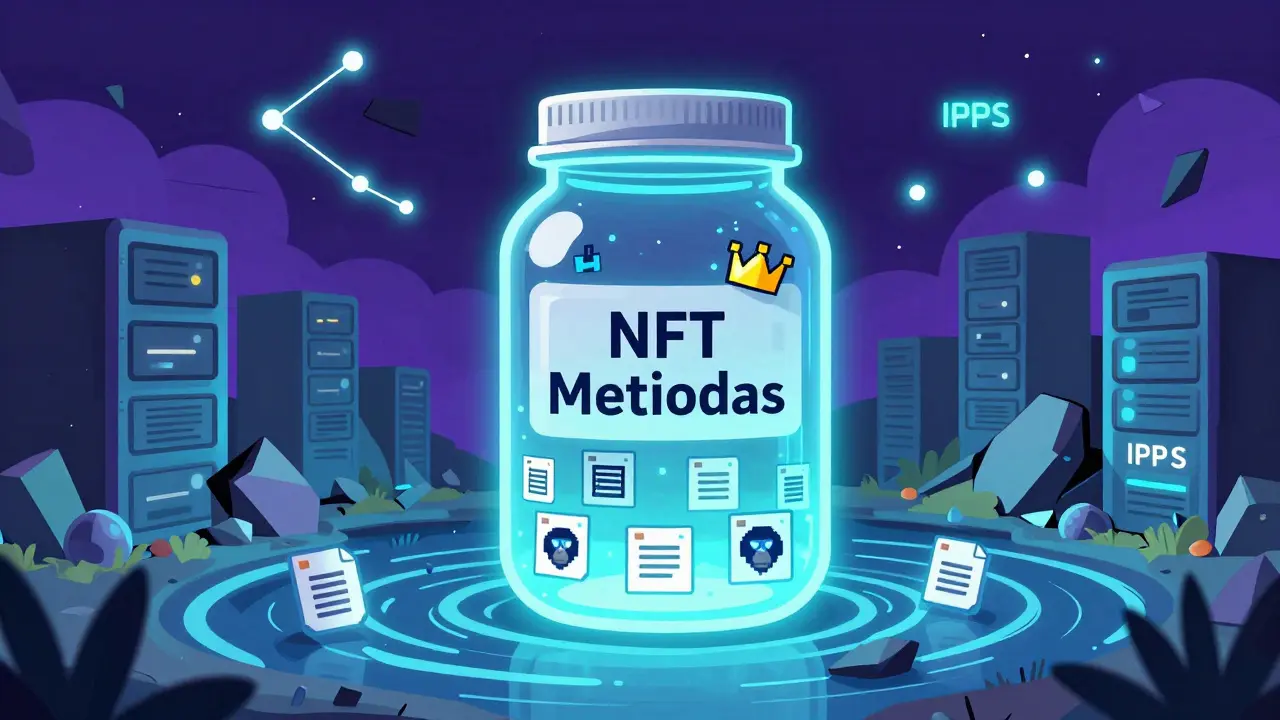
What Is NFT Metadata? A Clear Guide to How It Works and Why It Matters
NFT metadata is the JSON data that defines what your NFT looks like and what it means. Without it, your digital asset is just a number on a blockchain. Learn how it works, why storage matters, and how to protect your NFTs from disappearing.
Recent Post
-
Top Smart Contract Auditing Firms in 2025
Oct, 19 2025