SakeToken price: What it's worth, why it matters, and what to watch
When you check the SakeToken, a cryptocurrency token with minimal public tracking and no verified project documentation. Also known as SakeToken (SAKE), it appears on a few obscure exchanges but lacks any real utility, team, or community backing. Most people asking about SakeToken price are either chasing quick gains or stumbled on it through a misleading airdrop site. The truth? It’s not a coin you invest in—it’s a warning sign.
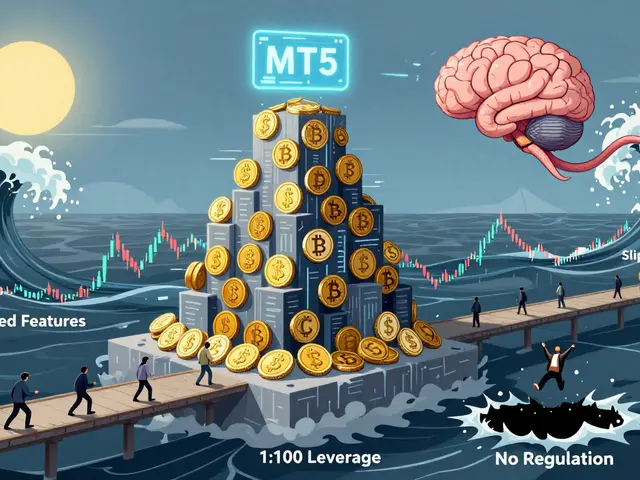
What makes SakeToken different from real projects? It doesn’t run on a major blockchain like Ethereum or BSC. It has no whitepaper, no roadmap, and no active development. Compare that to Apertum (APTM), a Layer 1 blockchain on Avalanche with clear tokenomics and community governance, or even Flux Protocol (FLUX), a token with a documented airdrop, active users, and measurable on-chain activity. Those projects at least try to explain what they do. SakeToken doesn’t. Its price moves because of bots, not demand. You’ll see spikes when someone pumps it on a low-volume exchange, then it crashes back to near zero. That’s not investing—that’s gambling with your wallet.
Why does this keep happening? Because crypto scams thrive on confusion. People see a token with a catchy name, check a price tracker that shows a $0.0001 value, and think, "What if it goes 100x?" But those price trackers often pull data from fake trading pairs or mirror sites. Real market depth, like what you’d see with Bitcoin or even lesser-known tokens like Metahero (HERO), a token with a verifiable history, active trading volume, and official distribution records, shows real buying and selling pressure. SakeToken has none of that. If you’re seeing a "SakeToken airdrop" or a "SakeToken wallet claim," it’s a trap. No legitimate project gives away tokens with no purpose.
So what should you do if you’re wondering about SakeToken price? Don’t buy it. Don’t connect your wallet to any site asking for it. Don’t chase its chart. Instead, look at the bigger picture: the crypto market is full of tokens that vanish overnight. The ones that last—like those in our posts on smart contract audits, DeFi exchanges, or regulated platforms—have transparency, teams, and users. SakeToken has none of that. It’s a ghost. And ghosts don’t make money—they just scare people into losing it.
Below, you’ll find real stories about tokens that actually mean something—some that exploded, some that failed, and others that taught people how to avoid the next SakeToken before it even launched. No fluff. Just what works—and what doesn’t.

What is SakeToken (SAKE) Crypto Coin? A Real-World Look at Its Value, Risks, and Reality
SakeToken (SAKE) is a micro-cap Ethereum-based DeFi token with minimal liquidity, no active development, and under $150K market cap. Learn its real risks, current stats, and why it's not a viable investment.