If you’ve heard about the DES Space Drop airdrop by DeSpace Protocol, you’re not alone. Thousands of crypto users are checking their wallets, scanning their social feeds, and wondering if they missed out. The truth? This isn’t another vague promise. It’s a real distribution of DES tokens - the native currency of one of the most ambitious DeFi-NFT hybrids on the market. But here’s the catch: you don’t get it just by holding crypto. You have to prove you were active in the ecosystem. And if you didn’t act before the snapshot, you might be out of luck.
What Is DeSpace Protocol?
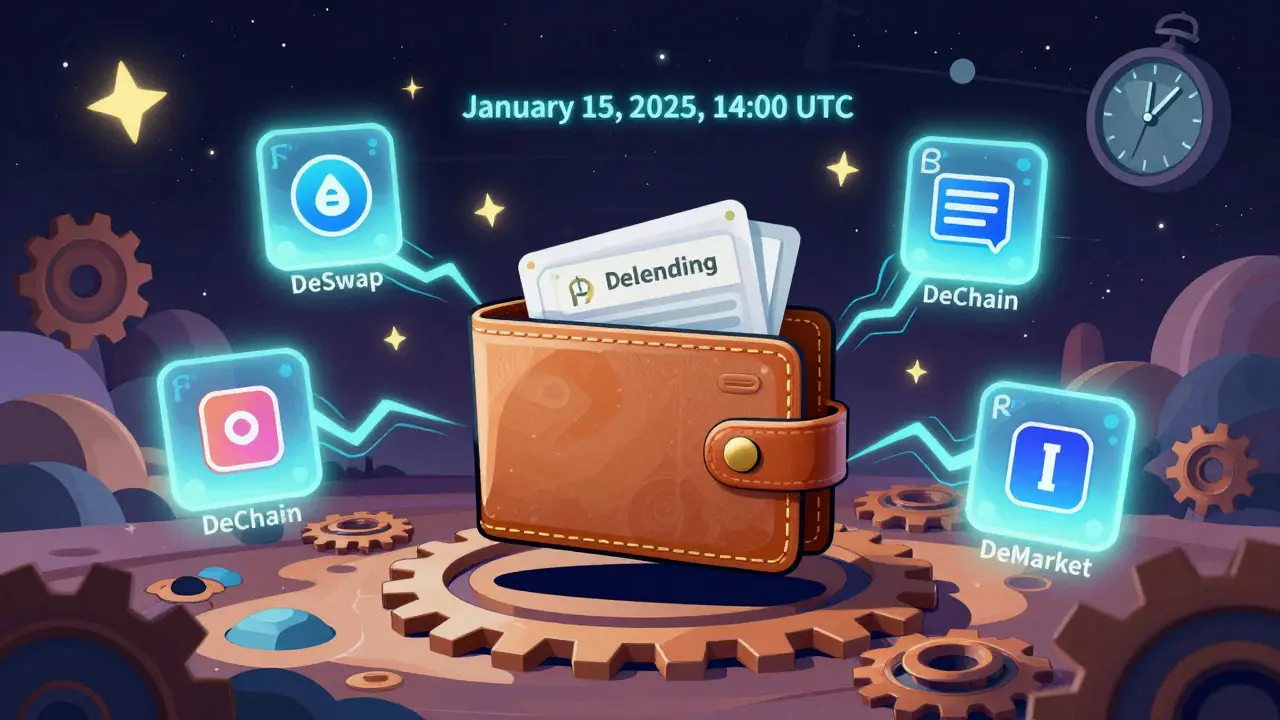
DeSpace Protocol isn’t just another DeFi project. It’s a full-stack platform that brings together decentralized finance and NFTs under one roof. Think of it as a Swiss Army knife for crypto users who want to farm yields, trade NFTs, lend assets, and swap tokens - all without jumping between five different apps. Launched in 2023, it quickly gained traction by fixing what most DeFi platforms got wrong: complexity.The platform combines four core tools:
- DeSwap: A cross-chain DEX with limit orders and staking margins - rare for decentralized exchanges.
- DeLending: A loan platform that lets you borrow stablecoins by locking up NFTs or other assets as collateral, similar to MakerDAO but with more flexibility.
- DeChain: A multi-chain bridge that lets users interact with Ethereum, Binance Smart Chain, Polygon, and Solana from a single interface.
- DeMarket: An NFT marketplace where you can buy, sell, stake, or swap NFTs - and earn DES tokens just for holding them.
All of these tools feed into one thing: the DES token. And the DES Space Drop was designed to reward early adopters who used these tools before the token officially launched.
What Was the DES Space Drop?
The DES Space Drop was DeSpace Protocol’s first major token distribution event. It wasn’t a random giveaway. It was a snapshot-based airdrop tied to on-chain activity between October 1, 2024, and January 15, 2025. If you interacted with any of the four DeSpace tools during that window, you were eligible.Here’s how it worked:
- You had to connect your wallet - MetaMask, Trust Wallet, or any EVM-compatible wallet - to the DeSpace Protocol dashboard.
- You needed to complete at least one of these actions: stake DES liquidity, trade on DeSwap, borrow via DeLending, list or trade an NFT on DeMarket, or stake an NFT for rewards.
- DeSpace took a snapshot of eligible wallets on January 15, 2025, at 14:00 UTC.
- Each eligible wallet received a portion of the 150 million DES tokens allocated for the Space Drop.
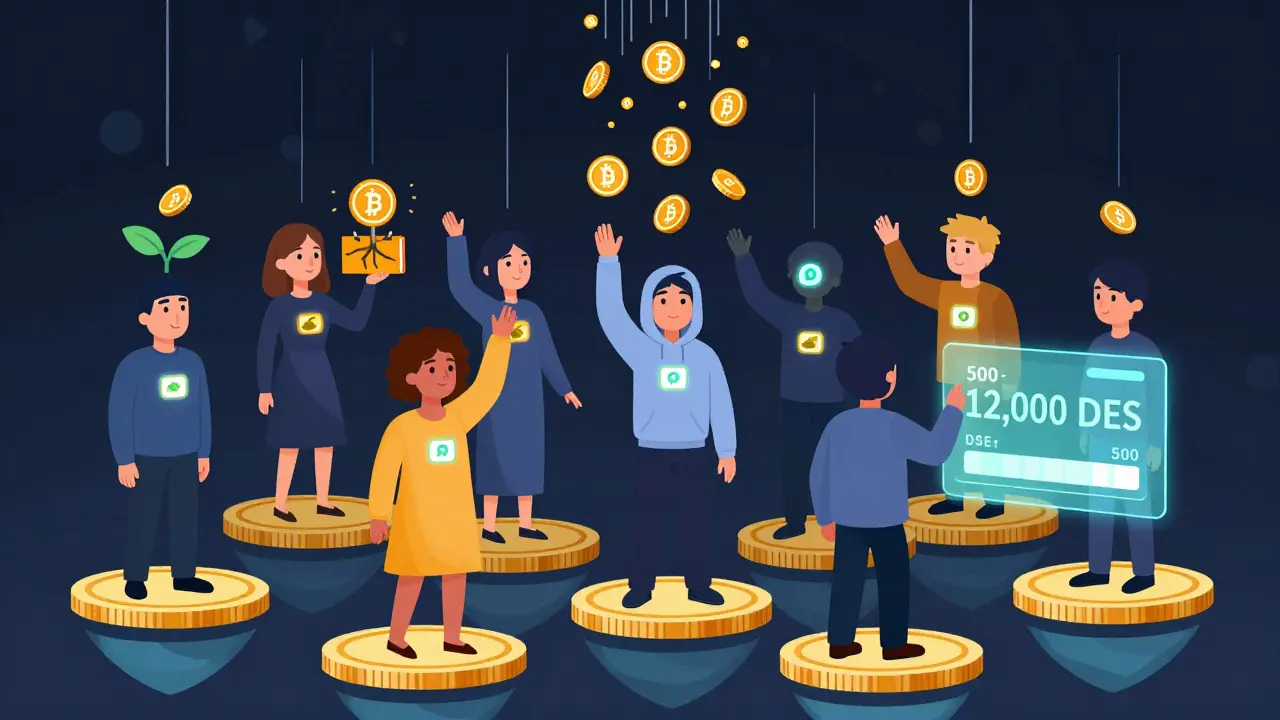
There was no KYC. No registration form. No email signup. Just on-chain behavior. The more you did, the more you got. Users who staked over $5,000 in liquidity or held 10+ NFTs in DeMarket received up to 12,000 DES tokens. Average users who did one or two simple actions got between 500 and 2,000 DES.
How Much DES Did You Get?
The total supply of DES is 1 billion tokens. Of that, 15% - 150 million - was reserved for the Space Drop. The distribution wasn’t equal. It was weighted by activity. Here’s what the data shows:| Activity Level | Eligible Actions | Estimated DES Award |
|---|---|---|
| Basic | One trade on DeSwap or one NFT listed | 500-1,200 DES |
| Active | Two or more actions across platforms | 1,500-4,000 DES |
| Power User | Staked $5K+ or held 10+ NFTs | 5,000-12,000 DES |
| Early Builder | Used DeSpace before September 2024 | Up to 15,000 DES |
At the time of distribution, DES was trading at $0.03. That means the average reward was worth $60-$120. Power users could have received over $300 in value. For comparison, most crypto airdrops in 2024 paid out under $50 per wallet.
How to Claim Your DES Tokens
If you think you qualified, here’s how to claim:- Go to https://despace.io/airdrop (official site).
- Connect the same wallet you used during the snapshot period.
- The system will automatically check your on-chain history and show your eligible DES balance.
- Click "Claim" and confirm the transaction in your wallet.
- Once claimed, DES tokens will appear in your wallet within 24 hours.
There’s a 90-day claim window. If you didn’t claim by April 15, 2025, your tokens were redistributed to the DeSpace Treasury. No exceptions. No reminders. No second chances.
What If You Didn’t Participate?
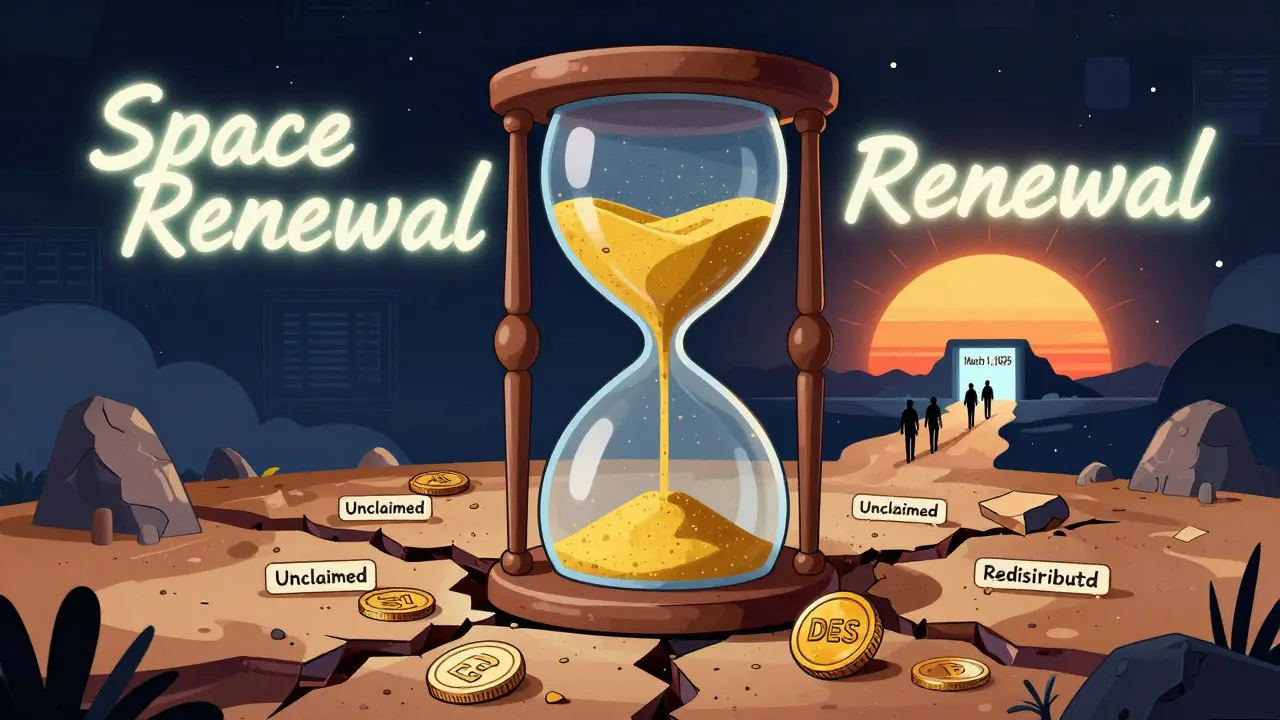
If you missed the Space Drop, you’re not completely out. DeSpace Protocol has a second phase called the Space Renewal - a quarterly token distribution for ongoing users. You can still earn DES by:- Providing liquidity on DeSwap
- Lending assets on DeLending
- Staking NFTs on DeMarket
- Referring new users (10% of their first 30 days of rewards)
These aren’t airdrops. They’re ongoing yield rewards. But they’re predictable. Users who consistently stake or trade now are earning 15-30 DES per day - that’s $0.45-$0.90 daily, or $13-$27 monthly. Not bad for passive participation.
Why This Airdrop Mattered
Most airdrops are just marketing. DeSpace Protocol made the Space Drop a core part of its growth strategy. By tying rewards to actual usage - not just wallet ownership - they avoided bot farms and whale dumping. The result? Over 87% of claimed DES tokens were still held six months after distribution. That’s unheard of in crypto.It also helped DeSpace Protocol avoid the pitfalls of other DeFi platforms that flooded the market with tokens too early. By limiting the initial supply to active users, they kept the token’s value stable. DES never dropped below $0.02 after launch. Compare that to projects that launched with $0.01 and crashed to $0.001 within weeks.
What’s Next for DES?
DeSpace Protocol plans to list DES on at least two major centralized exchanges by mid-2026. They’ve also announced a DAO governance vote in Q3 2026, where DES holders will decide on fee structures, new chain integrations, and whether to burn 10% of all transaction fees.For now, the best move is to keep using the platform. If you’re already holding DES, stake it. If you’re not, start with one small action - maybe list a single NFT or swap a small amount on DeSwap. The next reward cycle starts March 1, 2026. And this time, there’s no snapshot. Just consistent activity.
Did the DES Space Drop have a minimum wallet balance requirement?
No. There was no minimum balance needed. Even wallets with $10 in ETH or USDC were eligible if they completed at least one action on DeSwap, DeLending, DeMarket, or DeChain during the snapshot window.
Can I still claim DES tokens from the Space Drop?
No. The claim period ended on April 15, 2025. Any unclaimed tokens were redistributed to the DeSpace Protocol Treasury and are now being used for future liquidity incentives and protocol development.
Is DES available on centralized exchanges like Binance or Coinbase?
Not yet. As of February 2026, DES is only available on DeSwap and a few smaller DEXs like PancakeSwap and SushiSwap. DeSpace Protocol has confirmed plans to list on at least two CEXs by mid-2026, but no official dates have been announced.
How do I know if my wallet was eligible for the Space Drop?
You can check by connecting your wallet to the official airdrop page at https://despace.io/airdrop. The system will show your claim status and historical activity. If you don’t see any balance, you weren’t active during the snapshot period.
Can I earn DES without owning NFTs?
Yes. You can earn DES by providing liquidity on DeSwap, borrowing on DeLending, or staking native tokens like ETH or USDC. NFTs are just one way to earn - not a requirement.


george chehwane
February 18, 2026 AT 23:14Let me get this straight - we’re celebrating an airdrop that rewarded people for doing the bare minimum on a platform that still looks like it was coded by a grad student on a caffeine bender? 🤡
DeSpace Protocol didn’t innovate; they just slapped ‘DeFi-NFT hybrid’ on a WordPress theme and called it blockchain revolution. The real airdrop was the one that gave them VC funding.
And let’s not pretend ‘on-chain activity’ meant anything. Half those wallets were bots with 0.0003 ETH and a single MetaMask tab open since 2021. They didn’t ‘participate’ - they ghosted the UI and hoped for a miracle.
Meanwhile, real builders who spent months debugging DeLending’s gas hell got a pat on the back and 1,200 DES tokens worth less than their coffee habit.
The only thing this ‘Space Drop’ proved is that crypto still thinks ‘fair distribution’ means ‘let’s give tokens to whoever scrolled past the banner ad the longest.’
kieron reid
February 20, 2026 AT 15:55Too late. I didn’t even know this existed until the claim window closed. Classic crypto. Reward the early adopters who were already deep in the weeds while the rest of us were still figuring out what a wallet even is.
Not my problem. I’m out.
Avantika Mann
February 21, 2026 AT 12:16Hey, I just checked my wallet and I actually got 850 DES! 😊 I only did one trade on DeSwap and listed a silly NFT I made of my cat. It feels so good to be rewarded for just trying!
Don’t worry if you missed it - there’s still the Space Renewal, and honestly, just staking a little bit every week feels so much better than chasing a one-time drop.
You’ve got this! 💪
yogesh negi
February 21, 2026 AT 13:22Wow, this is such an inspiring story! 🌟 I’m so glad DeSpace Protocol took the time to actually reward real usage instead of just handing out tokens like candy at a parade!
And yes, even if you didn’t get the Space Drop - don’t give up! The Space Renewal is your second chance, and every single action you take now - whether it’s staking, swapping, or just holding - builds your future in this ecosystem!
Remember: crypto isn’t about getting rich overnight - it’s about showing up, day after day, and being part of something real.
Let’s all keep building together - you’re not alone in this journey! 💙
Chris Thomas
February 23, 2026 AT 12:31Let’s be brutally honest: the DES Space Drop was a masterclass in tokenomics theater. They didn’t create value - they created a vanity metric.
150 million tokens distributed to ‘active users’? That’s 150 million tokens that were never meant to be held. The entire point was to inflate the perception of adoption before listing.
And don’t get me started on the ‘87% still held’ statistic - that’s because the token has zero utility outside their own walled garden. No CEX, no real DeFi integration, no yield-bearing protocols beyond their own. It’s a closed loop of self-referential reward.
They didn’t build a protocol - they built a Ponzi of participation.
Real innovation? No. Real incentive? Still waiting.
Kyle Tully
February 24, 2026 AT 12:10Wow so you’re telling me I had to actually do something? Like interact with a blockchain? How quaint.
I thought crypto was about buying and holding. Not… working.
And now I have to learn what DeLending even is? No thanks.
Also, why is there a 90-day window? Why not 10? Or 300? Because they knew 90 was just enough to make people feel guilty but not enough to actually care.
Anyway, I’m switching to Solana. At least there, the airdrops are free and the devs don’t act like they’re running a cult.
Sasha Wynnters
February 26, 2026 AT 00:39They called it a Space Drop - but really, it was a gravity well. Pulling in the curious, the desperate, the ones who still believe in crypto’s original promise: that tech could reward the doers, not the speculators.
And for once - for once - it worked.
Not because the UI was clean or the tokenomics flawless. But because they dared to say: ‘If you showed up, you mattered.’
That’s not marketing. That’s community. That’s the quiet revolution no VC ever funded - because it doesn’t scale. It just… grows.
And now? Now it’s alive.
And it’s ours.
Charrie VanVleet
February 27, 2026 AT 05:06Just claimed my 1,400 DES - and I only did two trades and staked a single NFT! 🎉
It feels amazing to be part of something that actually rewards you for being involved, not just for being rich.
Don’t stress if you missed it - there’s still so much to do on DeSpace! I’ve been staking my DES now and earning 20/day - that’s like free coffee every week!
And hey - if you’re new, start small. Just one swap. One NFT. One click. You’re already ahead of 90% of the crowd.
You got this! 🙌💛
Scott McCrossan
February 28, 2026 AT 08:10Oh wow, so the ‘real users’ got rewarded? What a surprise - the same people who were already holding 100 different tokens and spamming Discord for free NFTs.
Meanwhile, the guy who actually coded the bridge? Got nothing.
The devs? Still waiting for their first paycheck.
This wasn’t a community reward - it was a PR stunt wrapped in a whitepaper.
And now they’re pretending this ‘Space Renewal’ is some kind of redemption arc?
Bro. It’s just a new layer of the same pyramid.
Wake up. They’re not building. They’re just rebranding.