Uniswap: What It Is, How It Works, and Why It Matters in Crypto
When you trade crypto without a middleman, you’re likely using Uniswap, a decentralized exchange built on Ethereum that lets users swap tokens directly from their wallets. Also known as a DEX, it doesn’t hold your money or require KYC—your wallet connects, you click trade, and the deal happens automatically through smart contracts. This isn’t just a tool—it’s a shift in how finance works. Unlike Binance or Coinbase, where a company controls your funds and sets the rules, Uniswap runs on code. No CEO, no customer support line, no freezing accounts. If you have ETH or an ERC-20 token, you can trade it—no permission needed.
Uniswap is part of something bigger called DeFi, a movement to rebuild financial systems using blockchain instead of banks. It’s not just about swapping tokens; it’s about lending, earning interest, and providing liquidity—all without a bank in the middle. People use Uniswap to trade new tokens the moment they launch, to farm yield by locking up their coins, or to avoid centralized exchanges that might shut down or freeze assets. In places like India or Cuba, where traditional finance is restricted, Uniswap becomes a lifeline. And in markets like the Philippines or Bangladesh, where exchanges get shut down by regulators, decentralized ones like Uniswap keep trading alive. The platform runs on Ethereum, the blockchain that powers most major DeFi apps and tokens. That means you pay gas fees in ETH, and transactions can get slow or expensive during high demand. But it also means your trades are secure, transparent, and unstoppable—once a contract is deployed, it runs exactly as written, forever. Uniswap doesn’t list coins itself. Anyone can create a trading pair by adding liquidity. That’s why you’ll find everything from stablecoins like USDC to obscure meme tokens like EDOGE or SAKE on it. Some of those tokens are legitimate projects. Others? They’re ghosts. That’s why the posts below focus on what’s real, what’s risky, and what’s outright fake.
What you’ll find here isn’t a beginner’s guide to clicking ‘Swap.’ It’s a collection of real-world stories about how people actually use Uniswap—and what goes wrong when they don’t know what they’re doing. You’ll see how users bypass restrictions, how scams mimic real airdrops tied to DeFi platforms, and why some tokens trade for pennies with zero liquidity. Some posts warn you about fake projects pretending to be linked to Uniswap. Others explain how market depth and liquidity analysis help you avoid getting ripped off on low-volume trades. This isn’t theory. It’s what happens when you connect your wallet and hit confirm.
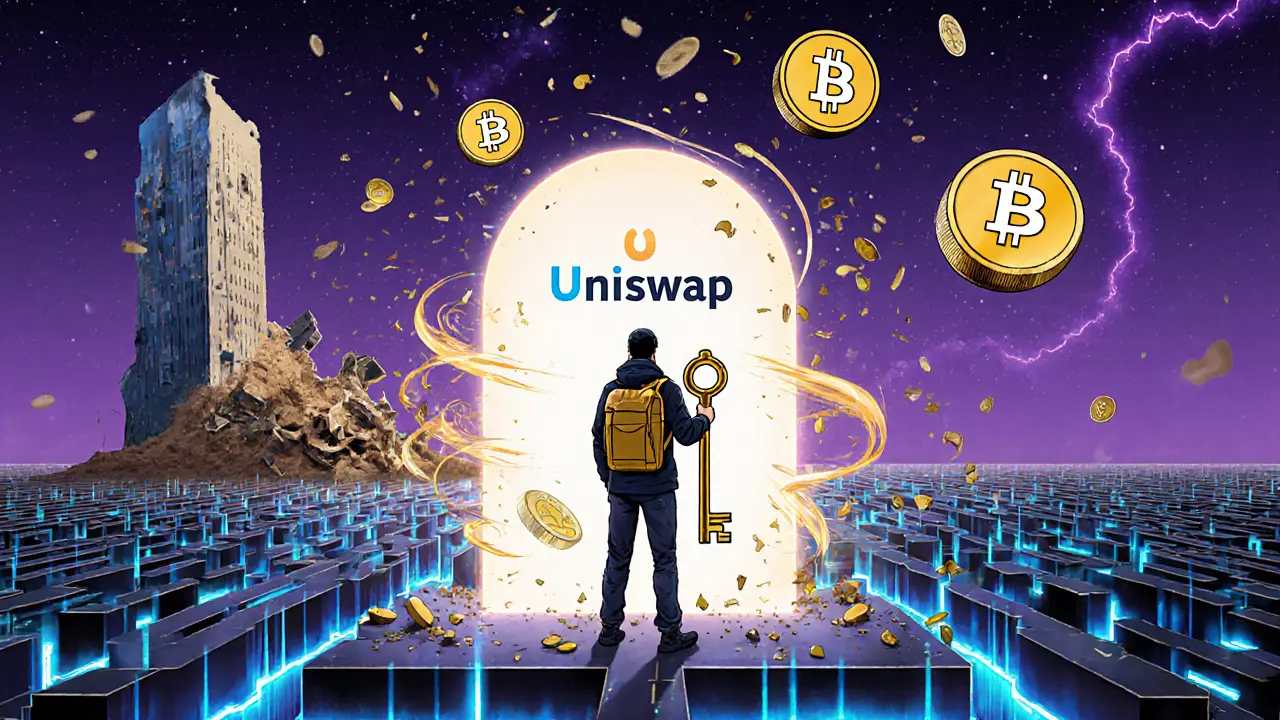
How to Use a Decentralized Exchange: A Step-by-Step Guide for Beginners
Learn how to use a decentralized exchange safely and effectively. Step-by-step guide for beginners on swapping crypto with MetaMask, avoiding common mistakes, and using Layer 2 networks to save on fees.