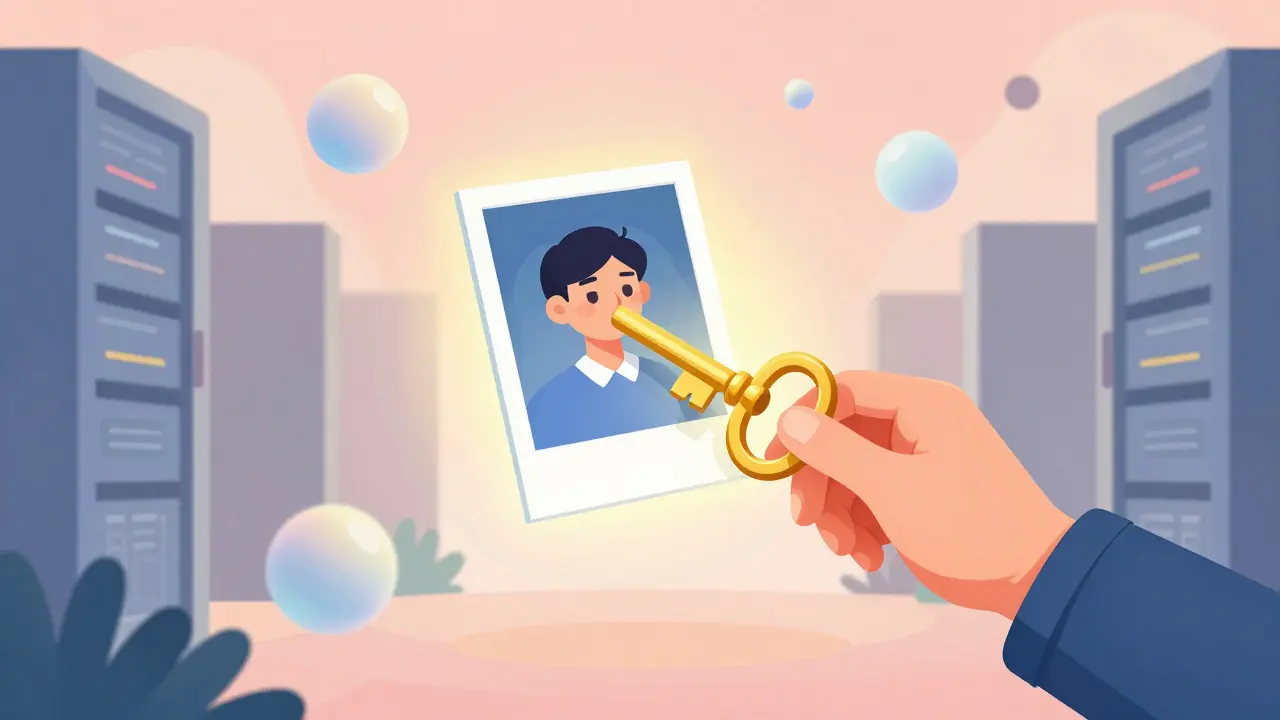
Imagine posting a photo and actually owning it. No algorithm decides who sees it. No company sells your viewing habits to advertisers. You hold the keys. That is the promise of blockchain social networks, which are decentralized platforms that give users full ownership and control over their personal data through cryptographic protocols. This shift from centralized giants like Meta or X (formerly Twitter) to peer-to-peer architectures represents one of the most significant changes in how we interact online.
For years, we have accepted a trade-off: free access to social media in exchange for our data. But with rising privacy concerns and massive regulatory fines against tech giants, this model is cracking. Blockchain technology offers a different path-one where data sovereignty belongs to you, not the platform. In this guide, we break down how these networks work, why they matter, and what you need to know before joining them.
How Blockchain Social Networks Work
Traditional social media stores your posts, likes, and profile info on servers owned by one company. If that company goes down, gets hacked, or changes its rules, your data is at risk. Blockchain social networks flip this script. They use distributed ledger technology to spread data across thousands of computers worldwide. This means no single point of failure exists.
The system relies on three core components:
- Distributed Ledger Technology: Verifies your identity without storing sensitive details in one place.
- Decentralized Storage: Platforms like IPFS or Filecoin host your content, ensuring it remains accessible even if one node fails.
- Smart Contracts: These automated programs manage permissions. For example, you can set a rule that only approved friends can view certain photos, and the contract enforces it automatically.
When you post something, it is hashed using SHA-256 encryption and stored across multiple nodes. Your private key acts as the digital signature proving you created the content. This creates an immutable record-once posted, nothing can alter it without your permission.
Data Sovereignty vs. Centralized Control
The difference between blockchain social networks and traditional platforms comes down to who holds the power. On Facebook or Instagram, the company owns your data. They can delete accounts, change algorithms, or sell insights to third parties. With blockchain, you retain ownership. Here is a quick comparison:
| Feature | Centralized Platforms | Blockchain Social Networks |
|---|---|---|
| Data Ownership | Platform retains rights | User retains full ownership |
| Content Moderation | Unilateral deletion possible | Immutable unless user revokes access |
| Encryption | 42% use end-to-end encryption | 98% implement end-to-end encryption |
| Account Recovery | Email/phone verification | Private key management required |
| Monetization Model | Ad-driven data sales | Token rewards or direct subscriptions |
This table highlights a critical advantage: transparency. On blockchain platforms, every data transaction is recorded on-chain. You can audit exactly who accessed your information and when. According to Pew Research Center’s 2024 survey, nearly all blockchain social platforms now offer end-to-end encryption, compared to less than half of traditional services.
Key Players in the Decentralized Space
Several platforms have emerged as leaders in this space. Each has unique strengths and target audiences:
- Minds: Launched in 2015, Minds focuses on community building and creator monetization. It uses a token-based reward system to incentivize engagement.
- Steemit: Built on the Steem blockchain since 2016, Steemit emphasizes content creation and curation. Users earn tokens based on post quality and community votes.
- Lens Protocol: A newer entrant built on Ethereum Layer 2 solutions. Lens handles 1,200 transactions per second across over 1,000 validator nodes, making it faster and more scalable than older systems.
- Mastodon: While not fully blockchain-based, Mastodon uses the ActivityPub protocol to connect independent servers. It supports 1.2 million active users across 5,000+ nodes, demonstrating horizontal scalability.
These platforms vary in maturity. Minds and Steemit have established communities, while Lens Protocol attracts developers seeking high-performance infrastructure. The choice depends on your goals: casual browsing, professional networking, or technical experimentation.

Benefits of User-Controlled Data
Why should you care about data sovereignty? Because it directly impacts your privacy, security, and financial opportunities. Here are the main advantages:
- Privacy Protection: Since data is encrypted and distributed, hackers cannot breach a single server to steal millions of records. Zero-knowledge proofs allow verification without exposing raw data.
- Censorship Resistance: No central authority can remove your account or silence your voice. Content remains available as long as nodes continue hosting it.
- Monetization Opportunities: Many blockchain platforms reward users with native tokens for creating content or curating others’ posts. This turns engagement into income rather than just attention.
- Regulatory Compliance: Smart contracts can be designed to comply with GDPR requirements. The arXiv 2024 paper demonstrates 100% auditability of data permissions, helping users meet legal standards effortlessly.
Dr. Jane Thomason, author of 'Blockchain and Society' (2023), notes that these networks represent the first viable architecture for true data sovereignty. However, she also warns that mainstream adoption hinges on simplifying key management-a challenge still being addressed.
Challenges and Limitations
Despite the benefits, blockchain social networks face real hurdles. Understanding these limitations helps set realistic expectations:
- Technical Complexity: Managing private keys requires basic cryptography knowledge. Misplacing your key means losing access forever. Peiko’s user experience study found that 63% of new users needed assistance during onboarding.
- Storage Costs: On-chain storage is expensive. High-resolution images or videos cost significantly more to store than text. As a result, 78% of blockchain platforms limit media sharing to low-res formats.
- Scalability Issues: Transaction finality takes 15-30 seconds on Ethereum Layer 2s, compared to instantaneous processing on purpose-built chains like Steem (3 seconds per block). This delay affects real-time interactions.
- User Experience Gaps: Fragmented interfaces and lack of unified standards make switching between platforms confusing. Only 28% of blockchain social apps offer real-time customer support, versus 89% for centralized alternatives.
Neha Narula, director of MIT’s Digital Currency Initiative, cautioned in her 2024 congressional testimony that current throughput limitations prevent feature parity with established platforms. Until usability improves, mass migration will remain slow.
Getting Started: A Practical Guide
If you want to try a blockchain social network, here is how to begin safely:
- Choose a Platform: Start with user-friendly options like Minds or Mastodon. Avoid experimental protocols unless you have technical expertise.
- Set Up a Wallet: Download a trusted wallet provider like MetaMask. Create a new wallet and write down your seed phrase offline. Never share this phrase with anyone.
- Create Your Profile: Connect your wallet to the platform. Customize your bio and avatar. Remember, your username may be tied to your wallet address.
- Understand Gas Fees: Transactions on Ethereum L2s average $0.05-$0.50. Check current rates before posting frequently.
- Backup Regularly: Store copies of your private keys in secure locations. Consider using hardware wallets for added protection.
Blaize Tech’s onboarding study shows initial setup takes 30-45 minutes. Most users benefit from following tutorials or joining community forums for guidance.
Future Outlook and Trends
The landscape is evolving rapidly. Gartner predicts that by 2027, 15% of global social media users will primarily interact through decentralized platforms. Growth drivers include stricter regulations like the EU’s Digital Services Act, which mandates data portability-a feature blockchain networks naturally support.
Recent developments show promising directions:
- Lens Protocol v2.3: Released in August 2024, this update introduced composable data modules allowing selective content sharing.
- DSNP Consortium: Announced integration with 12 major wallet providers effective Q4 2024, improving accessibility.
- Zero-Knowledge Proofs: Proposed implementations aim to enhance privacy further, with expected rollout by Q2 2025.
However, skepticism remains. Stanford’s Dr. David Kravets argues in his 2024 paper 'Decentralized Illusions' that network effects will hinder meaningful migration from entrenched platforms. The World Economic Forum suggests a hybrid future: blockchain handles identity and permissions, while centralized systems manage content delivery.
As of 2024, blockchain social networks represent 0.8% of the $184 billion global social media market. Yet growth accelerates at 37% annually, driven by privacy-conscious users and regulatory pressure. Whether you adopt now or wait, understanding these technologies prepares you for the next era of digital interaction.
What is a blockchain social network?
A blockchain social network is a decentralized platform where users own their data through cryptographic keys. Instead of storing information on corporate servers, data is distributed across peer-to-peer networks, giving individuals full control over privacy, permissions, and monetization.
Are blockchain social networks safe?
They are highly secure due to encryption and decentralization. However, safety depends on user behavior. Losing your private key means permanent loss of access. Always back up credentials securely and avoid phishing sites.
Do I need cryptocurrency to join?
Not always. Some platforms like Mastodon require no crypto. Others like Minds or Lens may involve small transaction fees (gas) paid in tokens. Having a basic wallet helps, but large holdings aren’t necessary for participation.
Can companies censor me on blockchain networks?
No. Once content is published on-chain, it becomes immutable. No central entity can delete your posts or ban your account. Censorship resistance is a core benefit of decentralized architecture.
Which blockchain social network is best for beginners?
Minds and Mastodon are recommended for newcomers. They offer intuitive interfaces, active communities, and minimal technical barriers. Steemit suits writers interested in earning rewards, while Lens appeals to developers seeking advanced tools.
How do I recover my account if I lose my key?
There is no password reset option. Recovery depends on backups. Use multi-signature wallets or hardware devices to safeguard keys. Without a backup, access is permanently lost.
Is my data truly private on these platforms?
Yes, especially with zero-knowledge proof integrations. Data is encrypted end-to-end, and smart contracts enforce strict access controls. Unlike traditional platforms, your activity isn’t sold to advertisers.
Will blockchain replace Facebook or Twitter?
Unlikely soon. Network effects favor incumbents. But hybrid models may emerge, combining blockchain’s privacy features with familiar user experiences. Adoption grows steadily among privacy-focused demographics.
Alexander Scheel
August 14, 2026 AT 17:02Oh, how delightful. Another guide promising that the masses will suddenly possess the cryptographic literacy required to manage their own digital sovereignty, as if the average person can distinguish between a seed phrase and a spam email.
We are told that 'you hold the keys,' which is a charming metaphor for the fact that you now hold the burden of your own destruction. If you lose that key, there is no customer support hotline, no password reset button, and certainly no mercy from the immutable ledger. It is a system designed by engineers who view human error not as a flaw in design, but as a moral failing of the user.
The article claims this is a shift toward freedom, yet it feels remarkably like a shift toward isolation. You are free to be unheard, free to be irrelevant, and free to store your high-resolution photos at a cost that would make a traditional data center weep with envy. The notion that 98% encryption solves the problem of trust is laughable when the interface itself is often built on shaky foundations of speculative tokens and vaporware promises. We are trading the tyranny of the algorithm for the tyranny of complexity.
Evelyn Kula
August 16, 2026 AT 05:55They want us to believe that decentralization is freedom, but look closer at who really benefits here. It’s just another way for the tech elite to hide their tracks while selling us back our own data through these so-called 'tokens.' I’ve seen the blueprints for this kind of surveillance state before, and it always ends with the government seizing control of the nodes. Don’t let them trick you into thinking you’re safe because your data is scattered across servers in countries that don’t even speak our language. The real conspiracy is that they want you busy managing wallets while they rewrite the laws of privacy behind closed doors. Stay woke, people. This isn’t liberation; it’s a trap wrapped in blockchain jargon. :)
manish jha
August 18, 2026 AT 02:49You miss the point entirely. The struggle with private keys is merely a test of discipline that the modern mind lacks. Most users are too lazy to take responsibility for anything, preferring the comfort of a centralized warden. If one cannot manage a simple string of characters, one is not ready for true autonomy. The guru does not blame the tool for the failure of the student. The technology is pure; it is the human attachment to convenience that corrupts the experience. Those who complain about gas fees or storage costs have not yet realized that scarcity creates value. Embrace the difficulty, or remain a slave to the algorithm.
Ashley Snyder
August 18, 2026 AT 20:35I think both sides have valid points here. It’s definitely intimidating to think about losing access forever, but the idea of owning your data is really appealing. Maybe we don’t need to choose between total chaos and total control. Perhaps the best path forward is a middle ground where the technology handles the heavy lifting for beginners, like Minds seems to try to do. It’s okay to find it confusing at first; we all had to learn how to use email once too. Let’s just keep talking about it and see what works best for everyone. :)
Sarah Hafner
August 20, 2026 AT 18:31Alexander raises a very fair point about the UX hurdles, and Manish is right about the mindset shift needed! But let’s not forget the practical side. If you’re new to this, starting with a hardware wallet like a Ledger or Trezor makes the 'key management' part much less scary. You don’t need to be a crypto expert to use Mastodon or Minds effectively. The gas fees mentioned are also dropping significantly on L2 solutions, so the cost barrier is lower than it used to be. Just take it one step at a time, back up your seed phrase (on paper!), and you’ll be fine. We’re all learning together! :)
Susan Kiley
August 22, 2026 AT 01:39Oh, please. Spare me the technobabble about 'gas fees' and 'L2 solutions.' Unless you are actually building the protocol, you are just consuming content. The real issue is that these platforms lack the cultural cachet of the old guard. Why would anyone migrate to a place where their posts might vanish if the node operator decides to go offline? It’s chaotic, unrefined, and frankly, a bit tacky. True sophistication lies in curated experiences, not in the raw, unfiltered noise of a decentralized feed. Until these networks offer the same level of aesthetic polish and social signaling as Instagram, they will remain a playground for geeks and conspiracy theorists. :)