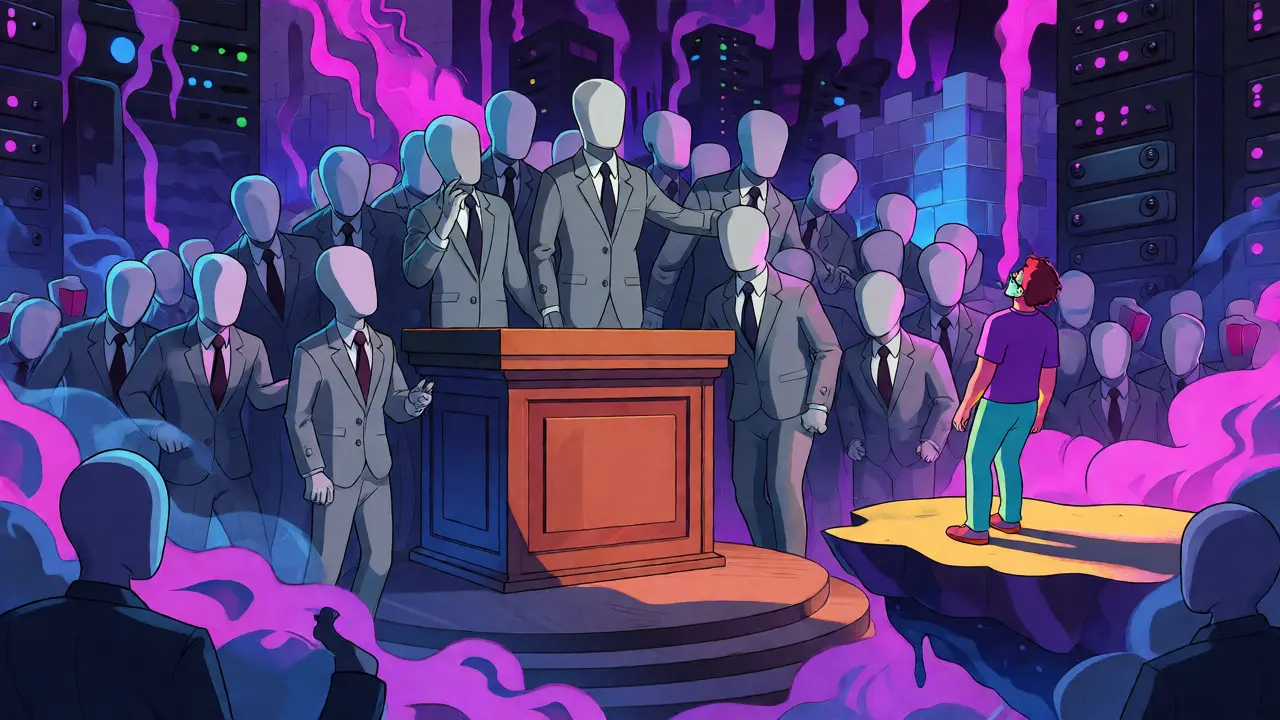
Imagine showing up to a digital town hall where half the attendees are clones of one guy in a basement. That’s a Sybil attack in a nutshell. It’s not just a theoretical headache; it’s the reason your favorite DeFi protocol might lose millions to bots during an airdrop. Since Brian Zill formally identified this vulnerability back in 2002, attackers have gotten smarter, using sophisticated scripts to flood networks with fake identities. But here’s the good news: the defenses are evolving fast. We’re moving away from brute-force methods like Proof-of-Work toward clever, privacy-preserving tech that can spot a fake without needing your passport.
| Method | How It Works | Best For |
|---|---|---|
| AI Behavioral Analysis | Tracks mouse moves, typing speed, and transaction timing to spot bots. | High-frequency trading and airdrops. |
| Zero-Knowledge Proofs (ZKPs) | Proves you’re unique without revealing who you are. | Privacy-focused users avoiding KYC. |
| Proof-of-Personhood | Uses biometrics or social graphs to verify human presence. | Governance voting and DAOs. |
| Economic Disincentives | Makes creating a new identity expensive via fees or staking. | Networks with high-value assets. |
Why Traditional Defenses Are Cracking
For years, we relied on Proof-of-Work and Proof-of-Stake to keep bad actors out. The logic was simple: if making an identity costs energy or money, spamming becomes unprofitable. But let’s be real-mining farms and stake pools mean one entity can still control huge chunks of the network. Plus, for lightweight apps or governance votes, burning electricity to prove you’re human is overkill. Recent data shows Sybil attacks caused $287 million in losses across DeFi platforms in 2023 alone. That’s why the industry is scrambling for lighter, smarter solutions that don’t require a power plant or a bank loan to participate.
The Rise of AI and Behavioral Biometrics
If you’ve ever been asked to "click all images with traffic lights," you know how annoying CAPTCHAs are. AI-driven systems are replacing those clunky gates with silent background checks. These tools analyze over 15 behavioral metrics, such as how fast you type, the curvature of your mouse movements, and even the timing between your clicks. A bot might click perfectly straight lines; humans make mistakes. According to Rejolut’s 2024 report, these AI detectors hit 92.7% accuracy by scanning connection patterns across massive node networks. Lightspark recently implemented this kind of behavioral biometrics, seeing a 76% drop in fake account creation. It’s invisible to the user but deadly to the script kiddie.
Zero-Knowledge Proofs: Privacy Meets Verification
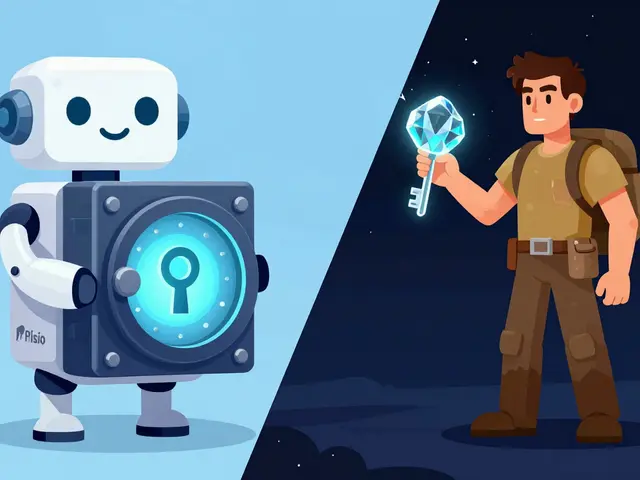
Here’s the big dilemma: how do you prove you’re a unique human without handing over your driver’s license? Enter Zero-Knowledge Proofs. This cryptographic method lets you prove a statement is true without revealing any underlying information. Think of it like proving you’re over 21 without showing your birthdate. Startups like Startup Defense have shown that combining ZKPs with reputation scores cuts Sybil vulnerability by 83%. However, there’s a catch. Verifying a ZKP currently takes about 3.2 seconds per check, which is too slow for high-speed trading but perfect for governance votes or NFT mints. As hardware improves, expect this friction to vanish, making ZKPs the gold standard for private verification.

Biometrics and Proof-of-Personhood
Sometimes, you just need to look someone in the eye-or at least their iris. Proof-of-Personhood protocols use biometric data to create a unique, non-transferable identity. Worldcoin’s Orb device scans faces with 99.98% liveness detection accuracy, ensuring no one uses a photo or mask to trick the system. Idena takes a different approach, requiring users to solve puzzles in monthly ceremonies. While effective-with Idena achieving 99.2% resistance-it demands time. You’re stuck in a 30-minute window, which limits scalability to around 500,000 active users. It’s robust but rigid. If you value speed and convenience, this might feel like a chore. But for critical governance decisions where one vote equals one human, it’s hard to beat.
Trust Graphs and Social Reputation
What if your identity was tied to your friends? Trust graph analysis, used by projects like BrightID, examines social connections rather than biological traits. If your wallet is connected to other verified wallets through mutual transfers or interactions, you gain credibility. MIT’s recent evaluation found that while this method analyzes millions of connections, it suffers from an 18% false positive rate. Bots can mimic social behavior, creating complex webs of fake friendships. Still, when combined with other layers, trust graphs add a powerful dimension. They reward long-term, organic participation, penalizing accounts that pop up only to farm rewards and disappear.

Economic Disincentives: Making Spam Expensive
Not every solution needs fancy cryptography. Sometimes, economics does the heavy lifting. Emin Gün Sirer, CEO of Ava Labs, argues that instead of verifying identity, we should make Sybil attacks financially painful. By imposing minimum computational costs or staking requirements, you force attackers to spend real money. If creating a fake identity costs $500 in gas and opportunity cost, few will bother unless the payoff is massive. Ethereum’s upcoming Pectra upgrade aims to enhance this with native account abstraction, allowing for standardized verification modules that can adjust these economic barriers dynamically based on network congestion and threat levels.
Implementation Challenges and Developer Reality
So, how do you actually build this into your project? It’s not plug-and-play. Developers face an 8-12 week integration timeline for advanced systems. You’ll need proficiency in zero-knowledge cryptography and decentralized identity standards. Documentation varies wildly-Chainlink’s suite scores highly for clarity, while newer protocols often lack detailed guides. The biggest hurdle isn’t code; it’s user experience. A July 2024 survey revealed that while 78% of users want better Sybil protection, 65% refuse to share government IDs. Finding the balance between security and privacy is the developer’s eternal struggle. Custom threshold adjustments are often necessary, tweaking parameters based on whether your network is handling micro-transactions or billion-dollar settlements.
The Road Ahead: Hybrid Models Win
No single silver bullet exists. The future lies in hybrid models that stack multiple defenses. Imagine a system that uses AI to filter obvious bots, ZK-proofs to ensure uniqueness without exposing data, and economic stakes to deter serious attackers. Gartner predicts mainstream adoption of these decentralized identity solutions between 2027 and 2029. Meanwhile, regulatory pressure from frameworks like the EU’s MiCA is forcing compliance, pushing stablecoin issuers to adopt robust verification by mid-2025. The goal isn’t to turn blockchain into a surveillance state but to preserve its permissionless nature while keeping the wolves at bay.
What exactly is a Sybil attack?
A Sybil attack occurs when a single malicious actor creates many fake identities to gain disproportionate influence over a decentralized network. Named after the book 'Sybil,' it allows one person to appear as hundreds, manipulating consensus mechanisms or farming airdrops.
Are Zero-Knowledge Proofs safe for privacy?
Yes, ZKPs allow you to prove you meet certain criteria (like being a unique human) without revealing personal details. You don't share your name or ID, just cryptographic evidence that you satisfy the condition, preserving anonymity.
Why do some users dislike biometric verification?
Many users fear permanent privacy risks associated with storing facial data. Unlike passwords, you can't change your face if a database is breached. Surveys show significant discomfort with mandatory biometric scans despite their effectiveness.
How much does Sybil prevention cost developers?
Integration typically requires 8-12 weeks of development time. Costs include smart contract upgrades, specialized engineering skills in ZK-cryptography, and ongoing maintenance of verification services. Economic disincentives also shift costs to users via fees.
Will AI replace manual identity checks?
AI won't fully replace them but will handle most routine filtering. It excels at spotting pattern-based anomalies like bot-like transaction timing. Complex edge cases may still require human review or secondary verification layers like trust graphs.