
TRIO isn’t just another crypto coin. It’s a utility token built directly on Bitcoin - not Ethereum, not Solana - and it’s designed to power a real platform: OrdinalsBot. Launched in early 2024, TRIO was positioned as the first BRC-20 token with actual, usable functions inside its ecosystem. If you’ve heard of Bitcoin NFTs or inscriptions, you’re already in the right neighborhood. But TRIO isn’t about collecting weird pictures on the blockchain. It’s about paying less, earning rewards, and helping shape the future of Bitcoin’s data economy.
What TRIO Actually Does
Most crypto tokens are either speculative bets or governance votes. TRIO tries to be both - but with a twist. It’s not just a coin you hold hoping it goes up. It’s a key that unlocks discounts, rewards, and control inside OrdinalsBot’s tools.
Here’s what you can do with TRIO right now:
- Get a 20% discount on inscription fees when minting NFTs on Bitcoin
- Use it to pay for API calls if you’re a developer building on Bitcoin
- Access exclusive early minting rights for new collections
- Participate in voting on how the platform’s treasury is used
That last one matters. Unlike tokens that just sit in your wallet, TRIO gives you a voice. The platform’s treasury - which holds 26.2% of all tokens - is slowly being handed over to token holders. By the end of 2026, you’ll be able to vote on how $2 million+ in TRIO gets spent.
How TRIO Is Built - And Why That Matters
TRIO runs on Bitcoin using the BRC-20 standard. That means it’s not a separate blockchain. It’s data inscribed directly onto Bitcoin’s ledger, like a digital note stuck to a Bitcoin transaction. This makes it slower and more expensive than tokens on Ethereum or Solana, but also far more secure. Bitcoin doesn’t get hacked. Its network is the most robust in crypto.
Here’s the catch: TRIO isn’t divisible. You can’t own 0.7 of a TRIO. You own whole tokens. That’s unusual. Most tokens split into decimals (like 0.000001 ETH). But TRIO’s design forces users to buy and trade in full units. That’s why some users complain: “I can’t pay $0.85 in fees if I only have 1 TRIO worth $0.77.” It’s a technical limitation that’s caused real friction.
TRIO’s contract address is c409d95ec5d858dcac9ef2e7b6bb57752b2e213f4e5443a252bdcc74625ec674i0. You can verify it on Ordiscan. Total supply? Fixed at 21 million - same as Bitcoin’s cap. No more will ever be created.
Who Owns TRIO? The Tokenomics Breakdown
Token distribution tells you who has power. Here’s how the 21 million TRIO tokens are split:
- 38% - Community: Sold publicly, given in airdrops, earned through platform use
- 33.8% - Team & Investors: Locked up for 19 months on average. No one can dump this all at once.
- 26.2% - Treasury: Controlled by OrdinalsBot now, but slowly shifting to community governance
This structure is smarter than most. Many projects give 50%+ to insiders and burn the rest. TRIO’s team got less than the community. And the treasury isn’t a slush fund - it’s being turned into a DAO. That’s rare for a Bitcoin-based project.

Where TRIO Trades and How It’s Performing
As of February 2026, TRIO trades at around $0.077 on MEXC Global. The 24-hour volume is about $108,000. That’s not much compared to Bitcoin or Ethereum, but it’s solid for a niche Bitcoin token.
It hit an all-time high of $6.17 in late 2024. That was hype. The current price reflects reality: a small, utility-driven token in a volatile niche. Still, it’s outperforming the broader crypto market, which was down 11% in early 2026. That suggests TRIO has staying power.
Market cap? Around $1.6 million. It ranks #2591 on CoinGecko. You won’t find it on Coinbase or Binance. You need to use smaller exchanges like MEXC. Liquidity is thin - selling 500 TRIO can move the price. That’s risky if you need to cash out fast.
Why TRIO Stands Out (And Why It Might Not Last)
Most BRC-20 tokens are memes. “Doge on Bitcoin.” “Pizza Coin.” TRIO is different. It’s tied to real infrastructure. OrdinalsBot powers tools used by major NFT platforms like Magic Eden and XVerse. Their API handles up to 10,000 inscription orders in one batch. That’s enterprise-grade.
That’s why developers care. One Reddit user saved $45 in fees last week just by paying with TRIO instead of BTC. That’s tangible value.
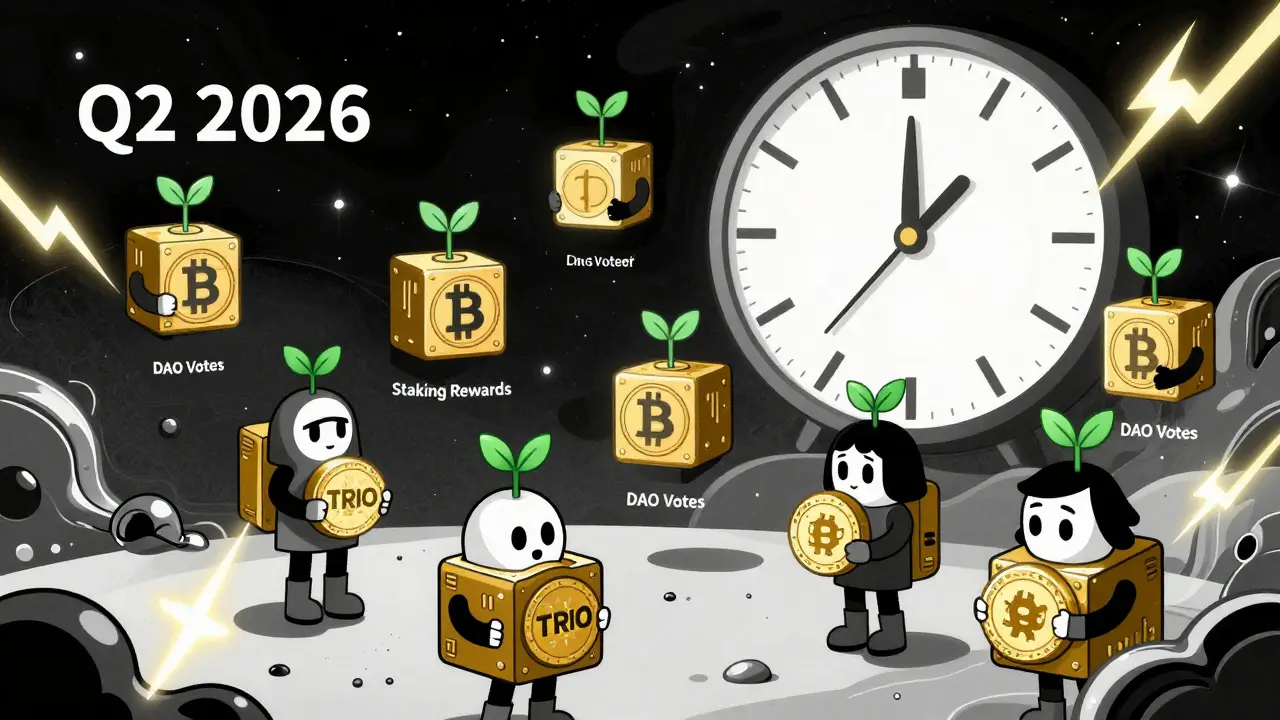
But here’s the threat: Runes. Launched in April 2024, Runes is Bitcoin’s newer, more efficient way to create fungible tokens. It’s faster, cheaper, and easier to use. Already, 35% of new Bitcoin token activity is on Runes, not BRC-20. OrdinalsBot says it’s adding Runes support by Q2 2026. If they don’t execute, TRIO could become obsolete.
Who Uses TRIO? Real Users, Real Feedback
OrdinalsBot has 12,450 people in its Discord. That’s a tight-knit community. Most users are developers, collectors, or early Bitcoin adopters.
Positive feedback:
- “TRIO cuts my minting costs in half.” - u/OrdinalTrader99, Reddit
- “API is rock solid. My app runs 24/7.” - Enterprise dev, Trustpilot
- “Finally, a Bitcoin token that does something.” - Discord member
Negative feedback:
- “Can’t pay exact fees. TRIO isn’t divisible.” - @BTC_Inscriber, Twitter
- “Hard to sell without crashing the price.” - Bitcointalk user
- “Wallet setup is a nightmare for beginners.” - Trustpilot review
On Trustpilot, OrdinalsBot has a 4.2/5 rating. That’s good - but the complaints are consistent. If you’re new, expect a learning curve. You need to understand Bitcoin wallets, inscription IDs, and fee optimization. It’s not like buying ETH on Coinbase.
What’s Coming Next for TRIO
OrdinalsBot has a roadmap - and it’s ambitious:
- March 15, 2026: Staking launches. Hold TRIO, earn rewards monthly.
- Q2 2026: Full Runes protocol support. TRIO will work on both BRC-20 and Runes.
- By Q4 2026: 25% of treasury controlled by DAO votes.
- January 2026: Lightning Network integration announced. Could cut fees dramatically.
If they deliver, TRIO could become the backbone of Bitcoin’s utility token economy. If they miss deadlines? It becomes another footnote.
Should You Buy TRIO?
Ask yourself this:
- Do you use Bitcoin NFTs or mint inscriptions? → TRIO saves you money.
- Are you a developer building on Bitcoin? → TRIO powers your tools.
- Do you believe in Bitcoin as a data platform? → TRIO is one of the few tokens built for that future.
- Are you looking for a quick flip? → Don’t. Liquidity is low. Volatility is high.
TRIO isn’t for everyone. It’s for people who care about Bitcoin’s evolution - not just its price. If you’re in that group, it’s worth studying. If you’re just chasing pumps? Walk away.
The real test? Not the price. Not the hype. It’s whether OrdinalsBot can keep building - and whether users keep using TRIO to pay for real services. So far, they are.
Is TRIO a good investment?
TRIO isn’t a traditional investment. It’s a utility token. If you use OrdinalsBot’s tools, it saves you money. If you don’t, it’s just a volatile asset with low liquidity. Don’t buy it hoping it’ll hit $10. Buy it if you need to pay for Bitcoin inscriptions or API services. Its value comes from usage, not speculation.
Can I stake TRIO yet?
Staking for TRIO is scheduled to launch on March 15, 2026. Until then, you can only use it for fee discounts, governance voting, and exclusive mint access. Once live, staking will offer monthly rewards - similar to how Ethereum staking works, but on Bitcoin. Check OrdinalsBot’s official channels for exact details when it goes live.
Why is TRIO non-divisible?
TRIO is built on Bitcoin’s Ordinals protocol, which inscribes data as whole units. Unlike Ethereum tokens, which can be split into decimals, BRC-20 tokens like TRIO are designed as indivisible units. This is a technical limitation of the standard, not a design choice. It causes friction for small transactions, which is why many users are asking for change - and why OrdinalsBot is working on Runes support, which allows divisibility.
Where can I buy TRIO?
TRIO is available on MEXC Global and a few smaller exchanges. It’s not listed on Coinbase, Binance, or Kraken. To buy, you’ll need a Bitcoin wallet compatible with BRC-20 tokens, like XVerse or Leather. You’ll also need to transfer BTC to pay for transaction fees. The process is more complex than buying ETH - it’s not beginner-friendly.
Is TRIO affected by Bitcoin’s high fees?
Yes. Since TRIO runs on Bitcoin, every transaction - buying, sending, using - costs BTC in fees. During network congestion, those fees can spike. That’s why OrdinalsBot is integrating the Lightning Network. Once live, users will be able to pay for small TRIO-related actions with near-zero fees. Until then, expect higher costs when Bitcoin is busy.
What’s the difference between BRC-20 and Runes?
BRC-20 is the first way to create fungible tokens on Bitcoin, using inscriptions. Runes is a newer, more efficient protocol launched in April 2024. Runes is faster, cheaper, and allows divisibility - something BRC-20 can’t do. While BRC-20 led the way, Runes is now gaining faster adoption. TRIO is moving to support both, but its long-term future depends on how well it adapts to Runes.
Can I use TRIO with a hardware wallet?
Most hardware wallets don’t support BRC-20 tokens yet. You’ll need a software wallet like XVerse or Leather to manage TRIO. Some users report partial success with Ledger using third-party apps, but it’s not officially supported and carries risk. For now, hardware wallets are not the best option for TRIO holders.
Is TRIO regulated?
The SEC hasn’t specifically named TRIO, but it has warned that many Bitcoin inscription tokens could be classified as securities. TRIO’s utility features - fee discounts, staking, governance - help argue it’s not a security. But regulatory risk remains. If the SEC targets BRC-20 tokens, TRIO could be affected. Always assume regulation could change quickly in this space.





Tom Sheppard
February 3, 2026 AT 15:53Also, who else is hyped for staking? March 15 can’t come soon enough 😍
Ramona Langthaler
February 4, 2026 AT 22:54Sunil Srivastva
February 6, 2026 AT 15:21Rachel Stone
February 7, 2026 AT 06:19Richard Kemp
February 8, 2026 AT 11:17Gurpreet Singh
February 10, 2026 AT 03:51Raymond Pute
February 10, 2026 AT 13:11Tressie Trezza
February 11, 2026 AT 11:51