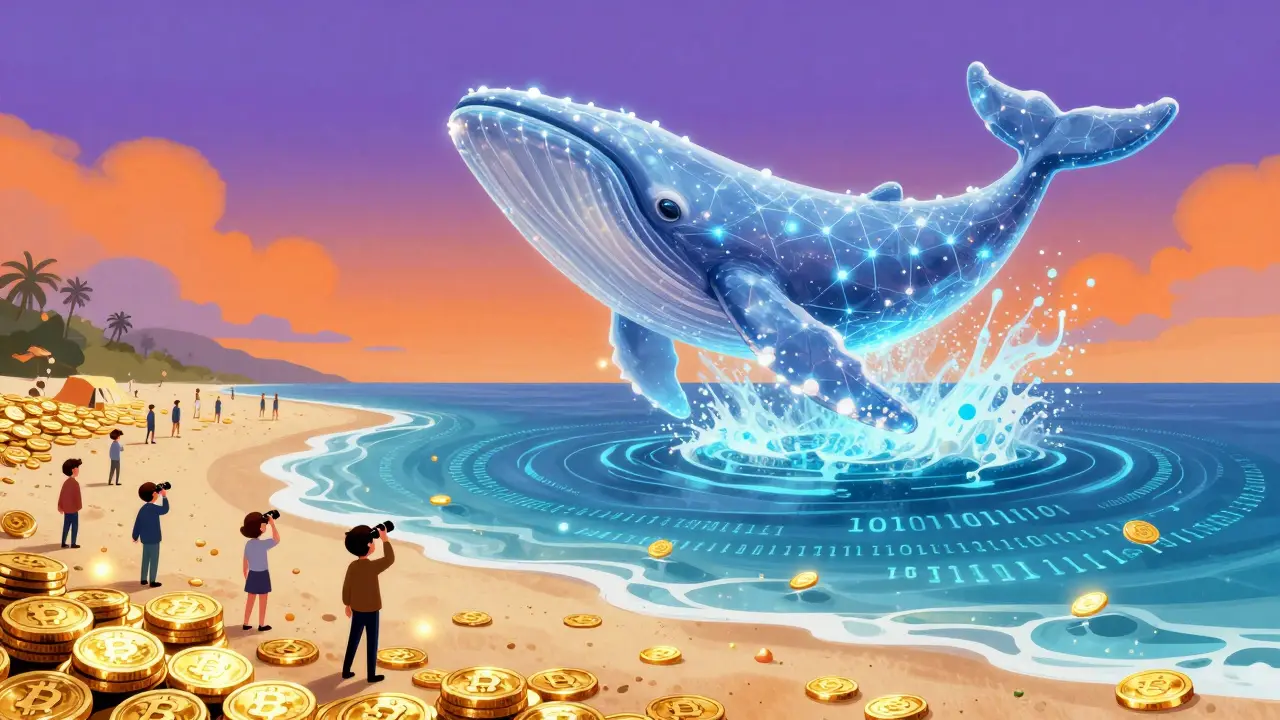
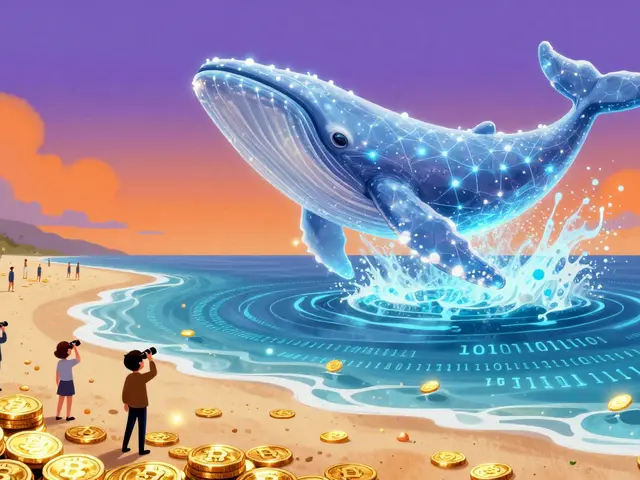
Imagine you are at a beach party. You can hear the chatter of hundreds of people, but suddenly, the ground shakes slightly. Everyone stops and looks toward the water. Something massive just moved. In the crypto world, that shake is a large transaction hitting the blockchain. The thing moving it is a crypto whale. If you want to make money in this market, you need to know where the big fish are swimming before they create waves.
Whale watching isn't about standing by a shore with binoculars. It is the practice of monitoring public blockchain data to track wallets holding enough cryptocurrency to move prices. By seeing what these giants buy, sell, or transfer, traders try to predict market shifts before they happen. But how do you spot them, and should you actually trust their moves?
Who Exactly Is a Crypto Whale?
The term "whale" comes from traditional finance, where it described investors with enough capital to sway markets. In crypto, the definition is looser but still significant. Generally, a whale is an individual or entity holding enough of a specific asset to influence its price.
For Bitcoin, the bar is high. Holding at least 1,000 BTC typically qualifies you as a whale. As of late 2023, that was worth roughly $64.7 million. For smaller altcoins, the threshold drops. Some analysts define a whale as anyone holding 1% or more of a coin's circulating supply. This matters because a single trade from a wallet holding 5% of a low-cap token can crash or pump the price instantly, whereas the same percentage in Bitcoin might barely ripple the charts.
How much Bitcoin makes someone a whale?
Typically, holding 1,000 BTC or more defines a Bitcoin whale. This represents a substantial portion of the network's liquidity and allows for significant market impact.
Why Do Traders Watch Whales?
The core idea is simple: follow the smart money. Large holders often have better information, deeper pockets, and more sophisticated strategies than retail traders. When a whale accumulates coins quietly over weeks, it often signals confidence in future price increases. Conversely, when they start moving assets to exchanges, it often precedes a sell-off.
Data suggests whale activities frequently lead major market shifts by 12 to 72 hours. If you can spot that accumulation phase, you get a head start. However, there is a catch. Not every large movement is a trade signal. Many "whale" transactions are simply exchanges moving funds between cold storage vaults for security purposes. Distinguishing between a strategic buy and a routine operational transfer is the hardest part of whale watching.
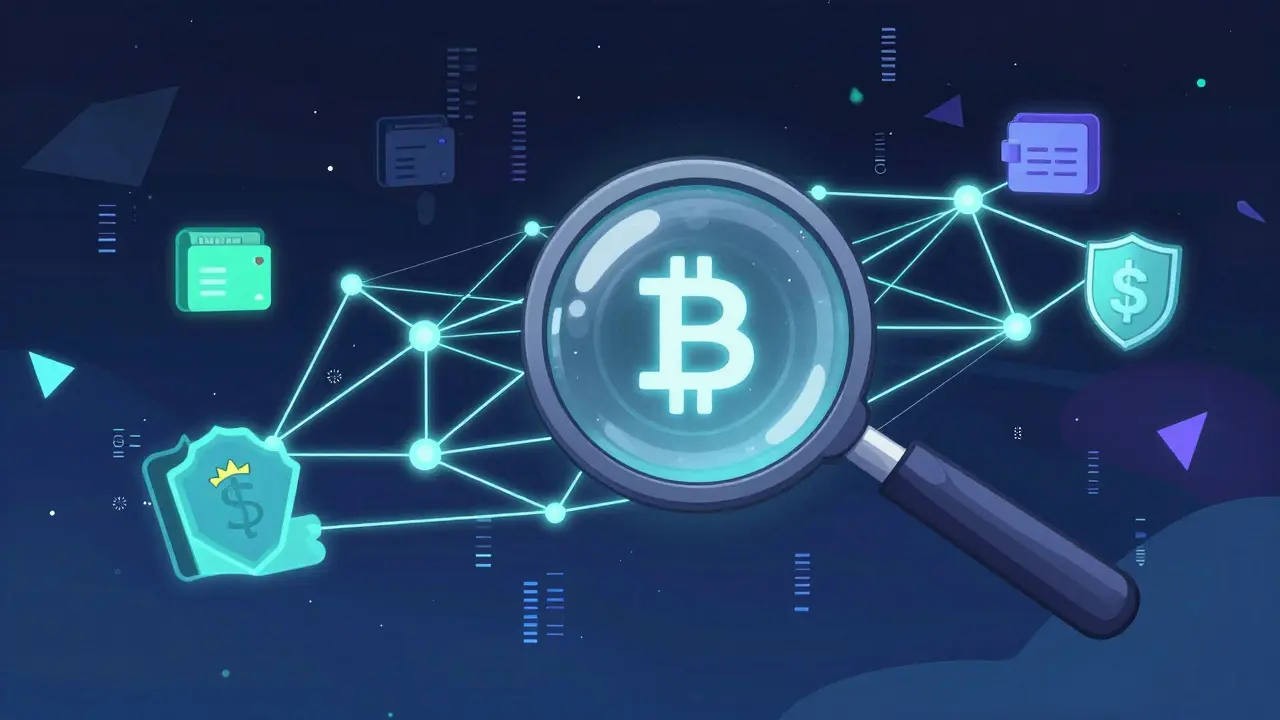
Tools for Tracking Big Moves
You don't need to be a coder to watch whales, but you do need the right tools. The ecosystem has grown from basic block explorers to advanced AI-driven platforms.
| Tool | Type | Key Feature | Cost |
|---|---|---|---|
| Whale Alert | Notification Service | Real-time alerts for transfers >$1M | Free (Twitter/Discord) |
| Nansen | Advanced Analytics | Labels wallets as 'Smart Money' | Premium (~$99/mo) |
| Etherscan | Block Explorer | Raw transaction history | Free |
| Glassnode | Macro Analytics | Long-term trend indicators | Freemium/Premium |
Whale Alert is the most accessible entry point. It monitors major chains and tweets when large amounts of Bitcoin, Ethereum, or other tokens move. It’s great for awareness but lacks context. You see a number, but not necessarily why it moved.
For deeper insights, platforms like Nansen use machine learning to label addresses. They identify which wallets belong to venture capital firms, successful traders, or exchanges. This helps filter out noise. Instead of seeing "Wallet A sent 10,000 ETH," you see "Top Trader Wallet sent 10,000 ETH to Binance." That distinction changes everything.
The Risks: Why Whale Watching Isn't a Crystal Ball
It is tempting to think following whales guarantees profits. It doesn't. In fact, it can trap you if you aren't careful. Here are the biggest pitfalls:
- False Signals: About 60-70% of large transfers tracked by free services are just exchanges moving coins for custody. Acting on these will cause panic selling or FOMO buying at bad times.
- Confirmation Bias: You might only notice the whales that were right and ignore the ones who got wrecked. Dr. Linda Jeng, former Head of Blockchain at Circle, warns that whale watching often creates this bias.
- Liquidity Differences: Whale moves matter less in highly liquid markets like Bitcoin. One whale selling won't crash BTC like it would crash a small meme coin. Focus your attention on altcoins with lower market caps where impact is higher.
- Privacy Coins: You cannot watch whales on Monero or Zcash. These networks hide transaction details, making whale watching impossible by design.

How to Start Whale Watching Today
If you want to add this to your strategy, start slow. Don't jump into expensive subscriptions immediately.
- Pick One Chain: Start with Bitcoin or Ethereum. Their data is cleaner and more widely analyzed. There are nearly 1,900 Bitcoin wallets holding over 1,000 BTC alone, giving you plenty of targets.
- Use Free Alerts First: Follow Whale Alert on Twitter or join their Discord. Get used to seeing large numbers. Notice how the market reacts (or doesn't) after a big alert.
- Learn to Read Block Explorers: Use Etherscan or Solscan. Look up a known exchange address (like Binance's hot wallet). See how inflows and outflows correlate with price action. Inflows usually mean selling pressure; outflows mean users are taking coins to private wallets, often signaling holding.
- Combine with Technical Analysis: Never rely on whale data alone. If a whale is buying but the RSI is extremely high and the chart shows resistance, wait. Professional traders report higher success rates when whale accumulation aligns with technical indicators like RSI below 35.
- Upgrade Gradually: Once you understand the basics, consider a tool like Nansen or Glassnode if you trade actively. They save time by labeling wallets automatically.
The Future of On-Chain Intelligence
As crypto matures, whale watching is evolving. Institutional adoption is rising, with many hedge funds hiring dedicated on-chain analysts. This means the "smart money" is becoming more professional and harder to trick.
New features are emerging too. Decentralized finance (DeFi) protocols like Uniswap are integrating native tracking for liquidity pool movements. AI-driven pattern recognition is now identifying accumulation phases with up to 82% accuracy days before price moves. However, experts predict that as market depth grows, the impact of any single whale will diminish. By 2028, some analysts believe individual whale influence could drop below 5% of market impact.
Until then, the transparency of the blockchain remains a powerful advantage for those willing to look under the hood. Just remember: whales swim deep, and sometimes they dive to avoid sharks. Always keep your own risk management tight.
Is whale watching legal?
Yes. Blockchain data is public. Monitoring transactions does not violate laws. However, using this data to manipulate markets or coordinate insider trading may cross legal boundaries depending on jurisdiction.
Can I track whale wallets on privacy coins?
No. Privacy-focused cryptocurrencies like Monero and Zcash obscure sender, receiver, and amount data, making traditional whale watching techniques ineffective.
What is the best free tool for beginners?
Whale Alert is the best starting point due to its ease of use and real-time notifications via social media. For deeper manual research, Etherscan is the standard free block explorer.
Do whales always predict price increases?
Not always. While accumulation often precedes bull runs, false signals occur in about 41% of bearish scenarios according to CFA Institute research. Context and confirmation from other indicators are crucial.
How accurate are premium whale watching tools?
Premium tools like Nansen claim high accuracy in labeling smart money, with case studies showing 82% accuracy in predicting movements 72 hours in advance. However, no tool is perfect, and human interpretation remains vital.


pankaj chawla
June 15, 2026 AT 13:43I think the point about liquidity differences is crucial here. Most people ignore that a whale moving BTC doesn't mean anything compared to them moving a low cap altcoin. You have to look at the market cap relative to the transfer size otherwise you are just chasing noise.
Charles Pawlikowski
June 17, 2026 AT 07:45lol another article telling retail how to pick pennies in front of a steamroller :/
Andrea Burd
June 17, 2026 AT 13:58this is such basic stuff and honestly i feel like its misleading. the tools mentioned arent even that good for real time trading because by the time you see the alert on twitter the price has already moved. also nansen is way too expensive for most people who read this garbage. typical clickbait content with no real value add for anyone trying to actually make money. just stick to charts if you want to survive.
Amit Thakur
June 19, 2026 AT 00:24You need to understand the alpha generation cycle properly. The institutional players use smart money labels not just for accumulation but for wash trading detection as well. If you are looking at raw volume without filtering for exchange internal transfers you will get rekt hard. The key metric is net inflow vs outflow combined with order book depth analysis. Retail traders always fall for the FOMO when they see a big green candle after a whale alert but they dont realize the whale might be distributing into that liquidity. You must correlate on-chain data with technical indicators like RSI divergence and volume profile value areas. Without that multi-factor confirmation model your win rate will stay below 50 percent. I suggest focusing on L2 ecosystems where gas fees allow for more frequent small batch accumulation strategies by whales rather than single massive transactions on mainnet.
Eric Scheinberg
June 20, 2026 AT 23:18The distinction between operational transfers and strategic positioning is indeed the most difficult aspect of this methodology. Many analysts fail to account for the routine custodial movements that occur daily. One must approach this data with extreme caution and rigorous verification protocols before making any financial decisions based solely on wallet activity metrics.
Nick Rice
June 21, 2026 AT 15:45Hey everyone, let's keep this discussion helpful. I've been tracking wallets for years and the biggest mistake newbies make is assuming every large move is a signal. It's often just rebalancing. Start with Etherscan as suggested, it's free and teaches you how the chain actually works. Don't rush into paid subs until you can identify an exchange hot wallet yourself. Knowledge is power here.
Jessica Lane
June 22, 2026 AT 00:32I really appreciate the breakdown of the risks involved. It is so easy to get caught up in the hype of 'smart money' following. I wonder if there are specific patterns in DeFi pools that are easier to track than simple token transfers? I am curious about how liquidity pool shifts compare to standard wallet movements in terms of predictive accuracy for price action.
Akeem Whittaker
June 22, 2026 AT 03:31Let me clarify something for those confused about the tools. Nansen isn't magic, it's just labeled data. You still need to interpret it. If you see a VC wallet moving funds, check if it's to an exchange or a cold storage multisig. Moving to Binance usually means selling pressure is coming. Moving to a known cold storage address means holding. That is the basic logic. Stop overcomplicating it and start reading the blockchain yourself instead of relying on tweets.