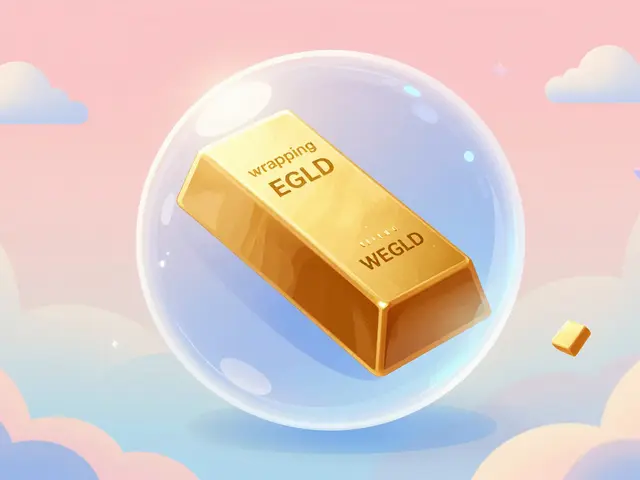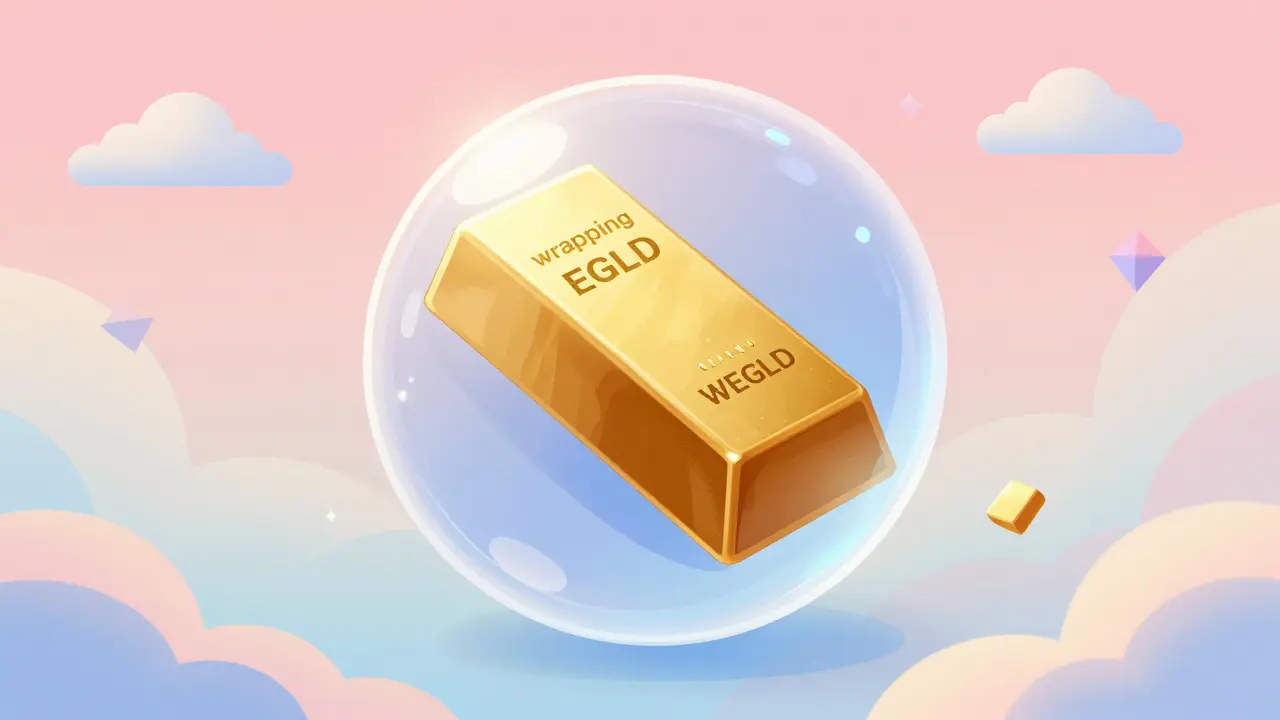
Imagine you have a physical gold bar. It’s valuable, but you can’t easily spend it at a coffee shop or use it in an online game that only accepts digital credits. Now, imagine someone gives you a digital receipt that represents that exact gold bar. You can trade that receipt instantly, use it in apps, and swap it back for the real gold anytime. That is exactly what Wrapped EGLD does.
If you are new to the MultiversX ecosystem, you might be confused by the existence of two tokens: EGLD and WEGLD. They look similar, they track each other’s price, and they seem redundant. But there is a specific technical reason why WEGLD exists, and understanding it will save you from mistakes when using decentralized finance (DeFi) tools.
The Core Problem: Native Coins vs. Smart Contracts
To understand WEGLD, we first need to look at how blockchains handle money. On many networks, like Ethereum, the native currency (Ether) has special rules. It pays for gas fees, it secures the network through staking, and it lives in accounts directly on the blockchain. However, smart contracts-the code that powers DeFi apps-often struggle to interact with this native currency efficiently. They prefer standardized tokens that follow strict coding rules, known as fungible token standards.
MultiversX follows a similar logic. Its native coin, EGLD (Electronic Gold), is used for transaction fees, staking validators, and governance. It is the "blood" of the network. But when developers built the xExchange (formerly Maiar DEX), they needed a version of EGLD that behaved like any other standard token. This allowed liquidity pools to treat EGLD exactly like USDC or MEX tokens without writing complex custom code for every interaction.
This is where WEGLD steps in. It is not a separate investment project. It is a technical wrapper. One WEGLD always equals one EGLD. The wrapping process locks up your native EGLD in a secure smart contract and mints an equivalent amount of WEGLD tokens. When you want your native EGLD back, you burn the WEGLD, and the contract releases the underlying EGLD.
Where Does WEGLD Live?
WEGLD actually exists in two different forms, depending on which blockchain you are using. This distinction matters because it affects how you use it and where you can find it.
- On MultiversX (ESDT): Here, WEGLD is an ESDT (Elrond Standard Digital Token). This is the primary form used within the MultiversX ecosystem. If you are trading on xExchange or providing liquidity to pools like WEGLD-USDC, you are using this version. It benefits from MultiversX’s fast transaction speeds and low fees.
- On External Chains (ERC-20/BEP-20): You can also find WEGLD on networks like Ethereum or BNB Smart Chain. In these cases, it acts as a bridge asset. If you hold EGLD on MultiversX but want to use a lending protocol on Ethereum, you can bridge your EGLD to receive WEGLD on Ethereum. This allows cross-chain interoperability.

Why Use WEGLD Instead of Just Holding EGLD?
You might wonder, "If I already own EGLD, why bother wrapping it?" The answer lies in utility. Native EGLD is great for holding long-term or staking to earn rewards. However, if you want to participate in yield farming, provide liquidity to automated market makers (AMMs), or trade against stablecoins on a decentralized exchange, you usually need the wrapped version.
Think of it like this: EGLD is cash in your wallet. WEGLD is that same cash converted into a universal payment method accepted by all merchants in the DeFi mall. Without wrapping, many DeFi protocols simply cannot recognize or process your native EGLD balance.
| Feature | Native EGLD | Wrapped EGLD (WEGLD) |
|---|---|---|
| Primary Use | Gas fees, Staking, Governance | DeFi trading, Liquidity Pools, Cross-chain |
| Token Standard | Native Coin | ESDT (MultiversX), ERC-20 (Ethereum) |
| Staking Eligibility | Yes (Earn validator rewards) | No (Must unwrap first) |
| Value Peg | Market Price | 1:1 with EGLD |
| Best For | Long-term holders, Validators | Active traders, DeFi users |
Risks and Considerations
While WEGLD is a straightforward tool, it introduces certain risks that pure EGLD holders do not face. Understanding these helps you protect your assets.
Smart Contract Risk: Since WEGLD relies on smart contracts to lock and mint tokens, there is always a theoretical risk of a bug or exploit in that code. While MultiversX has undergone audits by firms like Trail of Bits, no code is 100% immune to vulnerabilities. Always use official interfaces provided by MultiversX or reputable partners.
Bridge Risk: If you are moving WEGLD between chains (e.g., from MultiversX to Ethereum), you are relying on a bridge. Bridges have historically been targets for hackers. Ensure you are using trusted, well-established bridges and double-check destination addresses. Sending tokens to the wrong chain or address can result in permanent loss.
Liquidity Fragmentation: Because WEGLD exists on multiple chains, liquidity can be split. You might see a slightly different price for WEGLD on Ethereum compared to MultiversX due to arbitrage delays. For most users, this difference is negligible, but high-frequency traders should be aware of it.
How to Get Started with WEGLD
Using WEGLD is simple if you follow the right steps. Here is a practical guide for beginners:
- Acquire EGLD: Buy EGLD on a centralized exchange like Binance or Coinbase. Withdraw it to a MultiversX-compatible wallet, such as the Web Wallet or xPortal app.
- Wrap Your Tokens: Go to the xExchange platform. Connect your wallet. Look for the "Wrap" function. Enter the amount of EGLD you wish to wrap. Confirm the transaction. You will now see WEGLD in your wallet.
- Use in DeFi: With WEGLD, you can now add liquidity to pools, trade for other tokens, or stake in yield farms. Remember, you cannot stake WEGLD for validator rewards; you must unwrap it first if you want to earn those specific yields.
- Unwrap When Done: If you decide to exit DeFi and hold long-term, go back to the xExchange interface and select "Unwrap." Your WEGLD will be burned, and native EGLD will be returned to your wallet.
Is WEGLD a Good Investment?
It is important to clarify that WEGLD itself is not an independent investment. Its value is entirely derived from EGLD. Buying WEGLD is economically identical to buying EGLD, minus the convenience fee of wrapping. Therefore, your decision to hold WEGLD should depend on your activity, not speculation.
If you plan to actively trade or farm yields, holding WEGLD saves you time and transaction costs. If you are a passive investor, sticking with native EGLD is simpler and allows you to stake directly. Do not buy WEGLD expecting it to outperform EGLD; it will never do that because they are pegged 1:1.
Can I stake WEGLD to earn rewards?
No, you cannot stake WEGLD directly for validator rewards. Only native EGLD can be delegated to validators. If you want to earn staking yields, you must unwrap your WEGLD back into EGLD first.
Is there a fee to wrap EGLD?
There is no direct "wrapping fee," but you will pay the standard network gas fee for the transaction. On MultiversX, these fees are typically fractions of a cent, making the process very cheap.
What happens if the bridge gets hacked?
If a cross-chain bridge holding the collateral for WEGLD were compromised, the peg could break, and your WEGLD might lose value. This is a general risk with all wrapped assets. Always use official, audited bridges and monitor security news.
Can I send WEGLD from MultiversX to an Ethereum wallet?
Not directly. You must use a bridge service to transfer the value across chains. The bridge will burn your WEGLD on MultiversX and mint an equivalent amount of ERC-20 WEGLD on Ethereum. Never try to send tokens directly between incompatible blockchains.
Why does the price of WEGLD sometimes differ from EGLD?
In theory, they are always equal. Small discrepancies occur due to market volatility, trading delays, or liquidity differences on specific exchanges. Arbitrageurs quickly correct these gaps, so the prices usually align within minutes.