Gas Fee Savings Calculator
Calculate how much you could save on gas fees by trading on ApertureSwap instead of Ethereum-based DEXs. Based on data from the article: ApertureSwap offers zero gas fees while Ethereum transactions typically cost $5-$50+ per trade.
ApertureSwap isn’t your typical crypto exchange. You won’t find it on your phone’s app store. You won’t see ads for it on YouTube. And if you’re used to trading on Binance or Coinbase, you might scroll right past it. But if you care about privacy, zero gas fees, and AI-driven trades, ApertureSwap on Manta Pacific could be one of the most interesting tools in your DeFi toolkit - if you’re willing to accept its limits.
What Is ApertureSwap?
ApertureSwap, formerly known as Aperture Manta, is a decentralized exchange built on the Manta Pacific blockchain. It launched in 2022 by a team including Gao Han and Lian Zhu. Unlike centralized platforms that hold your keys, ApertureSwap is non-custodial - you control your wallet, your assets, and your trades. It’s built on Uniswap’s open-source code, but with major upgrades.
The big twist? It uses AI to interpret your trading intent. Instead of just clicking "swap 1 ETH for USDC," you tell it what you want: "I want to buy USDC at the best price over the next hour, with maximum privacy." The system then auto-executes trades across multiple liquidity sources, using zero-knowledge proofs to hide your transaction details from public view. It’s like having a private hedge fund bot running for you, without the $100k minimum.
How It Works: Zero Gas, AI Trades, and Privacy
On most blockchains, every trade costs gas - sometimes dozens of dollars during peak times. ApertureSwap removes that barrier entirely. Thanks to Manta Pacific’s modular ZK architecture, all transactions are batched and processed off-chain, then settled with cryptographic proofs. You pay nothing in gas. Not even a fraction of a cent.
That’s not just convenient - it’s revolutionary for frequent traders. If you’re dollar-cost averaging into tokens daily or rebalancing a portfolio across DeFi protocols, the savings add up fast. One user on Reddit calculated they saved over $200 in gas fees in three weeks just by switching from Ethereum-based DEXs to ApertureSwap.
The AI intent engine works by analyzing market depth, slippage tolerance, and liquidity across pools. It doesn’t just pick the cheapest route - it picks the most private one. Your trade doesn’t show up on block explorers like Etherscan. Even if someone monitors Manta Pacific, they can’t link your wallet to the trade. That’s why institutional investors - even those with $100k+ portfolios - are quietly testing it.
What You Can Trade
As of October 2025, ApertureSwap supports only four tokens: MANTA, USDC, USDT, and WETH. That gives you eight trading pairs. No BTC. No SOL. No DOGE. No new memecoins. If you’re looking to jump on the next trending token, this isn’t the place.
Trading volume? It’s tiny. Around $136.55 in 24 hours. That’s 0.00002% of Uniswap’s daily volume. Liquidity pools are shallow. A $5,000 trade might move the price by 5% or more. This isn’t a problem for micro-traders or privacy-focused users making small swaps - but if you’re moving six figures, you’ll get frontrun or slippage.
It’s not designed for volume. It’s designed for discretion. Think of it like a private club for traders who don’t want the market to know what they’re doing.
Security and Reliability
ApertureSwap’s security rests entirely on Manta Pacific’s blockchain. Manta Pacific uses zero-knowledge rollups to verify transactions without exposing data. It’s the same tech that powers privacy coins like Zcash, but applied to DeFi.
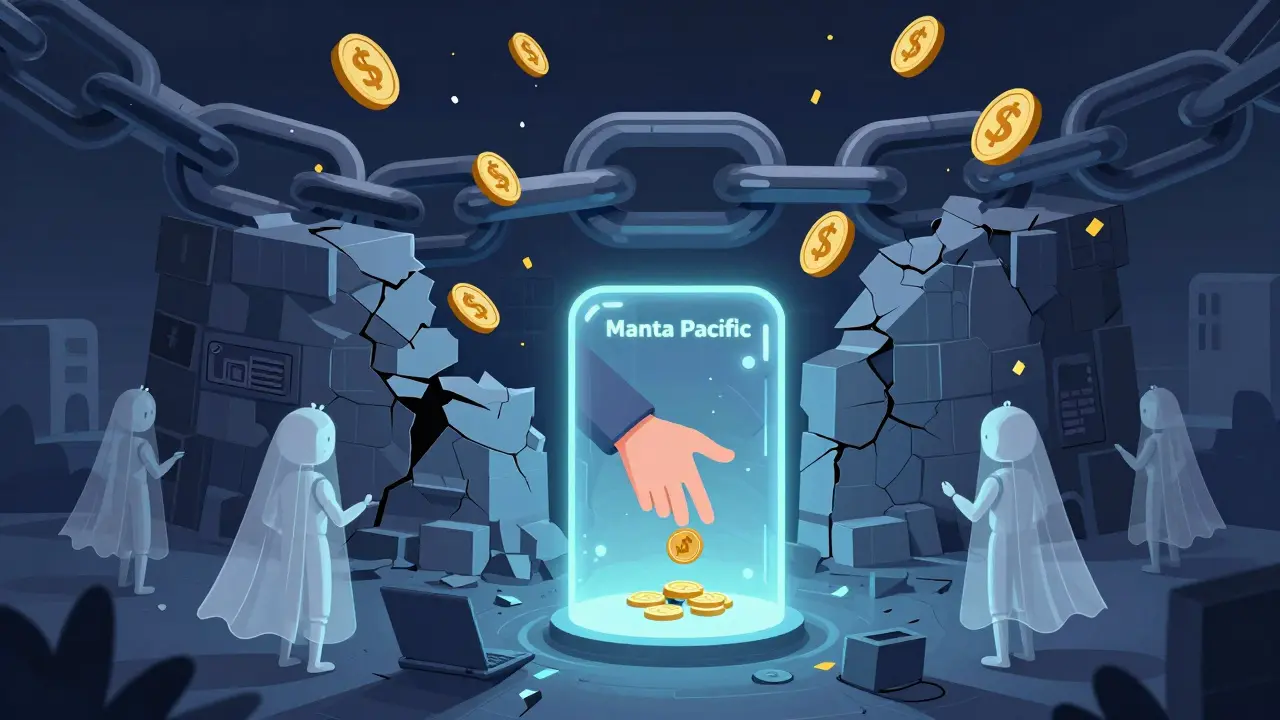
In 2024, Manta Pacific suffered a network attack. The exploit targeted a cross-chain bridge, not ApertureSwap’s smart contracts. The team froze the bridge, rolled back the chain, and restored funds. No user funds were lost. That response - fast, transparent, and effective - is rare in DeFi.
The platform also uses Celer Network’s cross-chain bridge to move assets between Manta Atlantic (the mainnet) and Manta Pacific (the privacy layer). That bridge has been audited and is considered secure. Still, any bridge carries risk. Don’t deposit more than you’re willing to lose.
Who Is This For?
ApertureSwap isn’t for everyone. It’s not even for most crypto users. But it’s perfect for three types of people:
- Privacy-first traders - You don’t want your wallet address tied to every trade you make. You’re tired of analytics firms tracking your movements.
- Gas-sensitive users - You trade often, and gas fees eat your profits. You’re tired of waiting for Ethereum to calm down.
- Institutional testers - Hedge funds and family offices with $100k+ are quietly using it to test privacy-preserving DeFi strategies without exposing their positions.
If you’re a beginner, you’ll be confused. If you’re a day trader chasing pumps, you’ll be frustrated. If you’re someone who values control and secrecy over volume and speed - this might be your new secret weapon.
What’s Missing
ApertureSwap is barebones by design. No staking. No yield farming. No NFT marketplace. No mobile app. No customer support chat. No educational content. It’s a single-purpose tool: swap tokens privately, with zero gas, using AI.
You won’t find reviews on Trustpilot or G2. No YouTube tutorials. No Reddit threads with 10k upvotes. That’s not an accident. The team wants this to stay under the radar. It’s not trying to go viral. It’s trying to be reliable for those who need it.
Also, no fiat on-ramps. You need to bring in USDC or ETH from another chain first. That means you need to already be in DeFi to use it. That’s a barrier for newcomers.
How It Compares to Other DEXs
Here’s how ApertureSwap stacks up against similar tools:
| Feature | ApertureSwap | Uniswap (Ethereum) | Curve (Ethereum) | Gate.io (CEX) |
|---|---|---|---|---|
| Type | Decentralized | Decentralized | Decentralized | Centralized |
| Gas Fees | $0 | $5-$50+ | $5-$50+ | $0 (but deposit/withdraw fees apply) |
| Privacy | High (ZK-proof hidden trades) | None (public on-chain) | None (public on-chain) | Medium (KYC, but trades private) |
| Trading Pairs | 8 | 10,000+ | 500+ | 1,000+ |
| 24h Volume | $136 | $1.2B | $350M | $2.1B |
| Minimum Investment | $0 | $0 | $0 | $0 |
| Institutional Focus | Yes (private execution) | No | No | Yes (but no privacy) |
ApertureSwap loses on volume, pairs, and ease of use. But it wins on two things no other DEX offers: zero gas and true transaction privacy. If you’re trading $500 or $5,000 and don’t want the market to know - this is the only option.
Future Outlook
ApertureSwap’s future depends entirely on Manta Network. If Manta Pacific gains adoption as a privacy layer for DeFi, ApertureSwap could become the go-to for institutional traders. But right now, Manta is still in scalability testing. It’s not yet as fast or as stable as Ethereum or Solana.
There’s no roadmap for new tokens, staking, or mobile apps. The team has stayed quiet since the 2024 incident. That’s either a sign of focus - or a red flag. No updates mean no progress.
For now, ApertureSwap is a niche tool for a niche need. It’s not the future of crypto trading. But for a small group of users who value privacy over everything else, it might already be the best option available.
Is ApertureSwap safe to use?
Yes, for its intended use. ApertureSwap’s smart contracts have not been hacked. Its security relies on Manta Pacific’s blockchain, which has a strong track record. A 2024 network attack targeted a cross-chain bridge, not ApertureSwap directly, and funds were fully restored. Still, always use a separate wallet for DeFi, never your main exchange wallet.
Do I need to pay gas fees on ApertureSwap?
No. All trades on ApertureSwap are gasless. The Manta Pacific blockchain handles transaction fees internally using zero-knowledge proofs. You only need to cover the cost of bringing funds onto the chain from another network - like Ethereum or Polygon - which does require gas.
Can I trade Bitcoin on ApertureSwap?
No. ApertureSwap only supports MANTA, USDC, USDT, and WETH. Bitcoin is not listed, and there are no plans announced to add it. If you want to trade BTC in a private way, you’d need to wrap it as WBTC first, then swap it on another chain.
Is ApertureSwap better than Uniswap?
It depends. If you want to trade hundreds of tokens, get the best price, and don’t care about privacy, Uniswap is far better. If you want to make small, private trades with zero gas and don’t want the market to see your moves, ApertureSwap wins. They serve completely different needs.
Do I need $100,000 to use ApertureSwap?
No. The $100k minimum applies only to institutional services - like custom trade routing or private order books - which are optional. Anyone can use the public swap interface with any amount. Most users trade under $1,000.
Can I use ApertureSwap on my phone?
Not directly. There is no official mobile app. You can access it through a browser on your phone, but you’ll need a Web3 wallet like MetaMask or Phantom connected to the Manta Pacific network. It’s not optimized for mobile, so desktop is recommended.


Lawal Ayomide
December 4, 2025 AT 00:05This thing is wild. Zero gas? AI that whispers to the blockchain? I tried it with $200 and my trade vanished like magic. No one saw it. No one even knew I was there. Game changer.
samuel goodge
December 5, 2025 AT 13:58It’s fascinating how this platform inverts the entire logic of DeFi: instead of maximizing transparency, it maximizes obscurity. In a world where every transaction is a public ledger entry, ApertureSwap treats privacy not as a feature-but as a fundamental right. The ZK-rollup architecture here isn’t just technical; it’s philosophical. It asks: why should my financial intent be broadcast to the world?
And yet-the trade-off is brutal. Eight pairs? $136 in volume? It’s like building a private library with only eight books. Who are the patrons? And what happens when the librarian retires?
The institutional adoption angle is real, but quietly. If hedge funds are using this, they’re not tweeting about it. They’re whispering in encrypted Discord channels. That’s not a bug-it’s the point.
Still, I wonder: if privacy is the goal, why not just use Zcash? Or Monero? Because here, you’re not just hiding your transaction-you’re automating it. The AI doesn’t just obfuscate-it strategizes. That’s the real innovation.
But the lack of a roadmap? The silence since 2024? That’s the shadow under the light. A team that doesn’t communicate isn’t building trust-they’re building a ghost town.
It’s a beautiful experiment. But experiments don’t scale. They evaporate.
Vidyut Arcot
December 7, 2025 AT 08:31Guys, if you're into privacy and hate gas fees, this is the hidden gem you’ve been waiting for. I’ve been using it for 3 months now-small trades, daily DCA-and my wallet’s never been this calm. No stress, no drama. Just clean, quiet swaps. Give it a shot if you’re tired of paying $10 to trade $50.
Jay Weldy
December 8, 2025 AT 09:24I love how this isn’t trying to be everything to everyone. It’s like a quiet corner in a noisy cafe-perfect for people who just want to get their business done without the noise. Not for everyone, but for the right people? It’s perfect.
Melinda Kiss
December 8, 2025 AT 12:07I’ve been using ApertureSwap for my weekly USDC swaps and I’m so glad I found it 😊 Zero gas fees = no more hesitation to trade small amounts. The AI really does make it feel like I have a personal trader. Still wish there was a mobile app though…
Nancy Sunshine
December 10, 2025 AT 09:15While the technical architecture of ApertureSwap is undeniably sophisticated, the practical utility remains constrained by its severe liquidity limitations. The absence of broader token support and the minimal trading volume render the platform functionally inert for any participant seeking meaningful exposure beyond micro-transactions. One must question whether the privacy benefits outweigh the opportunity cost of exclusion from the broader DeFi ecosystem. Furthermore, the lack of developer engagement or public roadmap suggests a project in stasis rather than evolution. In the context of decentralized finance, stagnation is tantamount to obsolescence.
It is worth noting that the 2024 network incident, while resolved, revealed an overreliance on a single cross-chain bridge-a single point of systemic vulnerability. The restoration of funds, while commendable, does not negate the underlying fragility of the infrastructure. Institutional users may tolerate this risk, but retail participants should approach with extreme caution.
Moreover, the claim that ApertureSwap serves as a ‘private hedge fund bot’ is hyperbolic. The AI does not ‘understand’ intent-it executes predefined parameters based on on-chain liquidity depth. To anthropomorphize the algorithm is misleading. It is not intelligence; it is optimization.
The comparison to Zcash is apt: both rely on zero-knowledge proofs, but Zcash has a decade of peer-reviewed research and community development. ApertureSwap, in contrast, appears as a boutique experiment-elegant, yes-but lacking the critical mass to sustain long-term viability.
Until the token list expands, liquidity increases, and a transparent governance model is introduced, ApertureSwap remains a curiosity-not a cornerstone of DeFi.
Alan Brandon Rivera León
December 11, 2025 AT 04:06Real talk-I’m from the U.S. but I’ve got family in Nigeria and India, and I’ve been showing this to them. They’re like, ‘Why does this even exist?’ And I’m like, ‘Because some of us don’t want the whole world watching our money moves.’
It’s not flashy. It’s not for TikTok traders. But for people who just want to move crypto without everyone knowing they bought USDC at 3:17 PM? This is it.
Yeah, the volume is tiny. But that’s the point. It’s not supposed to be the main stage. It’s the back room where the real traders go.
And if the devs are quiet? Maybe they’re just building. Not everyone needs to shout to be heard.
Ankit Varshney
December 12, 2025 AT 20:57Low volume is a feature, not a bug. If you're trading big, you're not here. You're on a CEX. This is for people who want to disappear. And it works.
Mani Kumar
December 12, 2025 AT 22:02ApertureSwap is not a DEX. It is a niche toy for amateurs who mistake obscurity for sophistication. Zero gas? Pathetic. The real innovation is not hiding your trades-it’s building a liquidity layer that doesn’t require secrecy. This platform is a digital velvet rope for the insecure.
And calling it ‘AI-driven’ is marketing nonsense. It’s a basic slippage optimizer wrapped in ZK-wizardry. Don’t confuse encryption with intelligence.
Do not invest time or capital here. The future belongs to scalable, open, transparent systems-not secret clubs with eight tokens.
Philip Mirchin
December 13, 2025 AT 01:21Mani’s got a point about the hype, but I think he’s missing the vibe. This isn’t for the masses. It’s for the quiet ones-the ones who don’t want their trades leaked to MEV bots or tracked by Chainalysis. I’ve used it for small swaps for months and never once felt exposed.
And yeah, no mobile app? Fine. I use it on desktop. No one needs a phone app to move $300 of USDC.
The real win? No gas. That alone saves me more than most DeFi platforms charge in a year. If you’re tired of paying to play, this is your quiet win.