
Back in 2021, the Central Bank of Nigeria shut down bank accounts tied to crypto exchanges. People thought that was the end. But it wasn’t. Nigerians kept trading - through P2P apps, cash deposits, and mobile wallets. By 2025, Nigeria led the world in peer-to-peer crypto volume, with over $92 billion flowing in just one year. So what’s the real story today? Are crypto payments allowed in Nigeria? The answer isn’t simple, but it’s clear: yes, they are - if you follow the rules.
It’s Not Illegal, But It’s Not Legal Tender
Cryptocurrency isn’t banned in Nigeria. You won’t go to jail for buying Bitcoin or sending Ethereum. But here’s the catch: crypto is not legal tender. That means you can’t use it to pay your taxes, buy government bonds, or settle official debts. The Nigerian naira still holds that status. Crypto operates in a parallel space - used for savings, remittances, trading, and business payments between private parties. This distinction matters. If you run a small business and accept Bitcoin for your goods, that’s fine. If you try to pay your landlord in Dogecoin and they refuse because they need naira for rent, that’s also fine. The law doesn’t force anyone to accept crypto. It just doesn’t stop them either.The Big Change: ISA 2025 and the SEC Takeover
The game changed in March 2025 when President Tinubu signed the Investments and Securities Act (ISA) 2025. This law didn’t legalize crypto - it classified it. Under ISA 2025, cryptocurrencies like Bitcoin, Ethereum, and Solana are now officially recognized as digital assets and treated as securities under Nigerian law. That means the Securities and Exchange Commission (SEC) is now in charge. Not the Central Bank. Not the police. The SEC. And with that power came strict rules:- All crypto exchanges and virtual asset service providers (VASPs) must register with the SEC.
- They must follow strict KYC (know your customer) and AML (anti-money laundering) rules.
- They’re subject to audits, reporting, and on-site inspections.
- Unlicensed platforms face fines of ₦10 million ($6,693) in the first month - plus ₦1 million ($669) every month after that.
Banking Is Back - But Only for Licensed Players
In 2021, the Central Bank of Nigeria (CBN) told banks: “Don’t touch crypto.” That caused chaos. People couldn’t deposit or withdraw naira to buy Bitcoin. P2P trading exploded because of it. Fast forward to December 2023. The CBN reversed course. It issued new guidelines allowing banks to serve SEC-licensed crypto businesses. Today, if you’re using Quidax or another licensed exchange, you can link your bank account. You can deposit naira, buy crypto, and withdraw profits - all through your regular bank. But here’s the twist: if you’re using an unlicensed international exchange like Binance or Kraken, your Nigerian bank can still block your transactions. The rules only protect licensed players. So if you want smooth banking, you need to use a local, SEC-approved platform.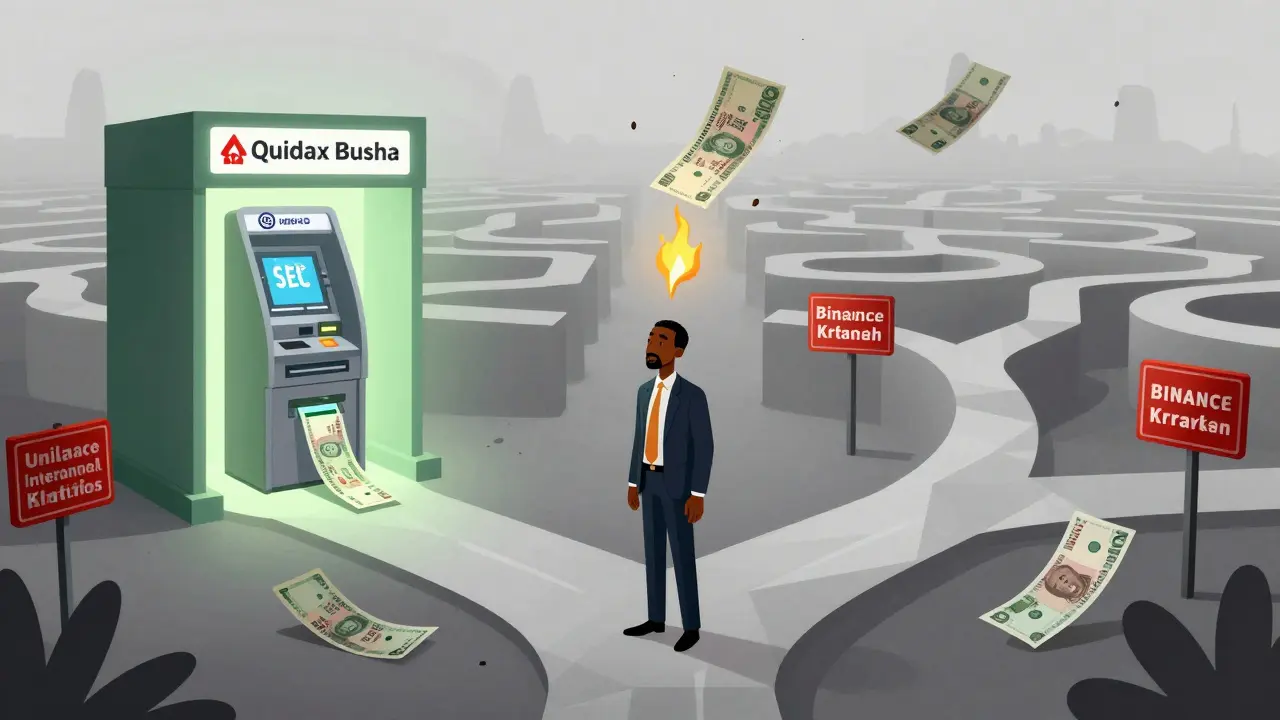
Taxes Are Now Official - Starting January 2026
For years, crypto users in Nigeria didn’t pay taxes on their gains. That’s over. The Nigerian Tax Administration Act (NTAA) 2025 took effect on January 1, 2026. Now, crypto is treated like property - not currency. That means:- Holding Bitcoin? No tax.
- Selling Bitcoin for profit? Taxable event.
- Exchanging Bitcoin for Ethereum? Taxable event.
- Using crypto to buy a laptop? Taxable event.
- Individuals: Profits taxed at personal income rates - up to 25%.
- Businesses: 20% corporate tax on profits between ₦25 million and ₦100 million. 30% if over ₦100 million.
- Transaction fees: All crypto platforms must charge 7.5% VAT on service fees they collect.
What’s Still Not Allowed
Just because crypto is legal doesn’t mean everything goes. The SEC and EFCC have cracked down hard on scams:- Ponzi schemes disguised as “crypto investment clubs” are illegal - and getting shut down fast.
- Unlicensed forex trading platforms that claim to offer crypto-backed trading are being raided.
- Anonymous wallets with no KYC are blocked from interacting with licensed exchanges.

Who Wins? Who Loses?
The new rules have created winners and losers. Winners:- Legit exchanges: Quidax, Busha, and others now have a legal edge. Customers trust them more. Banks work with them. They can grow.
- Remittance users: Nigerians abroad sending money home can now use licensed platforms with lower fees than Western Union.
- Investors: Clear rules mean less risk. You know who to trust.
- Unlicensed platforms: International exchanges that won’t register with the SEC are losing access to Nigerian users. Many are pulling out.
- Scammers: The days of easy crypto fraud are over. The SEC and EFCC are working together - and they’re not joking.
- Users who hate paperwork: KYC, tax filings, and compliance add friction. Some users are frustrated.
Can You Actually Use Crypto to Pay for Things?
Yes - but only in specific ways. You can pay for:- Online services (hosting, SaaS tools, freelance work)
- Products from Nigerian e-commerce stores that accept crypto (some do)
- Remittances via licensed platforms
- Investments in tokenized assets (real estate, startups)
- Pay your electricity bill
- Buy fuel at a gas station
- Settle a court fine
- Pay your landlord unless they agree to it
What’s Next?
The next 12 months will be critical. The SEC is still processing license applications. More platforms will get approved. Tax enforcement will ramp up. Banks will refine how they handle crypto deposits. Experts predict Nigeria’s crypto market will stabilize by late 2026. The chaos of 2021-2024 is behind us. The era of “legal gray zone” is over. What’s left is a regulated, taxed, monitored - but very real - crypto economy. For Nigerians, the message is simple: Use licensed platforms. Keep records. Pay your taxes. And don’t trust anyone promising 10x returns overnight.Is it illegal to own Bitcoin in Nigeria?
No, owning Bitcoin or any other cryptocurrency is not illegal in Nigeria. The law does not ban possession, holding, or personal use of crypto assets. However, you cannot use them as official payment for government services or taxes. They are treated as property, not currency.
Can I use Binance in Nigeria in 2026?
You can still access Binance, but your Nigerian bank will likely block deposits and withdrawals. Since Binance has not applied for a Nigerian license under the SEC’s ISA 2025 framework, it is not authorized to operate within Nigeria’s regulated financial system. This means you can’t easily convert naira to crypto or cash out profits through local banks. Licensed local exchanges like Quidax and Busha are now the safer, more reliable option.
Do I have to pay tax on my crypto profits in Nigeria?
Yes. Starting January 1, 2026, all crypto profits are taxable under the Nigerian Tax Administration Act. Selling Bitcoin for naira, trading crypto for another coin, or using crypto to buy goods counts as a taxable event. Individuals pay up to 25% personal income tax. Companies pay 20-30% corporate tax. All licensed crypto platforms must also charge 7.5% VAT on transaction fees.
Can Nigerian banks accept crypto payments?
Banks cannot accept crypto directly as payment. But they can now offer banking services to SEC-licensed crypto exchanges and VASPs. This means you can deposit naira into your Quidax account via your bank, buy crypto, and withdraw profits back to your account - all legally. It’s not crypto banking - it’s regulated crypto access through banks.
Are NFTs legal in Nigeria?
Yes, but with a caveat. Investment-focused NFTs - those sold as financial assets, with promises of returns or profit-sharing - are regulated by the SEC and must be licensed. Artistic NFTs (like digital art or collectibles) are not regulated unless they’re marketed as investments. So if you’re buying a digital painting, you’re fine. If you’re buying an NFT that promises dividends, you need to verify it’s SEC-approved.
What happens if I use an unlicensed crypto platform?
You’re not breaking the law by using an unlicensed platform - but you’re at risk. Your funds may be frozen if your bank blocks transactions. You have no legal recourse if the platform gets hacked or disappears. You won’t be protected by Nigeria’s investor compensation schemes. And if the platform turns out to be a scam, regulators won’t help you recover your money. Licensed platforms offer security, transparency, and legal recourse.






Arya Dev
February 23, 2026 AT 17:19maya keta
February 24, 2026 AT 06:22Curtis Dunnett-Jones
February 24, 2026 AT 09:42bella gonzales
February 26, 2026 AT 09:00Paul Reinhart
February 28, 2026 AT 01:22Amita Pandey
February 28, 2026 AT 03:41