You click "Sign Up" on the world's largest crypto exchange, only to be blocked instantly. It’s a frustrating reality for millions of users in 2026. Binance is the leading global cryptocurrency exchange that has faced intense regulatory scrutiny and market exits across dozens of jurisdictions since 2017. While it still serves over 120 countries, the list of places where you can’t trade-or can’t trade freely-is growing fast. Governments are cracking down on digital assets, citing money laundering risks and investor protection concerns.
If you live in a restricted region, trying to access your funds or open a new account can lead to frozen assets, forced withdrawals, or even legal trouble. This isn't just about missing out on low fees; it's about navigating a complex web of international sanctions, local bans, and partial service cuts. Understanding exactly where you stand is critical before you deposit a single dollar.
The Three Tiers of Restriction
Binance doesn't just have a simple "yes or no" list. The restrictions fall into three distinct categories, each with different implications for your ability to trade. Knowing which tier your country falls into determines whether you can use the platform at all, or if you're limited to specific features like spot trading while derivatives are off-limits.
| Category | Status | Key Examples | User Impact |
|---|---|---|---|
| Complete Ban (Sanctions) | No Access | Cuba, Iran, Syria, North Korea | Account termination if detected; strict KYC enforcement |
| Total Digital Asset Ban | Illegal Locally | China, Afghanistan, Bangladesh, Nepal | Binance blocks IPs; using VPNs risks permanent ban |
| Partial Restrictions / Exit | Limited Services | USA, UK, Netherlands, Canada, Nigeria | Futures banned, fiat deposits blocked, or full exit |
Countries with Complete Operational Bans
These are the red lines. If you reside in these jurisdictions, Binance will not allow you to create an account. If an existing account is flagged as belonging to a resident of these areas, it will be terminated, and funds may be frozen pending compliance review. These bans are primarily driven by international sanctions enforced by bodies like the Office of Foreign Assets Control (OFAC) in the United States.
- Cuba: Banned since Binance's inception in 2017 due to long-standing US sanctions.
- Iran: Added to the restriction list in 2018 following tightened OFAC regulations.
- Syria: Restricted since 2018 due to geopolitical sanctions.
- North Korea (DPRK): Strictly prohibited since 2018.
- Crimea & Non-Government Controlled Areas of Ukraine: Added to restrictions in 2019 and 2022 respectively, aligning with EU and US sanctions policies.
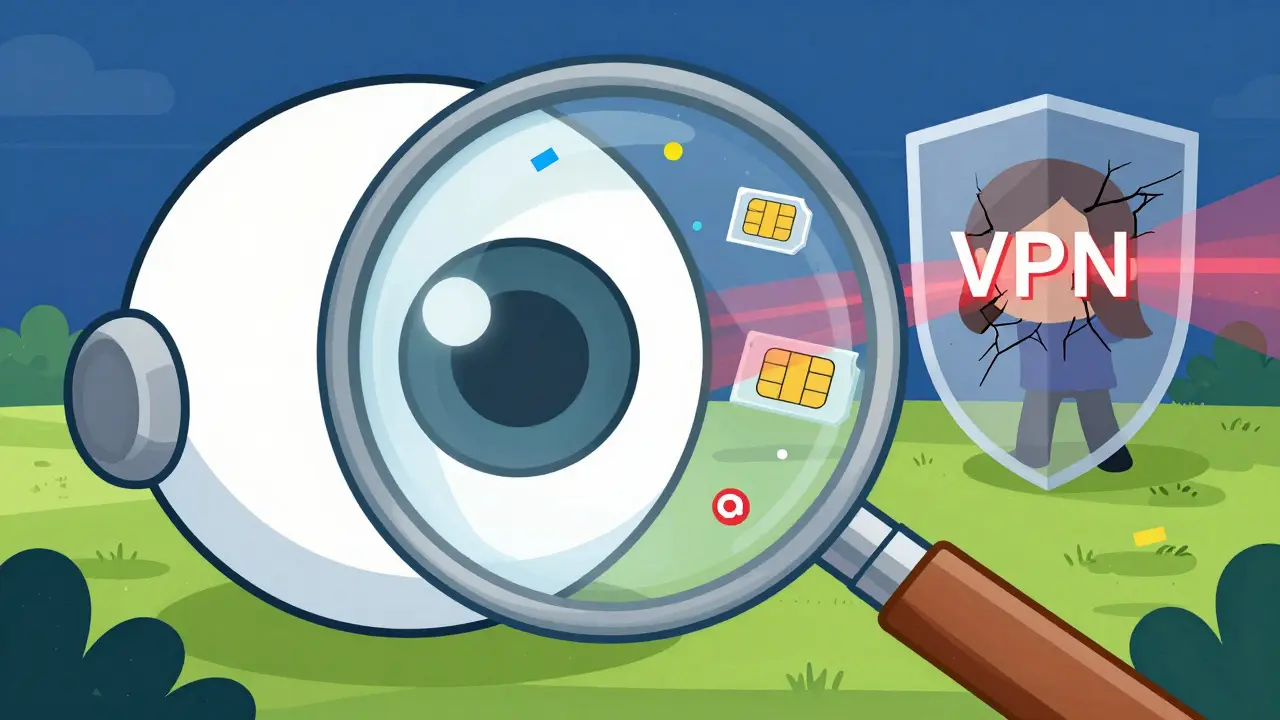
Attempting to bypass these geo-fences using Virtual Private Networks (VPNs) is risky. Binance employs advanced geolocation tracking, including GPS data from mobile apps, IP address triangulation, and SIM card analysis. If their systems detect you are accessing the platform from a sanctioned region, they reserve the right to terminate your account immediately under Section 3.4 of their Terms of Service.
Nations Where Crypto Trading Is Totally Illegal
In these countries, the government has declared cryptocurrency transactions illegal. Binance complies with these local laws by blocking access entirely. Unlike sanctioned countries, this isn't always about international pressure-it's often about domestic financial control or religious rulings.
- China: Enforced a comprehensive ban on trading and mining in September 2021. Note that Hong Kong and Taiwan operate under separate regulatory frameworks and are not included in this ban.
- Afghanistan: Trading banned since 2022 following Taliban decrees.
- Bangladesh: Prohibited under the Digital Security Act of 2018.
- Bolivia: Central Bank Circular 001-2014 forbids crypto usage.
- Egypt: Central Bank ruling in 2020 deemed crypto transactions invalid.
- Iraq: Central Bank issued strict warnings in 2022 against crypto trading.
- Kuwait: Central Bank Circular 7/2022 prohibits virtual asset activities.
- Morocco: Foreign Exchange Regulations from 2017 restrict capital flight via crypto.
- Nepal: Nepal Rastra Bank directive in 2017 banned crypto usage.
- Tunisia: Trading banned in 2018.
- North Macedonia: Implemented a total ban in 2023.
- Algeria: Finance Law 18-04 since 2018 restricts digital assets.
Users in these regions often report sudden account freezes without warning. According to community reports from mid-2025, thousands of users in "gray zone" border areas experienced closures when Binance updated its risk algorithms. If you live here, using Binance is not just technically difficult-it carries significant legal risk.
Partial Restrictions and Market Exits
This category is the most confusing because services change frequently. In many developed nations, regulators haven't banned crypto outright but have imposed strict rules that Binance couldn't meet, leading to partial limitations or complete exits.
The United States: Binance exited the main US market in September 2019, replacing it with Binance.US. However, Binance.US operates under severe state-level restrictions. For example, residents of New York, Hawaii, Idaho, and Vermont cannot use the platform at all. Even in allowed states, withdrawal times can stretch to 72 hours compared to minutes elsewhere, and the selection of cryptocurrencies is significantly smaller.
Europe (MiCA Impact): The implementation of the Markets in Crypto-Assets (MiCA) regulation has been a game-changer. While spot trading remains available in most EU countries, Binance Futures is unavailable in all 27 EU member states, plus Norway, Iceland, Liechtenstein, Switzerland, and the UK. Regulators require explicit approval for derivatives trading, which Binance has struggled to obtain uniformly. Additionally, the Netherlands saw Binance exit completely in July 2023 after a €3.3 million fine in 2022. Belgium halted operations in June 2023 per FSMA orders.
Other Key Exits:
- Canada: Binance exited in October 2023 after being fined CAD$6 million by the Ontario Securities Commission (OSC) in March 2024 for failing to verify high-risk transactions.
- Nigeria: Operations were suspended in February 2024 after the Nigerian SEC declared crypto exchanges illegal in September 2023. Users can no longer transact in Naira.
- Australia: Futures trading was suspended in July 2024 per Australian Securities and Investments Commission (ASIC) requirements.
- United Kingdom: The Financial Conduct Authority (FCA) revoked permissions in February 2023, banning retail access to crypto derivatives and lending products.
Service-Specific Limitations You Need to Know
Even if you can log in, you might not be able to do everything. Binance fragments its services based on local laws. Here is what gets cut first:
- Derivatives & Futures: Unavailable in 44+ countries, including the entire EU, UK, Canada, Australia, and the US. This is the most common restriction for users in regulated markets.
- Lending Products: Banned in the UK and several other jurisdictions due to consumer protection concerns regarding yield farming risks.
- Fiat On-Ramps: In countries like Nigeria and Canada, direct bank transfers in local currency (Naira, CAD) have been disabled. Users must rely on peer-to-peer (P2P) markets or third-party payment processors, which often come with higher fees and slower settlement times.
- Web3 Wallet: Restricted in 12 additional countries including New Zealand, Malaysia, Singapore, and Thailand due to recent updates to financial conduct acts requiring stricter identity verification for self-custody tools.
This fragmentation means your experience on Binance depends heavily on your IP location. A user in Germany can trade Bitcoin spot but not leverage ETH, while a user in Dubai might have full access to both. Always check the specific feature availability page within your account settings, as general terms don't always reflect real-time API blocks.
How Binance Enforces Geo-Restrictions
Binance uses a multi-layered approach to enforce these bans, making it increasingly difficult to hide your true location. Their geolocation system (version 3.2.1, updated June 2025) combines several data points:
- IP Address Tracking: The primary filter. If your IP originates from a banned country, access is denied instantly.
- GPS Data: If you use the mobile app, Binance accesses your device's GPS coordinates. Disabling location services may trigger enhanced manual review.
- SIM Card Analysis: The platform checks the Mobile Country Code (MCC) of your phone number during SMS verification. A mismatch between your IP country and SIM country raises red flags.
- Video KYC: Users in 14 "high-risk" jurisdictions (including Turkey and Vietnam) face mandatory video interviews for identity verification. This process adds an average of 3.2 business days to account activation, compared to 0.7 days in low-risk countries.
Border residents often face false positives. For instance, German users living near the Dutch border reported a 37% rate of accidental restrictions due to IP routing issues. Similarly, Canadian users accessing networks via US-based cellular towers experienced higher verification failure rates. If you find yourself locked out, contacting support with proof of residence (utility bills, government ID) is the only recourse, but response times in restricted regions are notoriously slow.
Alternatives for Restricted Users
If Binance is unavailable or limited in your region, you aren't out of options. The crypto landscape has diversified significantly as major players adapt to local regulations.
- For US Residents: Coinbase and Kraken offer robust, compliant platforms. Coinbase supports more states than Binance.US and has deeper integration with traditional banking.
- For European Users: Consider Bitstamp or Coinbase International, which are fully MiCA-compliant. Local exchanges like Bitpanda (Austria) also provide excellent regional fiat on-ramps.
- For Asian Markets: In India, CoinDCX and WazirX navigate local tax laws better than global giants. In Japan, bitFlyer remains a trusted, regulated option.
- For Latin America: Bitso dominates Mexico and Brazil with strong local banking integrations.
- Decentralized Options: For those in totally banned countries, decentralized exchanges (DEXs) like Uniswap or PancakeSwap allow trading without central oversight. However, you still need to bridge fiat to crypto via P2P methods, which carries counterparty risk.
Remember, moving to a different exchange doesn't eliminate regulatory risk. All centralized exchanges now adhere to FATF (Financial Action Task Force) Travel Rule standards, meaning your transaction history is shared with authorities if requested. Privacy coins like Monero are increasingly blocked from major exchanges globally.
Can I use a VPN to access Binance from a restricted country?
Technically, you might bypass the initial IP block, but it is highly risky. Binance detects VPN usage and may flag your account for enhanced verification. If they discover your true residence is in a banned jurisdiction (like Cuba or China), they will terminate your account and potentially freeze your funds. Furthermore, violating local laws regarding crypto usage can lead to legal consequences in your home country.
Why did Binance exit the Netherlands and Canada?
Binance exited these markets due to regulatory fines and licensing failures. In the Netherlands, a €3.3 million fine from the AFM led to their departure in 2023. In Canada, the Ontario Securities Commission fined them CAD$6 million for inadequate KYC procedures, prompting a full exit in October 2023. These moves signal Binance's strategy to prioritize compliance over market share in strict jurisdictions.
Is Binance.US the same as the global Binance?
No, they are separate entities with different liquidity pools, supported assets, and features. Binance.US is designed to comply with US federal and state laws, resulting in fewer trading pairs, no futures trading, and slower withdrawal times. Your accounts on Binance.com and Binance.US are not linked, and you cannot transfer funds directly between them.
What happens if I move to a restricted country while having a Binance account?
You must update your residency information in your account settings. If you move to a country where Binance is restricted, you will likely be required to withdraw your remaining funds and close your account. Failure to update your details can result in automatic account suspension when their systems detect the change in IP or billing address.
Are there any countries where Binance offers full unrestricted access?
Yes, Binance maintains full services in many jurisdictions, particularly in Asia-Pacific (excluding China/Japan limits), parts of Africa (excluding Nigeria/South Africa restrictions), and some Caribbean nations. However, even in unrestricted countries, certain high-risk features like margin trading may require additional verification steps. Always check the latest Terms of Service for your specific region.
Larry Port
May 15, 2026 AT 10:56it is wild how the regulatory landscape shifts every few months. i remember when you could just hop on and trade without a second thought. now you have to check if your specific state or country has pulled the plug on futures or even spot trading. the fragmentation is real and it makes moving funds around a headache. i always double check the terms before depositing anything substantial because one wrong move with ip location can freeze everything.
Matt Davis
May 15, 2026 AT 19:49this whole guide is absolute nonsense. binance has been dodging regulators for years and they will continue to do so. people who complain about restrictions are just lazy. if you want crypto freedom you use dexs or you deal with the consequences of using centralized exchanges that play nice with governments. stop whining about rules you broke anyway by trying to bypass geo-fences. it is pathetic really.
Bronwen Butler
May 16, 2026 AT 02:17actually matt davis is missing the point entirely. the issue is not about laziness but about the sheer complexity of compliance in a global market. binance cannot simply ignore local laws without facing existential threats from entities like the fca or sec. the exit from canada and the netherlands was inevitable given the fines they accumulated. it is not about playing nice it is about survival in a regulated environment where fiat on ramps require strict adherence to kyc norms.
Matt Davis
May 17, 2026 AT 04:11bronwen butler you are clearly working for some compliance firm or something. survival? no they survived just fine until they decided to fold under pressure. it shows weakness. the entire premise of cryptocurrency was to escape this kind of bureaucratic nightmare. now we have exchanges acting like traditional banks with all the same red tape and restrictions. it defeats the purpose completely.
Jocelyn Garcia
May 18, 2026 AT 20:01the miCA regulation impact is huge for eu users. losing access to derivatives on binance futures is a major blow for hedging strategies. many of us had to migrate to other platforms or use offshore entities which adds tax complications. the fragmentation means your alpha depends heavily on your jurisdiction. it is annoying that basic leverage trading is treated as high risk by regulators while stock options are fine.
Pauline Larocco71
May 19, 2026 AT 00:03i feel so bad for everyone living in countries with total bans. it must be terrifying to have your account frozen overnight without warning. i heard stories from friends in nigeria about how hard it became to withdraw naira after the sec declaration. using p2p markets is risky and often leads to scams. it is sad that financial inclusion efforts are being rolled back by these restrictive policies.
Michelle Bonahoom
May 20, 2026 AT 19:43why should america care about what happens in other countries. our regulations are there for a reason to protect american citizens from fraud and money laundering. binance exiting the us market was a good thing because they never followed the rules properly. we don't need foreign exchanges operating here without proper oversight. keep your crypto chaos elsewhere.
Albert Lee
May 21, 2026 AT 01:02larry port raises a great point about checking terms regularly. i lost sleep over a similar situation when my ip got flagged near the border. support took weeks to respond and i couldn't access my funds during a critical market dip. it is crucial to keep proof of residence handy and update your profile details immediately if you travel. do not wait until you are locked out to act.
Ankush Pokarana
May 21, 2026 AT 17:47the philosophical implication of geo-restrictions in a decentralized asset class is profound. we are seeing a re-centralization of power where access to value is determined by geography rather than merit or innovation. the use of gps and sim card analysis to enforce these boundaries creates a surveillance state within the digital economy. it forces users into gray areas where they must choose between legal compliance and financial sovereignty. this tension will only grow as governments demand more control over digital assets.