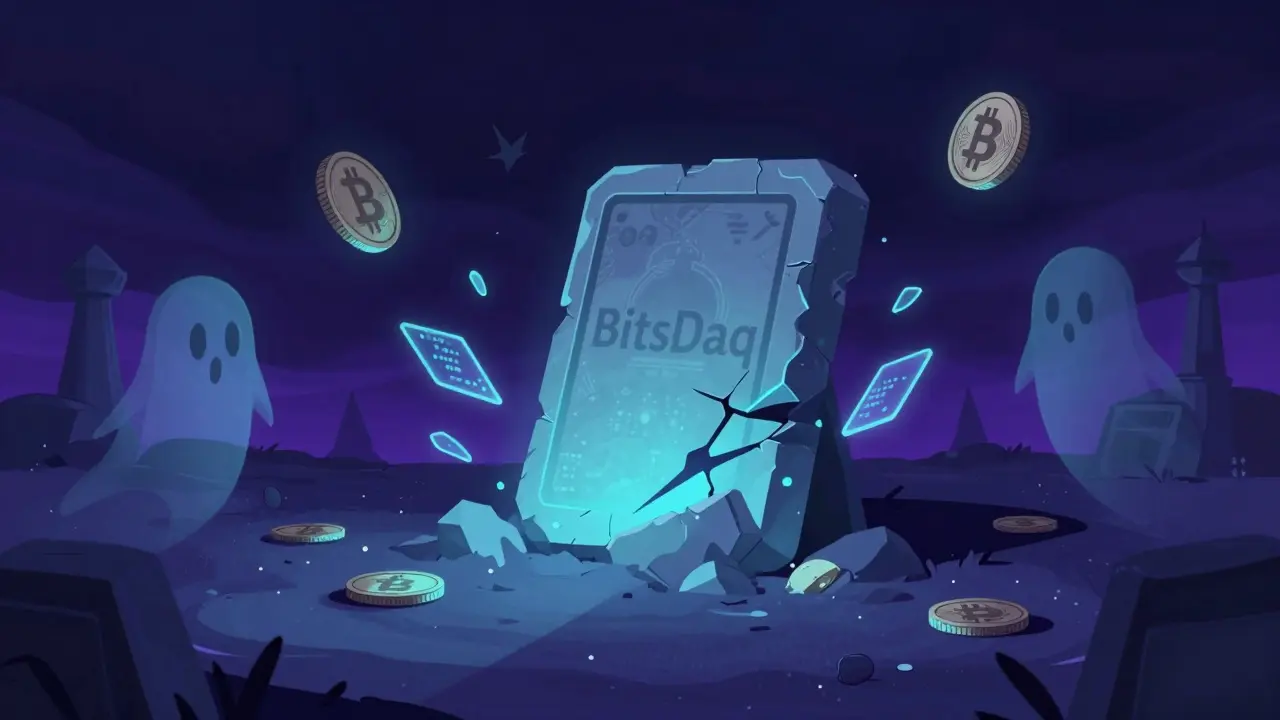
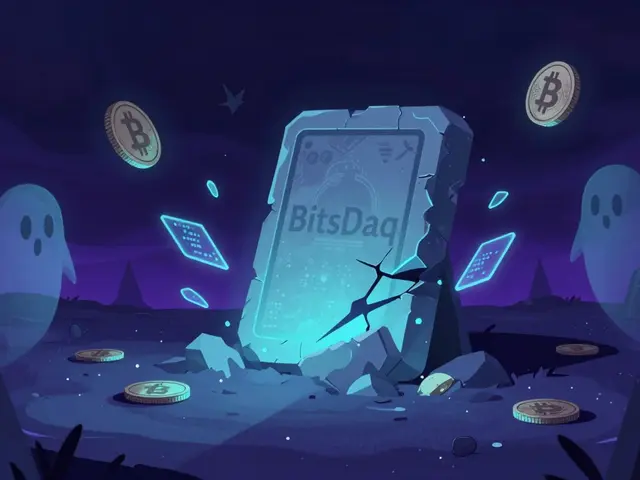
If you're searching for a Bitsdaq review to decide where to trade your digital assets, there is one critical piece of information you need immediately: the platform is no longer operational. In the fast-moving world of crypto, platforms can vanish almost as quickly as a meme coin pumps. Bitsdaq is now officially part of the "exchange graveyard," meaning the website is down and the service has permanently ceased operations.
While it is no longer a viable option for trading, looking at what happened to Bitsdaq offers a great lesson in how exchange partnerships and tokenomics actually work. It wasn't just another small site; it had a strategic blueprint and a native token that once attracted millions in investment. Understanding its rise and fall helps any trader spot the difference between a sustainable platform and one that might eventually go dark.
Key Takeaways for Traders
- Current Status: Defunct. The exchange has permanently closed.
- The Token: BQQQ is the native utility token, now largely irrelevant due to the platform's closure.
- Major Partnership: They previously used a joint order book with Bittrex to solve liquidity issues.
- Fee Model: They operated a simple 0.10% flat fee for all trades.
The Bitsdaq Strategy: Liquidity and Partnerships
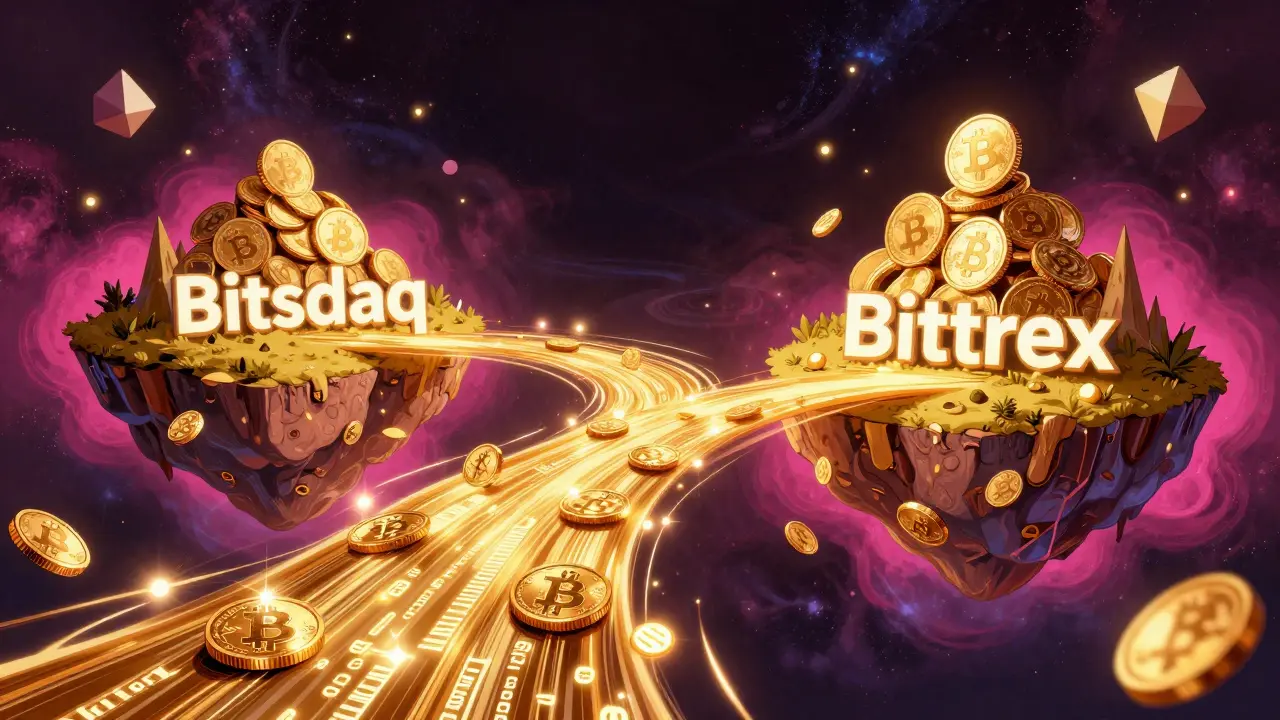
One of the biggest hurdles for any new Cryptocurrency Exchange is liquidity. If there aren't enough buyers and sellers, you get "slippage," where you can't execute a trade at the price you want. To fix this, Bitsdaq didn't try to build a community from scratch. Instead, they formed a technical partnership with Bittrex.
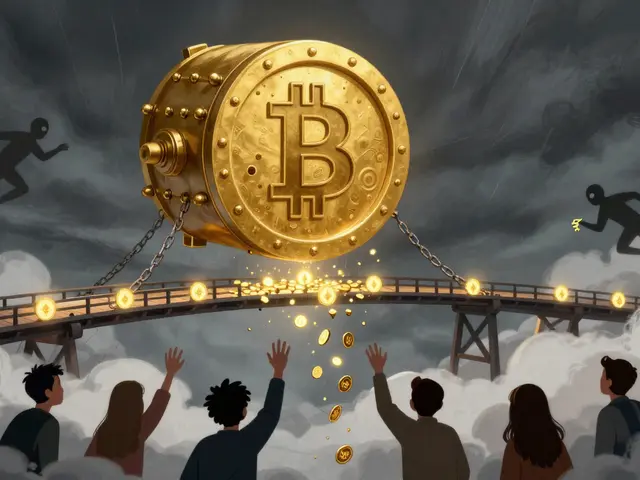
By implementing a joint order book, Bitsdaq users could essentially tap into the liquidity of Bittrex. This meant that if you wanted to buy a specific coin on Bitsdaq, the platform could pull the order from Bittrex's massive pool of traders. This was a smart move to reduce the spread between bid and ask prices, making the platform much more attractive to professional traders who move large volumes of capital.
Trading Costs and User Experience
Bitsdaq kept its pricing model refreshingly simple. While most exchanges use a complex "maker-taker" model-where you pay different rates depending on whether you provide liquidity or take it-Bitsdaq opted for a flat fee. Every transaction cost 0.10%. At the time, this was significantly lower than the industry average of around 0.25%, giving them a competitive edge for active traders.
However, the user experience had a major roadblock for beginners. Bitsdaq was a cryptocurrency-only deposit platform. This means you couldn't just link your bank account or use a credit card to buy Bitcoin. You had to buy your crypto on a different exchange first and then transfer it to Bitsdaq. For a novice, this added an extra layer of friction that often pushed them toward giants like Binance or KuCoin.
| Feature | Bitsdaq | Industry Average | Major Top-Tier Exchanges |
|---|---|---|---|
| Trading Fee | 0.10% (Flat) | ~0.25% | Variable (Maker/Taker) |
| Fiat Deposits | Not Available | Common | Extensive Options |
| Liquidity Source | Joint Order Book (Bittrex) | Internal | Massive Internal Pools |
| Market Cap (Token) | $55 Million | Variable | Billions (e.g., BNB) |
BQQQ Token: The Promise and the Pitfall
Like many exchanges, Bitsdaq launched its own utility token, BQQQ (also known as BQ). They raised $6.5 million through an Initial Exchange Offering (IEO), selling about 11.8% of the total supply. The goal was to create a token that users could use to pay for fees or access special services on the platform.
On paper, the token looked promising. The value of BQQQ was directly tied to the success of the exchange-the more people traded, the more valuable the token should become. But there was a red flag in the sale terms. Private investors received nearly 50% discounts and controlled over 95% of the sold tokens. This created a massive imbalance, where a few wealthy insiders held the power to crash the price if they decided to exit their positions, leaving IEO retail investors vulnerable.
Security Measures: How They Protected Assets
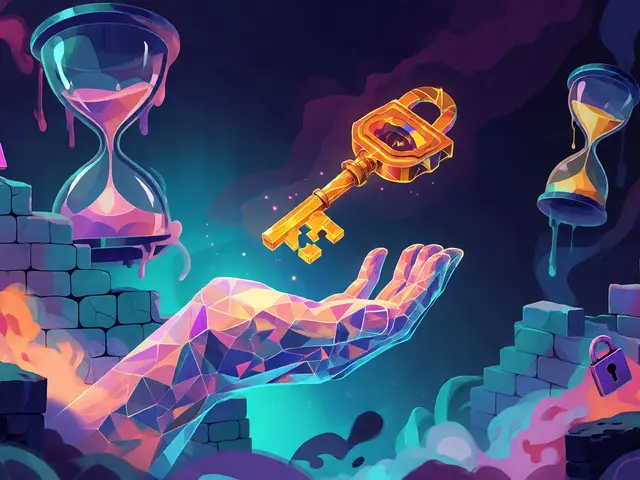
Security is the make-or-break factor for any exchange. Bitsdaq tried to differentiate itself by moving away from simple storage. They used a system of wallet key fragmentation, meaning the keys to move funds weren't stored in one single place. Instead, they were distributed across multiple encrypted locations with at least three layers of encryption.
They also leaned heavily on infrastructure tools like CloudFlare for DDoS protection and implemented strict defenses against XSS (Cross-Site Scripting) and CSRF (Cross-Site Request Forgery) attacks. While these measures were industry-standard and robust, they couldn't save the platform from the broader market pressures that eventually led to its closure.
Why Did Bitsdaq Fail?
It's easy to look at the technical partnerships and low fees and wonder why the platform disappeared. The reality is that the cryptocurrency exchange market is a "winner-take-all" game. When you are competing against platforms with billions in capital and millions of users, a $55 million market cap is essentially a rounding error.
The lack of fiat gateways was likely a major contributor. In a bull market, you want the path from "cash to crypto" to be as short as possible. By requiring users to use a second exchange just to get funds onto their platform, Bitsdaq created a barrier to entry that slowed its growth. Eventually, the cost of maintaining the infrastructure and the pressure from larger competitors made the operation unsustainable.
Can I still trade on Bitsdaq?
No. Bitsdaq has permanently closed its operations, and the website is no longer functional. You cannot deposit, withdraw, or trade assets on this platform.
What happened to the BQQQ token?
The BQQQ token has lost its primary utility because the exchange it was designed for is gone. While it may still appear on some low-volume third-party trackers, it is generally considered a dead asset with no real-world application left.
Was Bitsdaq a scam?
There is no widespread evidence that Bitsdaq was a deliberate scam; it had a legitimate partnership with Bittrex and a clear technical infrastructure. However, it failed as a business due to intense competition and structural limitations.
How did the Bittrex partnership work?
Bitsdaq used a joint order book system. This meant they shared market depth with Bittrex, allowing Bitsdaq users to trade against the liquidity available on the Bittrex platform, which prevented large price gaps during trades.
What were the trading fees on Bitsdaq?
Bitsdaq used a flat fee structure of 0.10% per trade, regardless of whether the user was a maker or a taker.


Matthew Morse
April 22, 2026 AT 07:25classic crypto move just another site gone to waste
Candace Sherrard
April 23, 2026 AT 07:50It is quite fascinating to consider how the ephemeral nature of these digital platforms mirrors the broader volatility of the speculative markets they inhabit, essentially acting as a cautionary tale about the fragility of ecosystems that rely entirely on the perceived utility of a native token which, in the end, possesses no intrinsic value once the central infrastructure collapses into obsolescence. The cyclical pattern of hype and inevitable decay in the exchange landscape suggests that we are merely witnessing a digital Darwinism where only the most aggressive and well-capitalized entities survive, leaving a trail of "graveyard" sites that serve as monuments to the misplaced optimism of retail investors who believed that a clever partnership or a low fee structure could somehow insulate a small player from the crushing weight of a winner-take-all economy. When we examine the BQQQ token specifically, we see a microcosmic representation of the structural unfairness inherent in early-stage venture capital, where the distribution of power is so heavily skewed toward insiders that the average participant is essentially gambling against a house that has already rigged the deck in its own favor, making the eventual crash not just a business failure but an almost mathematical certainty given the incentive structures in place. It makes one wonder if the industry will ever move toward a truly decentralized model that doesn't replicate the same systemic vulnerabilities as traditional finance, or if we are simply trading old monopolies for new, more agile ones that can disappear overnight without leaving a trace.
Tara Aman
April 24, 2026 AT 22:41Totally agree with the points about the fiat gateways! It's just so much harder to get people on board when you can't even use a bank account
It really is a huge barrier!
Alex Hunter
April 26, 2026 AT 16:28The joint order book with Bittrex was actually a pretty clever way to solve the liquidity problem for a startup. Most new exchanges fail because they have zero volume, and this was a solid attempt to bypass that hurdle. It is a good reminder for newer traders to always check where the liquidity is coming from before committing large amounts of capital.
Gary Lingrel
April 27, 2026 AT 21:27imagine thinking a 0.10% fee is a "competitive edge" when the whole tokenomic structure was basically a scam for the retail guys lol 🙄 nobody cares about fees when the insiders are dumping on your head
Jennifer L
April 29, 2026 AT 06:32Oh my goodness, it is simply heartbraking to see such a promissing venture just vanish into thin air!
I feel so deeply for those who lost their savings in the BQQQ token, it is truly a tragedy of the highest order!
Jagdish Sutar
April 30, 2026 AT 22:03It's a great lesson for everyone. Whether you are in India or the US, the fundamentals of risk remain the same across the globe. Always prioritize security and liquidity over low fees.
Gloris Young
May 2, 2026 AT 03:59So true. Just keep learning and stay safe everyone!