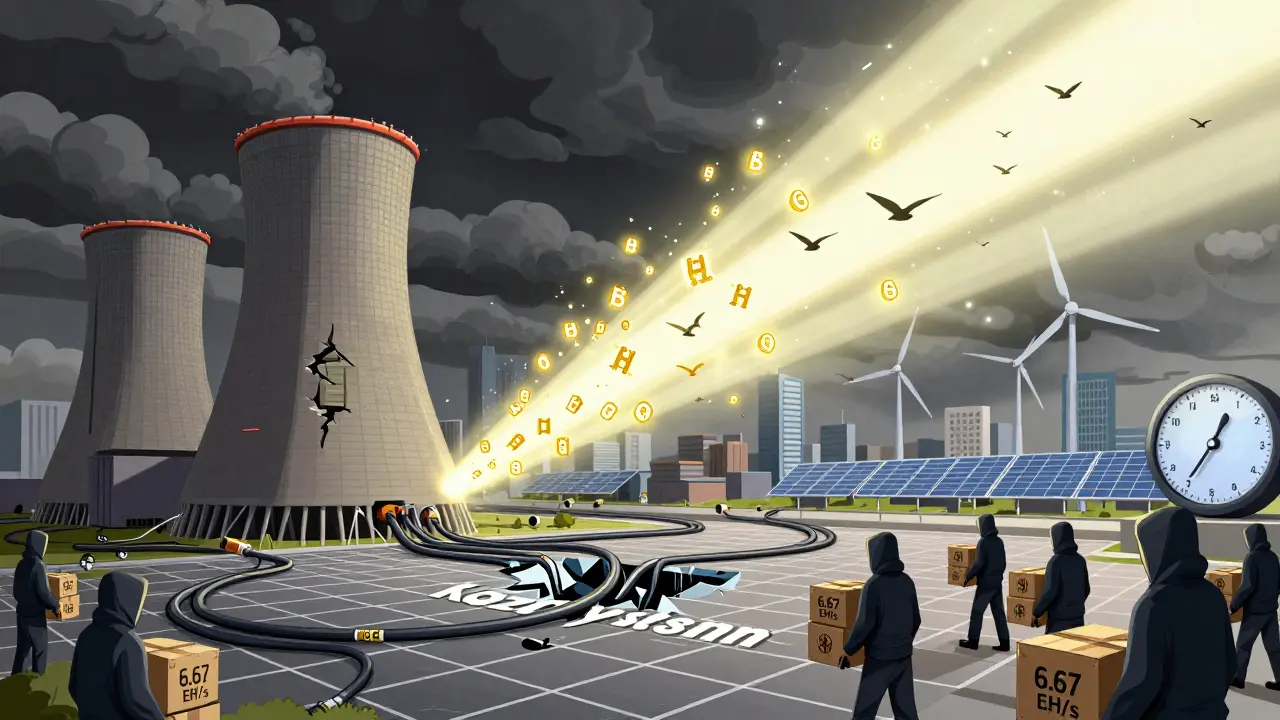
When Kazakhstan’s power grid started blacking out in 2021, it wasn’t because of a winter storm or a transformer failure. It was because Bitcoin miners were sucking up 7% of the country’s entire electricity supply. In Ekibastuz, where massive mining farms lined up like industrial warehouses, machines ran nonstop-burning through coal-generated power meant for homes, hospitals, and schools. The government shut them off. Within weeks, miners scrambled to find new homes. Now, in early 2026, that exodus is still unfolding-and reshaping the entire Bitcoin network.
Why Kazakhstan Was a Mining Magnet
Kazakhstan didn’t set out to become a Bitcoin powerhouse. It just happened. After the Soviet Union collapsed, the country was left with old power plants, cheap coal, and unused grid capacity. By 2018, miners from Russia and China started moving in. They didn’t need fancy permits. They didn’t need to explain what they were doing. They just plugged in, paid a low fixed rate, and started hashing. By 2021, Kazakhstan had jumped to second place in global Bitcoin hash rate-behind only China. At its peak, the country hosted over 18% of the world’s mining power. The mining hubs in Ekibastuz and Pavlodar became the unsung backbone of Bitcoin’s security. Every time the network adjusted difficulty, it was partly because of machines running in Central Asia. But cheap power came with a hidden cost: instability.The Grid Broke-and So Did Trust
In January 2022, after months of protests over rolling blackouts, Kazakhstan’s government cut off mining operations from the national grid. Not all of them. Just enough to send a message. Miners who had spent millions on rigs suddenly found their machines dead. Some switched to diesel generators. Others packed up and left. The government tried to fix things. They passed rules requiring miners to register. They started taxing electricity use. They even blocked over 15,800 unauthorized crypto transactions in Q1 2025, worth $3.07 million. But the damage was done. Trust in the country as a reliable mining hub was gone. Miners aren’t irrational. They don’t move because they hate Kazakhstan. They move because they need uptime. Bitcoin mining is a 24/7 business. A single day of downtime can cost thousands in lost rewards and increased electricity bills. When the grid can’t be trusted, the math stops making sense.The Big Exit: Canaan’s Withdrawal
The clearest sign that this wasn’t just a temporary shake-up came in July 2025, when Canaan-once the third-largest Bitcoin miner in the world-officially pulled out of Kazakhstan. Their hashrate dropped from 6.67 EH/s in May to 5.56 EH/s in July. That’s a 17% loss in computing power, all from one country. Canaan didn’t just shut down. They relocated. Half of the machines they pulled out of Kazakhstan were already back online in Texas by August. The rest followed in the next two months. They didn’t go to Iran or Russia. They went where the power is stable, the regulations are clear, and the grid doesn’t blink. This wasn’t an isolated move. Other miners quietly followed. Smaller operators packed up their rigs and shipped them to Georgia, Paraguay, and even Texas. Some moved to new data centers in the U.S. Midwest, where excess wind and solar power is sold directly to miners through long-term contracts.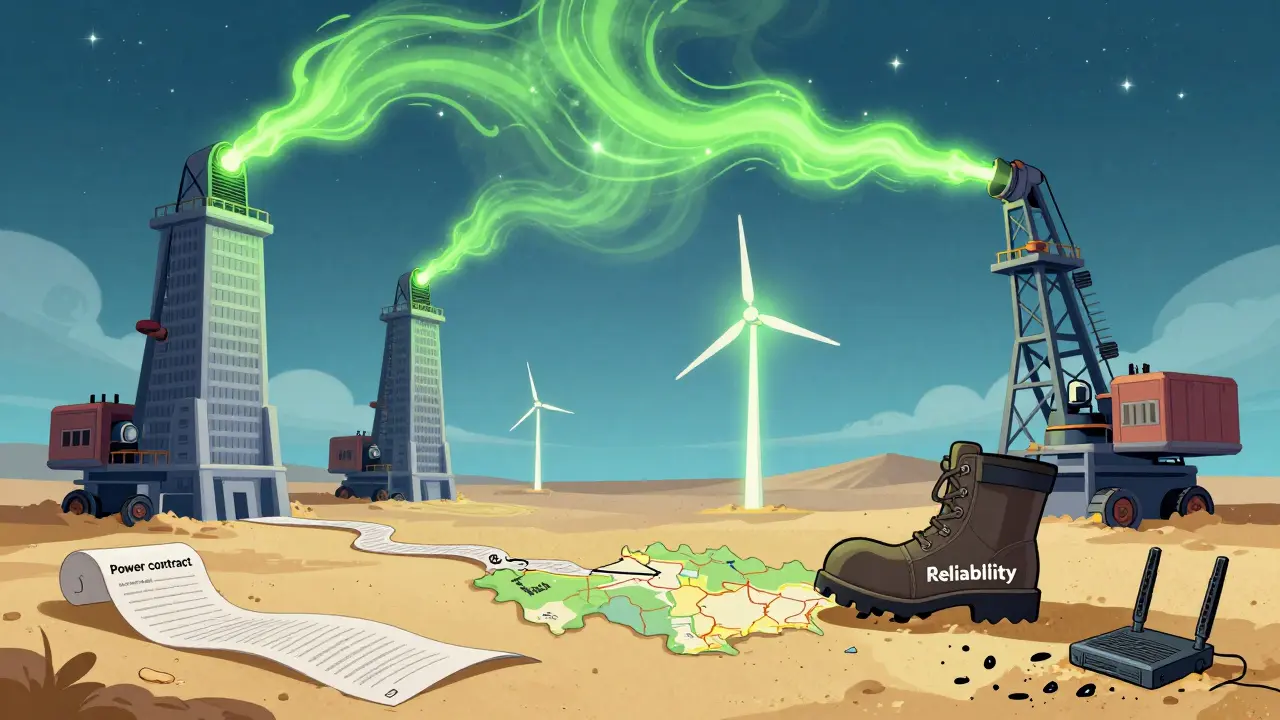
Where Is the Hashrate Going?
The global Bitcoin hash rate hit 1.041 billion TH/s in September 2025-the highest ever recorded. That’s up nearly 50% from the year before. And yet, Kazakhstan’s share fell from 18% to 14.8%. So where did the lost power go?- United States: Now leads with 35.4% of global hash rate. Texas, Georgia, and Washington state are the top three states hosting new mining farms. Many use renewable energy contracts with local utilities.
- China: Still holds 12% after a quiet comeback. Most operations are now in Sichuan and Inner Mongolia, running on hydro and coal, respectively. The government allows it-so long as miners pay taxes and don’t touch the grid.
- Canada: Up to 9.6%. Quebec and Ontario offer cheap hydro power and stable regulatory environments. Canadian miners are now among the most efficient in the world.
- Other players: Iran (2.3%), Russia (4.7%), and Malaysia (3.2%) are growing slowly. But none match the scale or reliability of the U.S. or Canada.
Kazakhstan’s Attempt to Rebuild
The Kazakh government isn’t giving up. In 2025, they launched a 70/30 energy policy: 70% of new thermal power plant output goes to the national grid. Only 30% is reserved for crypto mining. It’s a compromise. They want mining revenue without risking blackouts again. They’ve also started offering tax breaks to registered miners who use renewable sources. Some mining companies are now building solar-powered farms in the southern regions, away from the overloaded grid. But progress is slow. Building new power plants takes years. And miners? They move fast. Kazakhstan still has the lowest electricity cost in the region. It still has the space. It still has the ambition. But ambition doesn’t pay bills when your machines sit idle for three days because the grid failed.
What This Means for Bitcoin
Some people worry that when miners leave one country, the network gets weaker. That’s not true. Bitcoin’s hash rate keeps climbing. It’s stronger now than ever. Why? Because the migration isn’t a loss-it’s a redistribution. The machines aren’t disappearing. They’re just moving to places where they can run longer, cheaper, and safer. The result? A more resilient network. The U.S. and Canada now host over 45% of global hash rate. That’s a massive shift from just five years ago. And it’s not because those countries are better at mining. It’s because they’re better at supporting mining. Bitcoin’s security doesn’t depend on one country. It depends on decentralization. Kazakhstan’s decline actually helped that goal. Miners aren’t concentrated in one unstable region anymore. They’re spread across continents, using diverse energy sources, under different legal systems. That’s not a weakness. That’s the whole point of Bitcoin.What’s Next for Miners?
If you’re a miner right now, you’re not asking, “Should I leave Kazakhstan?” You’re asking, “Where can I get a 5-year power contract with no blackout clauses?” The new mining hubs aren’t defined by cheap electricity alone. They’re defined by:- Contract stability
- Grid reliability
- Clear tax and licensing rules
- Access to renewable energy
- Political neutrality
The Bigger Picture
This migration isn’t about Kazakhstan failing. It’s about Bitcoin evolving. The network doesn’t care where the miners are. It only cares that they keep hashing. And as long as there’s cheap power and a stable grid somewhere, miners will find it. The lesson? Don’t bet on a country. Bet on infrastructure. And if your mining operation relies on a single grid that can be shut off by a political decision? You’re already behind. Bitcoin’s future isn’t in one place. It’s everywhere there’s electricity-and the will to use it.Why did Bitcoin miners leave Kazakhstan?
Miners left Kazakhstan because the national power grid became unreliable. Mining operations consumed 7% of the country’s total electricity by 2021, leading to widespread blackouts. After protests and government intervention, miners faced sudden shutdowns, unpredictable power costs, and regulatory uncertainty. Reliable uptime is critical for mining profitability, so operators moved to countries with stable grids and clear energy contracts.
Is Kazakhstan still a major Bitcoin mining hub?
Yes, but its role has shrunk. As of 2024, Kazakhstan still holds 14.8% of the global Bitcoin hash rate, down from over 18% at its peak in 2021. It remains the third-largest mining jurisdiction after the U.S. and China. However, the trend shows a steady decline as miners relocate to more stable regions with better infrastructure.
Where are most Bitcoin miners moving to now?
The majority are moving to the United States, which now leads with 35.4% of global hash rate. Texas, Georgia, and Washington are top destinations. Canada (9.6%) is also a major recipient, thanks to cheap hydro power and stable regulations. Some miners are also relocating to Georgia, Paraguay, and parts of Saudi Arabia, where governments are actively courting the industry with dedicated power infrastructure.
Did Bitcoin’s network security weaken when miners left Kazakhstan?
No. Bitcoin’s total hash rate hit a record 1.041 billion TH/s in September 2025, up nearly 50% from the year before. The migration didn’t reduce overall security-it redistributed it. Machines moved to more reliable locations, making the network more geographically diverse and harder to disrupt. Decentralization improved, not weakened.
What’s the future of Bitcoin mining in Kazakhstan?
Kazakhstan’s future depends on its ability to build new power infrastructure without overloading the grid. The government’s 70/30 energy policy-allocating 70% of new power to the national grid and 30% to mining-is a step toward balance. Some miners are still investing in solar-powered farms in southern regions. But without guaranteed, long-term power contracts, Kazakhstan will remain a secondary option, not a primary hub.




Allen Dometita
January 11, 2026 AT 00:41Bro, the grid in Kazakhstan just couldn’t handle it. Like, imagine your toaster stealing half your house’s power-except it’s a warehouse full of computers mining Bitcoin. No wonder they flipped the switch. U.S. miners? We got wind, solar, and contracts that don’t vanish when some bureaucrat has a bad day. 🇺🇸⚡
Gideon Kavali
January 11, 2026 AT 05:13Let’s be clear: This isn’t about ‘energy policy’-it’s about sovereignty. The U.S. didn’t just ‘get’ the hash rate; we took it back. Kazakhstan? A temporary pitstop for reckless operators who thought they could drain a nation’s power like a soda machine. Now? We’re running on clean, reliable, American-made electricity-and the network is stronger than ever. This isn’t migration. It’s liberation.
Brittany Slick
January 12, 2026 AT 14:34I love how this whole thing just… unfolded like a quiet revolution. No banners, no protests-just machines packing up and moving to places where they’re welcome. It’s beautiful, really. Bitcoin doesn’t need a flag, it just needs a plug. And now, it’s plugged into sunshine, wind, and stability. Kinda poetic, huh? ☀️🌬️
greg greg
January 12, 2026 AT 20:20It’s worth noting that the shift isn’t just geographic-it’s structural. The old model of mining in places with cheap, unregulated, grid-dependent power has been replaced by a new paradigm: long-term power purchase agreements, renewable integration, and grid-agnostic infrastructure. This isn’t just relocation; it’s institutional evolution. Miners are no longer opportunistic tenants-they’re strategic partners with utilities, co-investing in energy capacity, sometimes even building their own microgrids. The result? A network that’s not only more secure but also more sustainable, because the incentives now align with long-term energy development rather than short-term arbitrage. Kazakhstan didn’t fail-it was simply outpaced by a smarter, more resilient economic model.
LeeAnn Herker
January 13, 2026 AT 01:38Oh please. ‘Reliable grid’? Sure. And I’ve got a bridge in Brooklyn to sell you. The U.S. is just hiding the real truth: they’re using taxpayer-subsidized power and lax environmental rules to steal mining from other countries. Meanwhile, Kazakhstan gets blamed for ‘instability’-but when you’re a small country trying to monetize its excess power, why should you be punished for being ‘too successful’? And don’t even get me started on how the ‘renewables’ these miners brag about are just greenwashed coal with a solar panel slapped on top. This isn’t progress. It’s corporate colonization with a crypto twist.
Sherry Giles
January 14, 2026 AT 20:44They’re all lying. The U.S. didn’t ‘win’-they bought off the grid operators, rigged the permits, and shoved out the competition with lobbying muscle. Canada? Same story. Hydro power? Sure, but it’s all tied to federal subsidies and pipeline deals. Meanwhile, Kazakhstan’s still sitting on cheap coal and empty rigs. The real winners? The banks and hedge funds that quietly own half the mining hardware. You think miners moved for ‘stability’? Nah. They moved because they got a better deal from Wall Street. Bitcoin’s decentralized? More like ‘decentralized but owned by the same 12 guys in New York.’