What State Channels Actually Do
State channels let two or more people send money back and forth without touching the main blockchain every time. Think of it like opening a private line between you and a friend to trade IOUs, only settling the final balance on the blockchain later. This cuts fees and speeds up payments-critical when Bitcoin handles only 5 transactions per second and Ethereum manages about 15. With state channels, you can hit up to 1,000 transactions per second, all off-chain. The Lightning Network for Bitcoin and Raiden for Ethereum are the most well-known examples. They work great for repeated, small payments-like buying coffee daily or streaming micropayments in a game.
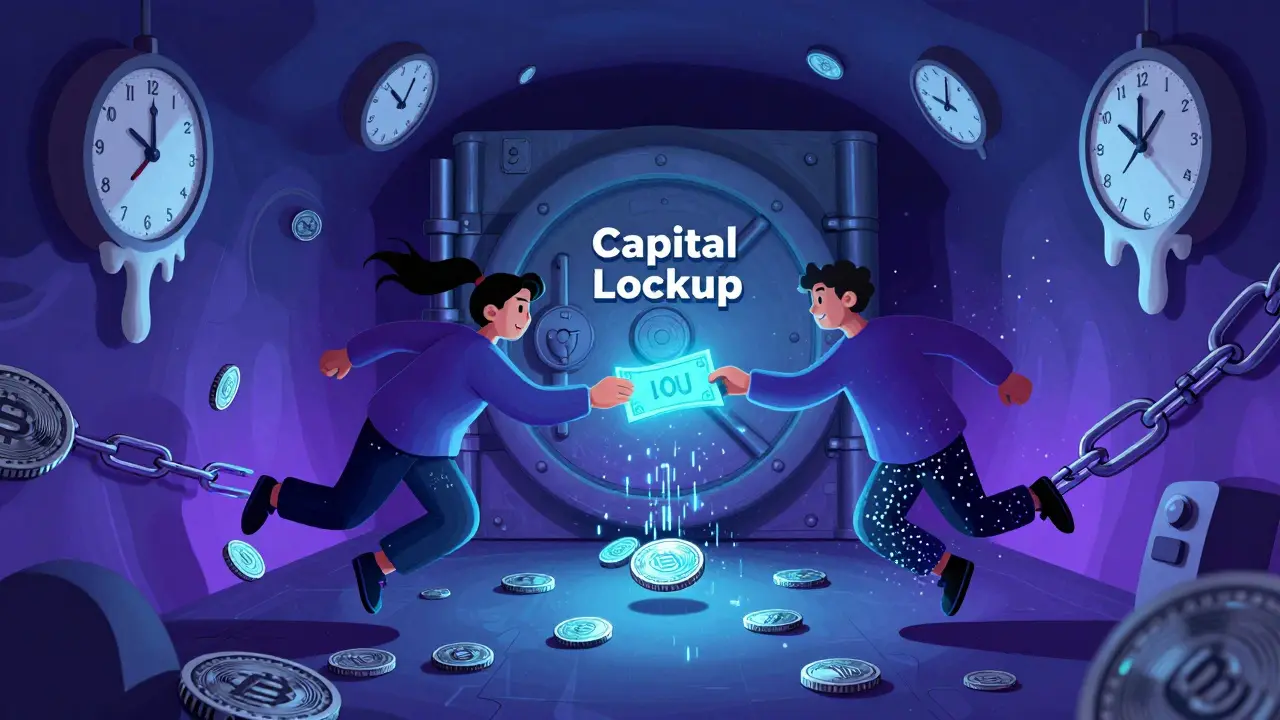
The Capital Lockup Problem
Here’s the catch: to open a state channel, you have to lock up real cryptocurrency. If you want to send $500 worth of ETH over the channel, you need to put at least that much-sometimes more-into the channel as collateral. That money sits idle. You can’t use it for staking, lending, or buying other assets. For big users, this might be fine. But for small businesses or everyday people? It’s a dealbreaker. Deloitte’s 2023 survey found 78% of small enterprises said they simply didn’t have enough crypto locked up to make state channels worth it. Even if you’re technically able to afford it, tying up funds reduces your liquidity. Dr. Christian Decker from Blockstream calls this the biggest adoption barrier. You’re not just paying fees-you’re paying in opportunity cost.
Going Offline Is a Risk
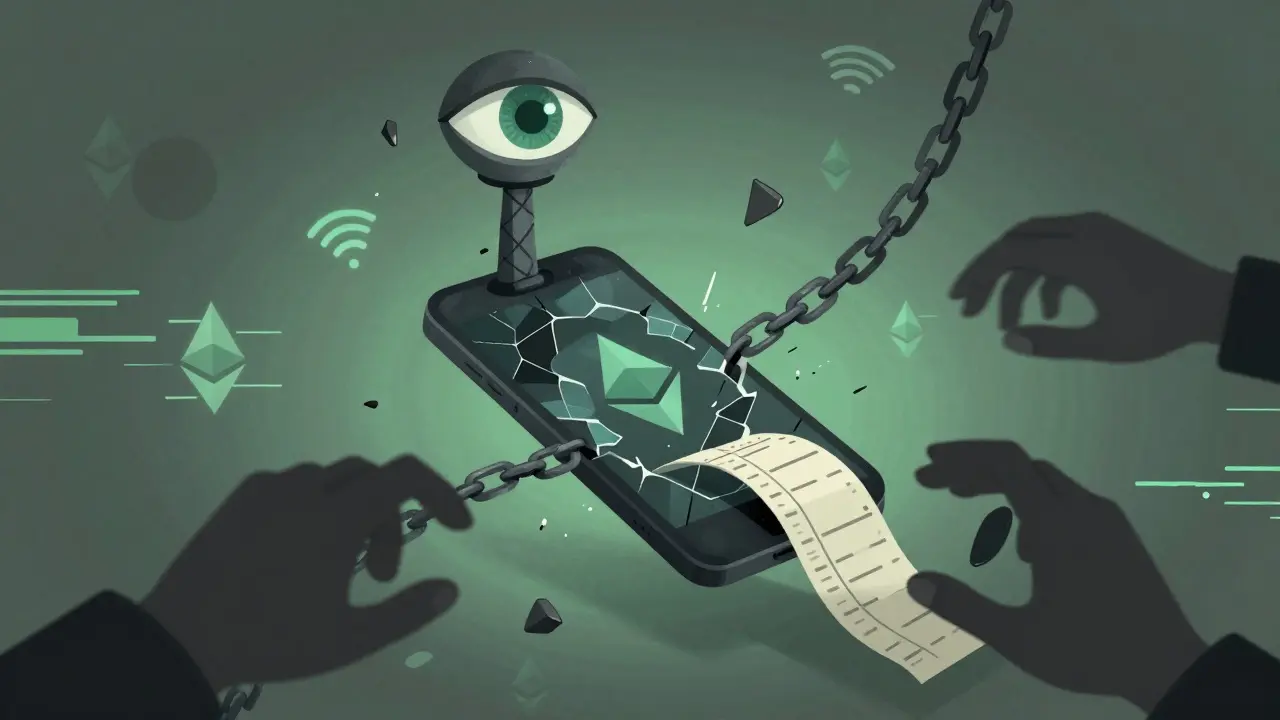
State channels assume you’re always online. If your phone dies, your laptop shuts down, or your internet cuts out, you’re vulnerable. A dishonest counterparty could broadcast an old, unfair state to the blockchain and steal your funds. That’s not theoretical-it’s happened. Developers on GitHub’s Lightning Network repo reported frequent channel failures because mobile apps went offline. Reddit users in r/Bitcoin complained about rebalancing channels three or four times a week just to keep payments flowing. To fix this, watchtowers were introduced: third-party services that monitor your channels for you. But now you’re trusting someone else. And if the watchtower goes down or gets hacked? You’re back to square one. Vitalik Buterin pointed out this flaw clearly: state channels require continuous participation. That’s not how most people use money.
Disputes Are Slow and Expensive
Even though transactions happen off-chain, when something goes wrong, you have to go on-chain to resolve it. That means paying Ethereum gas fees, waiting for blocks, and dealing with complex smart contract logic. A 2023 survey by the Blockchain Research Institute showed 67% of developers said dispute resolution was the most frustrating part of building state channels. One Ethereum Stack Exchange thread revealed developers spent 20-30% more time coding dispute logic than they expected. The system was meant to avoid on-chain costs-but when things break, you’re paying them anyway. This defeats the whole purpose.
Multi-Party Channels Are a Nightmare
State channels were designed for two people. Add a third, and everything gets messy. Everyone has to agree on every update. If one person is slow to respond, the whole channel stalls. If someone tries to cheat, you need consensus on the correct state-which is hard when you’re not all in the same room. Connext and other platforms tried to scale this to group payments, but the complexity exploded. NADCA Consulting noted that managing channels with more than two participants becomes “tricky.” Real-world use cases like team payroll or group purchases? Nearly impossible to implement securely without adding layers of trust or centralized coordination. That’s not decentralized anymore.
Not Built for Public or Sporadic Use
State channels only work if you know who you’re transacting with. You can’t just send money to a random wallet on the internet like you can with regular crypto. There’s no public ledger of intermediate states. No one can verify your payment history unless they were part of the channel. That makes state channels useless for things like paying a freelancer you just met, donating to a public cause, or buying from a small shop that doesn’t run a node. Rollups and sidechains don’t have this problem-they keep a public record of all activity. State channels are like a private club. Great if you’re a member. Useless if you’re not.
Compared to the Alternatives
Rollups-especially ZK-Rollups-have taken over as the preferred scaling solution. They keep transactions off-chain but post cryptographic proofs on-chain, so everyone can verify everything. They don’t need you to lock up funds for every transaction. They handle public use cases. They’re easier to integrate with existing wallets. Sidechains offer similar flexibility, even if they trade off some security. State channels can’t compete on breadth. Gartner’s 2023 report showed rollups power 55% of enterprise blockchain scaling, sidechains 42%, and state channels barely 3%. Even with improvements like Ethereum’s Account Abstraction (EIP-4337), which reduces capital needs by 30-40%, state channels still can’t match the versatility of rollups.

Development Is Hard and Documentation Is Poor
Building on state channels isn’t like writing a simple smart contract. You need to understand off-chain state transitions, signature aggregation, time-locking, and dispute protocols. ConsenSys Academy says it takes developers 8-12 weeks just to get comfortable. Documentation? It’s inconsistent. Lightning Network’s docs rate 3.8/5. Raiden’s? 3.2/5. Community support is fragmented. The State Channel Community Slack has over 1,200 members, but the average response time to a technical question is over 72 hours. If you’re a startup trying to ship a product, this isn’t sustainable. You’re not just coding-you’re fighting a learning curve and a lack of reliable resources.
Where State Channels Still Make Sense
They’re not dead. They still have a place. For two parties doing hundreds of tiny payments a day-like a gaming platform paying out in-game currency, or a streaming service rewarding creators per second of content-they’re efficient. The Lightning Network handles over 14,000 nodes and billions of sats daily. But these are narrow, high-frequency use cases. For anything broader-retail payments, DeFi, NFT marketplaces, or public transactions-state channels don’t scale. They’re a specialized tool, not a universal fix.
The Bottom Line
State channels were a clever idea. They proved off-chain scaling was possible. But their limitations are structural: you need to lock up capital, stay online, trust third parties, and accept slow disputes. They don’t work for open participation. They’re too complex for most developers. And they’ve been outpaced by rollups that offer similar speed without the trade-offs. If you’re building a system for frequent, bilateral payments between known users? Maybe. For everything else? Look elsewhere. The future of blockchain scaling isn’t in private channels-it’s in public, verifiable, and capital-efficient systems.
Can state channels be used for public transactions like paying a freelancer?
No. State channels require both parties to be known and actively participating. There’s no public record of intermediate transactions, so you can’t verify payments to someone you’ve never interacted with before. For open, one-time payments, rollups or direct on-chain transfers are better options.
Why do I need to lock up funds in a state channel?
You lock up funds as collateral to ensure both parties can’t cheat. If you try to broadcast a fake state, the system uses that locked amount to penalize you. But this means your money is tied up and can’t be used elsewhere, which is a major barrier for users with limited crypto holdings.
What happens if I go offline while using a state channel?
If you’re offline, a dishonest counterparty could submit an old, unfair transaction to the blockchain and steal your funds. That’s why watchtowers exist-they monitor your channel for you. But relying on them introduces new trust risks. If the watchtower fails, you lose protection.
Are state channels safer than sidechains?
State channels inherit the security of the main blockchain because disputes are settled on-chain. Sidechains have their own consensus rules, which can be less secure if not well-secured. But sidechains don’t require you to stay online or lock up large amounts of capital. So safety depends on what you’re comparing: state channels are more secure in theory, but harder to use safely in practice.
Why are rollups replacing state channels?
Rollups keep all transaction data on-chain (in a compressed form) and use cryptographic proofs to verify them. This means they’re public, don’t require constant online participation, and don’t lock up funds per transaction. They handle complex applications like DeFi and NFTs. State channels can’t do that-they’re built for simple, repeated payments between two people.
Is there any progress fixing state channel limitations?
Yes. Watchtowers help with liveness. Ethereum’s Account Abstraction (EIP-4337) reduces capital lockup by 30-40%. But these are patches, not solutions. The core issues-offline vulnerability, capital inefficiency, and complexity-remain. Most experts agree state channels will stay niche, not become mainstream.



Andrea Demontis
January 30, 2026 AT 13:41It's wild how state channels feel like a philosophical paradox in practice-you're trying to build a decentralized future but forcing users into this high-stakes, always-on, capital-tied prison just to send a coffee payment. The opportunity cost isn't just financial, it's existential. You're trading the freedom of open blockchain access for the illusion of speed, and in doing so, you're recreating the very centralized friction we were trying to escape. If the solution requires you to lock up your life savings and babysit your phone 24/7, is it really progress or just a cleverly dressed-up bottleneck? The fact that even developers admit they spend more time coding dispute logic than actual payment flows says everything. We built a Swiss watch to replace a flashlight, and now we're all just sitting in the dark wondering why it won't turn on.
Raju Bhagat
January 30, 2026 AT 17:47Jeremy Dayde
February 1, 2026 AT 07:35I remember when I first tried setting up a Lightning channel back in 2021 and spent three days just trying to figure out why my funds weren't syncing right. I had watchtower alerts going off every other hour, my phone battery was dying by noon, and I ended up just closing the channel because I got tired of the drama. It's not that the idea is bad, it's that the user experience is just brutal for anyone who isn't a full-time node operator. The whole thing feels like it was designed by engineers who've never actually used Bitcoin to buy anything. And now with rollups just working out of the box, why are we still clinging to this? It's like insisting on using a rotary phone because you like the sound it makes.
Ramona Langthaler
February 1, 2026 AT 13:49Sunil Srivastva
February 1, 2026 AT 23:18Actually, there's a quiet win here that doesn't get talked about enough. For high-frequency micropayments between known parties-like a content creator getting paid per second of video watched or a gaming platform distributing in-game currency-state channels are still unbeatable. The Lightning Network processes billions in sats daily, and that's not magic, that's real utility. The problem isn't the tech, it's that people keep trying to force it into use cases it was never meant for. Think of it like a scalpel versus a hammer. You wouldn't use a scalpel to hang a picture, and you shouldn't use state channels to pay a freelancer you just met. The real failure is in the marketing, not the engineering.
Devyn Ranere-Carleton
February 3, 2026 AT 16:12Joseph Pietrasik
February 4, 2026 AT 05:29Rollups are just centralized trust machines pretending to be decentralized. State channels are the only real off-chain scaling because they don't rely on some third-party proof system that could be manipulated by a DAO vote or a core dev with too much power. The fact that Gartner says rollups dominate just proves how much corporate adoption has corrupted the space. State channels are pure peer-to-peer. Sure they're clunky, sure you gotta lock up cash, sure you need to stay online-but that's the price of true decentralization. If you're okay with trusting a smart contract to verify your payments instead of your own node, then you're not building crypto, you're building a bank with a blockchain sticker on it.