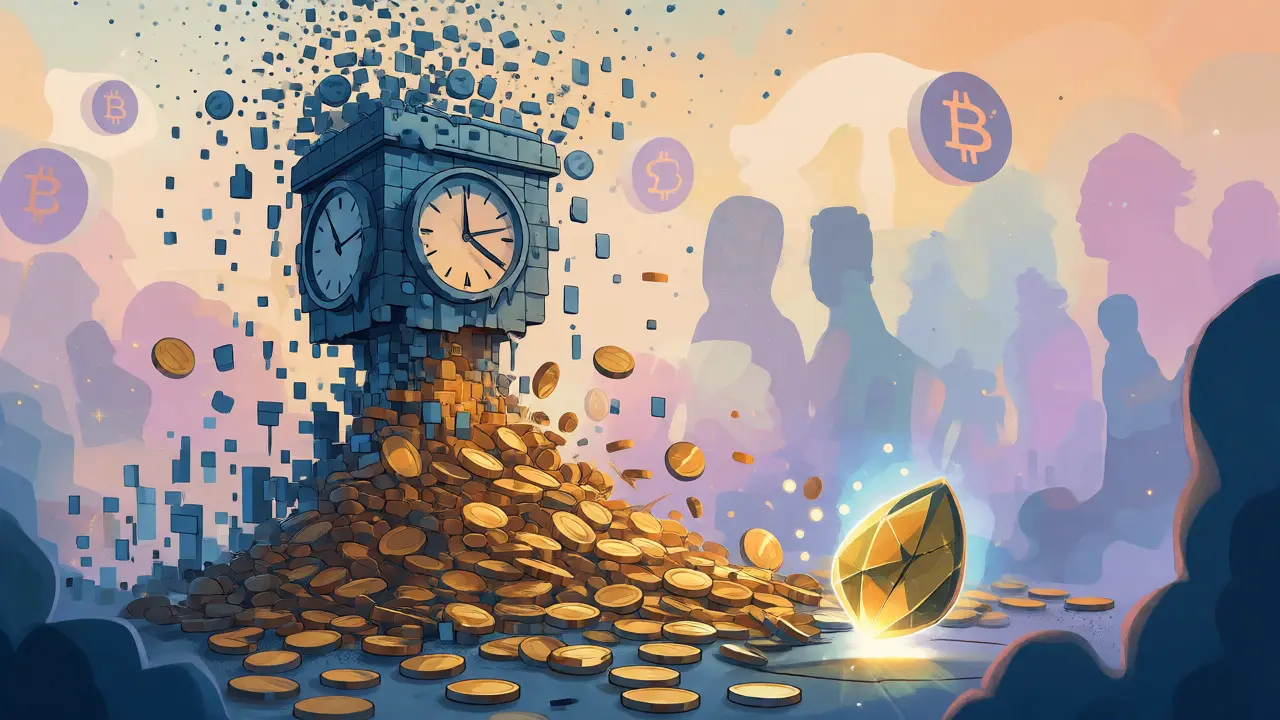
Imagine a world where you could send money to someone on the other side of the planet without asking a bank for permission. No fees eating into your transfer, no waiting days for settlement, and no central authority deciding if your transaction is valid. That world didn't exist until Bitcoin, the first decentralized digital currency that solved the double-spending problem without relying on trusted third parties. It wasn't just a tech upgrade; it was a direct response to a broken financial system.
If you've ever wondered how we got from paper money to digital coins flying around the internet, the story starts with one mysterious figure and a very specific date. Let's look at what actually happened, why it mattered, and how Bitcoin changed everything.
The Problem Before Bitcoin
To understand why Bitcoin matters, you have to look at what came before it. For centuries, money relied on trust. You trusted the gold in the vault, or you trusted the government backing the paper in your wallet. When digital money started appearing in the late 1980s and 1990s, the goal was to make transactions private and fast. But there was a catch: digital files can be copied. If I email you a file, I still have a copy. If I "email" you $10, how do you know I didn't also "email" that same $10 to someone else? This is known as the double-spending problem.
Early attempts tried to fix this by using central servers. In 1983, cryptographer David Chaum invented eCash, which used blind signatures to keep transactions private. Later, he launched DigiCash in 1995. It worked technically, but it failed commercially because it still required users to trust a central company to verify the money. If DigiCash went bankrupt, your digital cash vanished. Other projects like Wei Dai’s b-money (1998) and Nick Szabo’s Bit Gold proposed decentralized solutions, but they never fully launched or scaled. They were missing the final piece: a way to agree on who owned what without anyone being in charge.
Satoshi Nakamoto and the Whitepaper
Enter Satoshi Nakamoto. On October 31, 2008, a person (or possibly a group) using this pseudonym posted a document titled "Bitcoin: A Peer-to-Peer Electronic Cash System" to the Cypherpunk mailing list. The timing wasn't accidental. The global financial crisis was hitting hard. Lehman Brothers had collapsed, banks were begging for bailouts, and people were losing faith in centralized institutions.
Nakamoto’s whitepaper outlined a radical idea: use cryptography and a public ledger to solve the double-spending problem. Instead of a bank keeping the records, everyone in the network would keep a copy. To prevent cheating, miners would compete to solve complex math puzzles-a process called Proof-of-Work. This required real-world energy expenditure, making it expensive to attack the network. It was elegant, simple, and completely new.
The Genesis Block and the Hidden Message
On January 3, 2009, the Bitcoin network officially went live. Nakamoto mined the first block, known as the Genesis Block (or Block 0). This block contains a few unique features that signal its importance:
- No Previous Block: Unlike every other block in the chain, it doesn't point back to an earlier block because it is the start.
- Reward Unspendable: The 50 BTC reward for mining this block cannot be spent. It serves as a permanent monument to the network's birth.
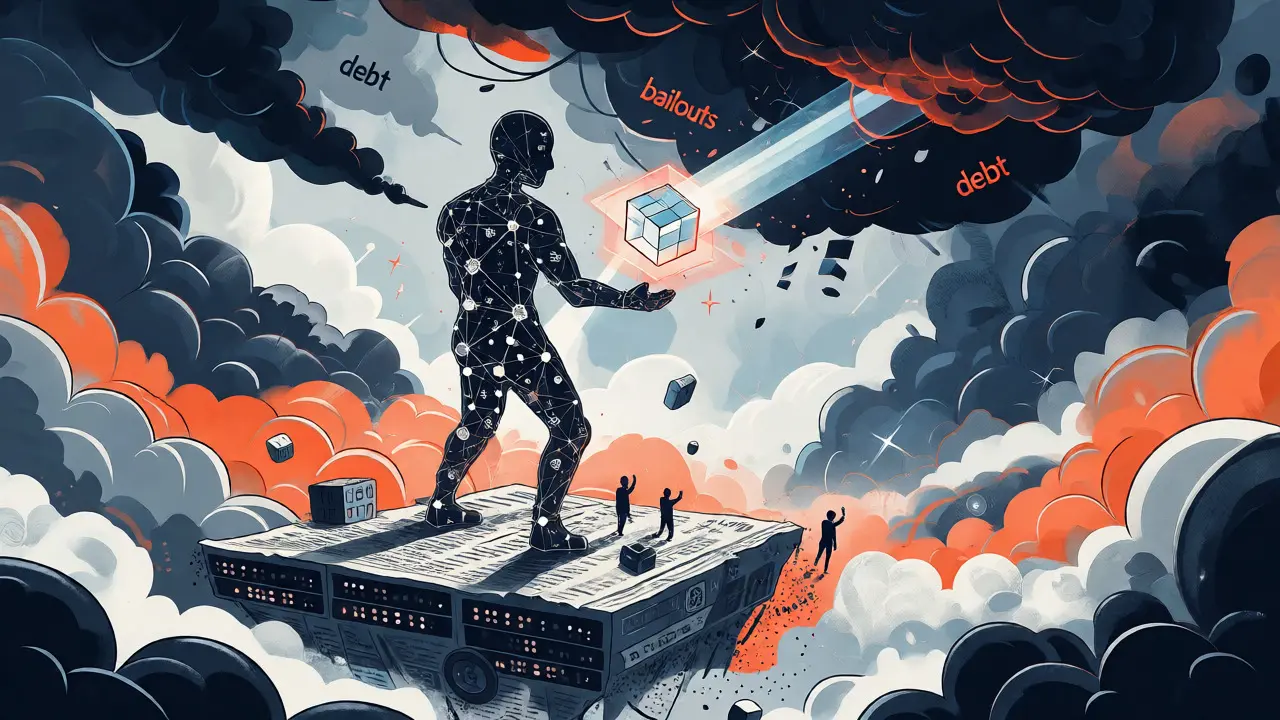
- The Newspaper Headline: Embedded in the coinbase data of this block is the text: "The Times 03/Jan/2009 Chancellor on brink of second bailout for banks."
That headline isn't just a timestamp. It’s a political statement. By embedding a news article about bank bailouts into the immutable code of the first block, Nakamoto made sure future generations would remember exactly why Bitcoin was created. It was meant to be independent of the failing traditional banking system.
From Zero to Hero: Early Milestones
For the first year, Bitcoin had no price. It was mostly a hobby for computer scientists and cypherpunks. The first recorded exchange rate appeared on March 17, 2010, valuing 1,309.03 BTC at $1.00. That means one Bitcoin was worth roughly $0.00076. Yes, less than a tenth of a cent.
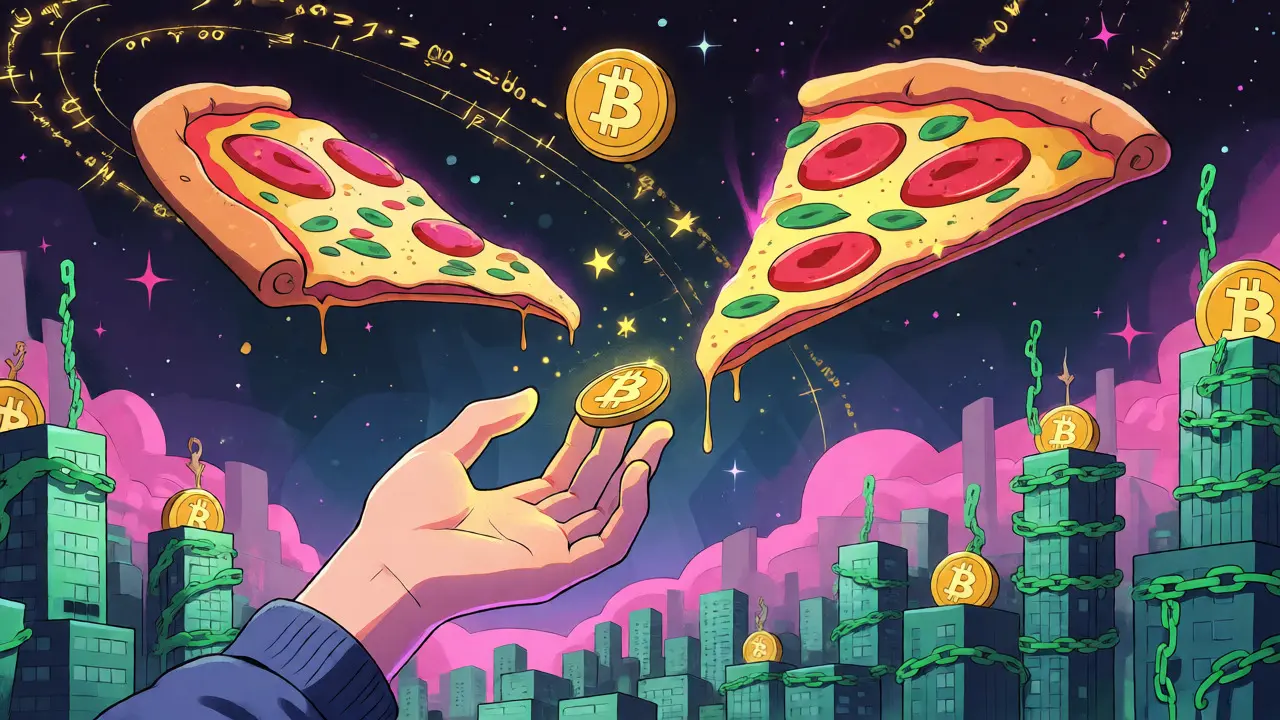
The moment Bitcoin became "real" money happened on May 22, 2010. A programmer named Laszlo Hanyecz paid 10,000 bitcoins for two Papa John’s pizzas. Today, those coins are worth hundreds of millions of dollars, but at the time, Laszlo likely thought he was getting a good deal on dinner. This event is now celebrated annually as "Bitcoin Pizza Day."
Infrastructure followed quickly:
- July 2010: The first major exchange, Mt. Gox, launched. It eventually handled over 70% of all Bitcoin trades before its infamous collapse.
- November 2012: The first halving occurred. The reward for mining blocks dropped from 50 BTC to 25 BTC, enforcing scarcity.
- February 2011: The dark web marketplace Silk Road began operating, exclusively accepting Bitcoin. This gave the currency a practical use case outside of speculation.
| Date | Event | Significance |
|---|---|---|
| Oct 31, 2008 | Whitepaper Published | Defined the technical framework for decentralized cash. |
| Jan 3, 2009 | Genesis Block Mined | Network launch; embedded anti-bank message. |
| May 22, 2010 | Pizza Transaction | First real-world commercial use of BTC. |
| Nov 28, 2013 | Price Hits $1,000 | Mainstream media attention peaks. |
Why Did It Succeed Where Others Failed?
So, why did Bitcoin stick while DigiCash and Bit Gold faded away? The answer lies in three specific innovations Nakamoto combined:
- Decentralized Consensus: Using Proof-of-Work allowed thousands of anonymous nodes to agree on the state of the ledger without trusting each other. This removed the single point of failure.
- Fixed Supply: The code limits the total number of Bitcoins to 21 million. This predictable monetary policy contrasts sharply with fiat currencies, which can be printed endlessly by central banks.
- Open Source Code: Anyone could download the software, run a node, and verify the rules. There was no CEO to fire and no headquarters to raid.
This combination created a network effect. As more miners joined, the network became more secure. As more users joined, the liquidity increased. By the time competitors like Litecoin (launched 2011) or Peercoin (launched 2012) arrived, Bitcoin had already established itself as the standard.
The Mystery of Satoshi
Perhaps the most fascinating part of Bitcoin’s origin is that we still don’t know who built it. Satoshi Nakamoto stepped back from development in 2011, handing the project over to core developers like Gavin Andresen. Since then, numerous people have claimed to be Satoshi, including Craig Wright, who famously struggled to prove ownership of early Bitcoin keys.
Does it matter? Many argue no. The decentralization of Bitcoin means it doesn't need a leader. If Satoshi showed up today and said, "I want to change the protocol," the community could simply say no. The code is law. However, the mystery adds to the allure. It suggests that Bitcoin belongs to no one-and therefore, to everyone.
Legacy and Modern Impact
Today, Bitcoin is far more than a niche experiment. It has spawned an entire industry. Over 25,000 cryptocurrencies now exist, many trying to improve upon Bitcoin’s design. Yet, Bitcoin remains the dominant asset by market cap. Institutional adoption has surged, with companies holding BTC on their balance sheets and ETFs allowing traditional investors to buy exposure to the asset.
The technology behind Bitcoin, the blockchain, has also found uses beyond money. From supply chain tracking to voting systems, the concept of a shared, immutable ledger has influenced sectors worldwide. But none of this would exist without that first block mined in 2009.
Bitcoin proved that money could be code. It showed that trust could be replaced by math. And it started with a pizza, a newspaper headline, and a desire for freedom.
Who created Bitcoin?
Bitcoin was created by an individual or group using the pseudonym Satoshi Nakamoto. The true identity of Satoshi remains unknown despite extensive investigations. Nakamoto published the Bitcoin whitepaper in 2008 and mined the genesis block in 2009 before disappearing from public view around 2011.
When was Bitcoin first created?
While the whitepaper was released on October 31, 2008, the Bitcoin network officially launched on January 3, 2009. This is when Satoshi Nakamoto mined the first block, known as the Genesis Block, marking the beginning of the blockchain.
What was the first real-world purchase with Bitcoin?
The first documented real-world transaction involving Bitcoin occurred on May 22, 2010. Programmer Laszlo Hanyecz paid 10,000 bitcoins for two large pizzas. This event is now commemorated annually as "Bitcoin Pizza Day."
Why does the Genesis Block contain a newspaper headline?
The headline "Chancellor on brink of second bailout for banks" from The Times (January 3, 2009) is embedded in the Genesis Block to serve as both a timestamp and a political statement. It highlights the distrust in central banking that motivated Bitcoin's creation.
Was Bitcoin the first digital currency?
No, Bitcoin was not the first attempt at digital currency. Predecessors included David Chaum's eCash/DigiCash, Wei Dai's b-money, and Nick Szabo's Bit Gold. However, Bitcoin was the first successful implementation that solved the double-spending problem without a central authority.