Iranian Energy Subsidy Calculator
This calculator shows the electricity consumption of Bitcoin mining in Iran compared to household use based on article data. Enter values to see the energy imbalance that's causing blackouts for citizens while miners operate.
Iran produces Bitcoin for as little as $1,300 per coin. Meanwhile, the average Iranian household faces 12 hours of blackouts every summer. This isn’t a coincidence. It’s the result of a government policy that gives cryptocurrency miners access to electricity at a fraction of the cost-while ordinary citizens struggle to keep their lights on.
How Cheap Electricity Made Iran a Crypto Mining Hotspot
Iran’s electricity subsidy system is one of the most extreme in the world. For licensed cryptocurrency miners, the government charges between $0.04 and $0.07 per kilowatt-hour. For households, it’s even lower-just $0.01 to $0.02. That’s less than one-tenth of what miners pay in the United States, and less than 1% of what they pay in Italy, where Bitcoin mining costs over $300,000 per coin. This massive price gap exists because Iran has long subsidized energy for its citizens and industries. But when cryptocurrency mining was legalized in 2018, the government didn’t just extend the subsidy-it turned it into a tool. Miners were given industrial rates that were still dirt cheap compared to global standards. The result? Iran became one of the most profitable places on Earth to mine Bitcoin. A single Bitcoin requires over 300 megawatt-hours of electricity. That’s enough to power 35,000 Iranian homes for a day. And Iran is running millions of these machines. Estimates suggest the country’s mining operations consume nearly 2,000 megawatts of power-about 5% of Iran’s total electricity use. But here’s the real problem: that 5% is responsible for 15-20% of the country’s energy imbalance. In other words, mining isn’t just using power-it’s breaking the grid.The Grid Is Crumbling, and Miners Are the Reason
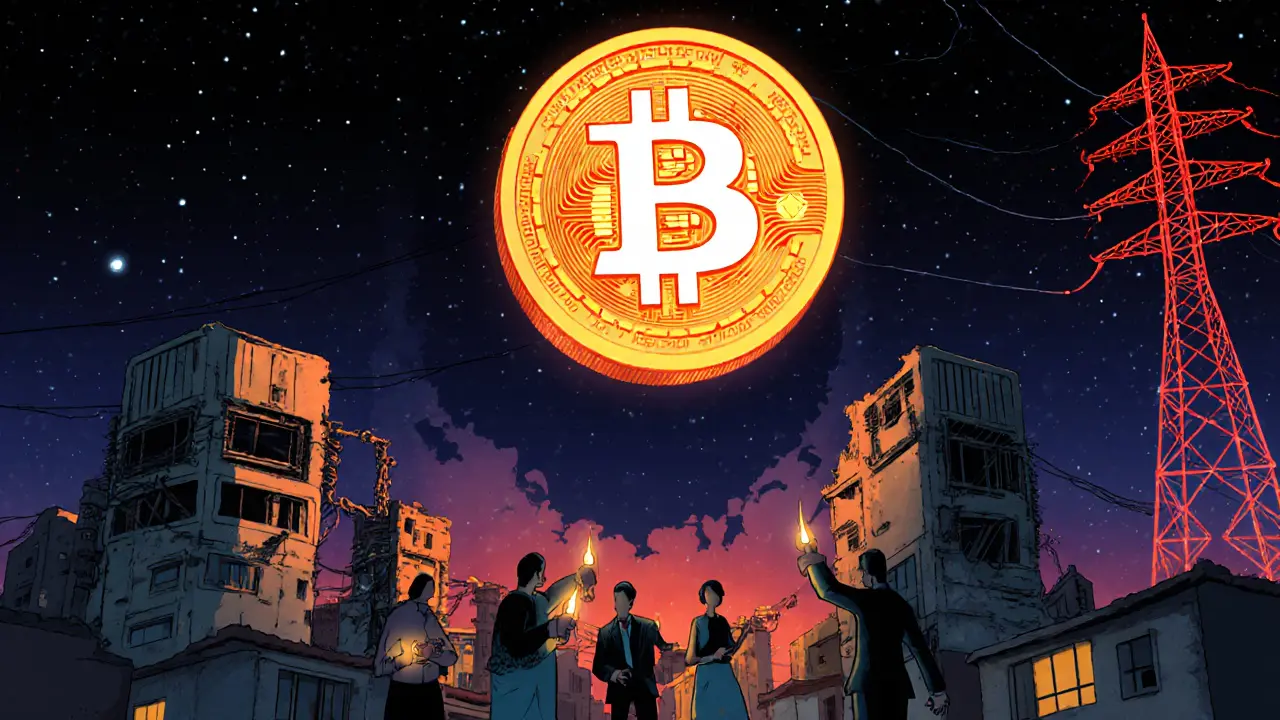
Iran’s power infrastructure was already aging before mining took off. Decades of underinvestment, sanctions, and mismanagement left the system running at 60-70% of its needed capacity. Then came the ASICs. In 2025, during a nationwide internet shutdown linked to regional tensions, power usage dropped by 2,400 megawatts. Why? Because over 900,000 illegal mining devices were suddenly turned off. That single event proved how deeply mining had become embedded in the national energy system. The Iranian government later confirmed that illegal miners alone were consuming up to two gigawatts daily-equivalent to the entire electricity demand of Tehran, a city of 9 million people. During summer months, when air conditioning demand spikes by 30-40%, the grid collapses. Blackouts become routine. In Tehran, residents report 8 to 12 hours without power every day. In Ahvaz, a city in the southwest, people discovered a massive mining operation hidden inside the tunnels beneath the local stadium. While families sat in the dark, miners ran 24/7, siphoning off subsidized power. Social media is full of anger. One Twitter user with over 50,000 followers posted: “21 hours of blackouts this week while the IRGC’s mining farms in Ahvaz Stadium tunnels run 24/7-this is economic terrorism against ordinary Iranians.” On Reddit, 92% of 1,450 comments blamed crypto mining for the outages. Telegram channels now share real-time blackout maps that line up perfectly with known mining locations. When Bitcoin’s price jumps, blackouts spike within 48 hours.Who’s Really in Control?
The government says it regulates mining. But the truth is messier. To legally mine, you need four permits: one from the Ministry of Industry for equipment imports, one from the power company for electricity, one from the Central Bank of Iran (CBI) to export coins, and proof you’re operating in an industrial zone. The process takes 3 to 6 months. Approval rates are below 40%. Meanwhile, illegal miners operate with no paperwork, no oversight, and no electricity bills. And who runs most of those illegal operations? Evidence points to the Islamic Revolutionary Guard Corps (IRGC). Energy analysts estimate the IRGC controls 55-65% of all mining in Iran-either directly or through front companies. These aren’t hobbyists with a few rigs in their garages. These are state-backed operations with access to state-subsidized power, state-approved export channels, and zero accountability. Former Energy Minister Reza Ardakanian warned in 2024 that mining was using up to 10% of Iran’s total electricity generation. He was fired shortly after. Today, the current Energy Minister, Ali Akbar Mehrabian, defends the system: “Regulated mining brings in $800 million annually in foreign exchange.” That’s true-but it ignores the cost. The government is trading public infrastructure for short-term cash. Dr. Saeed Laylaz, an economic advisor to former President Khatami, put it bluntly: “The government has created a parallel economy where the IRGC controls both the energy supply and the cryptocurrency output, bypassing central bank oversight.”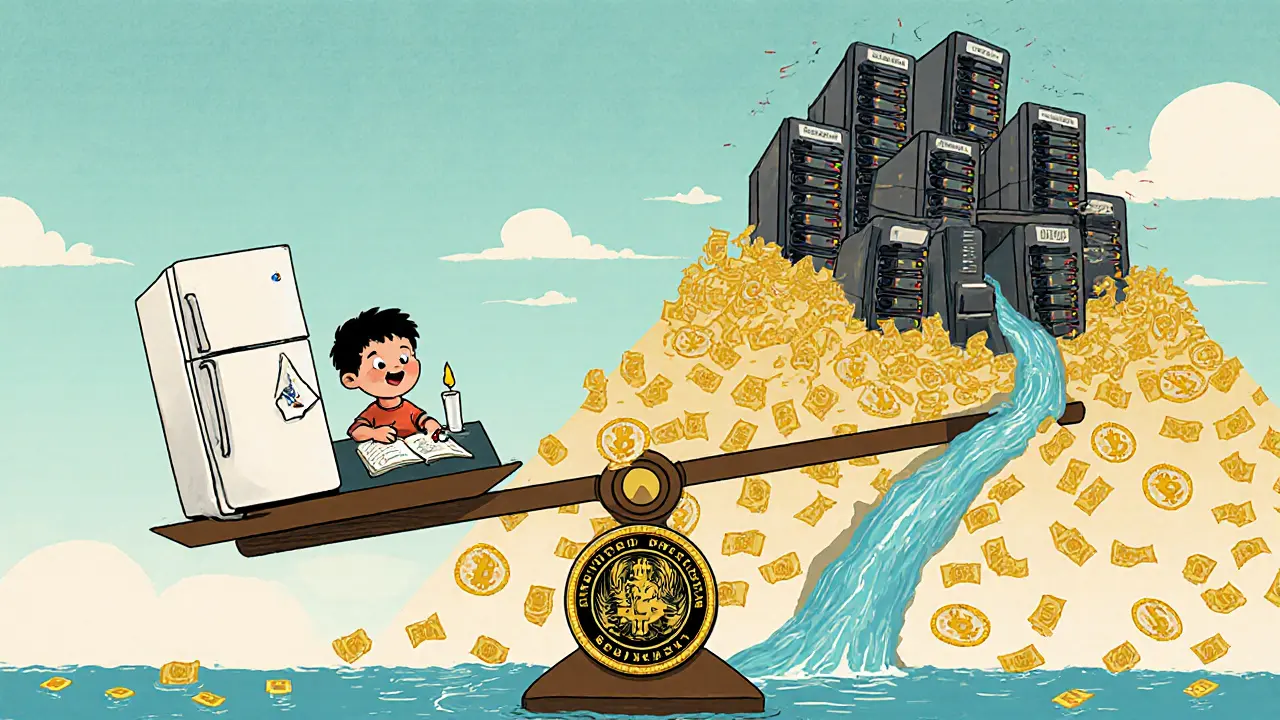
How the System Works (Legally and Illegally)
Licensed miners pay $0.04-$0.07 per kWh. They’re required to use smart meters, register their devices, and sell their Bitcoin through state-approved channels. In return, they get access to stable power-at least most of the time. But even these “legal” miners face 15-20 outages per month during summer. Their equipment is expensive, imported under strict sanctions, and takes 4-6 months to arrive. Illegal miners? They don’t pay anything. They tap into household lines, steal power from factories, or run rigs in abandoned warehouses. Some even use the grid meant for public transit systems. They don’t need permits. They don’t need licenses. They just need electricity-and Iran’s grid gives it to them freely. To fight back, the government offers a reward: 10% of the recovered electricity cost for anyone who reports illegal mining. In the first six months of 2025, citizens filed 8,432 reports. Over 2,000 operations were shut down. But for every device seized, ten more pop up.Why Iran Won’t Stop
Iran isn’t shutting down mining because it can’t afford to. The country is under heavy international sanctions. Traditional exports-oil, gas, petrochemicals-are restricted. Cryptocurrency mining is one of the few ways to earn hard currency. In 2024, over $700 million in Bitcoin was used to pay for sanctioned imports like medicine, food, and industrial parts. The Central Bank of Iran doesn’t allow Bitcoin for domestic payments, but it lets miners sell their coins abroad for trade settlements. The sector is projected to generate $1.5 billion in revenue by 2025. That’s 0.8% of Iran’s entire GDP. It’s not just miners who benefit-it’s the entire shadow economy. Truckers transport equipment. Electricians wire illegal connections. Local officials look the other way for bribes. The International Energy Agency warns that without major grid upgrades, Iran’s power shortages could grow by 25-30% by 2027. But upgrading the grid costs billions. And Iran doesn’t have the money-or the access to foreign technology-to do it. So the government keeps doing what it’s always done: turn off the lights for citizens during peak demand, then turn them back on for miners when winter comes and electricity use drops.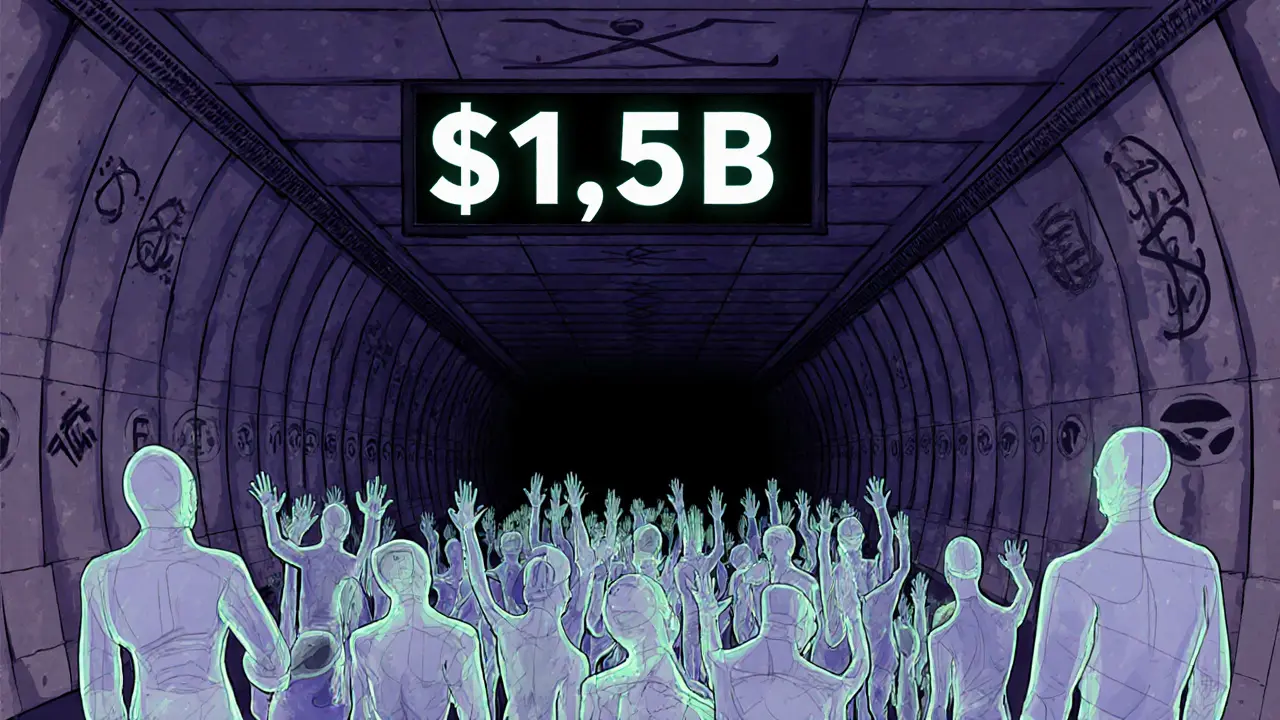
The Human Cost
Behind every statistic is a family. A child studying by candlelight. A hospital running on backup generators. A refrigerator full of medicine that spoiled during a 10-hour blackout. In Tehran, a mother told a reporter: “These power cuts are endless. I can’t take it anymore. They only mine cryptocurrency, but we are deprived of electricity.” The government calls mining a “national asset.” But for millions of Iranians, it’s a daily punishment. The energy subsidy wasn’t meant to fund a global crypto industry. It was meant to help people survive. Now, the subsidy is killing them.What Comes Next?
Iran won’t abandon crypto mining. Not yet. The money is too good. The leverage is too valuable. But the cracks are showing. The government has started requiring all mining operations to be registered in industrial zones with smart meters. It’s cracking down harder on illegal operations. It’s even testing new electricity tariffs modeled after those for electricity exporters. Still, the core problem remains: cheap power for miners, blackouts for everyone else. Until Iran chooses between feeding its people and feeding its crypto farms, the answer won’t change. The lights will keep going out. The miners will keep running. And the people? They’ll keep waiting.Why does Iran subsidize electricity for crypto mining?
Iran subsidizes electricity for crypto mining because it’s one of the few ways to earn foreign currency under international sanctions. By allowing miners to sell Bitcoin abroad for trade settlements, the government bypasses financial restrictions and gains hard currency to import essential goods like medicine and food. The cost is paid by ordinary citizens through rolling blackouts and strained infrastructure.
How much electricity does crypto mining use in Iran?
Crypto mining in Iran consumes an estimated 2,000 megawatts of electricity, which is about 5% of the country’s total power output. However, this 5% is responsible for 15-20% of the national electricity imbalance. Illegal mining alone uses up to 2 gigawatts-equal to the entire daily demand of Tehran, a city of 9 million people.
Is crypto mining legal in Iran?
Yes, but only under strict conditions. Licensed miners must register with the Ministry of Industry, obtain electricity quotas from the power company, and get approval from the Central Bank of Iran to export Bitcoin. However, the licensing process is slow and approval rates are below 40%. As a result, most mining operations are illegal, running on stolen or subsidized household power.
Who controls most of Iran’s crypto mining operations?
The Islamic Revolutionary Guard Corps (IRGC) controls an estimated 55-65% of all mining operations in Iran, either directly or through front companies. These operations benefit from state-subsidized electricity, state-approved export channels, and minimal oversight, making them a key part of Iran’s shadow economy and sanctions-busting strategy.
Why are there so many blackouts in Iran?
Blackouts occur because Iran’s power grid is old, underfunded, and overwhelmed. Crypto mining consumes nearly 2,000 megawatts-equivalent to a major city’s demand. During summer, when air conditioning use spikes, the grid can’t handle the load. The government responds by cutting power to homes and businesses while keeping mining operations running, especially those linked to the IRGC.
Can Iran shut down crypto mining completely?
Iran could shut down mining, but it won’t-because it needs the money. Mining generates $1.5 billion annually in foreign exchange, helping the country import goods under sanctions. Instead of banning it, the government uses temporary shutdowns during peak demand and targets only illegal operations. The system is designed to keep mining alive while blaming citizens for the consequences.





Sarah Roberge
December 2, 2025 AT 17:17Jess Bothun-Berg
December 3, 2025 AT 20:53Steve Savage
December 4, 2025 AT 09:00Joe B.
December 4, 2025 AT 09:37Rod Filoteo
December 5, 2025 AT 02:44Layla Hu
December 6, 2025 AT 03:43