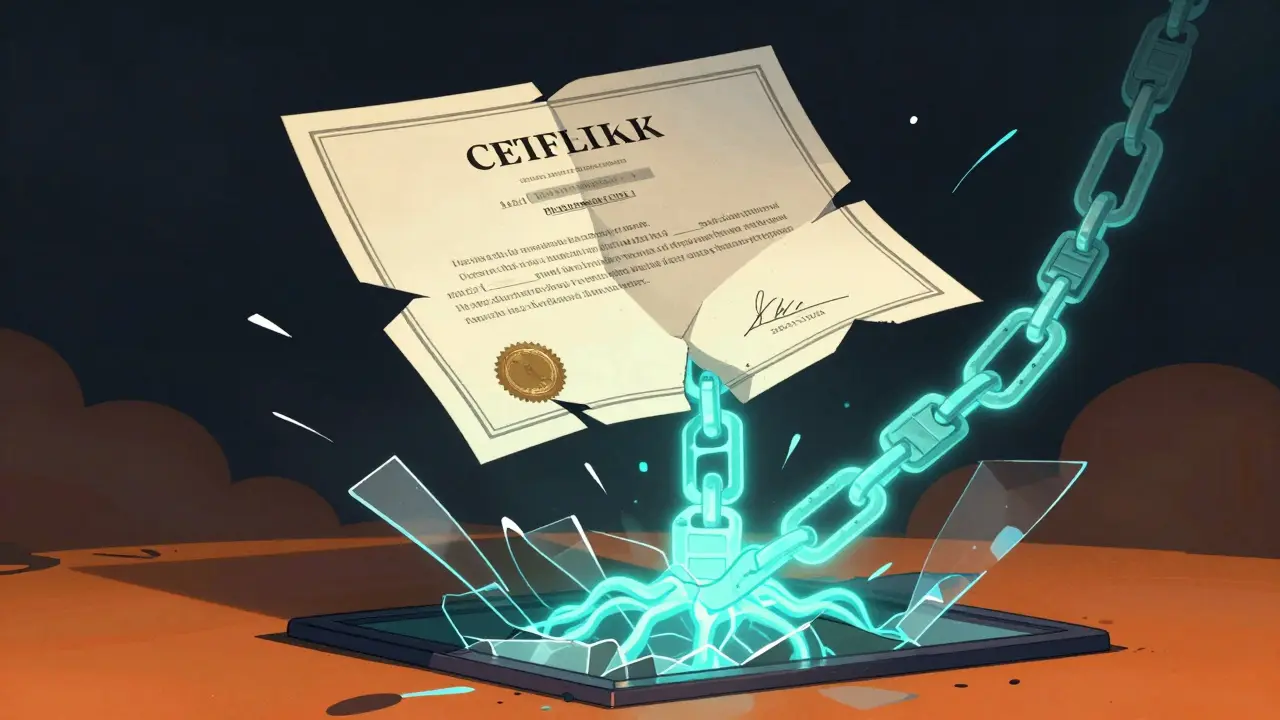
Imagine buying a painting for $5 million-only to find out years later it’s a fake. The paperwork says it’s real. The expert said it’s real. But the brushstrokes don’t match. The signature was copied. And now, no one can prove who really owned it before. This isn’t a movie. It happens all the time in the art world.
For centuries, art authentication relied on paper certificates, handwritten notes, and the word of a few trusted curators. But those papers get lost. Signatures get forged. Experts retire or die. And when disputes arise, there’s no clear trail. Enter blockchain provenance: a digital ledger that records every step of an artwork’s life-from the moment the artist puts down the brush to the last time it changed hands.
How Traditional Art Authentication Really Works
Traditional art authentication is a patchwork of old-school methods. A gallery or auction house might issue a certificate of authenticity signed by an expert. That certificate is stapled to the back of the painting. Sometimes, it’s stored in a file cabinet. Other times, it’s kept in a private database only accessible to insiders.
Here’s how it breaks down:
- Physical documentation: A signed paper slip, a handwritten note, or a stamped seal. These can be stolen, copied, or altered.
- Expert opinion: A scholar or curator says it’s real. But what if they’re wrong? Or biased? Or retired? There’s no way to verify their reasoning years later.
- Fragmented records: Provenance might be scattered across museums, private collections, auction catalogs, and old receipts. No single source holds the full story.
- No real-time updates: If the painting is sold, the new owner might not even know where to find the original paperwork.
According to the Art Loss Register, over 50,000 stolen artworks are still unaccounted for. Many more are fakes disguised with forged papers. And when insurance claims are filed, companies often delay payouts because provenance can’t be verified. The system isn’t broken-it was never built to handle today’s scale.
How Blockchain Provenance Works
Blockchain provenance turns the art world’s paper trail into a digital one that can’t be erased, edited, or faked. Each artwork gets a unique digital identity tied to a blockchain-like Bitcoin or Ethereum-but instead of tracking coins, it tracks art.
Here’s how it works in practice:
- Registration: The artist or gallery uploads high-res photos, materials used, dimensions, creation date, and a digital signature of the work.
- Minting: A non-fungible token (NFT) is created for the artwork. This NFT isn’t the painting itself-it’s the digital proof of its authenticity and ownership history.
- Ownership transfers: Every time the artwork is sold, the new owner’s wallet address is added to the blockchain. No middleman needed. No paperwork.
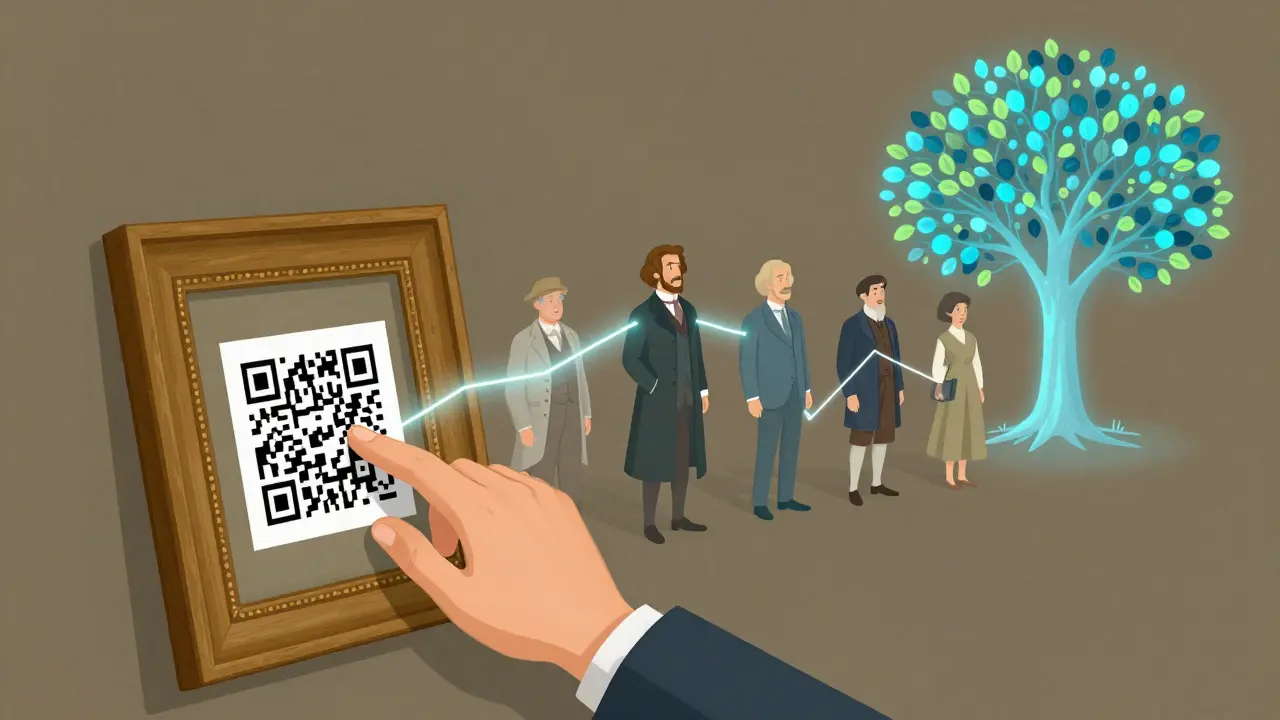
- Verification: Anyone can scan a QR code on the frame or visit a public registry to see the full history: who made it, who owned it, when it was sold, and for how much.
Unlike paper, blockchain records are stored across thousands of computers worldwide. No single entity controls it. No one can delete a transaction. Even if the original gallery shuts down, the record lives on.
Why Blockchain Beats Paper Certificates
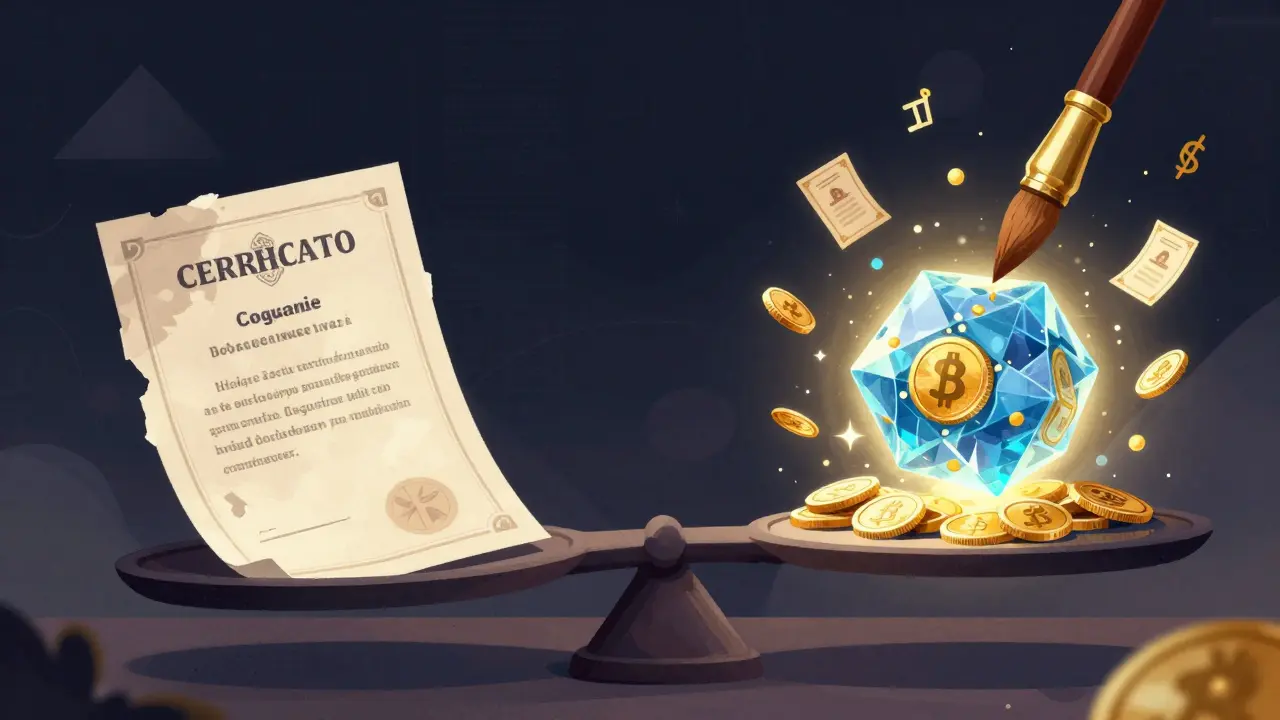
Let’s compare the two side by side:
| Feature | Traditional Authentication | Blockchain Provenance |
|---|---|---|
| Immutability | Paper can be forged or altered | Records cannot be changed after being added |
| Transparency | Only accessible to insiders | Publicly verifiable by anyone |
| Ownership History | Incomplete, often missing decades | Full chain from creation to current owner |
| Verification Speed | Weeks of research, expert consultation | Seconds with a QR code or online lookup |
| Loss Risk | Documents get destroyed in fires, floods, or moves | Stored across global network-no single point of failure |
| Automated Royalties | Artists rarely earn from resales | Smart contracts pay artists 5-15% every time the art is sold |
That last point matters. For decades, artists sold their work once and never saw another dime-even when it sold for millions later. Blockchain changes that. Smart contracts automatically send a percentage to the artist every time the NFT changes hands. That’s not just fair-it’s revolutionary.
Real Platforms Making This Happen
This isn’t theoretical. Companies are already using blockchain to protect art:
- Verisart: Issues blockchain certificates for physical and digital art. Over 250,000 artworks are registered on their platform.
- Masterworks: Lets investors buy shares in $10 million Picasso or Basquiat paintings. Ownership is tracked on blockchain, reducing fraud risk.
- Maecenas: Uses blockchain to tokenize art ownership, allowing 100+ people to co-own a single piece.
- Sotheby’s and Christie’s: Both now offer blockchain-verified provenance for select high-value lots.
In 2023, Deloitte’s Art & Finance Report found that 78% of collectors said they’d pay more for art with verified blockchain provenance. Why? Because they finally trust the system.
What About Digital Art?
Digital art-NFTs, generative art, animated pieces-was the first to adopt blockchain. But now, the same tech is being used for physical art too. A painting can have a QR code on its back that links to its blockchain record. The NFT isn’t replacing the canvas-it’s protecting it.
Some collectors worry: “What if someone steals the physical painting and sells it without the NFT?” Good question. The answer? The NFT doesn’t own the painting-it proves who owns the right to claim it. If someone tries to sell a stolen piece, the blockchain record shows the last legitimate owner. Buyers can check before paying.
It’s like a car title. The car isn’t the title. But without the title, you can’t legally prove you own the car.
Challenges Still Left to Solve
Blockchain isn’t magic. It has limits:
- Not everyone knows how to use it: Older collectors or galleries may not have digital wallets or understand NFTs.
- Scams still exist: Fake NFTs can be minted for fake art. But the blockchain still records who minted it-making fraud easier to trace.
- Integration is slow: Auction houses still rely on legacy systems. Change takes time.
- Costs vary: Minting an NFT can cost $50-$500 depending on the network. That’s a barrier for emerging artists.
But these aren’t flaws in the idea-they’re growing pains. As wallets get simpler, platforms get cheaper, and education improves, these barriers will fade.
What This Means for Collectors, Artists, and Galleries
If you’re a collector: You’re no longer gambling on a signature. You’re verifying a digital trail that’s been sealed since the day the work was made.
If you’re an artist: You finally get paid every time your work sells. No more being left out of the resale boom.
If you’re a gallery: You’re not just selling art-you’re offering trust. And trust is the most valuable asset in the art market.
By 2026, blockchain provenance won’t be a luxury. It’ll be the standard. The question isn’t whether you should use it. It’s whether you’re ready to stop trusting paper.
What’s Next?
Insurance companies are already starting to require blockchain records for high-value policies. Banks are exploring art-backed loans using NFTs as collateral. Museums are digitizing their entire provenance archives onto blockchain.
The old system relied on human memory and fragile paper. The new one relies on code, cryptography, and a global network. One is fragile. The other is built to last.
Art has survived wars, fires, and revolutions. But its documentation? That’s been broken for too long. Blockchain isn’t just fixing it-it’s rebuilding it from the ground up.
Can blockchain really prevent art forgery?
Blockchain doesn’t stop someone from painting a fake. But it stops them from selling it as real. Every legitimate artwork gets a unique digital record tied to its physical form. If a forgery appears with no blockchain history, buyers can instantly spot it. The system doesn’t eliminate fraud-it makes fraud impossible to hide.
Do I need a crypto wallet to buy art with blockchain provenance?
Not necessarily. Many platforms let you pay with a credit card and automatically create a wallet for you. You don’t need to understand crypto to own art with blockchain provenance-you just need to know you can verify its history with a click.
What happens if the blockchain network shuts down?
Blockchain networks like Ethereum are designed to run forever. They’re maintained by thousands of computers worldwide. Even if one provider goes out of business, the data is stored across the network. Plus, many platforms back up blockchain records to traditional databases for extra safety.
Can I still use traditional certificates if I have a blockchain record?
Yes-but they’re redundant. The blockchain record is the authoritative source. Paper certificates might still be kept for sentimental or historical reasons, but they no longer hold legal or verification weight. Buyers will trust the digital record, not the paper.
Is blockchain provenance only for expensive art?
No. While big auction houses use it for million-dollar pieces, platforms like Verisart help emerging artists register works for under $100. The value isn’t in the price-it’s in the trust. Even a $500 painting deserves a verifiable history.
Bill Sloan
January 18, 2026 AT 02:40Telleen Anderson-Lozano
January 18, 2026 AT 07:46Haley Hebert
January 20, 2026 AT 05:00Pat G
January 21, 2026 AT 10:10myrna stovel
January 22, 2026 AT 17:15Sarah Baker
January 23, 2026 AT 02:14