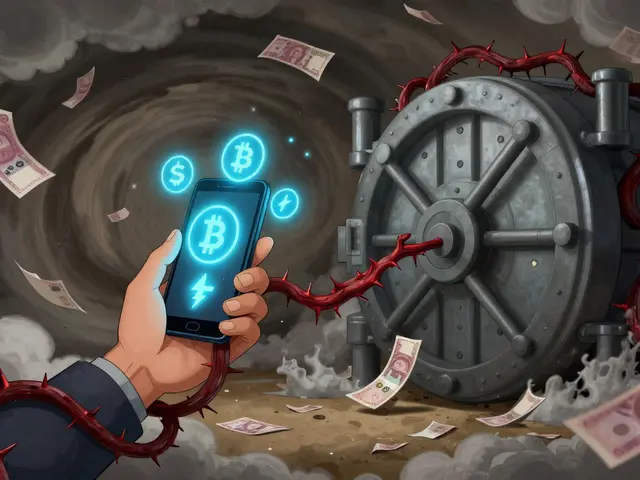
You’ve probably heard the horror stories. One day your coins are on a centralized exchange, and the next, you’re refreshing a webpage hoping for news about withdrawals. It’s frustrating, right? That fear is exactly why many of us started looking for alternatives that keep our keys in our own pockets. Enter Chainge Finance, a platform promising to be your "own digital bank" without the middlemen. But does it actually deliver on that promise, or is it just another app with a fancy interface? If you’re tired of juggling five different wallets just to swap tokens across chains, this review breaks down what Chainge really offers. We’ll look at its security model, how easy it is to use, and whether its native token has any real value today. Spoiler alert: it’s not perfect, but for specific users, it solves a genuine pain point.
What Exactly Is Chainge Finance?
Think of Chainge Finance as a decentralized finance (DeFi) application that acts as a bridge between multiple blockchains. Founded in 2020 by Chainge Tech Limited, it isn’t a traditional exchange where they hold your money. Instead, it’s a non-custodial wallet that lets you trade, save, and earn yield directly from your mobile device. The core idea here is consolidation. Normally, if you want to move assets from Ethereum to Binance Smart Chain, you might need MetaMask for one and Trust Wallet for the other, plus a bridge service. Chainge integrates 13 different blockchain networks into a single app. You can swap assets across these chains without leaving the interface. It supports over 75 assets, which covers most of the major coins people care about, though it doesn’t have every obscure altcoin out there.The Security Model: DCRM and Self-Custody
Security is the elephant in the room for any crypto app. If you lose your seed phrase, you lose everything. Chainge tries to make this less scary using something called Distributed Control Rights Management (DCRM). Here’s how it works in plain English: instead of storing your private key in one place where it could get hacked, Chainge splits the cryptographic operations across multiple nodes. No single point of failure means no single target for hackers. Plus, they offer a feature that encrypts your wallet seed phrase into a QR code. You can print this out or save it offline, keeping full control while making backup easier. Users often praise this aspect. One reviewer noted that after the collapse of several centralized exchanges, having total control over their keys felt like a game changer. You aren’t trusting a company to keep your funds safe; you’re trusting math and distributed networks. That said, always remember: self-custody means self-responsibility. If you mess up your backup, there’s no customer support team to reset your password for you.
User Experience and Mobile Performance
Let’s talk about the actual experience. Chainge is mobile-first. The iOS app requires iOS 13.0+ and takes up about 143.4 MB. It’s not huge, but it’s substantial enough to suggest they’ve packed in some heavy-duty features. Users report it’s smooth and glitch-free, which is rare for DeFi apps that often feel clunky or slow. The interface is designed for people who don’t want to read whitepapers before buying a coin. Swaps are intuitive. You select the asset you have, pick the asset you want, and the app handles the cross-chain routing automatically. This "universal assets" feature is a big deal because it removes the technical headache of bridging manually. However, there are limitations. Because it’s focused on simplicity, you won’t find advanced trading tools like complex order books or perpetual futures trading here. If you’re a day trader needing leverage, Chainge might feel too basic. It’s better suited for holding, swapping, and earning passive income.Tokenomics: The Reality of XCHNG
Now, let’s address the XCHNG token. If you’re expecting to get rich quick by holding this token, you might be disappointed. Data from 2024 showed extremely low returns-around 0.01% over a year. That’s basically flat. Why does this matter? In many DeFi projects, the native token gives you governance rights or fee discounts. For Chainge, the utility seems limited compared to giants like Uniswap (UNI) or PancakeSwap (CAKE). There’s no clear roadmap showing massive growth for the token itself. So, if you’re buying Chainge solely for the token appreciation, proceed with caution. Use the platform for its functionality, not as a speculative investment vehicle.| Feature | Chainge Finance | Centralized Exchange (CEX) |
|---|---|---|
| Custody | Non-custodial (You hold keys) | Custodial (They hold keys) |
| Cross-Chain Support | Native (13+ networks) | Limited or Manual Bridging |
| Fiat On-Ramp | Limited/Indirect | Direct Bank Integration |
| Advanced Trading | Basic Swaps/Yield | Spot/Margin/Futures |
| Regulatory Compliance | Less Regulated (DeFi) | Highly Regulated (KYC/AML) |
Pros and Cons: Who Should Use Chainge?
Is it right for you? Let’s break it down honestly. **Pros:** * **True Ownership:** You never give up your private keys. * **Simplicity:** Managing 13 chains in one app saves time and reduces errors. * **Security Architecture:** DCRM adds a layer of protection against common hacks. * **User-Friendly:** Great for beginners moving away from CEXs. **Cons:** * **Weak Token Performance:** XCHNG hasn’t shown strong market momentum. * **Limited Fiat Options:** Getting cash in and out is harder than on Coinbase or Kraken. * **No Advanced Tools:** Not suitable for active traders needing charts and orders. * **Lack of Audits:** While the tech sounds good, third-party audit details are sparse in public records.Final Verdict
Chainge Finance isn’t trying to replace every crypto tool you own. It’s a niche player solving a specific problem: fragmentation. If you hold assets on multiple chains and hate bridging them manually, this app is a breath of fresh air. The security model is robust, and the user experience is surprisingly polished for a DeFi product. But don’t ignore the red flags. The token lacks utility-driven price growth, and the lack of transparent, detailed audits is a concern for serious whales. For the average user who wants to store, swap, and earn yield safely without worrying about an exchange going bankrupt, Chainge is a solid choice. Just keep your expectations realistic regarding the token’s value.Is Chainge Finance safe to use?
Chainge uses a non-custodial model with Distributed Control Rights Management (DCRM), which distributes cryptographic operations to prevent single points of failure. However, since it is a DeFi app, safety also depends on your personal security practices, such as securely backing up your seed phrase.
Can I buy crypto with fiat currency on Chainge?
Chainge primarily focuses on crypto-to-crypto swaps. While it may integrate with third-party services for fiat on-ramps, it is not as seamless as centralized exchanges like Coinbase or Binance, which allow direct bank transfers.
Which blockchains does Chainge support?
As of recent updates, Chainge supports 13 different blockchain networks, including major ones like Ethereum, Binance Smart Chain, and others, allowing for cross-chain transactions within the same app.
What is the XCHNG token used for?
The XCHNG token is the native utility token of the Chainge ecosystem. Historically, its price performance has been weak, and its primary use cases include governance and potential fee reductions, though specific utility benefits may vary.
Does Chainge require KYC verification?
Since Chainge is a decentralized, non-custodial platform, it generally does not require Know Your Customer (KYC) verification for standard crypto transactions, unlike centralized exchanges.