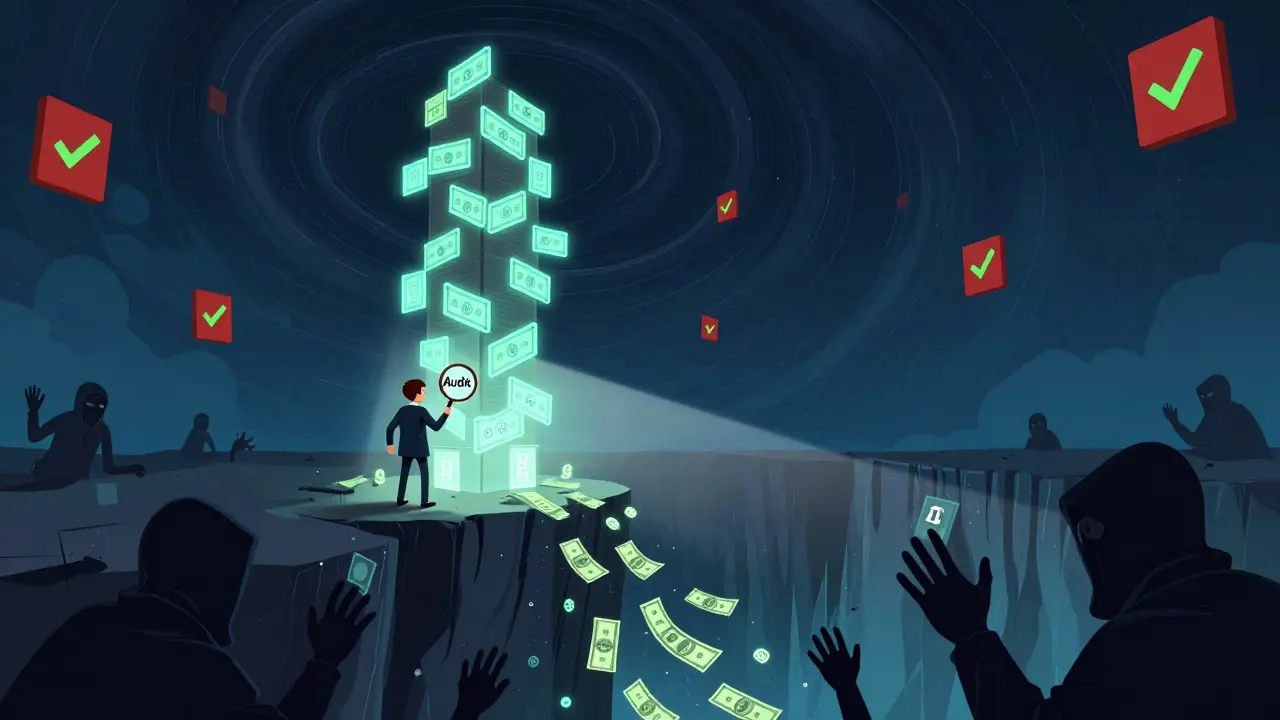
When you’re building a blockchain project, the last thing you want is to launch a smart contract only to find out weeks later that hackers cleaned out your treasury. That’s not hypothetical - in 2024 and 2025 alone, over $1.2 billion was lost to exploits on unaudited or poorly audited protocols. Professional crypto security audits aren’t optional anymore. They’re the bare minimum. And yes, they cost money - a lot of it. But compared to losing millions, the price is almost never the real question.
How Much Do Crypto Security Audits Actually Cost?
The cost of a professional crypto security audit isn’t a flat rate. It’s a sliding scale based on how complex your project is. At the low end, a simple ERC-20 token with basic minting and transfer functions might cost between $1,000 and $20,000. That’s the kind of audit you’d get for a utility token, a meme coin, or a small NFT collection with no staking or governance. But don’t be fooled by ads that say "starting at $5,000." Those prices rarely include the follow-up checks you’ll need after fixing the issues the auditors find.
Once you add even a little complexity - like staking rewards, voting mechanisms, or custom tokenomics - the price jumps. Projects in this range, such as DeFi platforms with basic yield farming or NFT marketplaces with royalty logic, typically cost between $15,000 and $50,000. This is where most small-to-mid-sized teams land. But if your project involves lending pools, automated market makers, or cross-chain bridges, you’re looking at $40,000 to $100,000. These are the kinds of systems where a single bug can drain hundreds of millions in TVL (total value locked).
At the top tier, enterprise-grade audits for multi-chain protocols, DAOs with treasury management, or zero-knowledge rollups can cost $100,000 to over $300,000. Firms like Trail of Bits and ConsenSys Diligence don’t just check your code - they simulate real-world attack scenarios, test economic incentives, and review every external contract your system talks to. These audits often take 12 to 16 weeks and involve multiple rounds of review.
What Drives the Price Up?
It’s not just about how big your codebase is - it’s about how tangled it is. A 5,000-line Solidity file with simple logic might cost less than a 2,000-line Rust file full of async calls and cross-contract dependencies. That’s why Solana audits are currently more expensive than Ethereum ones. There are fewer auditors who deeply understand Rust and the Solana virtual machine. The same goes for newer chains like Aptos or Sui - fewer experts, higher prices.
Another big factor is the audit method. Some firms offer automated scans for under $1,000. Those tools can catch obvious issues like reentrancy bugs or unchecked external calls. But they miss everything else: logic flaws, tokenomics imbalances, front-running risks, and subtle economic attacks. A proper audit means human experts reading every line of code, simulating edge cases, and asking, "What happens if someone tries to game this?" That kind of manual review takes time - and skilled people don’t come cheap.
Timeline matters too. If you need the audit done in two weeks instead of six, expect to pay 25-50% more. Top firms have limited capacity, and rushing them means pulling engineers off other projects or working nights. That’s not a perk - it’s a premium.
Why Some Audits Are Worth More Than Others
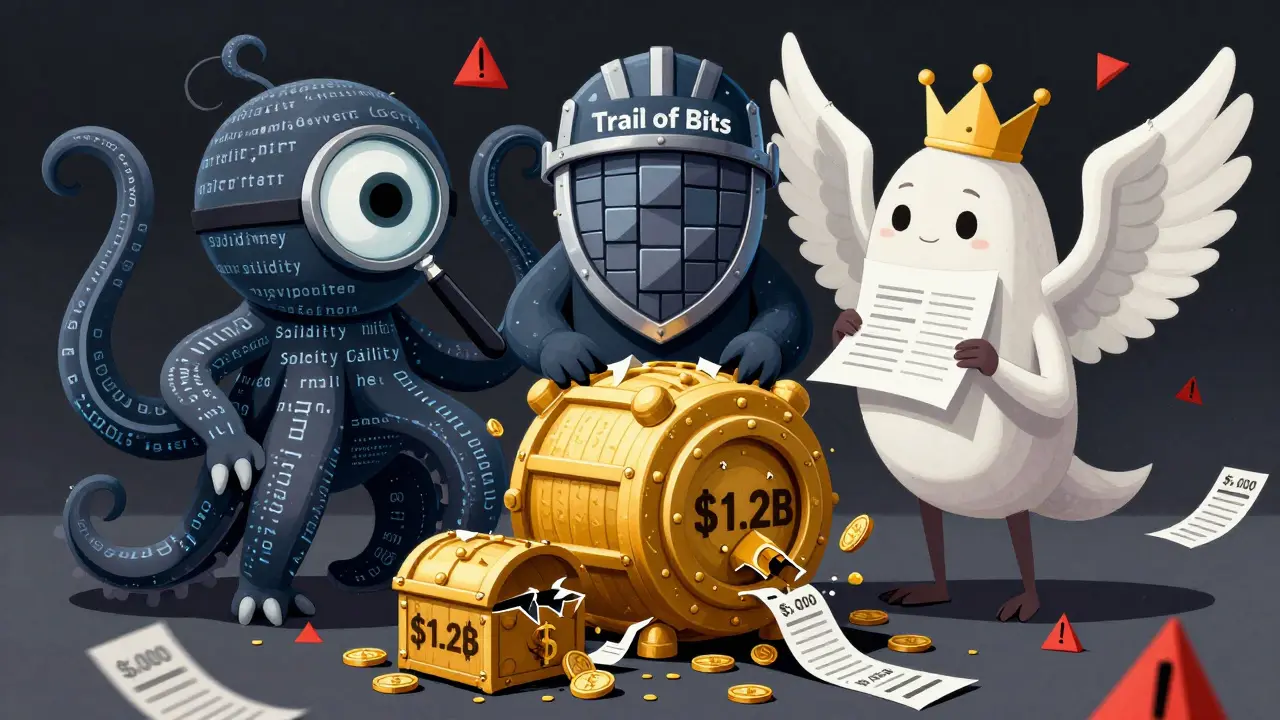
Not all audit firms are created equal. You’ll see names like OpenZeppelin, Trail of Bits, and ConsenSys Diligence come up again and again in high-profile DeFi projects. Why? Because they’ve caught the bugs that others missed. In 2024, a project that used a $7,000 audit from a lesser-known firm was exploited for $84 million. The same team later hired Trail of Bits for a re-audit - they found three critical vulnerabilities the first audit didn’t catch.
There’s a pattern: cheaper audits often focus on compliance - "did you follow the standard?" - while premium audits focus on risk - "could someone break this?" The difference isn’t just in the report. It’s in the depth of the remediation guidance. Top firms don’t just say, "Fix this line." They explain why it’s dangerous, how to fix it securely, and what to watch for afterward.
Community feedback on Reddit and Twitter is clear: developers who cut corners on audits regret it. One user shared how their $3,000 audit missed a simple overflow bug that cost them $2.1 million. They later paid $65,000 for a second audit - and still lost users’ trust.
Hidden Costs You Can’t Ignore
Most people think the audit quote is the final number. It’s not. You need to budget for at least 20-30% more.
- Remediation cycles: Almost every audit finds issues. Fixing them isn’t free - you’ll need to redeploy, retest, and pay for a follow-up review. Some firms charge $5,000-$15,000 just for the second pass.
- Documentation: If your code isn’t well-documented, auditors spend extra time figuring out what it does. That’s billable hours.
- Post-audit support: Some firms offer ongoing monitoring for $5,000-$10,000/month. It’s not mandatory, but for high-value protocols, it’s smart.
- Multiple audits: Enterprise projects now often hire two or three different firms. One does the initial review, another does a second opinion, and a third checks for regulatory compliance. That can double or triple your cost - but it’s becoming standard for institutional investors.
Smart teams plan for this. They don’t just set aside money for the audit - they set aside time, too. A basic audit takes 2-4 weeks. A complex one can take 4-6 months, especially if major changes are needed.
How Much Should You Budget?
There’s a rule of thumb in the industry: budget 5-10% of your total development cost for security audits. For a simple token, that might be $5,000. For a DeFi protocol with $50 million in TVL, it’s more like $100,000-$200,000. Some teams even go as high as 15% - especially if they’re targeting institutional capital.
Here’s a quick breakdown:
| Project Type | Typical Cost Range | Timeline | Recommended? |
|---|---|---|---|
| Basic ERC-20/SPL Token | $1,000 - $20,000 | 2-4 weeks | Yes - if it’s public |
| NFT Collection + Staking | $15,000 - $40,000 | 4-6 weeks | Yes - high risk of rug pulls |
| DeFi Protocol (Lending/Yield) | $40,000 - $100,000 | 6-10 weeks | Essential |
| Cross-Chain Bridge | $80,000 - $200,000 | 10-16 weeks | Mandatory |
| Enterprise Multi-Chain DAO | $150,000 - $300,000+ | 12-20 weeks | Required by investors |
And remember - if you’re raising funds from VCs or institutional players, they’ll ask for audit reports before they even look at your whitepaper. No audit? No investment.
What Happens If You Skip It?
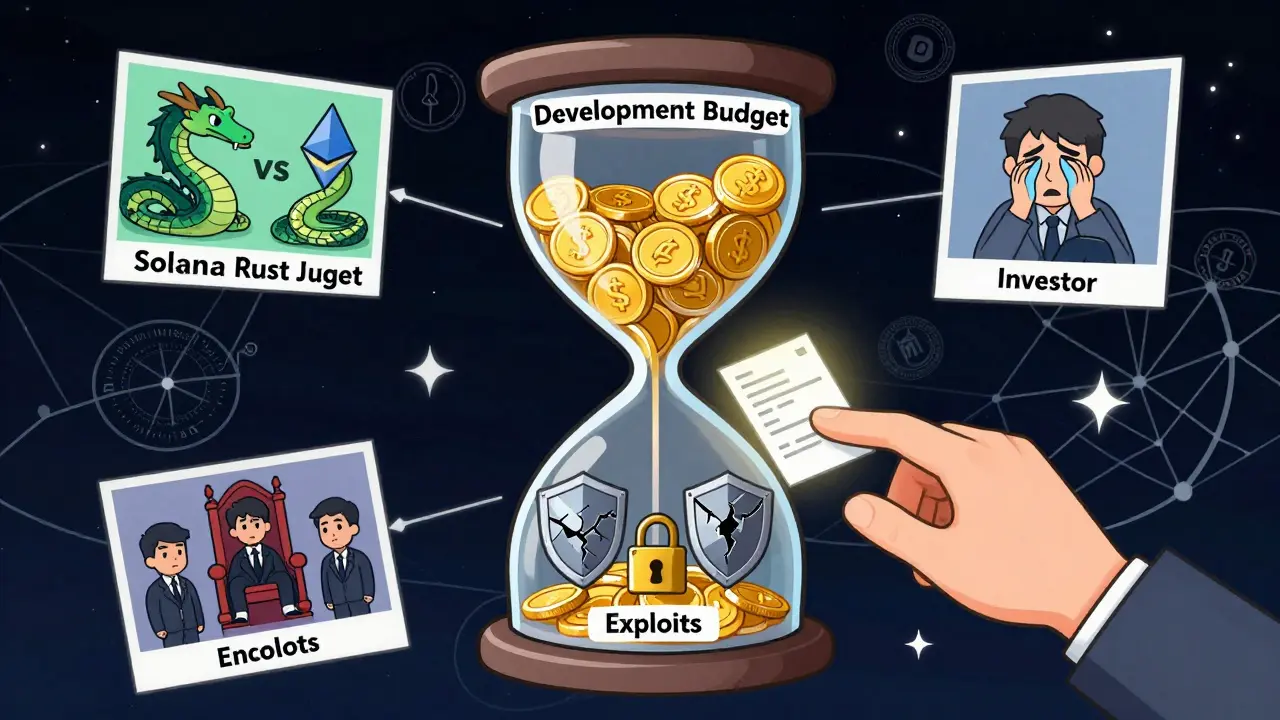
In 2025, three major DeFi protocols were exploited because they skipped audits or used budget services. Combined, they lost over $400 million. One of them had a $12,000 audit - and the exploit was a known vulnerability that automated tools flagged in 2023. The team ignored it.
It’s not just about money. It’s about trust. Once a project is hacked, even once, it’s hard to recover. Users don’t forget. Liquidity doesn’t come back. Reputation is gone.
The audit isn’t a cost center. It’s insurance. And just like insurance, you don’t think about it until you need it. By then, it’s too late.
How to Pick the Right Audit Firm
- Check their track record. Look for public reports. Did they catch exploits in the past? Have they audited similar projects?
- Ask for references. Talk to teams who used them. Did the audit process feel thorough? Were the findings clear?
- Don’t go for the cheapest. Go for the most transparent. Firms that publish full reports (even for failed audits) are usually more reliable.
- Make sure they offer remediation support. A report without help fixing issues is just a pile of problems.
- Confirm they cover your chain. Auditing Solana is different from Ethereum. Make sure they’ve audited projects on your platform before.
There’s no magic formula. But one thing’s clear: if you’re building something that handles real money, you don’t get to choose between paying for an audit or not. You only get to choose how much you pay - and who you pay.
Are there any affordable crypto security audits under $5,000?
Yes - but they’re risky. Audits under $5,000 are usually automated scans with minimal human review. They catch basic issues like reentrancy or overflow bugs, but they miss logic flaws, economic attacks, and integration vulnerabilities. These are fine for very simple tokens with no user funds, but never for DeFi, staking, or NFTs with trading features. Many teams that saved money with cheap audits later lost millions. If you’re handling more than $1 million in TVL, skip the $3,000 audit.
Why are Solana audits more expensive than Ethereum audits?
Solana programs are written in Rust, which is harder to audit than Solidity. There are far fewer auditors with deep experience in Solana’s unique architecture, like its event-driven model and on-chain programs. Demand is rising fast as Solana-based DeFi grows, but supply hasn’t kept up. This imbalance drives prices up. Ethereum has been audited for years, so the market is saturated with experts - which keeps prices lower.
Do I need multiple audits for my project?
For high-value projects - especially DeFi protocols, bridges, or DAOs with treasury functions - yes. Many institutional investors now require at least two independent audits from different firms. This reduces the chance that one team misses a critical flaw. It’s not common for small projects, but if you’re aiming for institutional funding or listing on major exchanges, multiple audits are becoming standard.
Can I do my own security audit?
You can try, but you shouldn’t. Even experienced developers miss subtle bugs. Professional auditors have seen hundreds of exploits. They know the patterns attackers use. Tools like Slither or MythX help, but they can’t replicate human intuition. If you’re serious about your project’s security, hire experts. Your users’ funds depend on it.
How long does a crypto security audit take?
It varies. A simple token audit takes 2-4 weeks. A medium DeFi protocol takes 4-8 weeks. Complex systems like bridges or multi-chain DAOs can take 12-20 weeks. Many projects underestimate this timeline and rush, which leads to missed issues. Plan ahead - don’t wait until launch day to start the audit process.
What happens after the audit finds bugs?
The audit firm gives you a detailed report with vulnerability levels (critical, high, medium) and step-by-step fixes. You then update your code and submit it for a follow-up review. Most firms charge extra for this second pass - it’s not included in the initial quote. Skipping this step is dangerous. Many exploits happen because teams fix one bug but introduce another. A proper verification audit confirms the fix works and doesn’t break anything else.






Leona Fowler
March 23, 2026 AT 12:36Just wanted to add that I've seen teams skip audits because they thought "it's just a small token." Then a single overflow bug wiped out 70% of their liquidity. The audit cost $18k. The recovery? $2.1M gone and zero trust left. Don't be that team.
It's not about the price - it's about not being the next headline.
Neil MacLeod
March 24, 2026 AT 10:51Let’s be brutally honest: if you’re spending less than $25k on an audit for anything beyond a meme coin, you’re not serious about security - you’re just gambling with other people’s money. The fact that people still think $3,000 audits are "affordable" is why this industry is a dumpster fire wrapped in a whitepaper.
Misty Williams
March 25, 2026 AT 10:29It’s morally irresponsible to even consider a sub-$10,000 audit when real people’s life savings are at stake. You’re not "saving money" - you’re choosing to enable theft. There’s no excuse. Not for DAOs. Not for NFTs. Not for "just a token." If you can’t afford a proper audit, you shouldn’t be launching anything that touches crypto.
And yes - I’m angry. Because I’ve seen the aftermath. Again and again.
Anand Makawana
March 26, 2026 AT 11:00From a technical standpoint, the cost differential between Ethereum and Solana audits is primarily attributable to the scarcity of qualified Rust-based static analysis practitioners with deep familiarity in the Solana Runtime Environment (SRE) and its event-driven, account-based model. The supply-demand imbalance in this niche vertical is non-trivial, with fewer than 120 globally recognized auditors capable of performing comprehensive on-chain program analysis on Solana. This is why premium firms charge 2.3x the rate compared to Solidity audits - not due to inflation, but due to specialization arbitrage.
Additionally, the absence of standardized tooling for Solana’s BPF VM further compounds manual review overhead.
Mohammed Tahseen Shaikh
March 28, 2026 AT 00:59You think $300k is expensive? Try losing $200M because your bridge didn’t validate cross-chain nonces and some clown auditor missed it because they were too busy drinking coffee. Real talk - if you’re not doing multiple audits, you’re not building for real users, you’re building for your ego.
And stop pretending "automated scans" are audits. They’re glorified linters. If your codebase is worth more than your car, hire humans. Period.
namrata singh
March 29, 2026 AT 18:36I’ve been in this space since 2021, and I’ve watched so many teams cry after an exploit - "we thought we could afford it" - and then lose everything.
One time, a friend’s team did a $5k audit. Found one medium bug. Ignored it. Six weeks later, someone drained the staking pool using a reentrancy they didn’t even know existed. They didn’t even have a pause button.
Now they’re working at a coffee shop. I’m not saying this to be mean. I’m saying it because I care. Please, please, please - budget for the audit. Not just the cost. The time. The follow-ups. The trust.
It’s not just code. It’s people.
Alice Clancy
March 31, 2026 AT 03:44US devs are too soft. In India, we audit before we write a single line of code. No excuses. No "budget constraints." If you can’t afford a $100k audit, you don’t belong in crypto. Period. 🇺🇸