Cross-Border Payment Calculator
Compare traditional cross-border payment systems with blockchain technology. Enter an amount to see how much time and money you could save.
Imagine sending money from the U.S. to Nigeria and having it arrive in under three minutes-not three days. No middlemen, no hidden fees, no waiting for banks to open on Monday. This isn’t science fiction. It’s already happening, thanks to blockchain cross-border payments.
Why Traditional Systems Are Broken
Right now, most international payments run through SWIFT, a 50-year-old network that connects banks but doesn’t move money itself. Every transfer goes through multiple intermediaries: your bank, a correspondent bank in the recipient’s country, maybe another intermediary, and finally the receiving bank. Each one takes a cut. Fees? Usually 2% to 7% of the amount sent. Settlement? Three to five business days. And you never really know where your money is until it arrives-or doesn’t. For someone sending remittances to family in the Philippines, that’s $30 in fees on a $500 transfer. For a small business paying a supplier in Vietnam, it’s delayed cash flow and unpredictable costs. The system wasn’t built for today’s global economy. It was built for paper checks and telex machines.How Blockchain Fixes This
Blockchain cuts out the middlemen. Instead of relying on banks to vouch for each other, it uses a shared digital ledger where every transaction is verified by a network of computers. No single bank controls it. No one can alter it after it’s recorded. And it works 24/7-weekends, holidays, midnight in Manila. Here’s how it works in practice:- A sender in the U.S. initiates a payment in U.S. dollars.
- The blockchain converts it into a digital token-either a stablecoin like USDC, a Central Bank Digital Currency (CBDC), or a custom token tied to the recipient’s currency.
- The token moves across the network in seconds, validated by consensus, not paperwork.
- The recipient in the Dominican Republic receives the equivalent in Dominican pesos, instantly.
Real-World Players Making It Happen
Several platforms are already turning this into reality:- Ripple’s XRP Ledger: Used by banks like Santander and American Express to settle cross-border payments in under 4 seconds. XRP acts as a bridge currency, reducing the need to hold multiple foreign currencies.
- Stellar (XLM): Focused on financial inclusion, Stellar powers low-cost remittances in Africa and Southeast Asia. Companies like BitPesa use it to move money between Kenya and the U.S. at a fraction of traditional fees.
- IBM World Wire: Built on Stellar, it lets banks send payments using digital assets and stablecoins, connecting institutions across borders without correspondent banking.
Cost and Speed: The Numbers Don’t Lie
Here’s what blockchain delivers compared to traditional systems:| Feature | Traditional (SWIFT) | Blockchain |
|---|---|---|
| Settlement Time | 3-5 business days | Under 3 minutes |
| Cost | 2%-7% of transaction | Under 1% |
| Availability | Banking hours only | 24/7, 365 days |
| Transparency | Opaque, no real-time tracking | Real-time, immutable record |
| Reversibility | Chargebacks possible | Final, irreversible |
Stablecoins and CBDCs: The New Currency Layer
The real game-changer isn’t Bitcoin. It’s stablecoins-digital tokens pegged to real money like the U.S. dollar or euro-and Central Bank Digital Currencies (CBDCs). These are the bridges between traditional finance and blockchain. Stablecoins like USDC and USDT are already moving billions in cross-border payments. They’re not volatile like Bitcoin. They’re digital cash with the speed of crypto. In 2025, BVNK predicts stablecoins could capture 20% of the global cross-border payments market within ten years. Meanwhile, 90% of the world’s central banks are actively exploring or developing CBDCs, according to J.P. Morgan. When the European Central Bank or the Bank of Japan issues its own digital currency, it won’t replace the dollar-it will connect to it. Think of CBDCs as the new wires in the global financial grid. Blockchain is the protocol that lets them talk to each other.Where Blockchain Doesn’t Shine (Yet)
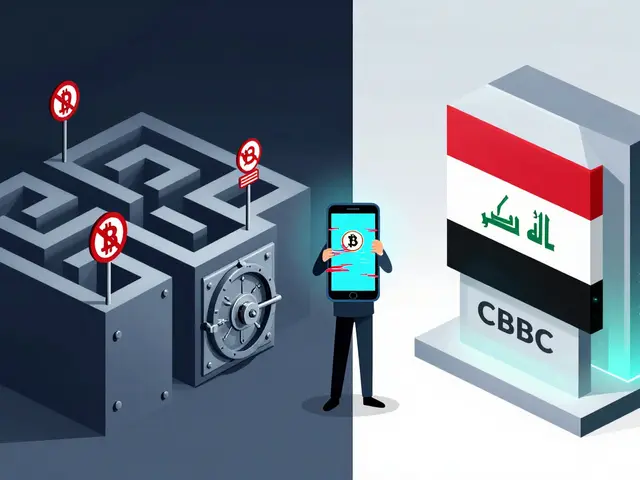
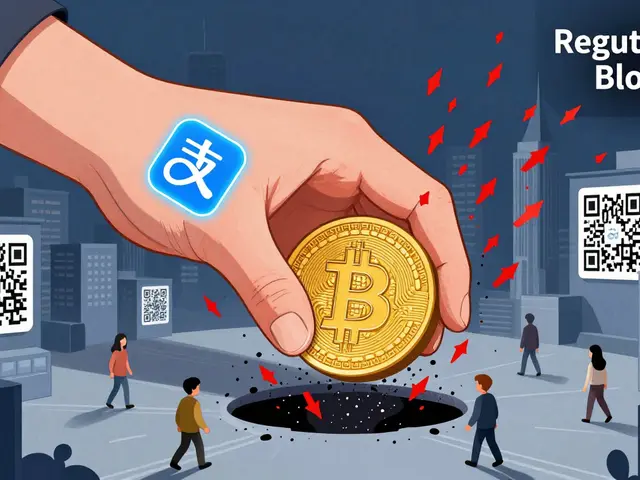
This isn’t a magic bullet. There are still limits:- Regulation is a mess. The EU has MiCA, a clear framework for crypto assets. The U.S. still has no unified rule. In some countries, blockchain payments are blocked outright.
- Interoperability. Not all blockchains talk to each other. A payment on Stellar can’t directly reach a payment on Ripple without a bridge. Standards like ISO 20022 are helping, but it’s still a patchwork.
- Legacy systems won’t vanish overnight. Big banks, insurers, and governments still rely on old tech. Blockchain doesn’t replace them-it connects to them through APIs.
- Large transactions need compliance. A $50 million payment for a merger? That still needs AML checks, legal reviews, and human oversight. Blockchain can speed up the paperwork, but it can’t skip it.

What’s Next? Hybrid Systems Are the Future
The future isn’t blockchain or SWIFT. It’s blockchain and SWIFT. Banks aren’t shutting down their correspondent networks. They’re adding blockchain as a faster, cheaper layer on top. ScienceSoft and BVNK are already building hybrid platforms that let companies choose: send via SWIFT for large, regulated transfers, or via blockchain for speed and savings. In 2025, we’re at a turning point. Infrastructure is maturing. Developer tools are easier. Enterprises are testing. The 37% of businesses already using blockchain for B2B payments? That number will double in the next two years. The goal isn’t to break the old system. It’s to make it better. Faster. Cheaper. Transparent. And for millions of people who wait days for their family’s money to arrive, that’s not innovation-it’s justice.Is This Right for You?
If you’re:- A small business paying overseas suppliers?
- A freelancer getting paid from clients abroad?
- A remittance service looking to cut costs?
- A fintech building cross-border tools?
Why This Matters Beyond Money
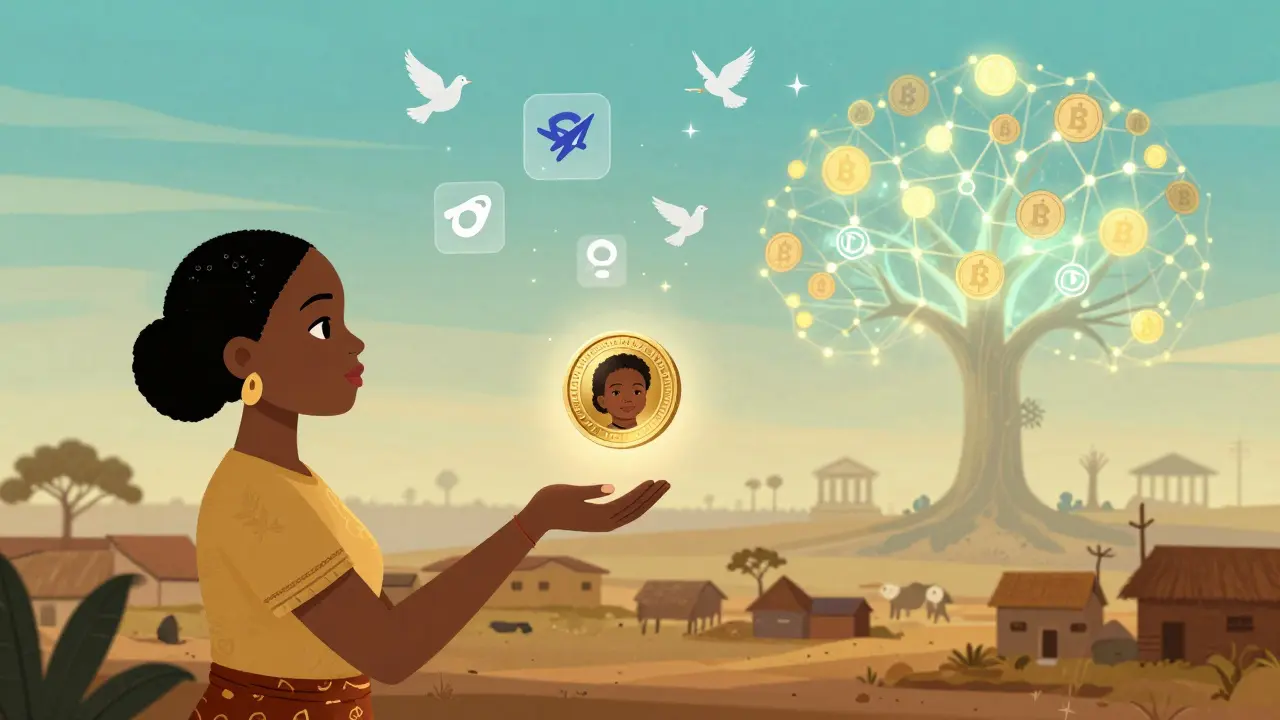
This isn’t just about saving a few percentage points. It’s about access. In Nigeria, 60% of adults are unbanked. In the Philippines, remittances make up 9% of GDP. When blockchain lowers the cost of sending money, it doesn’t just help businesses-it helps mothers, students, farmers, and gig workers who’ve been locked out of the global economy for too long. The technology is ready. The question is: who will use it first?Can blockchain replace SWIFT completely?
No-not anytime soon. SWIFT handles trillions in transactions and is deeply embedded in global finance. Blockchain won’t replace it; it will complement it. Think of blockchain as a faster lane on the highway, not a new road. Banks are already integrating both systems together.
Are blockchain cross-border payments safe?
Yes, if used correctly. Blockchain transactions are encrypted, timestamped, and stored across hundreds of computers. No single point of failure. But safety also depends on the platform you use. Reputable providers like Ripple, Stellar, and BVNK use multi-factor authentication, biometric checks, and fraud detection. Always choose regulated platforms with proven track records.
Do I need cryptocurrency to use blockchain payments?
Not necessarily. Many platforms let you send U.S. dollars, euros, or other fiat currencies using stablecoins (like USDC) as the underlying token. You never have to own Bitcoin or Ethereum. The system handles the conversion behind the scenes. You just send and receive money in your local currency.
How do I start using blockchain for cross-border payments?
Start by choosing a provider that connects to your bank or accounting system. BVNK, RippleNet, and Stellar-based platforms offer APIs for businesses. For individuals, apps like Coins.ph or BitPesa allow you to send remittances via blockchain. Test with a small amount first. Compare the time and cost against your current method.
What’s the biggest barrier to adoption?
Regulation. Different countries have wildly different rules. Some ban crypto outright. Others have no clear guidelines. Until there’s global alignment, adoption will be patchy. But progress is happening-MiCA in Europe, pilot programs in the U.S. and Asia-are paving the way.