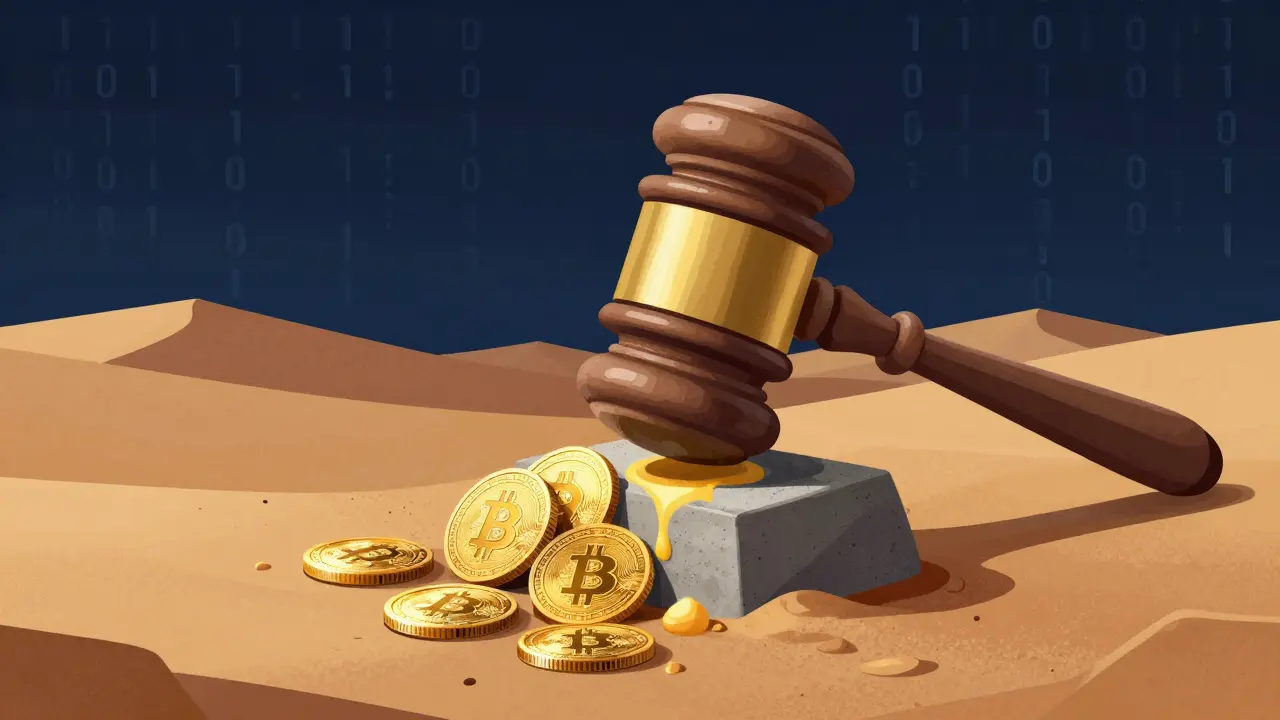
It is April 2026, and the landscape for digital assets in North Africa has shifted dramatically. If you are holding cryptocurrency or planning to do business near Algiers, you need to understand one thing immediately: the rules are no longer just about taxes. They are about criminal liability. On July 24, 2025, Algeria enacted Law No. 25-10, transforming the country into one of the most restrictive jurisdictions globally for blockchain technology.
This legislation did not start as a whisper; it arrived with full force. Unlike previous regulations that merely discouraged usage, this law explicitly criminalizes the entire ecosystem. Whether you are a trader, a miner, a developer, or someone who simply writes about crypto on social media, the net has been cast wide. The government moved quickly from vague restrictions to hard penalties, signaling that monetary sovereignty takes precedence over any innovation narrative currently driving the rest of the world.
The Full Scope of the Prohibition
To understand why this ban feels so different from older regulations, you have to look at the specific language used in the text. Many countries previously banned the use of crypto as payment but allowed ownership. Algeria removed that distinction. Article 6 bis of the law creates a comprehensive list of forbidden actions that leaves almost no room for interpretation.
The prohibited activities cover the entire lifecycle of digital asset interaction:
- Issuance and Creation: You cannot mint tokens or launch new blockchain projects.
- Possession and Storage: Keeping coins in a wallet, even a private hardware wallet, falls under the ban.
- Trading and Exchange: Buying or selling crypto assets is illegal.
- Mining: Using computational power to validate transactions earns you a criminal charge.
- Promotion: Advertising, teaching, or advocating for cryptocurrencies is off-limits.
This last point regarding promotion is particularly aggressive. In many other bans, the focus is on financial transactions. Here, if you run an educational YouTube channel or post about DeFi opportunities on Instagram, you face prosecution. The law targets the information flow just as much as the capital flow. This effectively silences public discussion around the technology, making grassroots adoption impossible.
For businesses, this means shutting down local operations immediately. There are no "legal pathways" left open. Services facilitating crypto activity, such as exchanges or wallet providers, are entirely shut out. Any attempt to offer these services constitutes a direct violation. The banking sector has been instructed to cut all ties, ensuring no traditional financial bridge exists to move funds to or from the digital economy.
Penalties and Enforcement Reality
The consequence of violating Law No. 25-10 is severe and quantifiable. Authorities have set clear financial and physical punishments to deter participation. These penalties apply regardless of whether you are an individual investor or a corporation.
| Violation Type | Imprisonment | Fine Range (DZD) | Fine Range (USD Approx.) |
|---|---|---|---|
| General Violation | 2 Months | 200,000 | $1,540 |
| Severe/Commercial Offense | Up to 1 Year | 1,000,000 | $7,700 |
These numbers represent a significant burden for average citizens. A fine of $7,700 is substantial in a local economic context where wages differ vastly from Western standards. Beyond the immediate financial hit, the record of imprisonment changes your ability to travel or conduct business abroad.
Enforcement involves multiple agencies working in tandem. The Bank of Algeria leads the oversight role. Their mandate is to maintain the stability of the Algerian Dinar against unregulated competition. They work alongside the Banking Commission, which ensures commercial banks do not unknowingly facilitate crypto transactions.
However, the street-level enforcement comes from security authorities. They monitor digital footprints and investigate suspicious flows of value. The judicial system has been empowered to handle prosecutions swiftly. The combination of financial monitoring and security surveillance creates an environment where anonymity is nearly impossible to maintain. Even peer-to-peer deals conducted via messaging apps are targeted because the mere exchange of value is deemed a crime.

Rationale Behind the Crackdown
Why would a nation with growing fintech adoption pivot so aggressively toward prohibition? The government cites three core pillars for this decision: anti-money laundering (AML), counter-terrorist financing (CTF), and monetary sovereignty.
Money laundering remains a global concern. Criminals often use privacy coins and complex chains to obscure the origin of funds. Algerian officials argue that by banning the asset class entirely, they eliminate this vector completely. They align their strategy with guidance from the Financial Action Task Force (FATF). While FATF generally advises regulation rather than prohibition, some nations interpret the advice as justification for a total shutdown to satisfy international scrutiny.
Terrorism financing is another major fear for the region. Governments worry that illicit groups could utilize decentralized finance to fund operations outside state control. By removing access to the tech, officials believe they strip potential adversaries of a modern tool.
The third pillar, monetary sovereignty, is perhaps the strongest driver. The Algerian Dinar must remain the sole medium of exchange. When citizens hold Bitcoin or stablecoins, they are effectively opting out of the national currency. This reduces the government's ability to manage inflation and interest rates through central bank mechanisms. Protecting the integrity of the Dinar is viewed as a matter of national security, placing it above technological progress.
Global Contrasts and Market Impact
The situation in Algeria stands in sharp contrast to its neighbors and global peers. Just across the border, the regulatory mood differs significantly. For example, the United Arab Emirates has embraced digital assets, launching frameworks to attract investment and tech talent. Bahrain has similarly integrated stablecoins into its regulated financial system. Meanwhile, the European Union is rolling out Markets in Crypto-Assets (MiCA), creating structured guidelines rather than bans.
Even China, known for its crackdown, focuses primarily on mining and initial coin offerings while allowing research. Algeria went further, criminalizing possession. This isolation puts the country at a competitive disadvantage in the long term. Fintech startups and blockchain developers are migrating to friendlier jurisdictions. The "brain drain" is already evident.
Just 12 months before the law passed, reports indicated Algeria was among the fastest-growing crypto markets in the MENA region. Peer-to-peer trading volumes were surging. That momentum evaporated overnight. Investors fled, and the underground market moved to less visible channels that pose greater risks to users due to lack of consumer protection.
This divergence highlights a regional split. One side views crypto as a threat to stability; the other sees it as a tool for growth. For anyone operating in North Africa, understanding this divide is crucial. Moving capital or talent across borders now requires navigating very different legal realities.
Practical Implications for Residents and Visitors
If you live in Algeria or plan to visit, the practical application of the law requires caution. Carrying crypto assets is not just risky; it is illegal. Travelers entering the country with significant digital holdings should consider clearing their wallets beforehand.
Content creators must be careful with their speech. Discussing blockchain projects in public forums can trigger reporting mechanisms. Influencers who promote investment ideas face prosecution under the promotion clauses. This chilling effect has silenced much of the local tech community.
For businesses, the risk extends to employees. Even if a company does not deal in crypto, hiring a former miner or developer associated with the industry can raise flags during background checks. Companies must audit their workforce and digital infrastructure to ensure no hidden exposure exists.
Future Outlook and Stability
Looking toward late 2026 and beyond, there are few signs of relaxation. The detailed nature of Law No. 25-10 suggests a long-term commitment. Building a legal framework for criminalization is resource-intensive, and governments rarely reverse course unless pressured heavily.
With active enforcement mechanisms in place involving the Bank of Algeria and security forces, the status quo is likely to remain unchanged. Economic shifts or political transitions may eventually alter the stance, but current indicators suggest continued resistance. The priority for the government remains the stability of the national financial system over the integration of global blockchain innovations.
Those hoping for a shift toward licensed adoption should temper expectations. Unless regional pressure mounts significantly, the prohibition will persist. Until then, the cost of non-compliance remains high, and the legal risks are severe.
Is owning Bitcoin illegal in Algeria?
Yes. Under Law No. 25-10, simple possession of digital assets is a criminal offense. You do not need to trade the coins to face prosecution; storing them in a wallet is sufficient grounds for a fine or jail sentence.
Can foreigners bring crypto into Algeria?
Travelers should avoid bringing crypto assets. The ban applies to all individuals within Algerian jurisdiction. Customs and security officials have the authority to confiscate devices holding digital assets and prosecute holders.
Are mining rigs confiscated?
Mining operations are explicitly banned. Equipment found running hashing algorithms for cryptocurrency validation will likely be seized by security authorities, and operators face criminal charges.
Does the law affect NFTs?
The law bans all "digital assets." While the specifics on non-fungible tokens (NFTs) can vary in interpretation, the broad definition encompasses any digital token stored on a blockchain, making NFTs high-risk and likely prohibited.
Will this ban change soon?
Currently, there is no indication of a reversal. The law is deeply embedded in financial policy to protect the Dinar. Expectations for liberalization should remain low unless regional geopolitical dynamics shift drastically.







david head
April 3, 2026 AT 02:22i mean wow that really puts everything in perspective 🌍 just thinking about how many people were holding bags before the news dropped out is scary af 😱 definitely makes you wonder what happens next for everyone trying to stay safe 💸 regulations like this always feel super extreme when you think about normal folks just wanting to invest 📉 hope things stabilize soon but until then gotta keep wallets clean 🧼
Susan Payne
April 3, 2026 AT 15:00The audacity of individuals to defy monetary policy is truly astonishing. One must understand that national security supersedes personal financial freedom in such contexts. It appears that certain citizens prioritize speculative assets over the stability of the Dinar. This behavior reflects a disturbing lack of patriotism among modern investors. The government has clearly outlined its stance and compliance should be absolute. Those who continue to promote such technology face severe consequences. It is tragic to see talent migrate due to greed rather than logic. We cannot simply allow unregulated currencies to undermine the economy. The penalties listed are entirely appropriate for maintaining order. Every citizen has a duty to support the official banking system. History will judge those who ignored clear legal warnings during this transition. Personal gain should never outweigh collective economic safety. The ban serves as a necessary shield against illicit funding sources. Sovereignty must remain intact regardless of global trends. Technology does not justify breaking established laws. Orderly society depends on respecting these boundaries completely.
Siddharth Bhandari
April 4, 2026 AT 22:01The situation does present significant challenges for existing infrastructure though. Economic migration is often cited as a secondary consequence of such policies. Many developers have already relocated to jurisdictions with more favorable regulations. The loss of technical expertise impacts long-term digital transformation goals significantly. Enforcement mechanisms described are quite robust compared to neighboring nations. Compliance costs for businesses would inevitably increase substantially under current frameworks. Monitoring digital footprints requires sophisticated surveillance tools currently deployed. Citizens need to be aware that privacy expectations have changed fundamentally. Legal exposure extends beyond simple trading activities into possession scenarios. Understanding the scope of Article 6 bis is critical for any resident. Avoidance of liability requires complete abstention from related digital activities. Professional advice suggests liquidating positions before border crossings. Risk assessment models should account for potential detention outcomes immediately.
akash temgire
April 6, 2026 AT 08:55This legislation marks a definitive end to decentralized experimentation within Algerian jurisdiction.
Earnest Mudzengi
April 6, 2026 AT 14:04look deeper into the protocol layers because the shutdown aligns with broader surveillance grid initiatives across MENA 🕵️♂️ fiat dominance relies on killing off competing ledgers effectively. zero knowledge proofs get nullified when nodes are physically banned. this isn't just economics it is data control warfare. the elite don't want peer verification disrupting legacy banking flows. sovereign debt management gets compromised by private ledger adoption rates. watch the satellite uplinks monitoring ISP traffic spikes near exchange points. compliance algorithms flag IP addresses running mining software locally. we know the intelligence apparatus tracks wallet metadata constantly. blockchain obfuscation techniques fail against state-level packet inspection. centralization benefits the ruling class significantly more than individual liberty. the narrative is purely about controlling transaction visibility vectors. nothing about security actually protects average citizens here.