
Setting up a crypto business in UAE free zones isn’t just possible-it’s one of the clearest, most structured paths in the world
If you’re thinking about launching a crypto exchange, custody service, or token issuance platform, the UAE’s free zones offer something few other countries do: a real, working regulatory system designed specifically for digital assets. This isn’t a gray area. It’s not a loophole. It’s a formal, published, and actively enforced licensing framework that’s been refined since 2022. And as of 2025, the rules are stable, predictable, and surprisingly beginner-friendly-if you know where to look.
The key is understanding that the UAE doesn’t have one crypto regulator. It has several, each with its own rules, fees, and target businesses. You can’t just pick Dubai and call it done. You need to pick the right free zone for your type of business.
Three main regulators, three very different paths
When you start researching, you’ll run into three names: VARA, ADGM, and DIFC. Each controls a different free zone and serves a different kind of company.
- VARA (Virtual Assets Regulatory Authority) runs Dubai’s free zones-except DIFC. It’s the world’s first regulator focused only on crypto and digital assets. If you’re a startup, a retail-focused exchange, or a wallet provider, VARA is your best bet.
- ADGM (Abu Dhabi Global Market) is for institutional players. Think hedge funds, asset managers, and banks. It’s stricter, more expensive, and built for firms that already have compliance teams and large capital reserves.
- DIFC (Dubai International Financial Centre) sits between the two. It’s well-established, trusted by traditional finance, and good for firms that want to blend crypto with banking services.
Most new crypto businesses choose VARA. Why? Because it’s modular. You don’t need to apply for everything at once. You can start with custody services, then add exchange functions later. That’s a huge advantage if you’re bootstrapping.
VARA licensing: What you actually need to get started
VARA doesn’t give you a single “crypto license.” It gives you permission for specific activities. Each one has its own cost, capital requirement, and compliance rules.
Here’s what you’ll face in 2025:
- Application fee: AED 40,000-100,000 ($11,000-27,000)
- Annual supervision fee: AED 80,000-200,000 ($22,000-54,000)
- Minimum paid-up capital: AED 100,000-1.5 million ($27,000-408,000), depending on your activity
For example, if you want to run a crypto-to-crypto exchange, you’ll need at least AED 500,000 in capital. If you’re offering custody services for institutional clients, you’ll need AED 1.5 million. Token issuance? That’s a two-step process-you need a license AND separate approval.
And don’t forget: you must incorporate your company in Dubai. You can’t register offshore and operate in Dubai. VARA requires local legal presence. That means a physical office, local directors, and a UAE business bank account.
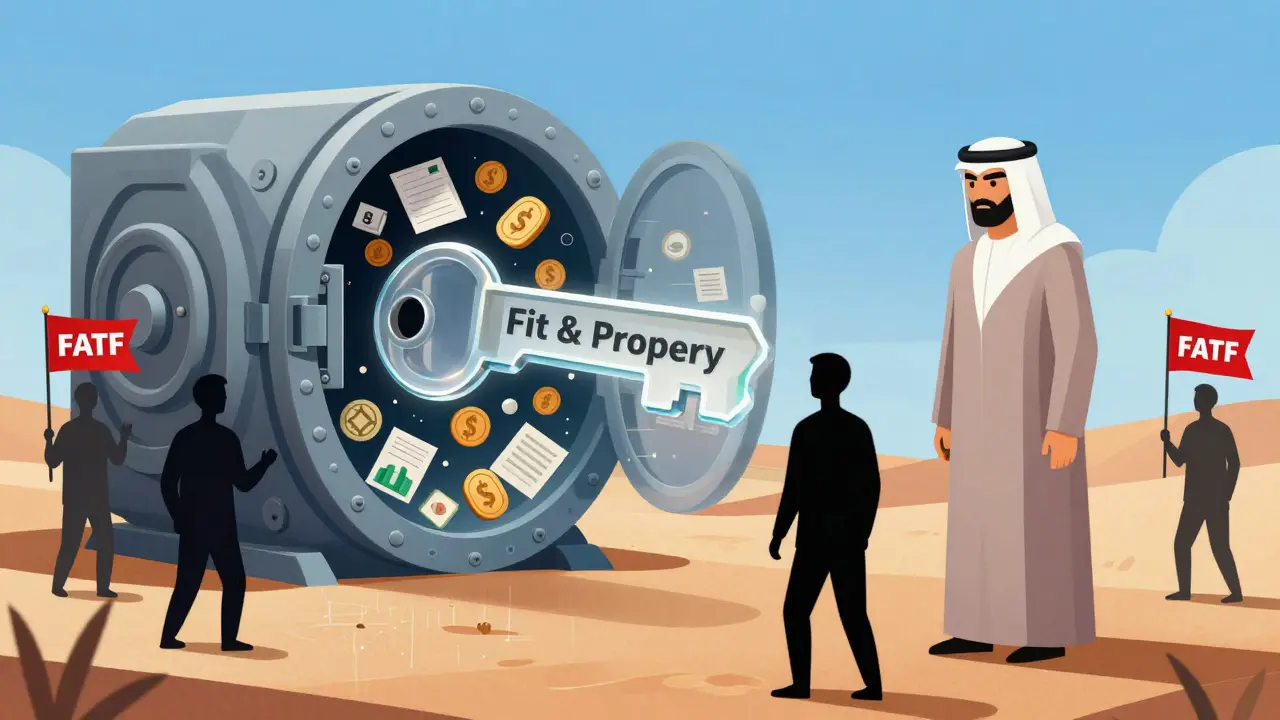
Fit and proper: The hidden hurdle most startups miss
It’s not just about money. VARA runs a “fit and proper” check on every owner, director, and key employee. That means they look at your background: criminal history, past business failures, financial sanctions, or even links to high-risk jurisdictions.
If you’ve ever been flagged by FATF, had a bank account closed for compliance reasons, or worked for a company that got shut down for AML violations-VARA will find out. And they won’t approve you.
This isn’t bureaucracy. It’s protection. The UAE doesn’t want to be the next money-laundering hub. They want to be the trusted global center for crypto. That means they screen aggressively.
Token issuance: The tricky part
Want to launch your own token? VARA divides tokens into two categories:
- Category 1: Publicly traded tokens (like utility or security tokens). You need a license AND explicit approval from VARA before you launch.
- Category 2: Closed-loop tokens (like loyalty points or in-game currencies). You don’t need a license, but you still need to register with VARA and follow their rules.
Many startups think they can skip regulation if they call their token a “utility token.” That’s a mistake. VARA looks at how it’s used, not what you call it. If people can trade it, transfer it, or use it outside your platform-it’s regulated.
ADGM vs. VARA: Which one fits your business?
Here’s a quick comparison:
| Feature | VARA (Dubai) | ADGM (Abu Dhabi) |
|---|---|---|
| Best for | Startups, retail exchanges, wallet providers | Institutional investors, fund managers, banks |
| Minimum capital | AED 100,000 | AED 5 million+ |
| Licensing model | Modular (pick your services) | All-in-one (comprehensive) |
| Approval time | 3-6 months | 6-12 months |
| Banking access | Challenging, but possible | Stronger, due to traditional finance ties |
| Tax | 0% corporate tax (free zone) | 0% corporate tax (free zone) |
If you’re a small team with $200,000 in funding and a clear product-go VARA. If you’re raising $10 million from institutional investors and plan to manage client assets-ADGM makes more sense. DIFC is a middle ground for firms that want to connect crypto with traditional finance.
What you can’t do (and why it matters)
Article 4 of Cabinet Resolution No. (111) of 2022 is simple: No one can operate a virtual asset business in the UAE without a license. That includes free zones. No exceptions.
Many people think if they’re based offshore, they can serve UAE clients remotely. That’s false. If your platform is accessible to UAE residents-or if you market to them-you’re subject to UAE law. VARA has been cracking down on unlicensed platforms offering services to Emirati users. Fines are steep. Bank accounts get frozen. Directors get blacklisted.
Even if you think you’re “just a tech company,” if your product touches crypto assets in the UAE, you’re regulated. Period.

Why the UAE wins over other crypto hubs
Compare this to places like the U.S., where you need 50 different state licenses, or Europe, where MiCA is still being rolled out. The UAE has a single, clear, federal-backed system. VARA isn’t just a regulator-it’s a growth engine.
They’ve built infrastructure: dedicated crypto banks, blockchain-friendly legal firms, and even sandbox programs for testing new products. The Central Bank is piloting the Digital Dirham, a CBDC that could one day settle crypto trades. That’s not speculation-it’s happening now.
And unlike some jurisdictions that ban crypto or make it nearly impossible to get a bank account, the UAE gives you a legal path to operate, grow, and scale.
What comes next? The 2025 roadmap
VARA is already refining its rules. In 2025, expect:
- More clarity on DeFi protocols-whether they need licenses or not
- Integration between VARA and DIFC to reduce overlap
- Stronger AML tools using AI and blockchain analytics
- Expanded CBDC pilot with private sector partnerships
Don’t wait for perfection. The window is open. The rules are clear. The infrastructure is ready. If you’re serious about building a crypto business, the UAE isn’t just an option-it’s the most viable one today.
Can I set up a crypto business in the UAE without being physically present?
No. You must incorporate your company in the UAE free zone, have local directors, and maintain a physical office. Remote registration isn’t allowed. You can hire local agents to handle paperwork, but you still need a legal presence on the ground.
How long does it take to get a VARA license?
Typically 3 to 6 months. The timeline depends on how complete your application is. Missing documents, unclear business plans, or incomplete compliance policies can add months. Start early, get legal help, and don’t rush the fit-and-proper check.
Do I need a bank account before applying for a license?
No, but you’ll need one eventually. Many banks in the UAE are still cautious about crypto clients. Once you have your license, you can approach specialized crypto-friendly banks. Some free zones offer introductions to banking partners.
Are there tax benefits for crypto businesses in UAE free zones?
Yes. Free zones offer 0% corporate tax for up to 50 years, provided you don’t do business directly with mainland UAE entities. You can also repatriate 100% of profits. This makes the UAE one of the most tax-efficient places in the world for crypto companies.
Can I operate a crypto exchange for U.S. clients from a UAE free zone?
Technically yes-but you’ll still need to comply with U.S. regulations like FinCEN and state licensing. The UAE license only covers your operations within the UAE. If you serve U.S. residents, you’re subject to U.S. law. Many firms avoid this by restricting access to U.S. users.
Final thought: Don’t guess. Apply.
The UAE isn’t waiting for you. Other companies are already moving in. VARA approved over 200 crypto firms in 2024. The system works. The rules are written. The path is clear. If you’ve been holding off because you thought it was too complicated, it’s not anymore. The hardest part isn’t the paperwork-it’s starting.







Jayakanth Kesan
December 20, 2025 AT 12:32Aaron Heaps
December 21, 2025 AT 09:40Tristan Bertles
December 21, 2025 AT 10:36Megan O'Brien
December 21, 2025 AT 14:44Earlene Dollie
December 21, 2025 AT 21:57