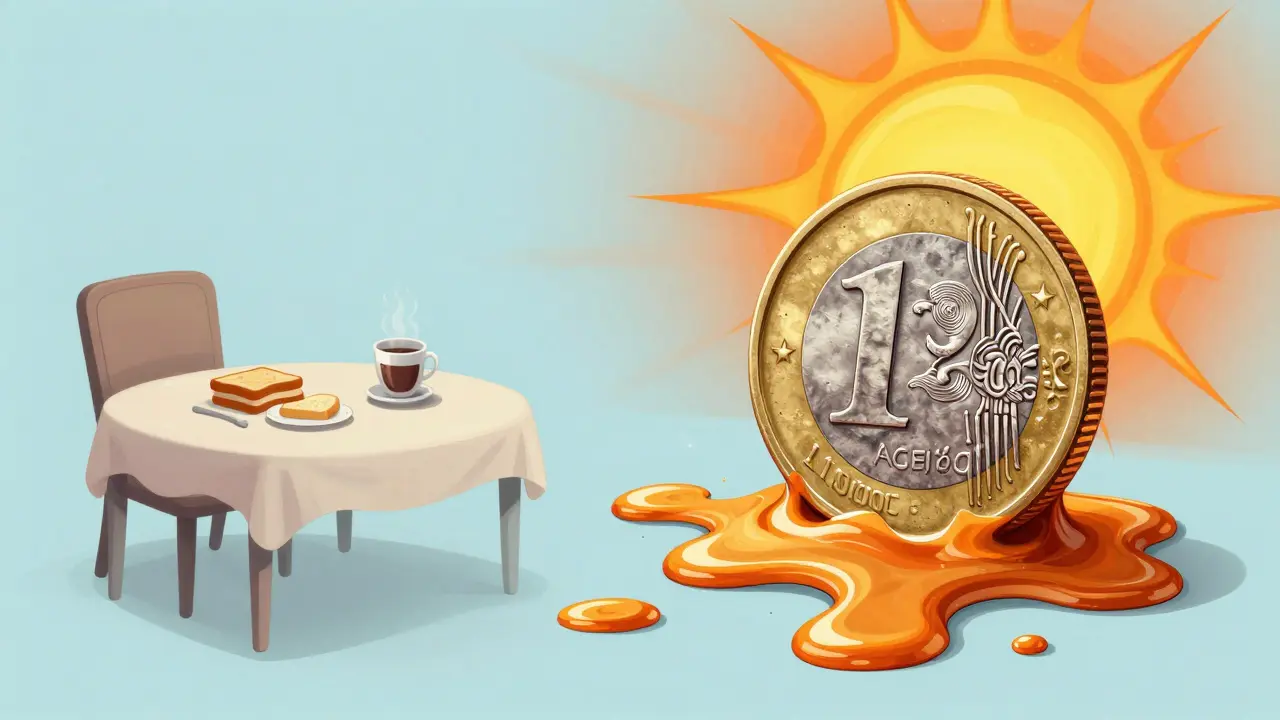
Imagine waking up and realizing the money in your bank account buys 10% less bread than it did last week. For many people in Argentina, this isn't a nightmare-it's a Tuesday. With inflation hitting 161% in 2023 and remaining a persistent threat through 2025, the local peso has become a liability rather than a store of value. When your own currency melts away, you don't look for a high-yield savings account; you look for an exit ramp. For millions, that exit is Cryptocurrency is a digital or virtual currency that uses cryptography for security and operates on a decentralized network.
In Argentina, crypto isn't about getting rich quick or betting on the next meme coin. It's about survival. Because the government imposes strict capital controls that make it nearly impossible for the average person to open a traditional US dollar bank account, people have turned to digital assets to create their own "digital dollar" safety net.
The Shift from Speculation to Survival
While investors in the US or Europe might buy Bitcoin hoping for a moonshot, Argentines use it as a refuge. This necessity has pushed Argentina to the top of Latin American crypto adoption, with nearly 20% of the population owning digital assets. The goal is simple: move money out of a depreciating asset (the peso) and into something that holds its value.
The real engine behind this movement isn't actually Bitcoin, but Stablecoins. Stablecoins are cryptocurrencies designed to have a stable price, typically pegged to a reserve asset like the US dollar. By holding a digital asset that tracks the USD, Argentines can protect their purchasing power without needing to smuggle physical cash under a mattress or find a corrupt banker to open a secret offshore account.
The "Digital Dollar" Toolkit: Popular Assets
Not all cryptocurrencies are created equal when you're trying to save for rent. The focus here is on stability. The most popular choices are those that mimic the US dollar's movements almost exactly.
- Tether (USDT): The most widely used stablecoin, providing high liquidity and easy access across almost every exchange.
- USD Coin (USDC): Often preferred by those who prioritize transparency and regulatory compliance.
- DAI: An interesting choice because it is decentralized and backed by collateral on the Ethereum blockchain, meaning it doesn't rely on a single central company to maintain its value.
| Asset | Stability Mechanism | Main Use Case | Risk Level |
|---|---|---|---|
| Argentine Peso | Central Bank Policy | Daily micro-transactions | Extreme (Inflation) |
| USDT / USDC | Fiat-backed reserves | Short-to-medium term savings | Low-Moderate |
| DAI | Over-collateralized crypto | Long-term decentralized savings | Moderate |
| Bitcoin | Market Demand | Long-term wealth preservation | High (Volatility) |
How the Process Actually Works
For the average worker in Buenos Aires, the process is now as simple as using a banking app. Platforms like Lemon Cash have revolutionized how people handle their paychecks. Instead of letting their salary sit in a peso account for a week and losing 2% of its value, users can instantly convert their earnings into USDC.
The brilliance of this system is the "closed loop" spending. Many of these platforms provide a prepaid Visa debit card. When a user goes to a grocery store, they aren't manually selling their crypto for pesos on an exchange and transferring it to a bank. Instead, the card automatically converts the required amount of USDC back into pesos at the exact moment of purchase. This allows the user to keep their wealth in dollars until the very second they need to spend it.

Beyond Savings: Remittances and Global Work
Economic instability doesn't just affect savings; it pushes people to look for work outside their borders. Many Argentines now freelance for international companies or move abroad. Sending money back home used to be a nightmare of high fees and slow processing times through traditional banks.
Now, stablecoins act as a high-speed bridge. A family member in Spain can send USDT to a relative in Argentina in minutes. The receiver gets the funds almost instantly, avoids the predatory fees of traditional remittance services, and can keep the money in a stable asset until they need it. This has created a vital financial lifeline that bypasses the broken domestic banking system.
The Regulatory Shift: From Shadow to Sunlight
For years, using crypto was a bit of a gray area. However, the landscape changed significantly with the election of President Javier Milei, who is openly pro-crypto. This political shift has moved cryptocurrency from a "survival hack" used in the shadows to a recognized economic tool.
In March 2025, the National Securities Commission (CNV) stepped in as the official regulator through Resolution 1058/2025. By establishing clear rules for crypto players, the government is providing the legal certainty that institutional investors and businesses need. This means we're likely to see more companies paying salaries in crypto and more stores accepting stablecoins directly, further reducing the reliance on the failing peso.

Common Pitfalls and Reality Checks
While crypto solves the inflation problem, it introduces new ones. The biggest risk is the "exchange risk." If a user keeps all their funds on a small, unregulated exchange and that platform goes bankrupt, the savings vanish. This is why savvy users are moving toward hardware wallets or reputable global exchanges like Binance.
There is also the learning curve. While apps like Lemon make it easy, understanding the difference between a custodial wallet (where the exchange holds your keys) and a non-custodial wallet (where you have total control) is crucial. For someone just trying to save for a new fridge, the technical jargon can be overwhelming, which is why the success of "crypto-invisible" apps-where the blockchain part happens in the background-is so important.
Why use stablecoins instead of just buying US dollars?
The Argentine government has strict capital controls that limit how many US dollars a citizen can buy legally. Stablecoins like USDT and USDC provide a way to get "dollar-equivalent" value without needing a foreign bank account or dealing with the black market (the "blue dollar") in person.
Is Bitcoin better than stablecoins for fighting inflation?
It depends on the goal. Stablecoins are for daily stability and preserving purchasing power for short-term needs. Bitcoin is more volatile but is often viewed as "digital gold" for long-term wealth preservation, as it isn't controlled by any single government.
Are cryptocurrencies legal in Argentina?
Yes. In fact, the regulatory environment has become much clearer recently. The National Securities Commission (CNV) now provides a framework for cryptocurrency players, and the current administration is generally supportive of digital asset adoption.
How do I spend crypto in a local store if they only take pesos?
The easiest way is using a crypto-linked debit card (like Lemon). You hold the balance in a stablecoin, and when you swipe the card, the app instantly converts the crypto to pesos at the current market rate to pay the merchant.
What happens if a stablecoin loses its peg to the dollar?
This is the primary risk of stablecoins. If the reserves backing a coin like USDT were found to be insufficient, the value could drop. To mitigate this, many Argentines diversify their holdings across different stablecoins (e.g., splitting between USDC and DAI).
Next Steps for New Users
If you're looking to protect your funds, don't put everything into one basket. Start by exploring a reputable local exchange that offers a debit card to simplify your daily spending. Once you're comfortable, look into "self-custody"-moving your long-term savings off the exchange and into your own private wallet. This ensures that even if a platform disappears, your hard-earned savings stay in your control.





Gloris Young
April 21, 2026 AT 04:01It's wild to see how necessity drives innovation. Really puts things into perspective for those of us in more stable economies.
Matthew Morse
April 22, 2026 AT 19:49stablecoins are basically just digital IOUs anyway. if the company behind them folds you're just holding a fancy string of numbers that nobody wants. people love to ignore the counterparty risk just to avoid the peso
Jason M
April 23, 2026 AT 16:27OH MY GOD, the sheer brilliance of that "closed loop" spending system is absolutely breathtaking! It is a total game-changer for financial autonomy. We should be championing these types of tools globally to empower every single person to protect their hard-earned wealth from systemic failure! It is truly a beacon of hope for the future of money!
Yvette P
April 25, 2026 AT 01:28Oh sure, because trusting a centralized entity like Tether is just *so* much safer than trusting a central bank, right? Total genius move. For those who actually care about the tech, we're talking about the fundamental difference between custodial risk and true non-custodial sovereignty where the private keys are the only thing that actually matters in the grand scheme of things. If you're just using a fancy Visa card wrapper, you're essentially playing a game of musical chairs with your liquidity and hoping the API doesn't go down during a market crash while the arbitrageurs are sucking all the value out of the peg. It's a classic case of trading one form of systemic dependency for another, wrapped in a shiny "Web3" bow to make the masses feel like they've escaped the matrix. Honestly, the obsession with fiat-backed assets just proves that people are terrified of actual volatility even when it's the only way to truly opt-out of the legacy financial plumbing that's currently choking the life out of the global south. Give me a cold storage wallet and a prayer over a centralized "digital dollar" any day of the week because at least then I know exactly who to blame when the music stops playing and the liquidity evaporates into the ether of a bankruptcy court. Absolute madness that people think a company's audit is a substitute for mathematical certainty.
Hannah Rubia
April 26, 2026 AT 16:01The utilization of DAI is particularly prudent for those seeking to mitigate the risks associated with centralized reserves. It provides a robust alternative by relying on over-collateralization within the Ethereum ecosystem, thereby ensuring a degree of autonomy from corporate governance.
debashish sahu
April 26, 2026 AT 16:39Many countries in Asia face similar struggles with currency devaluation, and these digital solutions are becoming quite common here too.