
Picture this: you see a cute rabbit logo on your screen, hear whispers about LINE Friends, and think you’ve found the next big thing in crypto. You buy in, only to watch your balance evaporate into thin air. This isn’t a hypothetical nightmare; it’s the reality for anyone who has touched Cony (CONY), a low-cap Ethereum-based meme cryptocurrency launched in 2023 that leverages the popularity of Cony the Rabbit from LINE Friends but lacks official backing or utility.
If you are wondering what CONY actually is, the short answer is: a speculative digital asset with almost no value, zero utility, and significant risks. It is not an investment. It is not a currency you can spend at a coffee shop. It is a micro-cap token that exists primarily because someone registered the ticker symbol before other entities could. Before you even think about connecting your wallet, you need to understand exactly what you are dealing with-and why most experts advise staying far away.
The Origin Story: Borrowed Fame, Zero Partnership
To understand CONY, you first have to separate the character from the coin. Cony the Rabbit is a popular character from the LINE Friends animated series and merchandise empire, created by LINE Corporation. LINE Friends has been a global phenomenon since 2011, with over 200 million daily active users on the LINE messaging app alone. The brand is huge in Asia and has a dedicated fanbase worldwide.
Here is the critical detail: LINE Corporation has never endorsed, partnered with, or acknowledged the CONY cryptocurrency project. There is no official announcement. There is no corporate backing. The creators of the CONY token simply took the name and imagery of a beloved character and built an ERC-20 token on the Ethereum blockchain standard for fungible tokens around it. This is a common tactic in the meme coin world-borrowing existing IP recognition to generate hype without doing the hard work of building a community or product.
The token was launched on October 12, 2023, on the Ethereum network. Its contract address is 0x002b68e699ab6cedc81e74e47f8a511dac6ecb11, which you can verify on Etherscan. Unlike legitimate projects that release whitepapers detailing technology or roadmaps, CONY’s "whitepaper" is a three-paragraph copy-paste job from generic meme coin templates. There is no innovation here. Just a name, a logo, and a hope that FOMO (Fear Of Missing Out) will drive prices up.
The Ticker Trap: CONY vs. YieldMax ETF
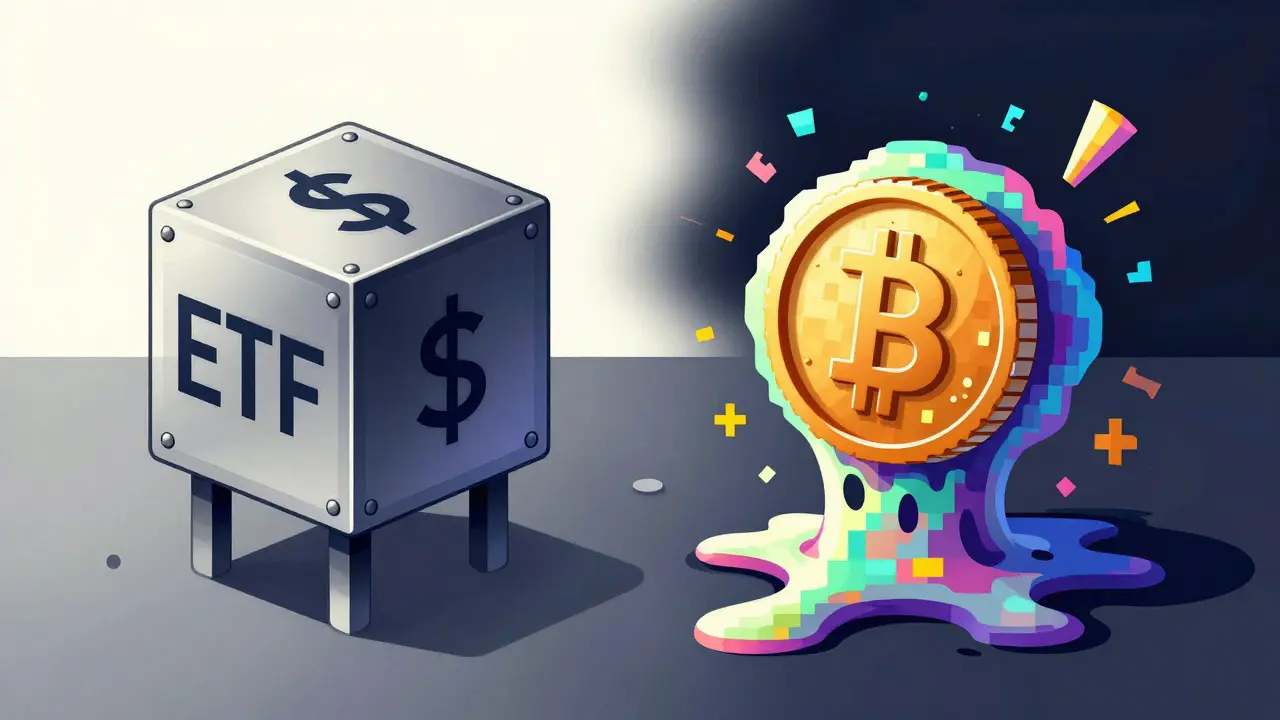
One of the biggest dangers surrounding CONY is simple confusion. If you search for "CONY" on financial news sites or brokerage platforms, you might find something completely different: the YieldMax COIN Option Income Strategy ETF. This is a regulated exchange-traded fund listed on the NYSE American under the same ticker symbol: CONY.
| Feature | Cony (CONY) Crypto | YieldMax CONY ETF |
|---|---|---|
| Type | Unregulated Meme Token | Regulated Exchange-Traded Fund |
| Platform | Ethereum Blockchain | NYSE American |
| Backing | None / Anonymous Creators | YieldMax Capital Management |
| Risk Level | Extremely High (Speculative) | Moderate (Market Dependent) |
| Utility | None | Income Generation via Options |
This overlap creates a dangerous situation for retail investors. In November 2025 alone, SimilarWeb data showed over 14,000 search queries mixing these two assets. Many people looking for safe, regulated income strategies stumbled upon the meme coin instead, or vice versa. Dr. Evelyn Rodriguez, a blockchain professor at MIT Media Lab, called this out explicitly in late 2025, noting that the shared ticker causes "significant retail investor confusion" and serves as a red flag for potential scams.
Tokenomics and Liquidity: The Numbers Don’t Lie
Let’s look at the raw data. As of December 2025, CONY ranks #4751 by market capitalization on CoinMarketCap. That sounds okay until you realize there are tens of thousands of cryptocurrencies. More importantly, its market cap sits at a mere $15,320. For context, Dogecoin (DOGE) has a market cap of nearly $20 billion, and even smaller meme coins like Shiba Inu (SHIB) sit above $11 billion.
The supply structure looks clean on paper: 1 billion total tokens, with 999,999,999 in circulation. But "circulation" is misleading here. LiveCoinWatch reports that actual circulating liquidity is near zero because massive amounts of tokens are locked in liquidity pools. Why does this matter? Because liquidity determines whether you can actually sell your tokens when you want to exit.
Here are the hard facts:
- Price: Approximately $0.00001532 (as of Dec 2025), down 99.96% from its all-time high.
- Daily Volume: Around $2,730 across all exchanges. This means if you tried to sell $1,000 worth of CONY, you would likely crash the price entirely.
- Holders: Only 327 unique wallet addresses hold any CONY. Of those, 78% have been inactive for over six months.
- Liquidity Depth: Near zero. Market depth analysis shows $0.00 in liquidity within ±2% of the current price. This makes the token extremely vulnerable to manipulation.
When you buy a token with this profile, you aren't investing; you're gambling on whether someone else will pay more than you did later. With such low volume and concentrated holdings, the risk of a "rug pull"-where developers drain the liquidity pool and disappear-is substantial.
Security and Development Status: Is It Dead?
If you’re considering buying CONY, you need to know that the project is effectively defunct. Blockchain analytics firm Nansen reported zero developer activity since June 2024. The last interaction with the smart contract occurred in August 2024. The Telegram group, which once had 87 members, has seen no admin messages since September 2024.
There are no third-party security audits. While Etherscan verification confirms the code matches standard ERC-20 implementation (meaning no obvious hidden backdoors like unlimited minting), the lack of formal review means vulnerabilities could exist. More concerning is the complete absence of customer support. The website, conycoin.io, is a single-page WordPress site with no contact information. If your transaction fails, if your wallet doesn't display the token, or if you get scammed, there is nobody to call.
User experiences reflect this abandonment. On Trustpilot, CONY holds a 1.1/5 rating. Users report losing funds to gas fees during failed transactions. One trader on Bitget forums described a 38% slippage when trying to sell just 5 million tokens. Slippage occurs when your order executes at a worse price than expected due to low liquidity-in this case, you lose nearly 40% of your value instantly just by trying to exit.
Why Experts Warn Against CONY
The consensus among crypto analysts is overwhelmingly negative. CryptoSlate gave CONY a 1.2/10 viability score in November 2025, citing "zero evidence of organic community growth." LunarCrush sentiment analysis places CONY at an "Extreme Fear" index of 11, compared to the broader market average of 52. Ninety-two percent of social media mentions are negative.
Even the most charitable assessments acknowledge the futility. MemeCoin Analytics gave it a speculative "C-" rating, noting that the only theoretical upside would be if LINE Corporation suddenly decided to endorse the project-a scenario they estimate has less than a 2% chance of happening given LINE’s strict IP protection history.
Delphi Digital’s micro-cap token report projected that 99.3% of tokens under $50k market cap will become completely illiquid within 12 months. CONY fits squarely into this category. Santiment’s metrics show the token trading at 1,842 times its fundamental value, a clear indicator of unsustainable valuation driven purely by speculation.
How to Buy (And Why You Shouldn’t)
I am not going to tell you what to do with your money, but I will explain how the process works so you understand the friction involved. If you still decide to proceed despite the warnings, here is what happens:
- Set up a Web3 Wallet: You’ll need MetaMask or similar. Ensure you are on the Ethereum network.
- Add Funds: Buy ETH (Ether) from a major exchange like Coinbase or Binance.
- Connect to DEX: Go to Uniswap (v2) or 1inch. Connect your wallet.
- Paste Contract Address: Search for CONY using the exact contract address:
0x002b68e699ab6cedc81e74e47f8a511dac6ecb11. Do not trust auto-suggestions. - Adjust Slippage: Due to low liquidity, you may need to set slippage tolerance to 10-20%. This means you accept getting fewer tokens than quoted.
- Execute Swap: Confirm the transaction. Pay the Ethereum gas fee.
Be aware that Bitquery.io data shows only a 43% success rate for transactions involving low-liquidity tokens like CONY. Failed transactions still cost you gas fees (averaging $1.85 per failure). You can easily spend $50 in gas fees trying to buy or sell a token worth $5.
Is Cony (CONY) associated with LINE Friends?
No. LINE Corporation has never endorsed, partnered with, or acknowledged the CONY cryptocurrency. The token uses the character's name and imagery without permission, relying on borrowed fame rather than official collaboration.
What is the difference between CONY crypto and CONY ETF?
They are completely different assets sharing the same ticker symbol. CONY crypto is an unregulated Ethereum meme token with no utility. The CONY ETF (YieldMax COIN Option Income Strategy ETF) is a regulated financial product listed on the NYSE American designed for income generation through options trading.
Can I sell my CONY tokens easily?
It is very difficult. CONY has extremely low liquidity, with daily volumes around $2,700. Selling even a small amount can cause massive slippage, meaning you receive significantly fewer dollars than expected. Many users report being unable to sell their positions at all.
Is the CONY project still active?
Effectively, no. Developer activity ceased in mid-2024, and the official Telegram channel has been inactive since September 2024. There are no ongoing updates, roadmap changes, or community management efforts.
What is the contract address for CONY token?
The verified ERC-20 contract address on Ethereum is 0x002b68e699ab6cedc81e74e47f8a511dac6ecb11. Always double-check this address on Etherscan before interacting with any decentralized exchange to avoid scams.



Zara Zaman
May 14, 2026 AT 04:03Stop pretending this is a real asset you clowns. It's just another scam wrapped in cute graphics to trick people who don't know better. The fact that LINE hasn't endorsed it should be the only thing you need to read. I'm sick of seeing these low-effort tokens clogging up the blockchain and wasting gas fees. If you bought this, you got what you deserved for being gullible.
Larry Port
May 14, 2026 AT 20:39It really comes down to basic tokenomics here. When you look at the liquidity depth being near zero, you are essentially buying a ticket to a one-way trip with no return leg. The confusion with the ETF ticker is a massive red flag that most retail investors miss because they aren't checking the contract addresses properly. It’s not about whether the rabbit is cute; it’s about whether there is actual utility or development behind the code. There isn’t. Just speculation on a dead project.
Jocelyn Garcia
May 15, 2026 AT 19:43The alpha here is clear: avoid illiquid micro-caps unless you have insider info which you definitely don't. The slippage metrics mentioned in the post are terrifying for anyone trying to exit. You can't even move $1k without crashing the price. It’s a classic honeypot structure disguised as a meme coin. The devs locked the liquidity pools effectively trapping everyone else while they hold the keys. Total garbage.
Amit Varpe
May 16, 2026 AT 01:06Lol typical western panic. In India we see these scams every day. They steal your money and run. Don't fall for it bro. 🐰
Bronwen Butler
May 16, 2026 AT 10:54actually you're all missing the point. if line friends ever decides to buy it back for marketing purposes the price could moon. history shows brands often acquire their own meme coins later. you guys are too short sighted to see the potential upside. ignore the fear mongering
Pauline Larocco71
May 18, 2026 AT 00:13I feel so bad for the people who lost money on this. It's really sad how easy it is to get scammed online now days. I hope someone helps them recover their funds even though its probably gone. Please be careful out there everyone!!