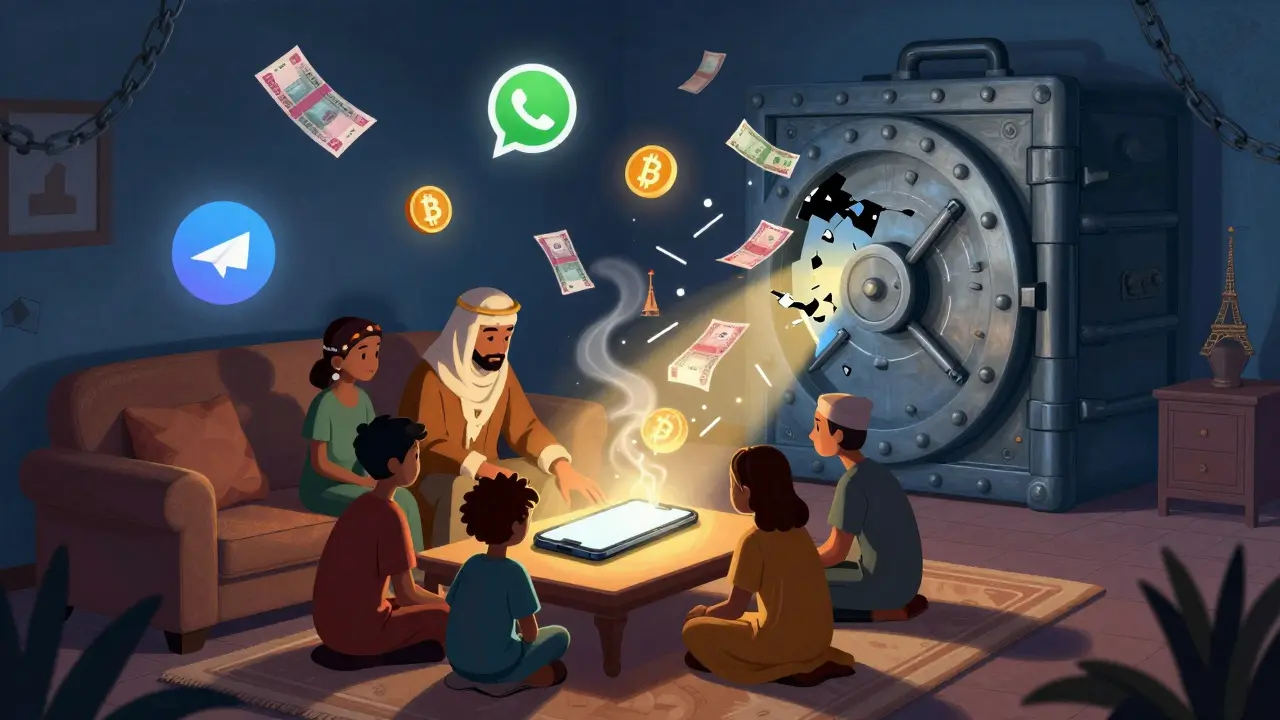
In Morocco, sending money abroad isn’t just expensive-it’s often impossible through official channels. Banks limit how much you can send, exchange rates are locked by the state, and processing times drag on for days. So, despite a nationwide ban on cryptocurrency since 2017, millions of Moroccans are turning to Bitcoin, USDT, and other digital assets to pay for family support, business supplies, and online services overseas. They’re not breaking the law because they’re reckless. They’re doing it because there’s no other way.
The Ban That Didn’t Stick
In November 2017, Morocco’s Central Bank, Bank Al-Maghrib, declared all cryptocurrency transactions illegal. The official reasons were clear: no consumer protection, risk of money laundering, extreme price swings, and violations of foreign exchange rules. But the ban didn’t shut down demand-it just pushed it underground.Today, you won’t find crypto exchanges openly operating in Casablanca or Marrakech. But you’ll find them anyway-hidden in WhatsApp groups, Telegram channels, and peer-to-peer apps. People trade directly: one person sends cash to a local seller, who then sends crypto to a buyer abroad. It’s not glamorous. It’s not safe. But it works.
By 2026, Morocco’s underground crypto market is expected to hit $292.4 million. That’s not a guess. It’s a projection based on transaction volumes, remittance flows, and user surveys. The numbers don’t lie: Moroccans are using crypto not for speculation, but for survival.
Why Crypto? The Real Reasons
Traditional remittance services like Western Union or MoneyGram charge up to 12% to send $200 to France or Spain. That’s $24 lost on every payment. For families relying on money from relatives abroad, that’s a meal, a school book, or a medicine bill gone.
Crypto cuts that cost to under 2%. You send USDT (Tether) from your phone to someone’s wallet in Germany, and they get euros in their bank account within minutes. No paperwork. No bank approval. No delays.
And it’s not just remittances. Moroccan small businesses import parts from China, pay for cloud hosting in the U.S., or buy ads on Google and Meta-all in crypto. Banks won’t let them convert dirhams to dollars easily. Crypto lets them bypass that.
One shop owner in Fes told me he buys iPhone components from Shenzhen every month. Before crypto, he had to use a middleman who took 15% and waited three weeks. Now, he sends USDT directly. Delivery time: 48 hours. Cost: $12 on a $2,000 order.
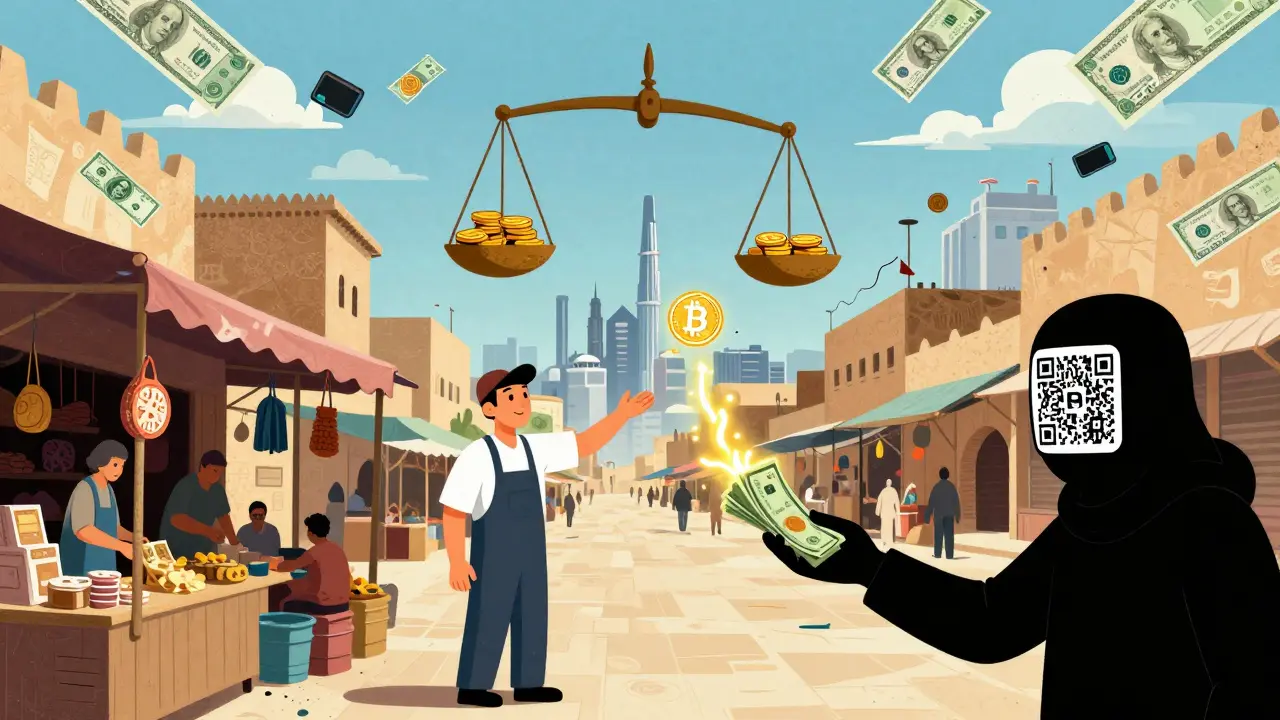
How It Actually Works
There’s no app store download. No regulated platform. It’s all manual.
- You find a trusted crypto seller through a WhatsApp group or a local meetup.
- You pay them in cash or via mobile money (like CMI or Orange Money).
- They send you Bitcoin or USDT to your wallet-usually Trust Wallet or MetaMask.
- You transfer it to a recipient abroad, who cashes out through their own local peer-to-peer network.
Some use decentralized exchanges like Bisq or Hodl Hodl to trade directly. Others rely on Telegram bots that auto-match buyers and sellers. Fees are low, but trust is everything. If you get scammed, there’s no recourse. No bank to call. No government to complain to.
Still, people keep doing it. Because the alternative-waiting weeks for a wire transfer that might get blocked-is worse.
The Government’s Quiet Shift
Here’s the twist: Morocco isn’t ignoring crypto anymore. In July 2025, the Central Bank announced it had finalized a draft law to legalize and regulate digital assets. Not fully open. Not like El Salvador. But a framework that could allow licensed platforms to operate for cross-border payments.
At the same time, Bank Al-Maghrib is working with the IMF and World Bank to build its own digital currency-a Central Bank Digital Currency (CBDC). This won’t be Bitcoin. It won’t be decentralized. It’ll be controlled by the state, designed for fast, secure international transfers between Morocco, Egypt, and other North African nations.
That’s the real game: the government wants the benefits of crypto-speed, low cost, global reach-but without losing control. They’re not trying to stop people anymore. They’re trying to replace them.
The Risks Are Real
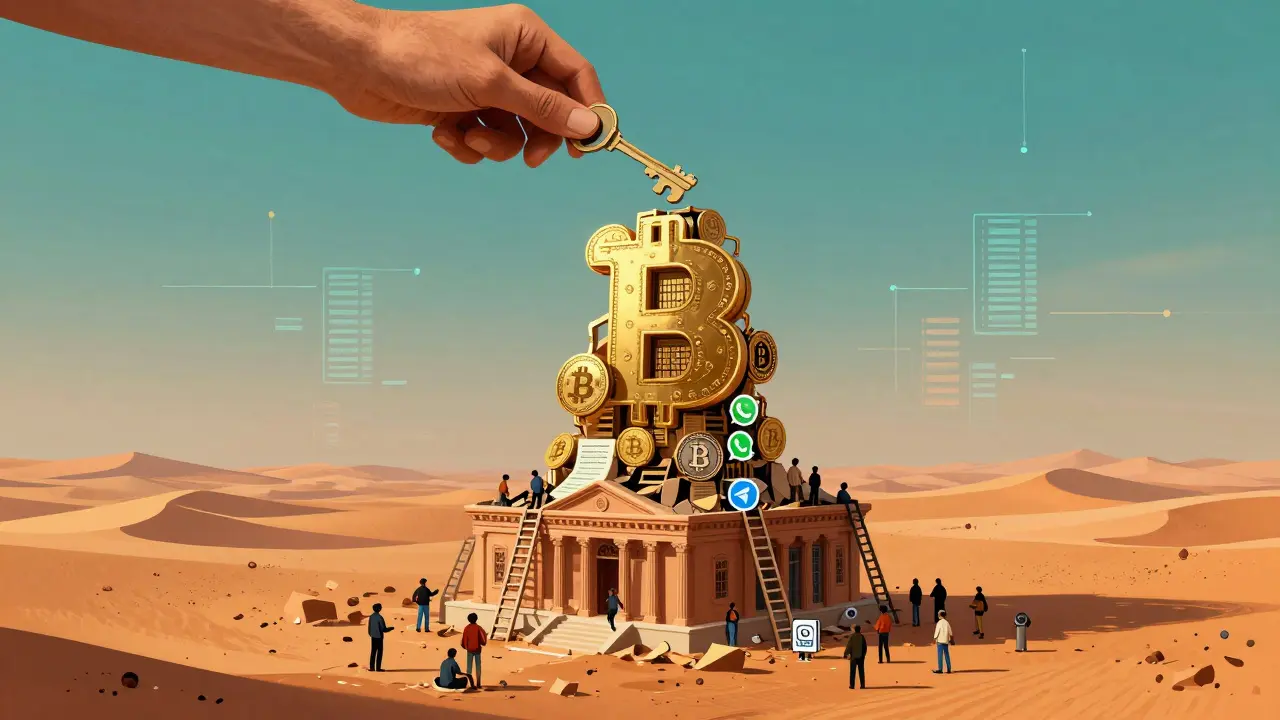
Using crypto in Morocco isn’t risk-free. You could lose your money to a scammer. You could get your account frozen if a bank flags your cash deposit. You could be questioned by authorities if you’re caught.
There’s no legal protection. If your wallet is hacked, you’re out of luck. If the person you sent crypto to disappears, you can’t sue them. There’s no law to protect you.
And volatility? USDT is supposed to be stable, pegged to the dollar. But even that can glitch. In 2023, a brief depeg caused panic among users who thought they’d lost half their savings. It recovered within hours-but the fear stuck.
Still, for many, the risks are worth it. Because the system they’re escaping is broken.
What’s Next?
By 2027, Morocco could have two parallel systems: one legal, state-run digital currency for official payments, and one underground, decentralized crypto network for everyday people.
Young Moroccans are already preparing. They’re learning how to use cold wallets. They’re teaching their parents how to scan QR codes for crypto payments. They’re building local networks of trusted traders.
And when the law finally changes-when crypto becomes legal-it won’t be because the government changed its mind. It’ll be because the people already made it necessary.
For now, Morocco’s crypto scene isn’t about wealth. It’s about access. It’s about dignity. It’s about sending money home without begging permission from a bank that won’t let you.





Rob Duber
January 28, 2026 AT 03:47So Morocco’s crypto scene is basically the wild west, but with WhatsApp groups instead of saloons? I love it. People aren’t trying to get rich-they’re just trying to feed their families. The government’s scrambling to regulate what they can’t stop, and honestly? That’s the most American thing I’ve seen all year-people outsmarting bureaucracy with sheer grit.
Also, USDT for groceries? I’m stealing this idea. My bank charges $40 to send $500 to my cousin in Mexico. I’d rather risk a scam than pay that.
Also also-when the CBDC launches, I bet it’ll be called ‘DirhamCoin’ and have a logo of a camel wearing a blockchain necklace.
Gary Gately
January 28, 2026 AT 07:58bro this is insane but makes total sense. banks are literally holding people hostage with their own money. i had a friend in morocco who waited 3 weeks to send 200 bucks to his sister and then it got rejected cause ‘foreign exchange limits’. so he found a guy on telegram who took his cash and sent usdt. 10 mins later she got it. no forms. no questions. just human to human.
the gov should just legalize it and take a tiny cut instead of pretending it doesnt exist. they’re losing control and they know it.
Joshua Clark
January 29, 2026 AT 07:59It’s fascinating, really, how systemic failure breeds decentralized innovation-Moroccans aren’t using crypto because it’s trendy or speculative, they’re using it because the formal financial infrastructure has become a labyrinth of inefficiency, red tape, and outright hostility toward ordinary citizens trying to survive. The state’s attempt to ban it only proves how powerless they are against grassroots adaptation. And now, as they draft regulations, they’re not trying to protect consumers-they’re trying to capture the market, to monetize what the people built themselves. It’s a classic case of institutional co-optation: the system doesn’t change until the people force it to, and then they try to take credit for it. The real heroes here? The unlicensed WhatsApp traders, the Fes shop owners, the mothers sending USDT to their kids in Spain. They didn’t wait for permission. They just did it.
And let’s not forget: this isn’t just about money-it’s about dignity. No one should have to beg a bank to send their own family a meal.
Katie Teresi
January 29, 2026 AT 09:27Let me get this straight-Moroccans are breaking the law to avoid paying fees, and you’re calling it heroic? This is why the West is collapsing. No rules. No accountability. Just chaos with a crypto wallet.
They should be fixing their banking system, not smuggling dollars through Telegram. This isn’t innovation-it’s anarchy. And now the IMF is helping them build a digital dictatorship? Great. Just great.
Moray Wallace
January 30, 2026 AT 10:25Interesting read. I’ve seen similar patterns in Nigeria and Kenya-when formal systems fail, informal networks fill the void. What stands out here is the sheer scale and maturity of the peer-to-peer networks. The fact that people are teaching parents to scan QR codes suggests this isn’t a fringe activity anymore. It’s becoming cultural.
That said, the lack of legal recourse if something goes wrong is terrifying. No one should have to risk their life savings because a Telegram bot vanished.
Joseph Pietrasik
January 30, 2026 AT 20:03lol crypto ban? morocco is just scared they cant tax it. also usdt is not stable its just less unstable than bitcoin. also banks are crooked everywhere. why is this news?
Raju Bhagat
February 1, 2026 AT 05:26bro i live in india and we do the same thing with uae traders and binance p2p. its wild how the world is building its own internet money without banks. morocco people are legends. no one cares about laws when your kid needs medicine. i sent 10k rupees to my cousin in bangladesh last week using usdt. 7 mins. 0.5% fee. bank would have taken 12% and 5 days. this is the future. the future is decentralized and it dont care about your borders or your rules.
also i taught my grandma to use trust wallet. she scans qr codes now. she calls it digital henna. i love her.
laurence watson
February 1, 2026 AT 15:34This made me cry a little. Not because it’s revolutionary-it’s because it’s human. People aren’t trying to be hackers or rebels. They’re just trying to love their families in a system that treats them like problems to be managed.
I’ve worked with refugees who couldn’t send money home for months. The fear in their eyes when they talked about their kids not getting medicine… this isn’t about crypto. It’s about belonging. About being seen. About having agency.
If the government wants to regulate, let them. But don’t erase the people who built this bridge with their own hands. Honor them.
Elizabeth Jones
February 2, 2026 AT 11:42The real irony here is that Morocco’s Central Bank is pursuing a CBDC not to empower citizens, but to reassert control over a financial ecosystem the people have already reclaimed. Cryptocurrency, in this context, is not a technological innovation-it is a political act. The masses have, through sheer necessity, created a parallel financial sovereignty. The state’s response-regulation, not repeal-reveals its fear of decentralized agency. And yet, the moral weight of this movement cannot be overstated: when dignity is denied by institutions, people invent new ways to be human. The blockchain here is not a ledger of transactions-it is a ledger of resilience.
One wonders whether the future of finance will be defined by the institutions that regulate, or by the people who refused to wait for permission.