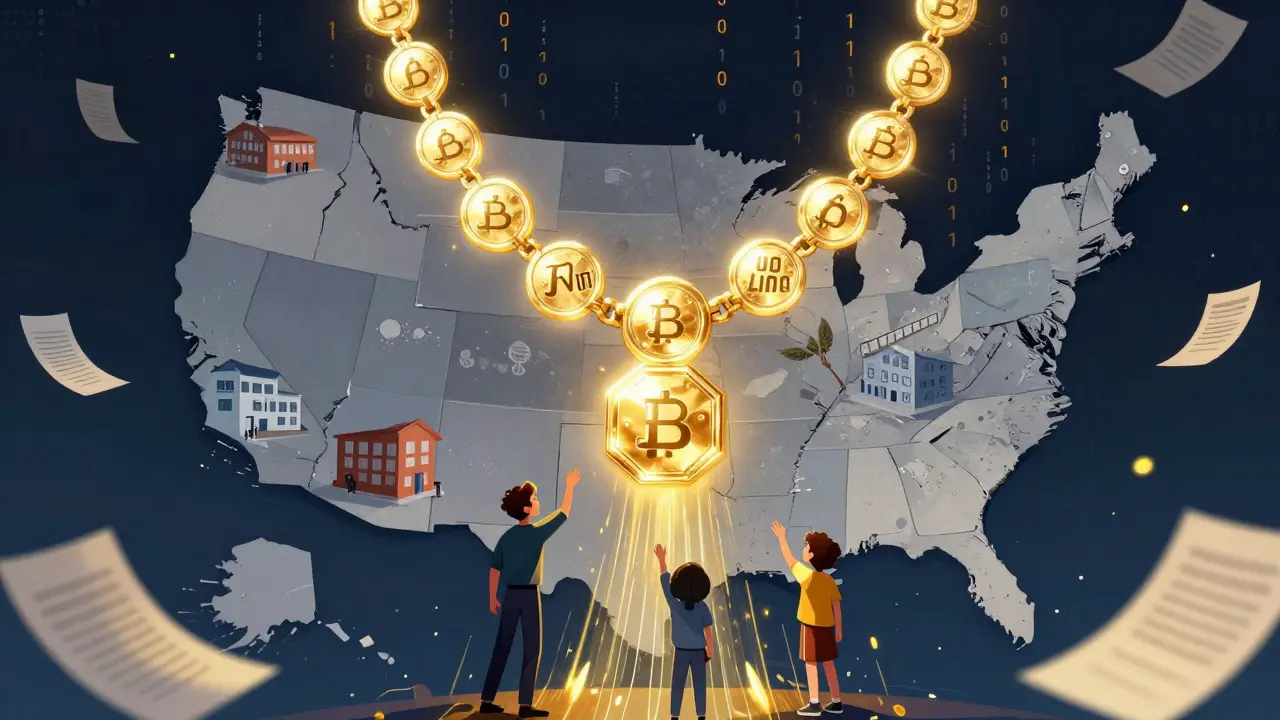
For decades, buying a piece of real estate meant tying up tens or even hundreds of thousands of dollars in a single asset, waiting months for paperwork to clear, and being stuck with it for years-even if the market shifted or you needed cash. But since 2018, something new has emerged: real estate tokenization. It’s not science fiction. It’s happening right now, and it’s changing who can invest, how fast transactions happen, and how much control regular people have over property markets.
What Exactly Is Real Estate Tokenization?
Real estate tokenization turns ownership of a physical property-like an apartment building, office space, or warehouse-into digital tokens on a blockchain. Each token represents a fraction of that property. Instead of needing $500,000 to buy a small commercial unit, you can now buy one token worth $1,000 and own 0.2% of it. These tokens are recorded on a public, tamper-proof ledger, usually on Ethereum, Polygon, or Hedera. They’re not cryptocurrencies like Bitcoin; they’re security tokens, meaning they’re legally tied to real assets and regulated like stocks or bonds.
This isn’t just about digitizing deeds. It’s about fixing broken systems. Traditional real estate moves slowly: appraisals take weeks, title searches drag on, and closing can take 60 to 90 days. With tokenization, settlement happens in seconds. A smart contract automatically transfers ownership when payment clears, no notaries, no escrow agents, no stacks of paper.
Why This Matters: The Top 5 Benefits
1. Fractional Ownership Opens the Door to Everyone
Before tokenization, only wealthy investors or institutions could buy commercial properties. A $10 million office tower? Only the top 1% could afford it. Now, that same building can be split into 10,000 tokens at $1,000 each. Suddenly, a teacher in Ohio, a freelancer in Mexico, or a student in Nigeria can invest in a high-value asset they’d never have touched before.
RealT, a U.S.-based platform, tokenized a Los Angeles apartment complex in 2022. Over 1,200 people bought in-with average investments of just $17,650. That’s not a hedge fund. That’s ordinary people building wealth through real estate without needing a million-dollar down payment.
2. Liquidity: Sell Your Share in Hours, Not Years
One of the biggest problems with real estate is illiquidity. If you need cash fast, you can’t just sell your house or apartment building overnight. You list it, wait for buyers, negotiate, and hope for the best. Tokenization changes that.
With tokens traded on regulated secondary markets, you can sell your share in minutes. Platforms like Harbor and Securitize allow investors to list and trade tokens like stocks. Transaction velocity has increased by over 300% compared to traditional real estate. Where you used to trade quarterly, now you can trade daily. In 2022, one investor on Reddit bought $5,000 in tokens for a Miami office building and sold part of it during a market dip to cover an emergency-something unthinkable just five years ago.
3. Lower Costs, Faster Transactions
Traditional real estate deals cost 5% to 10% of the property value in fees: agents, lawyers, title companies, transfer taxes, notary visits. Tokenization cuts that to 1%-3%. Why? Because smart contracts automate what used to require armies of middlemen.
Ernst & Young put it plainly: “The notary visit, the considerable transaction costs or the land transfer tax become technically obsolete through the use of tokenization.” A $2 million property that used to cost $150,000 to transfer now costs under $40,000. That difference isn’t just savings-it’s profit that goes straight to the investor.
4. Automated Income Distribution
When a property generates rent, who gets paid? In the old system, property managers collect rent, pay bills, then cut checks or wire transfers-often monthly, sometimes delayed. With tokenization, rent flows automatically.
Smart contracts are programmed to split rental income among token holders the moment it hits the account. No delays. No manual processing. Investors in the 2022 Los Angeles complex received monthly payouts with 11.3% annual returns-no paperwork, no phone calls, no chasing landlords.
5. Global Access to Institutional-Quality Assets
Before, only big funds could buy luxury hotels, logistics centers, or high-rise offices. Now, a tokenized asset like the Aspen St. Regis Resort-where $18 million in equity was split into digital shares in 2018-lets anyone participate. You don’t need connections. You don’t need a private banker. You just need a wallet and internet access.
Platforms like Mantra Chain and Tokeny now offer access to assets once reserved for pension funds and sovereign wealth funds. This isn’t speculation. It’s democratization.

Who’s Using It? Real Examples
It’s not just startups. Big players are jumping in. J.P. Morgan launched its Onyx blockchain platform in early 2023 specifically for commercial real estate tokenization. BlackRock filed a tokenized real estate fund with the SEC in August 2023. Even AWS released a Real Estate Tokenization Framework in June 2023, cutting setup time from nine months to under three.
Europe is catching up fast. The EU’s MiCA regulation, which took effect in June 2024, explicitly recognizes real estate tokens as financial instruments. That’s a huge step toward legal clarity. In the U.S., 32 states have passed blockchain-friendly securities laws since 2020. Still, the market is split: North America leads with 52% of activity, Europe at 31%, and Asia-Pacific at 17%.
Where It Falls Short
Tokenization isn’t magic. It has limits.
First, regulation is a mess. The U.S. has 50 different state securities laws. France still requires notarized transfers that can’t be bypassed by blockchain. If you’re in a country that doesn’t recognize digital ownership, tokenized property might not be legally enforceable.
Second, tech barriers remain. If you don’t know how to use a wallet, store a recovery phrase, or recognize a phishing site, you risk losing everything. Over 37% of new investors have lost access to their tokens because they misplaced their private keys.
Third, liquidity isn’t guaranteed. While major platforms like Securitize and Harbor have deep markets, smaller token offerings-especially from new issuers-can sit idle for months. You might own a piece of a building, but if no one wants to buy your tokens, you’re stuck.
And yes, smart contracts can fail. Between 2017 and 2023, $2.6 billion was lost across blockchain platforms due to coding bugs. While real estate tokens are generally more secure than DeFi projects (they’re backed by real assets), the risk isn’t zero.
What You Need to Know Before Investing
If you’re thinking about getting in:
- Start with commercial properties. They make up 73% of current tokenized assets because they generate steady income and are easier to value.
- Only use platforms that comply with SEC Regulation D, S, or A+. Avoid anything that promises “guaranteed returns” or doesn’t disclose legal structure.
- Use a hardware wallet (like Ledger or Trezor), not an exchange wallet. Exchange wallets aren’t yours-they’re theirs.
- Understand tax implications. If you’re in the U.S., tokenized rental income is taxed as ordinary income. Capital gains apply when you sell. Keep records.
- Don’t go all-in. Treat it like any other investment: diversify, start small, and learn.
The Future: What’s Next?
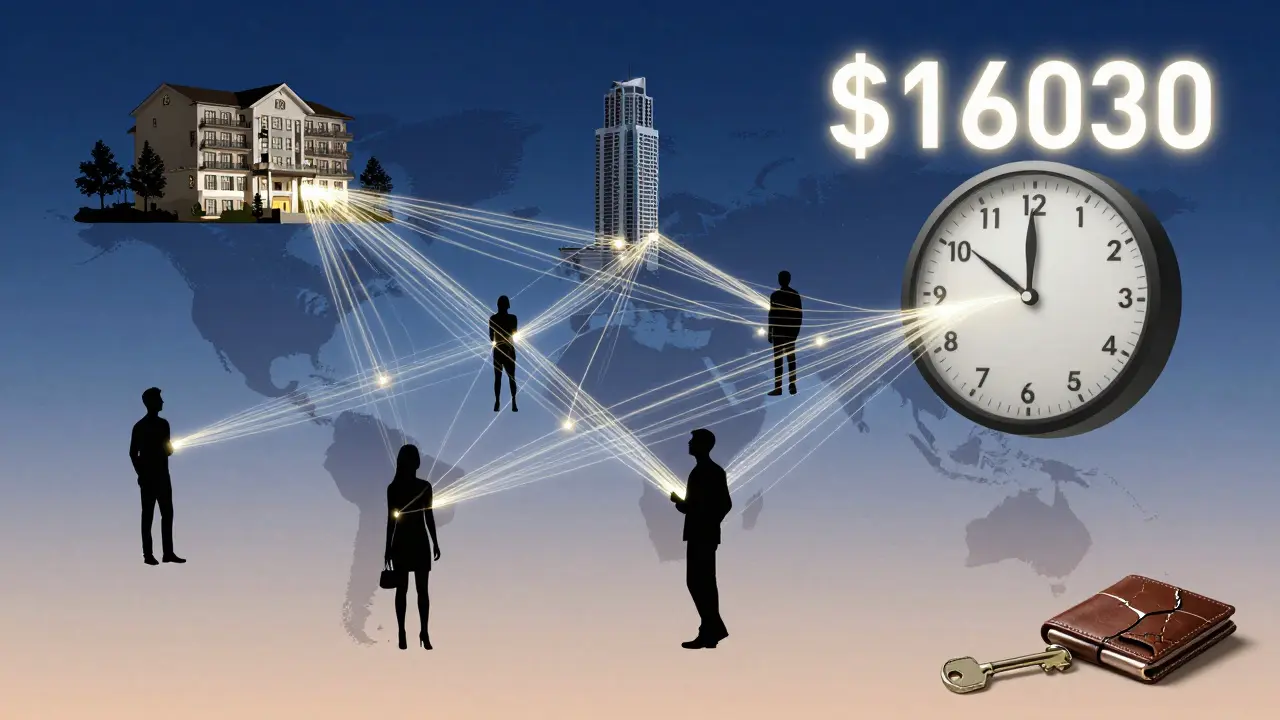
By 2027, Deloitte predicts that 25% of commercial real estate deals over $50 million will involve tokenized components. By 2030, J.P. Morgan estimates $16 trillion in global real estate could be tokenized.
The real game-changer? Central bank digital currencies (CBDCs). With 130 countries exploring them, we’re moving toward a world where your digital dollar, euro, or yen can directly buy a tokenized property-no banks, no intermediaries. That’s the endgame: seamless, global, instant ownership of physical assets.
But don’t wait for perfection. The technology is already working. The benefits are real. The cost of entry has never been lower. Whether you’re looking to diversify your portfolio, earn passive income, or simply get in on the next wave of finance-real estate tokenization isn’t coming. It’s already here.
Is real estate tokenization legal?
Yes, but only if done correctly. In the U.S., tokenized real estate must comply with SEC regulations like Regulation D, S, or A+. In the EU, MiCA (effective June 2024) explicitly recognizes them as financial instruments. However, countries like France and Japan still require traditional notarization, making tokenization legally unenforceable there. Always verify the platform’s legal structure and jurisdiction before investing.
Can I lose money with tokenized real estate?
Absolutely. Like any investment, you can lose money. Property values can drop, tenants can leave, or platforms can fail. While tokens represent real assets, their market price can fluctuate based on demand, regulatory news, or even social media hype. Smart contract bugs have caused losses in the past, though real estate tokens are generally less risky than DeFi projects because they’re backed by physical property.
Do I need to be tech-savvy to invest?
You don’t need to be a developer, but you do need basic blockchain literacy. You’ll need a digital wallet (like MetaMask or a hardware wallet), understand how to store your private keys securely, and know how to send and receive tokens. Most platforms simplify the process, but if you lose your recovery phrase, you lose access forever. Take 15-20 hours to learn the basics before investing.
How is tokenized real estate different from REITs?
REITs (Real Estate Investment Trusts) let you buy shares in a company that owns properties. You don’t own the property-you own a share of the company. Tokenized real estate gives you direct fractional ownership of the actual asset. You get rental income directly from the property, not from a fund manager. You also have more flexibility to sell your share anytime, whereas REITs trade on stock exchanges with less liquidity and higher fees.
What’s the minimum investment for tokenized real estate?
It varies, but it’s often as low as $1,000. Some platforms allow purchases starting at $100, especially for newer or smaller projects. The most common entry point is $1,000-$5,000. Compare that to traditional commercial real estate, where minimum investments typically start at $100,000 or more.
Can I live in a tokenized property?
Generally, no. Tokenized real estate is designed for investment, not personal use. The property is managed by a third party, and token holders receive income but don’t have the right to occupy or alter the property. There are rare exceptions-like fractional vacation homes-but most tokenized assets are commercial buildings or rental apartment complexes where tenants are managed by professional operators.
Are tokenized real estate returns guaranteed?
No. Any platform promising guaranteed returns is likely a scam. Returns depend on rental income, property appreciation, and market demand for the tokens. Past performance doesn’t predict future results. Always review the property’s financials, tenant mix, location, and management team before investing.


Patty Atima
March 15, 2026 AT 01:57This is actually kind of amazing. I bought $1,500 in tokens last year for a small apartment complex in Atlanta, and I’ve been getting monthly payouts like clockwork. No landlord drama, no repair bills. Just chillin’ while my money works for me.
Ernestine La Baronne Orange
March 15, 2026 AT 21:12Oh my GOD, this is the most revolutionary thing I’ve seen in my entire life-like, seriously, are you kidding me? We’re finally breaking free from the corrupt, old-school real estate mafia that’s been squeezing middle-class people for decades! I cried when I saw the first payout-$87.43 from a building in Houston! I’ve been waiting for this since 2012 when I got evicted from my studio! This isn’t just tech-it’s liberation! And don’t even get me started on how the banks are terrified because they can’t charge 5% fees anymore! THEY’RE SCARED! THEY KNOW THEY’RE OBSOLETE! I’M SO HAPPY I COULD SCREAM!
Manali Sovani
March 15, 2026 AT 21:29While the concept is theoretically intriguing, one must consider the structural inadequacies inherent in decentralized asset representation under current global regulatory frameworks. The absence of uniform legal recognition across jurisdictions renders such mechanisms inherently unstable. Furthermore, the reliance upon private key management by laypersons presents an unacceptable risk profile, particularly in emerging economies where digital literacy remains nascent. One cannot reasonably equate tokenized ownership with equitable access without first addressing systemic infrastructural disparities.
Konakuze Christopher
March 16, 2026 AT 11:46They’re using blockchain to sell real estate? Yeah right. This is a Fed-backed crypto scheme to drain your wallet. You think your ‘token’ is safe? It’s just a line of code. If the government shuts down the platform tomorrow, your $1,000 investment turns into digital dust. And don’t even get me started on how they’re bypassing property taxes. This is how they quietly nationalize assets. Wake up.
S F
March 17, 2026 AT 16:55Look, I don’t care what blockchain says-real Americans buy houses with sweat equity, not digital tokens. This is just Wall Street’s way of letting foreigners and tech bros buy up our neighborhoods while we’re stuck renting. If you’re investing in a tokenized apartment in LA, you’re not building wealth-you’re fueling gentrification. This isn’t progress. It’s surrender.