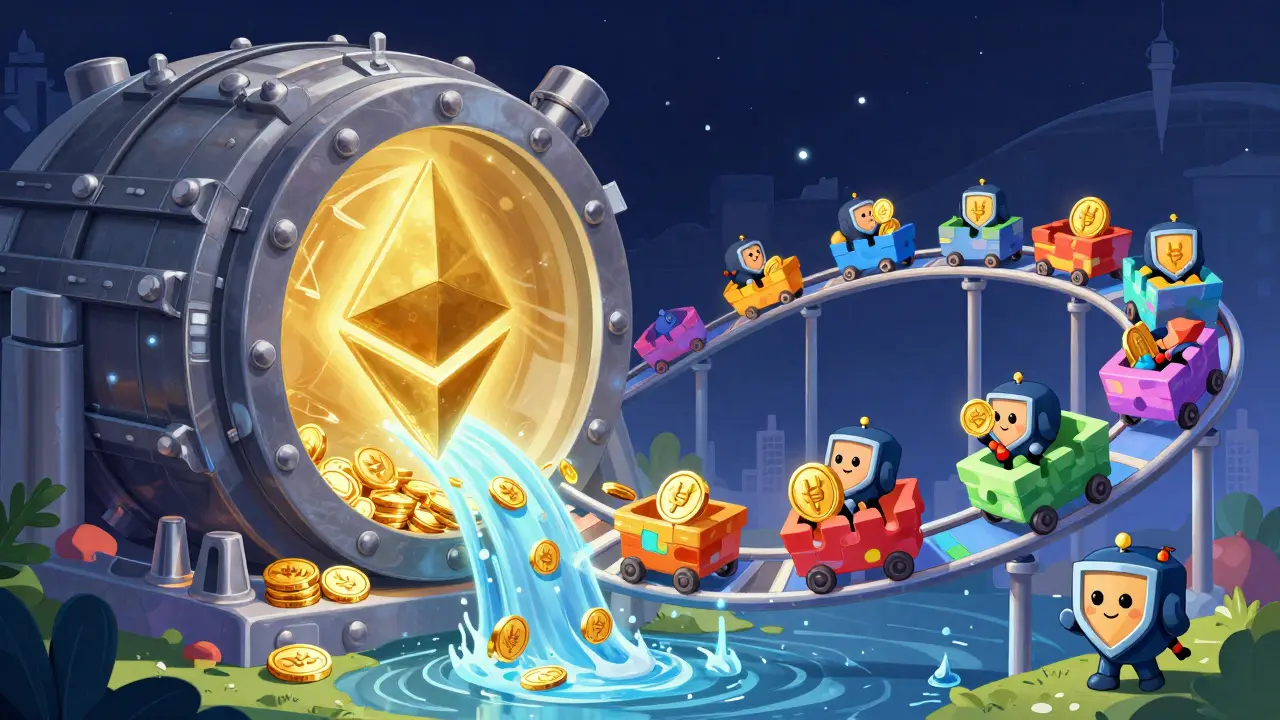
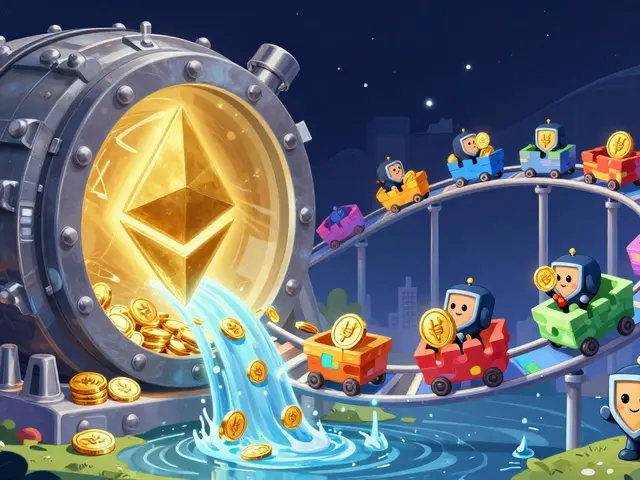
When you send ETH from Ethereum to Polygon, it doesn’t just disappear and reappear somewhere else. There’s a careful, step-by-step process happening behind the scenes-one that keeps your assets safe while letting you move them between blockchains. This process is called a two-way peg, and it’s the core of how sidechains connect to the main blockchain.
What Exactly Is a Sidechain?
A sidechain is its own blockchain, with its own rules, validators, and speed. It’s not part of Ethereum or Bitcoin. But it’s linked to them. Think of it like a parallel highway that connects to the main road. You can drive onto it to avoid traffic, but you can always drive back. The first real sidechain system was proposed in a 2014 paper by a group of blockchain researchers, including Adam Back and Pieter Wuille. Their goal? Solve the scaling problem. Ethereum and Bitcoin were getting slow and expensive. Transactions cost dollars, not cents. Sidechains offered a way to move work off the main chain without breaking trust. Today, Polygon (formerly Matic) is the most used sidechain. It handles over 1.2 million transactions per day. That’s 240 times more than Ethereum’s 30 transactions per second. And gas fees? On Polygon, they average $0.0001. On Ethereum, they’re around $1.20. That’s not a small difference-it’s what makes gaming, NFTs, and microtransactions possible.The Two-Way Peg: How Assets Move Back and Forth
The magic happens through a two-way peg. This isn’t just a link-it’s a locked system. Here’s how it works step by step:- You send ETH from your wallet to a smart contract on Ethereum. This contract is public, audited, and designed to lock funds.
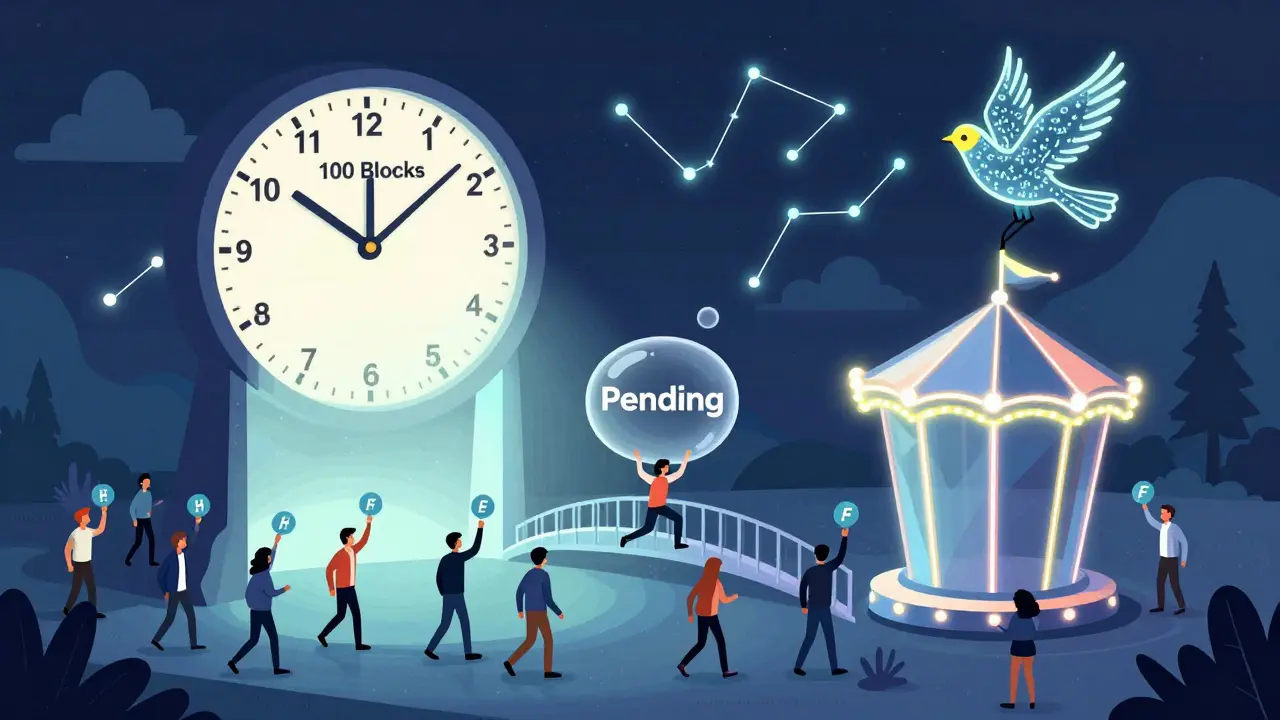
- Ethereum waits for about 100-200 block confirmations. That’s roughly 25-50 minutes. This delay isn’t random-it’s security. It ensures no one can reverse the transaction after the fact.
- Once confirmed, the Polygon sidechain mints an equivalent amount of WMATIC (wrapped MATIC) or pegged ETH on its chain. This new token is backed 1:1 by the locked ETH.
- To send assets back, you burn the WMATIC on Polygon. Polygon then sends a proof to Ethereum that the tokens were destroyed.
- Ethereum verifies the proof and unlocks your original ETH.
How the Bridge Actually Works
The bridge is the physical connection between the two chains. It’s not one thing-it’s a mix of technologies. There are three main types:- Federated bridges: Use a small group of trusted validators (like 9 nodes). Fast, but if even one gets hacked, your funds are at risk. Ronin Network used this model-and got hacked for $625 million in 2022.
- Proof-of-Stake (PoS) bridges: Validators stake their own tokens (like MATIC) as collateral. If they cheat, they lose their stake. Polygon uses this. It has 100 validators, and 67% must agree on each checkpoint. That’s a lot harder to attack than 9 nodes.
- Trustless bridges: Use math, not trust. Think zk-proofs or fraud proofs. These are slower to build but more secure. They’re the future, but not yet mainstream.
Security: What You Gain and What You Lose
This is the big tradeoff. Sidechains are fast and cheap. But they’re not as secure as the main chain. Ethereum has over 800,000 validators securing every block. Polygon has 100. That’s a huge drop in decentralization. And while Polygon slashes malicious validators (burning their MATIC), the attack surface is still smaller. Between 2020 and 2023, 65% of all blockchain hacks happened at bridges, not wallets or exchanges. Chainalysis tracked $2.8 billion lost in bridge exploits. The Ronin hack is the most famous example. Nine validators, all compromised. No one saw it coming. Vitalik Buterin put it bluntly: “Sidechains provide valuable scaling but should not be considered equally secure to the mainchain.” So, use sidechains for gaming, social tokens, or small payments. Don’t use them to store life savings. That’s what Ethereum is for.Real-World Impact: Where Sidechains Shine
Decentraland moved its land sales to Polygon in 2022. Before: $45 per transaction. After: $0.03. Daily active users jumped from 2,300 to 12,000. Why? Because people could actually afford to buy virtual land. Immutable X, another sidechain, handles 9,000 NFT trades per second for the game Gods Unchained. On Ethereum? That’d be impossible. The network would freeze. These aren’t edge cases. They’re the norm. Sidechains make blockchain usable for everyday people-not just crypto traders.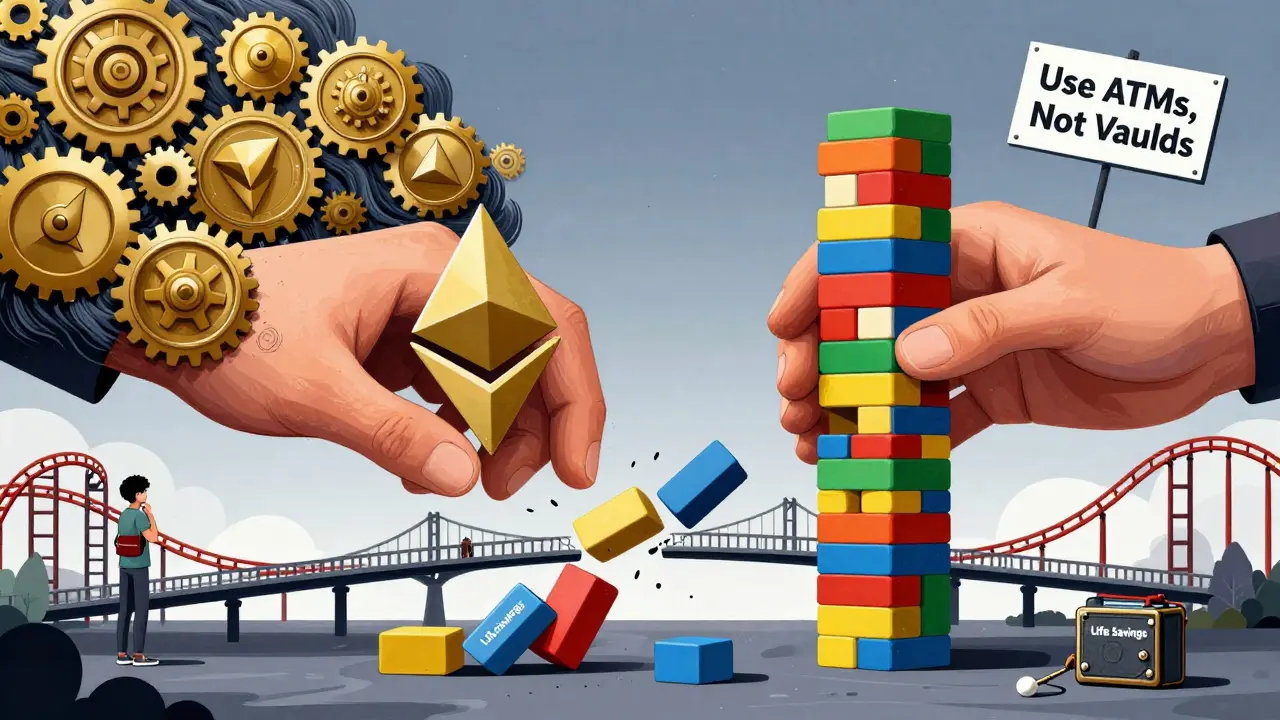
What’s Next? The Evolution of Sidechain Tech
The field is changing fast. Polygon launched Supernet in September 2023, letting anyone build their own custom sidechain with a dedicated bridge. That’s a game-changer for developers. Ethereum’s Proto-Danksharding (EIP-4844), coming in early 2024, will slash bridge costs by 90%. Why? Because it introduces “blob transactions”-a way to store large amounts of data cheaply. This means even more apps will move off Ethereum’s main chain. Chainlink’s CCIP, launched in October 2023, is a new kind of bridge. Instead of relying on validators, it uses decentralized oracle networks. Think of it like a blockchain version of a notary public-verified by multiple independent nodes. It’s insured for $750 million. That’s a big step toward trustless cross-chain communication. But the big question remains: Can sidechains ever match Ethereum’s security? Experts like Dr. Gavin Wood say no. He calls them “centralized points of failure.” Others, like Polygon’s Sandeep Nailwal, argue that with economic incentives and diversified validators, the gap is closing.What Happens When the Bridge Fails?
Even the best bridges glitch. GitHub issues for Polygon’s bridge show that 28% of user problems are “stuck deposits.” Another 22% are “failed withdrawals.” That’s why developers now build circuit breakers-automatic pauses if something looks wrong. Financial apps use multi-signature withdrawals: you need 3 out of 5 keys to move funds. It slows things down, but it saves money. And users? They rely on tools like the Bridge Status Dashboard, used by 47,000 developers monthly. It shows real-time status: “Pending,” “Confirmed,” “Failed.” No more guessing.Should You Use a Sidechain?
Here’s a simple rule:- Use a sidechain if you’re doing: gaming, NFTs, social apps, microtransactions, or anything where speed and cost matter more than absolute security.
- Stick to the mainchain if you’re: storing large sums, settling high-value contracts, or handling assets you can’t afford to lose.
Are sidechains part of the main blockchain?
No. Sidechains are completely separate blockchains with their own consensus rules, validators, and block times. They’re connected to the main blockchain via bridges and two-way pegs, but they operate independently. Think of them as parallel networks that can communicate, not as subnets of the main chain.
How long does it take to transfer assets between a sidechain and mainchain?
It varies. Deposits usually take 2-5 minutes on Polygon’s PoS bridge, but withdrawals can take 3-7 hours because of security delays. On Ethereum, the wait is longer-up to 7 days for rollups like Optimism. The delay is intentional: it gives time to detect and stop fraudulent activity.
Is Polygon a sidechain or a layer 2?
Polygon is technically a sidechain, not a Layer 2. Layer 2s like Optimism and Arbitrum inherit Ethereum’s security by posting data back to Ethereum. Polygon uses its own validators and doesn’t post every transaction to Ethereum. That’s why it’s faster and cheaper-but also less secure. Polygon has since added Layer 2 solutions (Polygon zkEVM), so it now offers both models.
Can you lose money using sidechain bridges?
Yes. Since 2020, over $2.8 billion has been stolen through bridge exploits. The most common cause is compromised validators or poorly coded smart contracts. Always use official bridges. Never send assets to unknown contract addresses. And never store large amounts on sidechains long-term.
Do sidechains have their own native tokens?
Yes. Polygon uses MATIC for gas fees and staking. Ronin uses AXS. Immutable X uses IMX. These tokens pay for transactions, secure the network through staking, and often give governance rights. But they’re not the same as ETH or BTC. They’re specific to each sidechain’s economy.


kati simpson
March 1, 2026 AT 08:58before i was paying like 5 bucks just to list something now its pennies
no more waiting 10 minutes for a tx to go through
gaming and social apps finally feel smooth
the only thing i miss is the security of ethereum but i dont keep big money here
its for fun not for savings
Cory Derby
March 2, 2026 AT 18:57By requiring cryptographic proofs and block confirmations, it enforces a verifiable chain of custody.
This design choice intentionally sacrifices speed for security during withdrawal phases.
The 3-7 hour delay is not a bug but a feature.
It allows time for anomaly detection and potential reversal of fraudulent activity.
Furthermore, the use of checkpoint merkle roots ensures that the sidechain state is anchored to the main chain without requiring constant data submission.
This is a brilliant balance between scalability and decentralization.
Thank you for this clear breakdown.
Colin Lethem
March 3, 2026 AT 23:58remember when eth gas was 200 dollars to mint a bored ape
now i can buy 1000 little pixel dogs for 2 cents
and the best part
no one cares if you mess up a tx
you just try again
its like the internet of money
finally
also shoutout to gods unchained
that game is wild
Kristi Emens
March 4, 2026 AT 20:57The slashing mechanism creates a natural deterrent against malicious behavior.
However the reduction in decentralization from 800k validators to 100 remains a structural vulnerability.
While cost efficiency is undeniable
the tradeoff in network resilience should not be minimized.
Users must be educated on this distinction.
Michelle Mitchell
March 4, 2026 AT 23:44but like what if the whole thing is a scam
like what if they just print matic and steal all the eth
like they could right
its just code
and who even watches these bridges
its like a bank with no cameras
Kaitlyn Clark
March 6, 2026 AT 05:01ETH is too slow and expensive for normal people
but polygon?? 🚀
gaming? NFTs? microtransactions? YES PLEASE
and dont even get me started on how cheap it is
imagine buying a digital cat for 3 cents
thats freedom
also i know people say "its not as secure"
but like 99% of us arent storing millions here
we just wanna have fun
and polygon lets us do that
stop being scared of innovation 🙌
christopher luke
March 8, 2026 AT 04:12thank you so much for breaking it down
finally i understand why bridges are the weak point
and yes i totally agree with the atm vs bank vault analogy
sidechains are the future for everyday use
ethereum is for the big stuff
keep doing what you're doing 🙏
Mary Scott
March 10, 2026 AT 00:41Shannon Holliday
March 10, 2026 AT 14:32My cousin in Nigeria just bought her first NFT on Polygon with her phone
no wallet setup stress
no gas wars
just a simple click
that's the real win
not the price
but the access
🌈