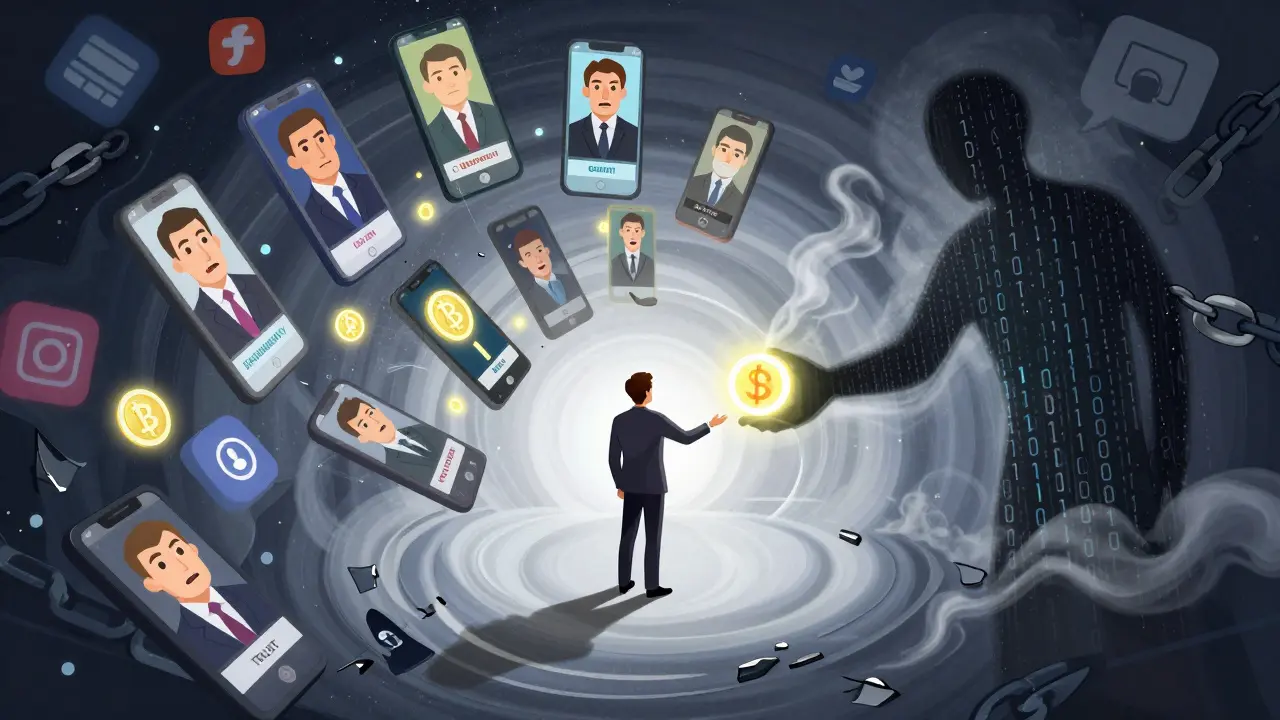
Every year, people lose hundreds of millions in cryptocurrency-not because their wallets were hacked, but because they were tricked. No malware. No broken code. Just a message that felt real, a voice that sounded trustworthy, or a story that pulled at their emotions. That’s social engineering. And in crypto, it’s the #1 way people get robbed.
Why Social Engineering Works Better Than Hacking
Most people think crypto theft means someone broke into a wallet using advanced code. But the truth? Over 90% of major crypto losses in 2025 started with a person being manipulated. Hackers don’t need to crack encryption. They just need you to click a link, download a file, or send your private key because someone you "trust" asked you to. Think about it: your password is useless if you give it away willingly. Scammers know this. They don’t attack systems-they attack minds. Take the Coinbase insider breach in May 2025. Attackers didn’t break into their servers. They paid a few employees to hand over user data. Then, they called customers directly, pretending to be Coinbase support. They said, “Your account is at risk-send your recovery phrase to secure it.” Hundreds did. Over $45 million vanished in days.The Three Triggers of Every Crypto Scam
There’s a pattern in every successful scam. Three psychological triggers are always there:- Authority - The scammer pretends to be someone important. A Coinbase rep. A celebrity. A developer from a big project. They use fake profiles, verified-looking X (Twitter) accounts, or even deepfake videos to look real.
- Urgency - “Your wallet will be frozen in 10 minutes!” “This airdrop ends in 2 hours!” “Your investment opportunity disappears if you wait!” Fear makes you act fast-and stop thinking.
- Trust Networks - Scammers don’t work alone. They build fake communities. A Telegram group with 500 members? All bots or paid actors. A Discord server with 10,000 people? Most are fake. They’ll have “real users” praise a fake token, then say, “I’m in-join me!”
Pig Butchering: The Long Game of Emotional Manipulation
One of the most dangerous scams isn’t fast-it’s slow. It’s called pig butchering. The name comes from how scammers “fatten up” their victims before killing them. It starts on dating apps or Telegram. Someone friendly, charming, maybe even romantic, reaches out. They talk about life, dreams, goals. They listen. They care. After weeks or months, they mention crypto. “I made a small profit on this platform,” they say. “It’s easy. Want to see?” They send you a link to a fake trading app. It looks real. You deposit $500. You see it grow to $700. You withdraw $100. It works. You trust it. So you deposit $5,000. Then $20,000. Then $100,000. The dashboard keeps showing gains. You tell your friends. You take out loans. You sell your car. Then, one day, the app goes down. The person disappears. The “platform” is gone. All your money is lost. And you’re left not just broke-but ashamed, heartbroken, and isolated. This isn’t rare. In 2025, pig butchering scams took over $1.2 billion globally. Victims aren’t just inexperienced users. They’re doctors, teachers, retirees. The scam doesn’t target tech knowledge. It targets loneliness, hope, and trust.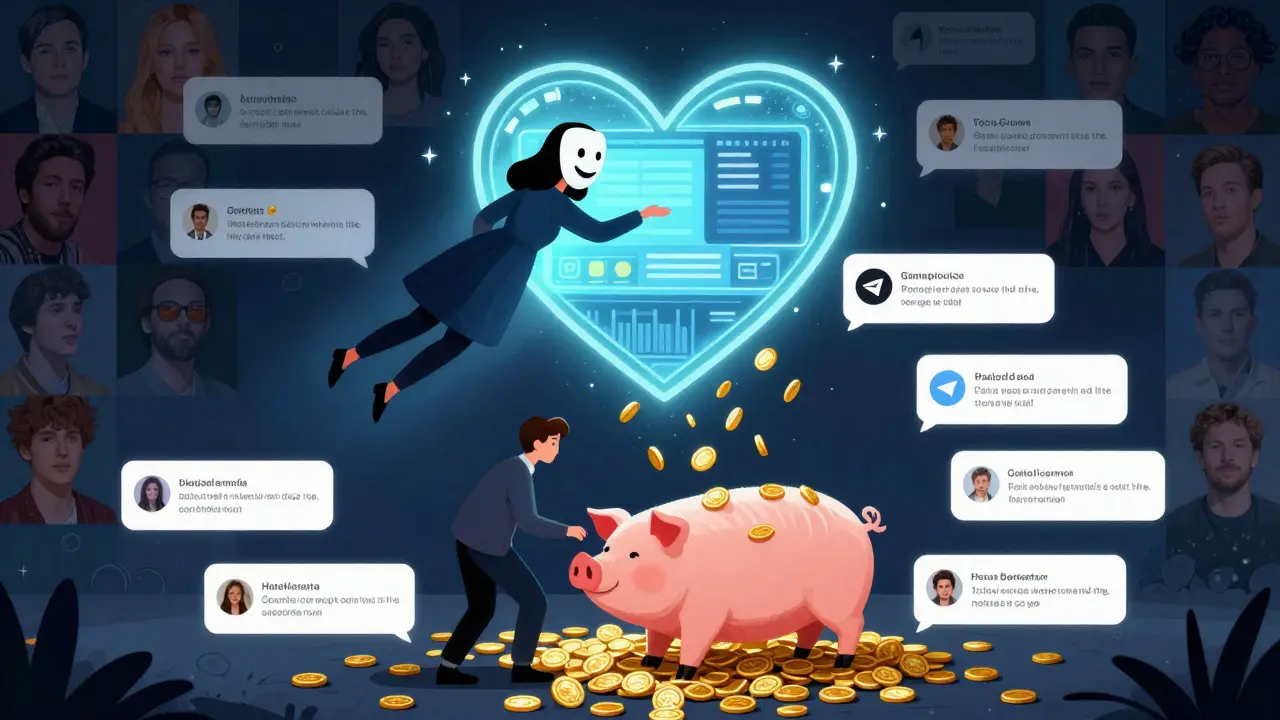
How Fake Startups and Deepfakes Are Making Scams Unstoppable
Scammers aren’t using basic phishing anymore. They’re building full companies-on paper. The “Meeten” campaign in late 2024 created fake AI video meeting startups. They had websites, Medium blogs, GitHub repos, LinkedIn profiles, even press releases. They weren’t sketchy. They looked like the next unicorn. Users downloaded their “meeting software”-and got the Realst info-stealer, which logged keystrokes, stole crypto wallets, and sent data back to the attackers. And it gets worse. Deepfakes are now part of the game. Scammers record short videos of real crypto influencers. Then, using AI, they swap faces and voices to make it look like the influencer is promoting a fake token. One video of a fake Sam Bankman-Fried promoting a “new Solana staking protocol” pulled in over $20 million in 48 hours before it was taken down. These aren’t one-off scams. They’re professional operations. Some groups have marketing teams, customer service bots, and even fake legal departments to answer questions like, “Is this legit?”How Celebrities and Influencers Are Used as Weapons
In August 2024, Kylian Mbappé’s X account was hacked. Within minutes, a post went out: “I’m launching my own meme coin, $MBAPPE. Join the presale on Solana.” The post went viral. Thousands of fans rushed to buy. Within hours, the coin hit a $460 million market cap. People invested real money-$1 million total-before realizing it was fake. Mbappé didn’t know his account was compromised until fans started flooding his DMs. This isn’t about celebrities. It’s about trust. People believe what people they admire say. Scammers know this. That’s why they target verified accounts with large followings. Even if the account is later restored, the damage is done. Money is gone. Trust is broken.How Governance Attacks Are Stealing from DeFi Protocols
It’s not just individuals. Entire DeFi protocols are being hacked through social engineering. Attackers submit fake proposals to DAOs (decentralized autonomous organizations). They write them in perfect English. They cite real past votes. They use official-looking templates. They pretend to be long-time contributors. Then they ask for a vote on a “minor update”-which actually redirects millions in treasury funds to their wallet. Why does this work? Because most DAOs have low voter turnout. If 5% of members vote, and 80% of those voters are scammers or bots, the proposal passes. No one notices until the money is gone. In 2025, a DAO lost $18 million this way. The proposal looked like a routine gas fee adjustment. It wasn’t.
How to Protect Yourself: Real Steps, Not Just Warnings
You can’t avoid crypto scams by just being “careful.” You need systems.- Never enter your seed phrase anywhere. Not on a website. Not in a DM. Not even if someone says, “We need to verify your wallet.” No legitimate service will ever ask for this.
- Verify every link. Hover over links before clicking. Check the domain. Is it
coinbase.comorcoinbase-support.net? Use tools likehttps://checkurl.orgto scan suspicious URLs. - Assume every message is fake until proven real. If someone messages you on Discord or Telegram offering a “private airdrop,” block them. Then report them. Don’t even reply.
- Use a hardware wallet. Even if you get phished, your funds stay safe if they’re offline. Trezor and Ledger aren’t foolproof-but they stop 99% of automated attacks.
- Never trust influencers or celebrities. If someone you follow promotes a coin, check their official website. Look for press releases. Search for the project on CoinGecko. If it’s not listed, it’s likely a scam.
- Use two-factor authentication (2FA) with an authenticator app. Don’t use SMS. SMS can be intercepted. Use Google Authenticator or Authy.
- Set up transaction alerts. Many wallets let you get a notification when funds leave your account. Enable it. If you didn’t authorize it, act immediately.
The Bigger Problem: No One Is Training People
Banks train employees to spot social engineering. Companies run phishing simulations. Crypto? Almost no one does. Exchanges don’t educate users. Wallets don’t warn you. Communities celebrate “quick gains,” not security. And when someone gets scammed, they’re often blamed for being “gullible.” That’s wrong. This isn’t about intelligence. It’s about design. Scammers are professionals. They use psychology, AI, and years of testing. You’re not supposed to win. The only way to fight back is to treat crypto like a battlefield-not a casino. Learn the tactics. Share what you learn. Warn your friends. Ask questions before you act.What Comes Next
As crypto becomes mainstream, these scams will get smarter. AI will generate personalized voice messages that sound like your cousin. Fake websites will copy real ones pixel-perfect. Scammers will use your public social media posts to craft messages that feel like they’re from someone you know. The future of crypto security isn’t in better encryption. It’s in better education. In community awareness. In asking, “Why is this person asking me for this?” before you click. Your money is safe-not because the system is perfect. But because you’re learning to see through the lies.Can a crypto exchange get hacked through social engineering?
Yes. In May 2025, Coinbase lost over $45 million because attackers bribed insiders to leak customer data, then impersonated support staff to trick users into giving up their recovery phrases. No code was broken-just trust was exploited.
What’s the difference between phishing and pig butchering?
Phishing is quick: a fake link, a fake email, a quick theft. Pig butchering is slow: scammers build emotional relationships over weeks or months before asking for money. The goal isn’t just to steal-it’s to make you want to give it to them.
Are hardware wallets safe from social engineering?
Hardware wallets protect your private keys from remote hacks-but they don’t stop you from being tricked into sending funds. If someone convinces you to send your crypto to a scam address, your hardware wallet won’t help. It only keeps your keys offline. You still need to be skeptical of requests.
Can AI-generated deepfakes be detected?
Not always. Many deepfakes today are indistinguishable to the average person. But red flags include unnatural blinking, mismatched lighting, robotic speech, or lip movements that don’t match audio. Always verify critical claims through official channels-not just video.
Why do people fall for crypto scams even after hearing about them?
Because scams are designed to trigger emotions-not logic. Fear of missing out, hope for quick profits, loneliness, or trust in authority override rational thinking. Even experienced users get caught when the scam feels personal, urgent, or emotionally compelling.
Is there any way to recover money lost to social engineering?
Almost never. Blockchain transactions are irreversible. If you sent crypto to a scammer’s wallet, there’s no “undo” button. Law enforcement can sometimes trace funds, but recovery is rare. Prevention is the only real defense.


Scott Sơn
December 5, 2025 AT 09:08Okay but let’s be real-this isn’t crypto being hacked, this is humanity being *played*. I mean, we’re talking about people falling for romance scams that end with them selling their kidneys to buy NFTs. The scammers aren’t tech wizards, they’re Shakespearean actors with a Discord server and a PayPal link. And the worst part? We *want* to believe them. We’re lonely. We’re hopeful. We’re tired of being told ‘just HODL’ while our rent’s due. So we click. We send. We cry. And then we blame ourselves. Not cool. Not cool at all.
miriam gionfriddo
December 7, 2025 AT 02:53ok so i just got dm’d by ‘sam bankman fried’ on insta saying ‘u r selected for exclusive airdrop’ and i was like… wait is this real?? then i checked his profile-no blue check, 3 followers, pic is a stock photo of a guy in a hoodie. i reported it but still. how many people actually fall for this?? like… i’m not even smart and i knew it was fake. so why do so many smart people get owned??
Nicole Parker
December 8, 2025 AT 03:13I think what’s really heartbreaking is how these scams weaponize the things we’re taught to value-trust, connection, empathy. People don’t lose money because they’re dumb. They lose it because they’re human. The pig butchering thing? That’s not a scam, that’s emotional abuse dressed up as a love story. And the fact that we treat victims like they’re gullible instead of saying ‘wow, that’s a sophisticated, predatory operation’ is what lets this keep happening. We need to stop shaming and start protecting. We need to teach emotional literacy in crypto spaces like we teach security. Because if you can’t recognize manipulation when it’s wrapped in kindness, you’re not vulnerable-you’re just awake in a world that’s designed to exploit that.
Tom Van bergen
December 9, 2025 AT 13:31Everyone’s acting like this is new but social engineering has been around since cavemen traded spears for berries and someone said ‘trust me bro this one’s magic’ the blockchain didn’t create lies it just gave them a new stage and a faster payout
Ben VanDyk
December 10, 2025 AT 04:19It’s funny how the article spends 800 words explaining why people get scammed, then lists seven bullet points that all boil down to ‘don’t be an idiot.’ No one needs a list. They need context. They need to understand why their brain gets hijacked. And no, ‘use a hardware wallet’ isn’t a solution. It’s a Band-Aid on a hemorrhage. The system is broken. The incentives are wrong. And until exchanges stop treating users like ATM machines, this will keep happening.
michael cuevas
December 10, 2025 AT 12:00bro i had a friend who lost 80k to pig butchering. he cried for three weeks. then he started a youtube channel called ‘how i got scammed’ and now he’s got 200k subs. sometimes the only way out is to turn your trauma into content. he’s not rich but at least he’s not alone. also don’t trust anyone who says ‘this is a once in a lifetime opportunity’ unless they’re selling a time machine
Barb Pooley
December 10, 2025 AT 17:08Let’s be honest-this whole crypto thing was a government psyop from day one. They let these scams happen so they can justify cracking down on ‘unregulated assets.’ The real crime isn’t the scammers-it’s the fact that the SEC and the Fed sit back and let people get destroyed so they can say ‘see? we told you crypto was dangerous.’ The ‘education’ they push? It’s just control dressed up as safety. You think they want you to be safe? No. They want you to be dependent.
Adam Bosworth
December 12, 2025 AT 11:25you know what’s wild is that the same people who roll their eyes at ‘don’t trust strangers on the internet’ are the ones who’ll send their seed phrase to a guy who says ‘hey i’m the dev of this new coin and i need to verify your wallet’ like bro i’m not even mad anymore i just feel bad for the species
Renelle Wilson
December 14, 2025 AT 02:37Thank you for writing this with such care. What’s missing from most discussions is the acknowledgment that these attacks are not failures of individual judgment but successes of systemic design. We have trained generations to trust authority, to respond to urgency, to seek belonging-and scammers have simply mapped their tactics onto the digital landscape. The solution isn’t just technical. It’s cultural. We need crypto communities to become places of emotional safety, not just financial opportunity. We need mentors, not influencers. We need silence before clicking, not applause before sending. And most of all, we need to stop treating victims as exceptions-and start treating the system as the problem.