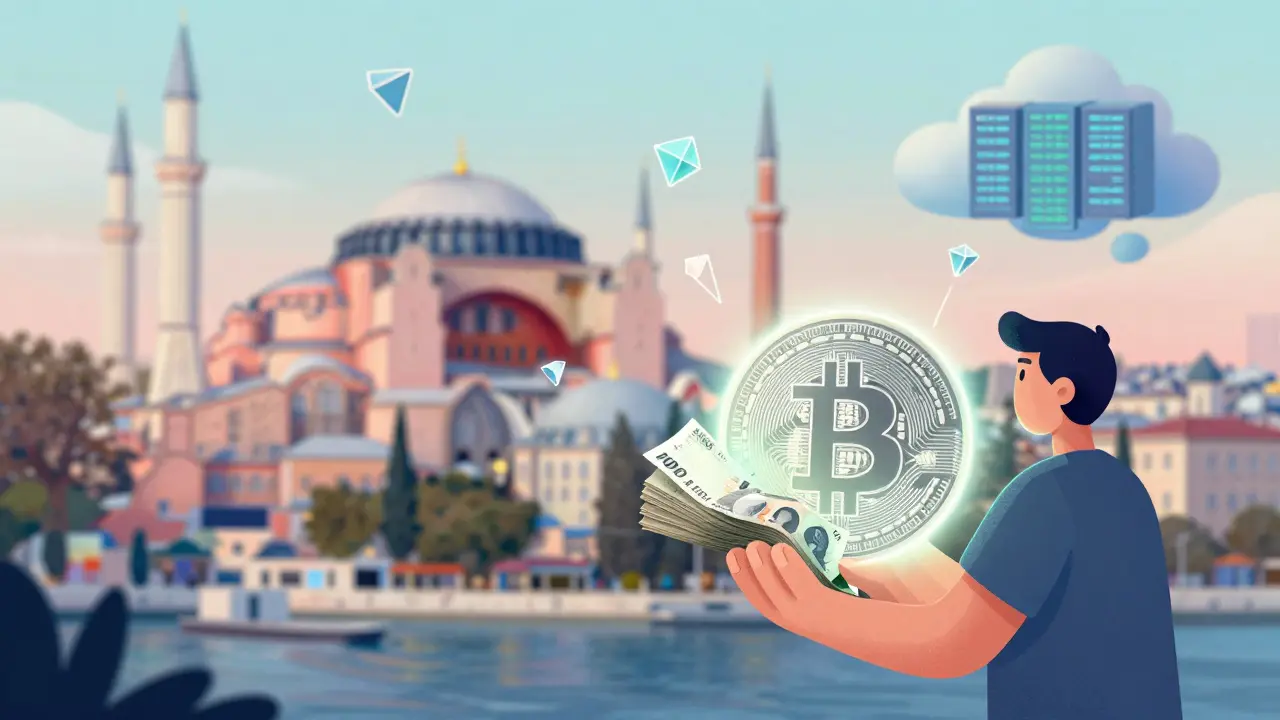
You can’t buy coffee with Bitcoin in Turkey. You can’t pay rent with Ethereum. But if you walk into any internet café in Istanbul or check the data from Ankara, you’ll see that millions of people are still buying, selling, and holding crypto every single day. It sounds like a contradiction, right? The Central Bank of the Republic of Turkey (CBRT) banned using cryptocurrency for payments back in April 2021. Yet, holding and trading these assets remains legal. This split personality in regulation has created one of the most complex, active, and innovative crypto markets in the world.
So, how do regular Turks navigate this maze? Are they breaking the law? Not necessarily. They are just playing by a different set of rules-one that involves licensed exchanges, peer-to-peer networks, and some clever technical workarounds. If you are trying to understand how the Turkish crypto market survives (and thrives) under pressure, here is exactly what is happening on the ground in 2026.
The Legal Loophole: Trading vs. Paying
To understand the method, you first have to understand the rule. The CBRT’s circular No. 2021-32/33 explicitly forbids financial institutions from facilitating the use of crypto as a means of payment. The goal was consumer protection. Crypto prices swing wildly, and there were no safety nets if a platform collapsed or a scammer stole your money. However, the government never said you couldn’t own it. They just said you couldn’t use it to buy goods or services directly.
This distinction is crucial. It means that platforms acting as intermediaries for trading-swapping Turkish Lira (TRY) for USDT or Bitcoin-are operating in a legal gray zone that has since been tightened but not closed. As of early 2025, the Capital Markets Board (CMB) stepped in to regulate these exchanges. Now, only licensed platforms can legally operate within Turkey. This includes major players like Binance Turkey, Paribu, and Bitlo. These platforms require strict identity verification. If you want to trade more than 15,000 TRY (about $425), you must verify who you are. This is the "compliant tier" of the market.
The Rise of Peer-to-Peer (P2P) Trading
But what happens when you want to move more money, or when you don’t trust a centralized exchange? Enter Peer-to-Peer (P2P) trading. This is where the real magic happens. P2P allows users to trade directly with each other without an intermediary holding the funds. In Turkey, this isn’t just a niche activity; it’s a lifeline.
Platforms like LocalBitcoins saw a 217% increase in Turkish user activity between late 2021 and late 2024. By December 2024, they were processing roughly $1.2 billion in monthly transactions. How does it work? User A wants to sell Bitcoin for Lira. User B wants to buy Bitcoin with Lira. They agree on a price. User B sends Lira via bank transfer to User A’s account. Once User A confirms receipt, the Bitcoin is released from escrow to User B.
This method bypasses the direct "payment" ban because the crypto isn’t being used to buy a shirt or a meal. It’s being exchanged for fiat currency between two individuals. It’s also anonymous enough to avoid immediate detection, though not entirely risk-free. According to a 2024 study by TÜBİTAK, about 68% of Turkish crypto users have used VPNs to access global P2P platforms like Coinbase or Kraken when local options felt too restrictive or expensive.

Navigating the Regulatory Tightrope
The regulators haven’t sat idle. In February 2025, new Anti-Money Laundering (AML) regulations came into force, published in Official Gazette No. 32512. These rules hit hard. The CMB banned 46 specific platforms, including decentralized giants like PancakeSwap. Then, in May 2025, another 17 platforms were added to the blacklist, bringing the total to 63 banned entities.
Did this stop traders? Hardly. It just pushed them deeper into technical solutions. Users who wanted to access decentralized finance (DeFi) protocols started using wallet applications like MetaMask connected to non-Turkish RPC endpoints. Essentially, they route their connection through servers outside Turkey to access banned dApps. Statistics from TÜİK show that despite the bans, 3.7 million Turkish addresses interacted with DeFi protocols in the first quarter of 2025 alone.
This creates a two-tier market:
- The Compliant Tier: Licensed exchanges (Paribu, Binance TR). Low fees (0.05%-0.25%), high security, mandatory KYC, but strict limits.
- The Shadow Tier: P2P groups, Telegram channels, and VPN-accessed global exchanges. Higher premiums (0.5%-2%), zero or low KYC, higher risk of scams or frozen accounts.
Why Do They Keep Doing It?
You might wonder why anyone would go through all this trouble. The answer lies in the Turkish Lira. When your local currency loses value rapidly, people look for a hedge. Stablecoins, particularly USDT, have become a digital savings account for millions. In 2024, 38.7% of all crypto transactions in Turkey involved stablecoins. People aren’t just speculating on Bitcoin’s next moon shot; they are parking their life savings in digital dollars to preserve purchasing power.
Dr. Ayşenur Acar, a professor at Ankara University, called this a "paradoxical situation." Turkey has one of the world’s most active crypto markets precisely because its utility as money is restricted. This restriction drives innovation in circumvention. The World Bank estimated in 2024 that this "regulatory arbitrage" industry employs over 15,000 professionals in Turkey, from VPN developers to P2P matching specialists.
Risks and Realities for Traders
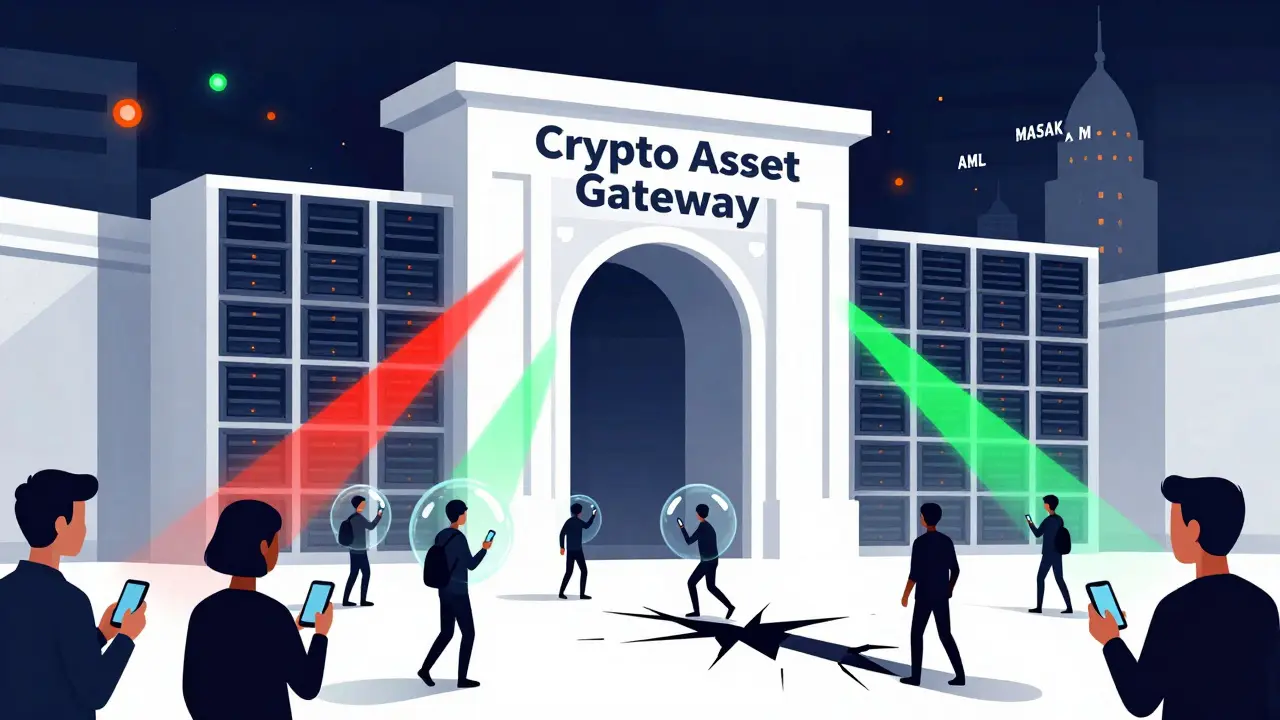
It’s not all smooth sailing. The biggest risk isn’t the market crashing; it’s the state freezing your assets. MASAK, Turkey’s Financial Crimes Investigation Board, actively monitors large transactions. If you exceed certain thresholds or exhibit "suspicious activity," your bank account can be frozen. A survey by the Istanbul Blockchain Association found that 22% of users had experienced MASAK interventions. Resolving these freezes takes 14 to 30 days and requires formal appeals.
To avoid this, many users employ a strategy called "transaction splitting." Instead of moving 50,000 TRY in one go, they split it across multiple smaller transactions, often using family members’ accounts. While effective, this practice walks a fine line with anti-money laundering laws. Additionally, scammers thrive in the unregulated P2P space. Without the buyer protection of a licensed exchange, if a seller doesn’t release the crypto after receiving your bank transfer, you have very little recourse.
What Does the Future Hold?
The game is changing again. The CMB announced plans for a "Crypto Asset Gateway" system expected by mid-2026. This system aims to centralize all on-ramps and off-ramps for crypto in Turkey. The idea is to create a controlled environment where all transactions pass through a regulated funnel, making it harder to use shadow methods while keeping the payment ban intact.
Analysts predict that even with this gateway, the demand will outstrip supply. Dr. Hasan Yılmaz of the Istanbul Finance Center argues that as long as trading is allowed but payments are banned, creative workarounds will continue to emerge. The market is simply too resilient. With projected trading volumes hitting $102 billion in 2025, Turkey’s crypto ecosystem is proving that you can ban the use of an asset, but you can’t easily ban the desire to own it.
Is it illegal to trade crypto in Turkey?
No, holding and trading cryptocurrency is legal in Turkey. However, using cryptocurrency as a direct means of payment for goods and services is banned by the Central Bank. You can buy and sell crypto on licensed exchanges, but you cannot swipe a Bitcoin card at a store.
Which crypto exchanges are legal in Turkey?
As of 2025, licensed exchanges include Binance Turkey, Paribu, Bitlo, and others authorized by the Capital Markets Board (CMB). These platforms require identity verification for transactions over 15,000 TRY. Unlicensed international platforms are technically banned, though many users access them via VPNs.
How do I avoid having my bank account frozen?
MASAK may freeze accounts for suspicious activity, especially large or frequent transfers related to crypto. To minimize risk, stay within transaction limits, keep clear records of your trades, and consider using licensed exchanges which offer better regulatory compliance. Avoid splitting transactions artificially to evade limits, as this can trigger further scrutiny.
Can I use P2P trading safely?
P2P trading is popular but carries risks. While platforms like LocalBitcoins offer escrow services, dealing with individual sellers means less protection against scams. Always check seller ratings, use secure communication channels, and be wary of deals that seem too good to be true. Remember, once you send fiat currency, recovery can be difficult if the counterparty defaults.
What is the Crypto Asset Gateway?
The Crypto Asset Gateway is a proposed system by the CMB, expected in 2026, designed to centralize all crypto on-ramps and off-ramps in Turkey. It aims to enhance oversight and reduce the use of unregulated channels while maintaining the ban on crypto payments. This could simplify compliance for users but may restrict access to global decentralized platforms.




Craig Swanson
May 28, 2026 AT 21:34Look, I've been watching the Turkish market for years and this article barely scratches the surface of how dangerous it actually is. You think splitting transactions is a clever hack? It's not. MASAK isn't stupid. They have algorithms that flag exactly that kind of behavior instantly. If you are thinking about trying to game the system by using your aunt's account or whatever, stop right now because you will get burned. The regulatory crackdown in 2025 was just the beginning. The 'Crypto Asset Gateway' isn't some bureaucratic suggestion; it's a net closing in on every single unregulated node. People who ignore this are walking into a trap with their eyes wide open.
mark valmart
May 30, 2026 AT 18:08I mean, Craig makes a fair point but let's be real here, when your currency is losing value faster than you can blink, you don't really have a choice do you? I know a few guys back home who use those P2P networks all the time. Yeah, there's risk, sure, but compared to watching your savings evaporate into thin air every month, a little bit of risk feels pretty manageable. It's survival mode basically.
Craig Swanson
May 31, 2026 AT 12:45Survival mode doesn't excuse breaking AML laws, Mark. And it definitely doesn't justify putting your entire financial life at the mercy of some anonymous seller on Telegram who might disappear with your Lira after you transfer it. You talk about 'risk being manageable' like it's a minor inconvenience. Getting your bank account frozen for thirty days while you beg bureaucrats for mercy is not manageable. It's catastrophic. You're romanticizing desperation. The fact that people are doing it doesn't make it smart. It just makes them desperate enough to ignore common sense.
Bill Gunn
June 1, 2026 AT 15:09Hey folks, let's keep it cool! 😎 Bill here. I gotta say, reading through this thread gives me a whole new perspective on what 'financial pressure' looks like globally. 🌍 While we debate the ethics, the tech side of this is fascinating though. Using non-Turkish RPC endpoints to access DeFi? That's some serious MacGyver-level engineering from everyday citizens. 🛠️ It shows that when you block the door, people don't just stand there crying; they build a ladder out of code and determination. Plus, emojis help lighten the mood! ✨
Hadleigh Edwards
June 3, 2026 AT 13:26I find myself absolutely captivated by the sheer resilience displayed by these individuals, as it serves as a profound testament to the human spirit's ability to adapt under duress, and while I understand the concerns raised regarding legality and safety, one must consider the broader philosophical implications of monetary sovereignty and the inherent desire for economic freedom that drives such innovative circumvention strategies, which ultimately suggests that regulation, no matter how stringent, is merely a temporary obstacle in the face of technological inevitability and collective ingenuity, thereby creating a dynamic ecosystem that evolves rapidly beyond the comprehension of traditional institutional frameworks, leading us to question whether the true value of an asset lies in its legal standing or in its utility to the individual user seeking preservation against systemic instability.
saradee dee
June 4, 2026 AT 19:32Oh my gosh, Hadleigh, you are so long-winded sometimes! 😱 But honestly? Yes. It is dramatic. It is intense. And it is beautiful in a scary way. I agree completely with the sentiment that people will always find a way. When you see millions of people risking everything just to hold onto their purchasing power, it breaks my heart but also inspires me. We need more empathy for these situations rather than judgment. Let's support each other and learn from these global challenges together. ❤️