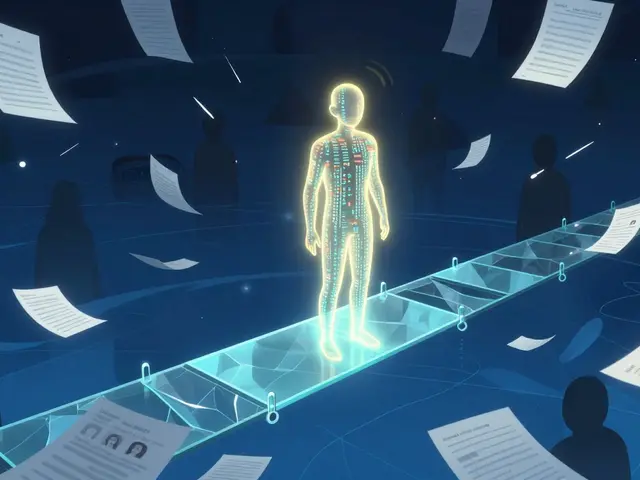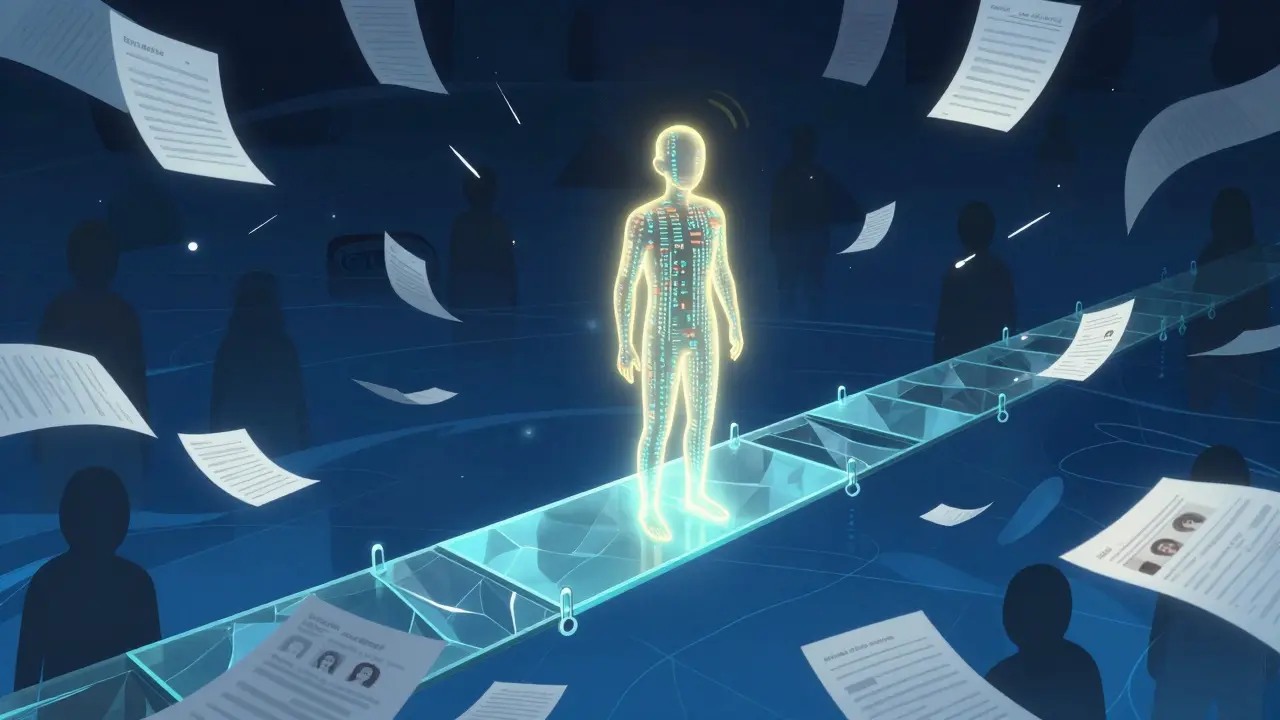
You might have heard that NFT digital identity is the next big step for Web3. The idea sounds perfect: you own your data, you control who sees it, and no central company can lock you out. But here is the catch. Most blockchains are public ledgers. Everything written on them stays there forever, visible to anyone with an internet connection. If you put your personal details on a standard NFT, you aren’t just sharing them; you are broadcasting them to the world.
This creates a massive tension. We want the security and ownership benefits of blockchain, but we also need the privacy protections guaranteed by laws like GDPR. How do we reconcile these two opposing forces? Let’s break down the risks, the current solutions, and what this means for your digital future.
The Core Problem: Transparency vs. Privacy
To understand why privacy in NFT-based digital identity is so tricky, we first need to look at how blockchains work. Public blockchains like Ethereum or Solana are designed for transparency. This transparency builds trust because everyone can verify transactions. However, when you use an NFT as an identity token, that same transparency becomes a liability.
Imagine minting an NFT that proves you are over 18 or that you hold a specific professional certification. On a standard public chain, that transaction is linked to your wallet address. Wallet addresses are often pseudonymous, not anonymous. With enough data points-like connecting your wallet to a social media account or making a purchase on a known platform-it is surprisingly easy to de-anonymize users. Once your real-world identity is linked to your wallet, every past and future transaction associated with that wallet becomes part of your permanent public record.
This permanence clashes directly with modern data protection regulations. In the European Union, the General Data Protection Regulation (GDPR) includes the "right to be forgotten." Users can request that their personal data be deleted. Blockchain technology, by definition, is immutable. You cannot delete what has been written to the chain. As experts from walt.id point out, this fundamental mismatch makes standard NFTs unsuitable for storing sensitive identity data. They are great for proving you own a digital painting, but terrible for proving who you are without exposing your entire life history.
Why Standard NFTs Fail at Identity
Not all NFTs are created equal, and using a standard ERC-721 token for identity is a recipe for disaster. Here is why traditional NFT structures fall short:
- Public Metadata: Most NFTs store metadata links (IPFS hashes) publicly. Even if the image itself is private, the link exists on-chain. If that metadata contains personal info, it is exposed.
- Transferability: Standard NFTs can be sold or transferred. An identity document should not be transferable. If someone buys your "verified citizen" NFT, they now claim your identity.
- Lack of Selective Disclosure: With a standard NFT, you either show the whole token or nothing. You cannot prove you are over 21 without revealing your exact birth date, your name, and potentially other linked data.
This is why industry analysts often say that NFTs are good for modeling what you own, but not for modeling who you are. Ownership is static and verifiable. Identity is dynamic, sensitive, and requires nuanced control over disclosure.
Solution 1: Secret NFTs and Private Metadata
So, is there a way to keep the benefits of NFTs while hiding the data? Yes. Enter Secret NFTs. These are not just marketing terms; they represent a technical shift in how data is handled on-chain.
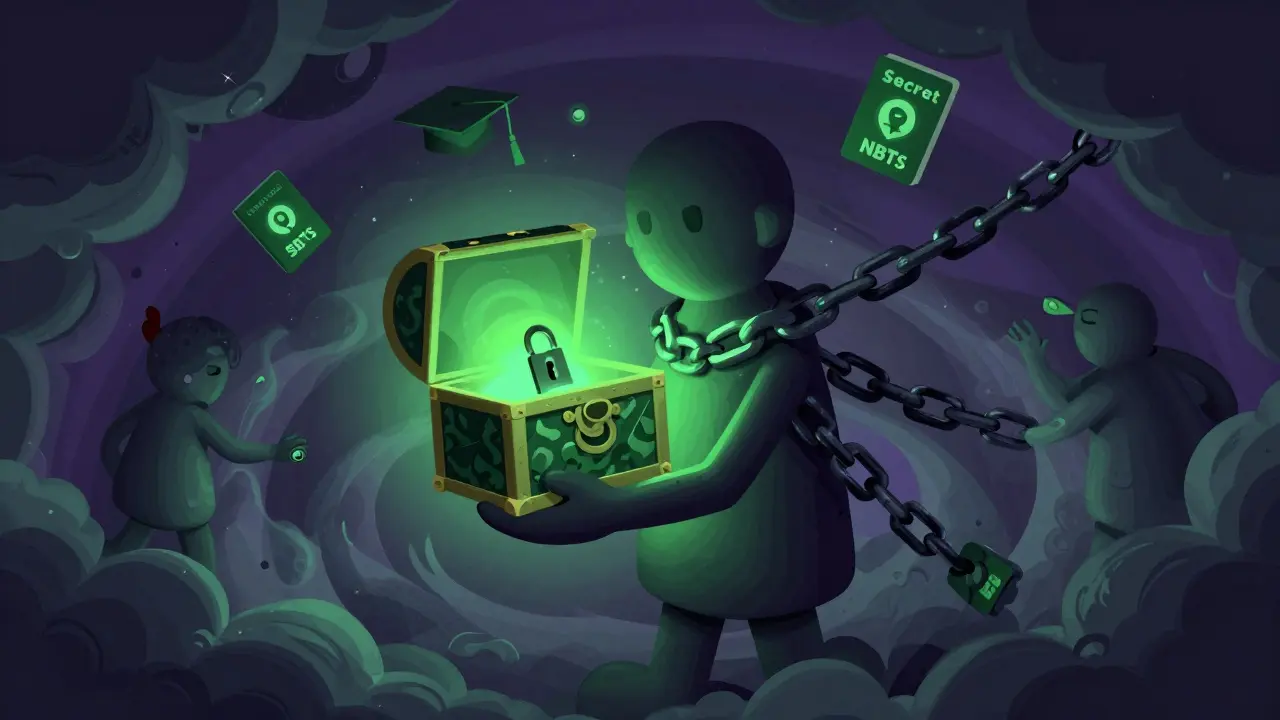
Secret NFTs, pioneered by networks like the Secret Network, use encrypted computation. Instead of storing raw data on the blockchain, they store encrypted blobs. Only the holder of the private key can decrypt and view the contents. This allows for private ownership. You can hold a collection of high-value identity tokens without the world knowing what they contain or even that you hold them.
For creators and users, this means true control. A creator can issue an NFT that grants access to exclusive content or verifies a credential. The public sees only a watermarked placeholder or a generic token ID. The actual value-the high-fidelity image or the verified identity data-is revealed only to the legitimate owner. This dramatically reduces the risk of hackers targeting high-profile collectors or scammers scraping identity data from public ledgers.
Solution 2: Soulbound Tokens (SBTs)
Another approach to fixing the transferability issue is the Soulbound Token (SBT). Coined by Ethereum co-founder Vitalik Buterin, SBTs are non-transferable NFTs. Once issued to a wallet (your "Soul"), they stay there. You cannot sell them, gift them, or lose them through a trade.
This makes SBTs ideal for credentials. Imagine an SBT issued by a university proving your degree, or one issued by a government proving your citizenship. Because it cannot be transferred, it serves as a persistent, tamper-proof record of achievement or status. It solves the problem of identity theft via resale.
However, SBTs introduce new privacy challenges. Since they are permanently attached to your wallet, they create a permanent reputation trail. If someone issues you an unwanted SBT-for example, a negative review or a controversial label-it sticks to your wallet forever. This "wallet spam" can lead to privacy violations and reputational harm. Therefore, any SBT system must include robust user consent mechanisms and clear pathways for revocation or appeal, even if the token itself remains on-chain.
Solution 3: Zero-Knowledge Proofs (ZKPs)
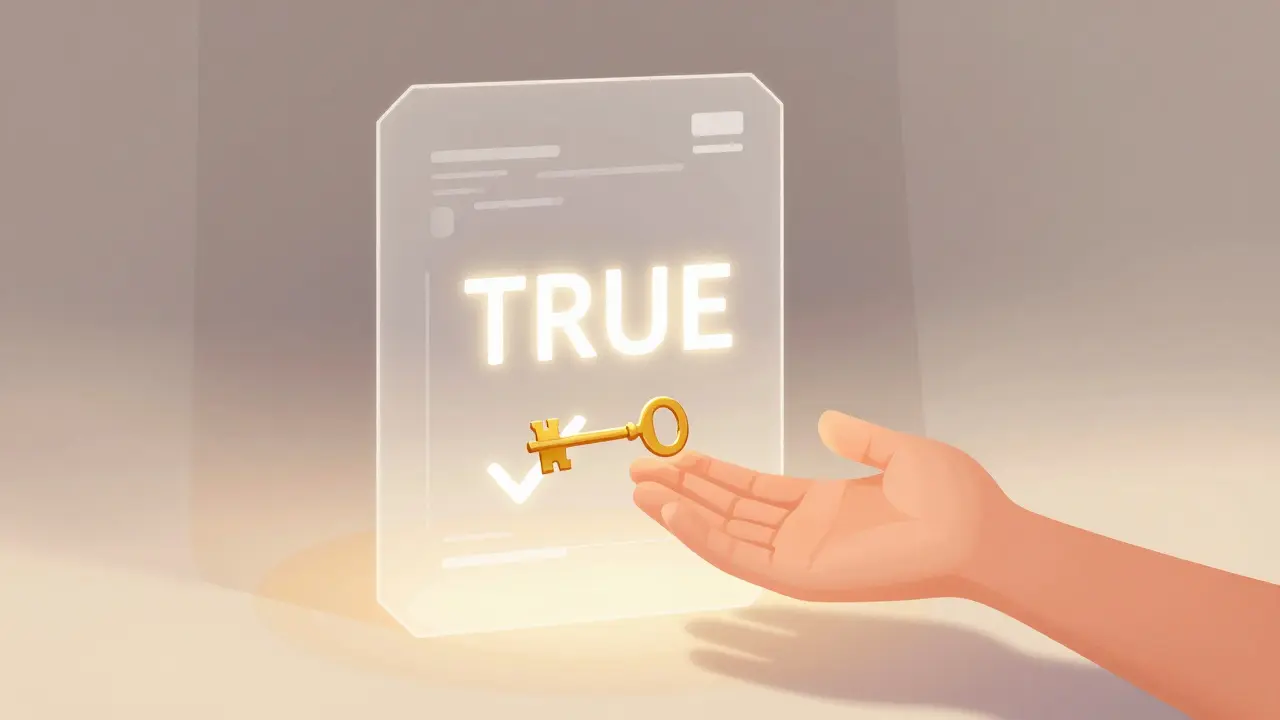
The most promising technology for balancing verification and privacy is Zero-Knowledge Proofs (ZKPs). ZKPs allow one party to prove to another that a statement is true without revealing any information beyond the validity of the statement itself.
In the context of digital identity, this is revolutionary. You can prove you are over 18 without revealing your birth date. You can prove you are a citizen of a specific country without revealing your passport number. You can prove you have sufficient funds for a transaction without revealing your total balance.
When combined with NFTs, ZKPs enable "selective disclosure." Your NFT acts as the anchor for your identity claims. When you need to verify something, the smart contract generates a zero-knowledge proof. The verifier checks the proof against the on-chain data, confirms it is valid, and grants access-all without ever seeing your underlying personal data. This satisfies regulatory requirements for verification (like KYC/AML) while preserving individual privacy.
Comparing Identity Models
| Feature | Web2 Centralized | Standard NFT | Privacy-Enhanced NFT |
|---|---|---|---|
| Data Control | Platform-owned | User-owned, but public | User-owned, encrypted |
| Privacy Level | Low (data breaches common) | Very Low (public ledger) | High (ZKPs/Encryption) |
| GDPR Compliance | Complex but possible | Non-compliant (immutable) | Potentially compliant (off-chain data) |
| Portability | None (locked in) | High (transferable) | High (with selective disclosure) |
| Best Use Case | Social Media Logins | Digital Art Collectibles | Verifiable Credentials |
Implementation Challenges and Real-World Friction
Even with advanced tech, rolling out privacy-focused NFT identity is hard. First, there is the interoperability problem. Different blockchains use different standards. An SBT issued on Ethereum might not be recognized by a dApp on Polygon unless there is a bridge or a universal standard. Fragmentation hurts user experience.
Second, scalability matters. Identity verification needs to happen quickly. If verifying a ZKP takes minutes instead of seconds, users will abandon the process. Current Layer 2 solutions help, but mass adoption requires near-instantaneous finality.
Third, and perhaps most importantly, is user education. Asking people to manage private keys, seed phrases, and gas fees is a steep learning curve. For identity systems to work, the interface must be invisible. Users shouldn’t know they are using ZKPs or interacting with smart contracts. They should just click "Verify" and get in. Until UX improves, privacy-enhanced identity will remain a niche tool for crypto-native users.
The Regulatory Landscape
Regulators are watching closely. The EU’s eIDAS 2.0 regulation aims to establish a European Digital Identity Wallet. While it doesn’t mandate NFTs, it emphasizes self-sovereign identity principles that align with blockchain tech. However, it also demands strict compliance with data protection laws.
This means any NFT-based identity solution operating in regulated markets must ensure that personal data never touches the public chain. Hybrid models are emerging where the NFT stores only a hash or a pointer to off-chain, encrypted storage. The blockchain verifies the integrity of the pointer, but the actual PII (Personally Identifiable Information) resides in a secure, accessible vault controlled by the user. This keeps the immutability benefit for verification while allowing deletion or modification of the actual data, satisfying the "right to be forgotten."
What This Means for You
If you are considering using NFTs for identity, be cautious. Do not upload sensitive documents to standard marketplaces. Look for platforms that explicitly mention "zero-knowledge," "encrypted metadata," or "private computation." Check if the project uses Soulbound Tokens for credentials to prevent accidental transfer.
For developers, the path forward is hybrid. Combine the cryptographic assurance of blockchain with the privacy features of ZKPs and off-chain storage. Don’t try to force square pegs into round holes. Use NFTs for the anchor of trust, not the repository of secrets.
The dream of self-sovereign identity is alive, but it isn’t here yet in its purest form. We are in the experimentation phase. Privacy in NFT-based digital identity is not a solved problem; it is an ongoing engineering challenge. But with tools like Secret NFTs and ZKPs, we are moving closer to a web where you own your identity without sacrificing your anonymity.
Can I delete my NFT-based identity if I change my mind?
You cannot delete the NFT token itself from the blockchain due to its immutable nature. However, you can burn the token (send it to a dead address) to render it useless. More importantly, privacy-focused systems store actual personal data off-chain. You can delete that off-chain data, effectively exercising your right to be forgotten, even though the empty token shell remains on the ledger.
Are Soulbound Tokens safer than regular NFTs for identity?
Yes, for identity purposes. Because SBTs are non-transferable, they prevent identity theft through resale. If someone hacks your wallet, they can steal assets, but they cannot transfer your verified credentials to their own wallet. However, SBTs still expose the fact that you hold the credential on the public ledger unless combined with privacy layers like ZKPs.
How do Zero-Knowledge Proofs protect my privacy?
ZKPs allow you to prove a fact is true without revealing the underlying data. For example, you can prove you are over 18 without showing your birth certificate. The verifier gets a mathematical confirmation that the condition is met, but learns nothing else about you. This minimizes data exposure significantly.
Is NFT identity compliant with GDPR?
Standard NFTs on public chains are generally not GDPR compliant because data cannot be deleted. However, hybrid systems that use NFTs only as pointers to encrypted, off-chain data can be compliant. The key is ensuring that no Personally Identifiable Information (PII) is stored directly on the immutable blockchain.
What is a Secret NFT?
A Secret NFT is a type of NFT built on privacy-focused blockchains like the Secret Network. It uses encrypted computation to hide metadata and ownership details from the public. Only the owner can decrypt and view the contents, providing a layer of privacy that standard ERC-721 tokens lack.