
The crypto landscape moves fast, and keeping track of which Layer 1 protocols offer real utility rather than hype can feel overwhelming. As of late March 2026, Radix (XRD) stands out not just for its speculative price action but for solving fundamental infrastructure problems that plague older chains. If you've seen the headlines about the January momentum surge or the recent integration with major cross-chain bridges, you're likely wondering if this is a passing trend or a foundational shift in decentralized finance.
This guide cuts through the noise to explain exactly what Radix is, how its unique architecture differs from giants like Ethereum, and what the current market data tells us about its potential moving forward. We will look at the tokenomics, the security features, and the specific developments happening right now in the ecosystem.
Understanding the Radix Network Architecture
At its core, Radix is a Layer 1 smart contract platform. Unlike many competitors that require Layer 2 solutions to scale transaction speeds, Radix attempts to handle scalability at the base protocol level. The network uses a proprietary consensus mechanism called Celestia, designed to process transactions without the bottlenecks common in proof-of-work systems. This design choice means developers building applications here do not need to manage complex rollups or pay exorbitant gas fees during peak usage times.
Ethereum is a leading smart contract platform often compared to newer entrants. Also known as ETH Network, it faces scaling challenges that Radix explicitly aims to solve.While Ethereum prioritizes decentralization and security above all else, sometimes at the cost of speed, Radix structures its blockchain using sharding technology. Sharding breaks the ledger into smaller parts called shards, allowing multiple transactions to occur simultaneously rather than sequentially. This architectural difference is crucial because it determines whether the network remains usable when millions of users interact with decentralized apps at the same time.
The Scrypto Language Advantage
A defining feature of the Radix protocol is its use of a custom programming language called Scrypto. Most blockchain platforms rely on Solidity or Rust, languages that are powerful but prone to human error. Scrypto was built with resource-oriented programming as its foundation. In simpler terms, the language treats digital assets as resources that have owners, making it impossible to accidentally burn tokens or create infinite supply bugs due to coding mistakes.
| Feature | Scrypto | Solidity | Rust |
|---|---|---|---|
| Primary Focus | Asset Safety | General Logic | Memory Safety |
| Built-in Resource Protection | Yes | No | Partial |
| Network Compatibility | Radix Network | EVM Chains | Multichain |
| Innovation Date | Recent (Proprietary) | 2014 | 2010 |
For developers, this translates to significantly lower risk when deploying smart contracts involving financial assets. The compiler itself enforces constraints that prevent double-spending issues and unauthorized transfers directly within the code structure. While this creates a steep learning curve for those used to traditional web development tools, the security benefit for end-users is substantial.
How the XRD Token Functions
The XRD token serves as the native fuel for the network. Similar to Ether on the Ethereum network, you need XRD to pay for transaction fees, stake nodes, and participate in governance decisions. However, the economic incentives differ slightly. Radix recently launched a massive incentive program worth 1 billion XRD tokens. This campaign isn't just about distributing free coins; it targets genuine participation in decentralized exchanges and lending protocols hosted on the chain.
To prevent bot farms from draining these rewards, the system includes integrated anti-Sybil mechanisms. These mechanisms verify that participants are real humans rather than automated scripts. This focus on organic growth contrasts with earlier Web3 airdrops where speculators would farm points quickly and dump their holdings immediately. By filtering out bad actors, Radix hopes to build a sustainable user base rather than a temporary liquidity pool.
XRD Token is the native currency powering the Radix blockchain network. Also known as Radix Crypto, it facilitates gas payments and staking rewards.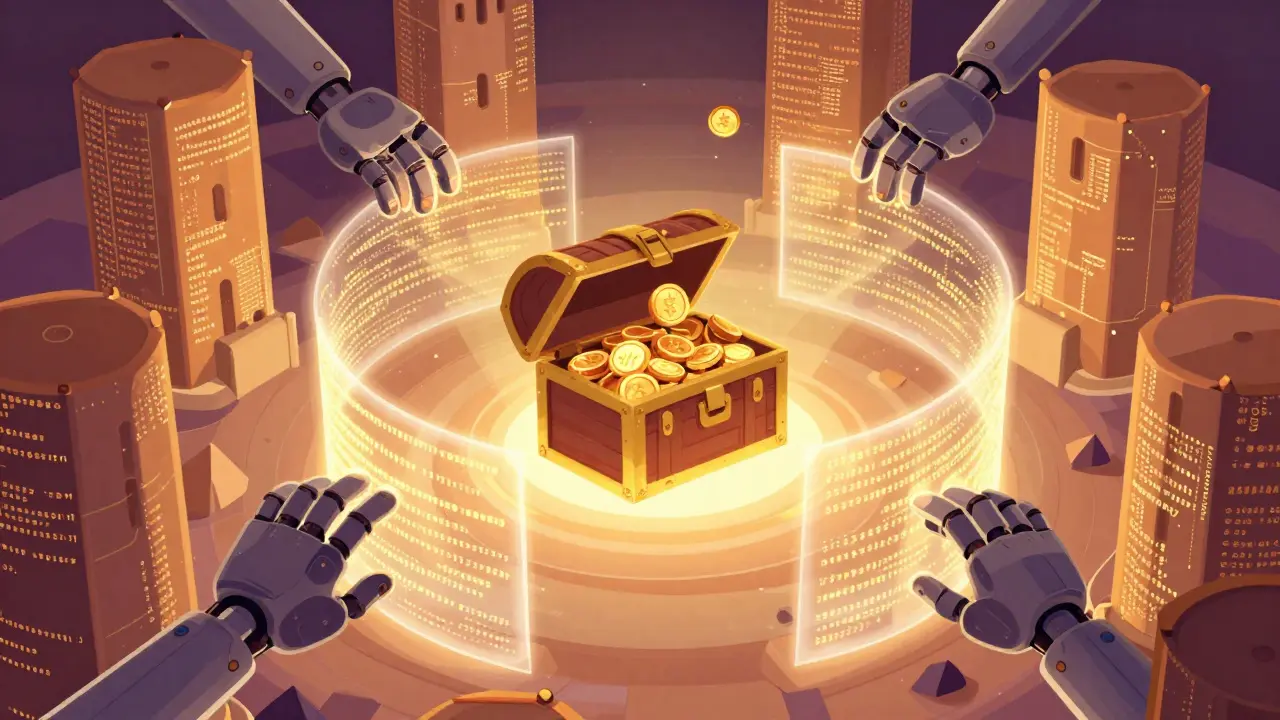
Market Performance and Volatility in 2026
Looking at the charts as of March 2026, the asset shows significant swings that characterize the current crypto winter recovery phase. On March 24, 2026, XRD was trading at approximately $0.001530. Just a few weeks prior, in late January 2026, it had surged by nearly 145% in a single week, signaling intense interest from short-term traders. By mid-March, however, the token experienced a pullback, registering a roughly -18% change over the preceding seven-day period.
Historical context matters here. The all-time high for XRD remains $0.6512, reached before the bear markets of 2022 and 2023. Current prices represent a fraction of that peak, indicating long holders have yet to realize profitability. Various forecasting models provide conflicting outlooks. Some analysts suggest a conservative decline towards year-end, while others project a rebound driven by technical upgrades.
Specifically, services like CoinCodex forecast a modest drop to around $0.001360 by the end of 2026, whereas Gate.com suggests a high potential near $0.00208. SwapSpace offers a more volatile range, predicting potential spikes to $0.018 if a bull market cycle fully engages by 2027. The divergence in these numbers highlights the unpredictability inherent in early-stage Layer 1 projects where adoption rates drive valuation more than cash flow metrics.
Ecosystem Growth and Cross-Chain Interoperability
One of the biggest shifts in the Radix roadmap recently involves connectivity. Through an integration with Hyperlane, a permissionless bridging protocol, Radix has connected to over 150 other blockchain networks. This move allows users to move wrapped assets from established ecosystems like Ethereum or Polygon directly into Radix. Millions of dollars in liquidity have already flowed through these channels since the upgrade went live.
Hyperlane is a messaging framework enabling permissionless interchain interaction. Also known as Interchain Messaging Protocol, it reduces friction between different blockchains.Why does this matter for XRD holders? Interoperability reduces the need to trade your native token multiple times to access services. If you want to swap a stablecoin on Ethereum for a yield-bearing asset on Radix, this bridge makes the journey seamless. Before this update, users faced higher risks of getting locked in a siloed network. Now, capital efficiency improves across the board, potentially increasing demand for the underlying infrastructure.

Investment Considerations and Risks
Entering the Radix ecosystem requires weighing specific risks against potential returns. The primary concern is competition. With established players like Solana and Ethereum constantly improving throughput, Radix must prove its niche advantage daily. If Scrypto fails to attract a critical mass of developers, the network could struggle to justify its valuations despite superior theoretical security.
Furthermore, regulatory scrutiny remains active regarding utility tokens. Since XRD functions as gas and governance, understanding local compliance rules is essential for investors outside the US, though this analysis focuses on general market dynamics. Long-term holders should monitor the vesting schedules of early venture funds and team allocations, as large unlocks can impact liquidity temporarily.
Final Thoughts on Adoption
The trajectory of Radix depends less on marketing and more on developer retention. The combination of secure smart contracts and scalable execution is the product promise, but actual adoption rates determine financial success. As we move through 2026, the completion of ongoing integrations and the results of the incentive campaign will serve as key indicators. Keep an eye on total value locked (TVL) in DeFi apps built on Radix, as this metric often leads price appreciation better than pure speculation.
Frequently Asked Questions
What exactly is the XRD coin used for?
XRD is the native token of the Radix blockchain. You use it to pay for transaction fees, stake for security, and interact with governance proposals. It acts similarly to Gas on Ethereum but is optimized for Radix's specific consensus mechanism.
Is Radix better than Ethereum for DeFi?
It depends on your priorities. Radix offers faster transactions and lower fees due to its sharding technology, while Ethereum has deeper liquidity and more established security audits. For specific high-speed dApps, Radix may be preferable.
How does the Scrypto language improve security?
Scrypto is designed around resource ownership, meaning assets cannot be accidentally deleted or duplicated by coding errors. The compiler enforces strict rules preventing common exploits found in other languages like Solidity.
What is the current price status in March 2026?
As of late March 2026, XRD is trading around $0.0015. Prices have shown volatility, recently recovering from a dip after a spike in January. Historical highs remain near $0.65.
Can I bridge assets from other chains to Radix?
Yes, thanks to the Hyperlane integration. This allows permissionless bridging between Radix and over 150 other blockchain networks, facilitating easy transfer of wrapped assets without custodial intermediaries.





Elizabeth Akers
March 29, 2026 AT 11:30radix really seems like a smart play for long term holdings
Alex Lo
March 30, 2026 AT 16:40hey guys i have been watching this chart for weeks now and it feels like something big is about to happen soon. the technology behind scrypto is really cool but sometimes people forget how hard it is to learn new coding languages. i mean soliditiy is everywhere so switching might be tough for most devs but radix is pushing hard. the market data shows volatility but that is just part of the cycle we are in right now. remember when ethereum launched and everyone said it would fail too but it did not. history repeats itself in crypto markets every single time without exception. the bridge integration with hyperlane opens up so many possibilities for liquidity flows. you can move assets freely which is exactly what we want in decentralised finance ecosystems. fee structures are also much lower which helps small traders participate more actively. staking rewards seem reasonable compared to other layer one blockchains out there today. security features are definitely a major plus point for anyone holding significant amounts. bugs in contracts get fixed faster when the language enforces ownership rules strictly. inflation might worry some people but the incentive program looks balanced enough. team communication has been open during the recent updates regarding roadmap progress. adoption metrics are slowly climbing which is always a good sign to watch. dont listen to the doom merchants who only see red candles on the charts. patience is required here because real value takes time to accrue properly. keep your eyes on total value locked growth instead of daily price action alone.
Lisa Miller
April 1, 2026 AT 04:00That is such a great summary of the situation thanks for sharing your thoughts here
Matt Bridger
April 3, 2026 AT 03:10The assertion regarding scalability neglects fundamental economic principles inherent in blockchain design. The comparison drawn with established protocols lacks necessary nuance regarding network effects. One must question whether proprietary solutions offer genuine innovation.
Jay Starr
April 3, 2026 AT 21:49This kind of criticism always feels like salt being thrown into an open wound unnecessarily
People invest their savings hoping for returns not gatekeeping advice from strangers
Joy Crawford
April 4, 2026 AT 15:31i just feel sad seeing people dump everything based on hype :(
the project has so much potential left to explore and nobody cares anymore :(
Beverly Menezes
April 6, 2026 AT 08:53I understand why you feel that way about the market movement
We just need to wait and see what happens next month hopefully things will go up
Michael Nadeau
April 7, 2026 AT 07:41Technology evolves in cycles regardless of current sentiment or public opinion
Understanding the deeper mechanics separates noise from signal effectively