Cryptocurrency Payments Banned: Where It’s Illegal and How People Still Use Crypto
When a government says cryptocurrency payments banned, a legal restriction that prohibits using digital currencies like Bitcoin or Ethereum for buying goods or services. Also known as crypto trading prohibition, it’s not just about control—it’s about cutting off financial freedom for everyday people. But bans don’t stop demand. In places like Bangladesh, North Macedonia, and even parts of India, people trade crypto anyway—not because they’re rebels, but because they have no other choice.
Take Bangladesh, a country where the central bank warns that crypto trading could lead to imprisonment. Also known as Bangladesh crypto ban, it’s a legal gray zone: while the law doesn’t explicitly say "you’ll go to jail," banks freeze accounts, and police arrest users on vague charges. Still, P2P platforms thrive. Students use USDT to pay for online courses. Small shop owners accept Bitcoin to avoid banking fees. The ban exists on paper, but not in practice. In North Macedonia, a country that outlawed crypto trading in 2017. Also known as crypto ban Macedonia, people use international exchanges and cash-based P2P deals to keep trading. No official app, no licensed exchange—but crypto moves anyway, quietly, through WhatsApp groups and Telegram channels. And then there’s Cuba, where the government legalized crypto not to support innovation, but to survive U.S. sanctions. Also known as Cuba cryptocurrency, it’s the only place where the state runs a regulated crypto system—because without it, families couldn’t receive remittances or buy medicine.
These aren’t exceptions. They’re patterns. Where banks fail, crypto steps in. Where inflation eats savings, stablecoins like USDT become lifelines. Where governments crack down, users adapt—using VPNs, mixing services, or just cash-in-hand trades. The real story isn’t about legality. It’s about survival. And behind every ban, there’s a network of people who found a way.
What you’ll find below are real stories from the frontlines: how Indians bypass taxes, how Cubans trade under state watch, how Bangladeshis risk jail for a better future. You’ll also see what happens when regulators freeze $150 million in assets in the Philippines, or shut down unlicensed exchanges in the U.S. and Europe. This isn’t theory. It’s what’s happening right now—in kitchens, dorm rooms, and street corners—where money has no borders, and the law is just one part of the story.
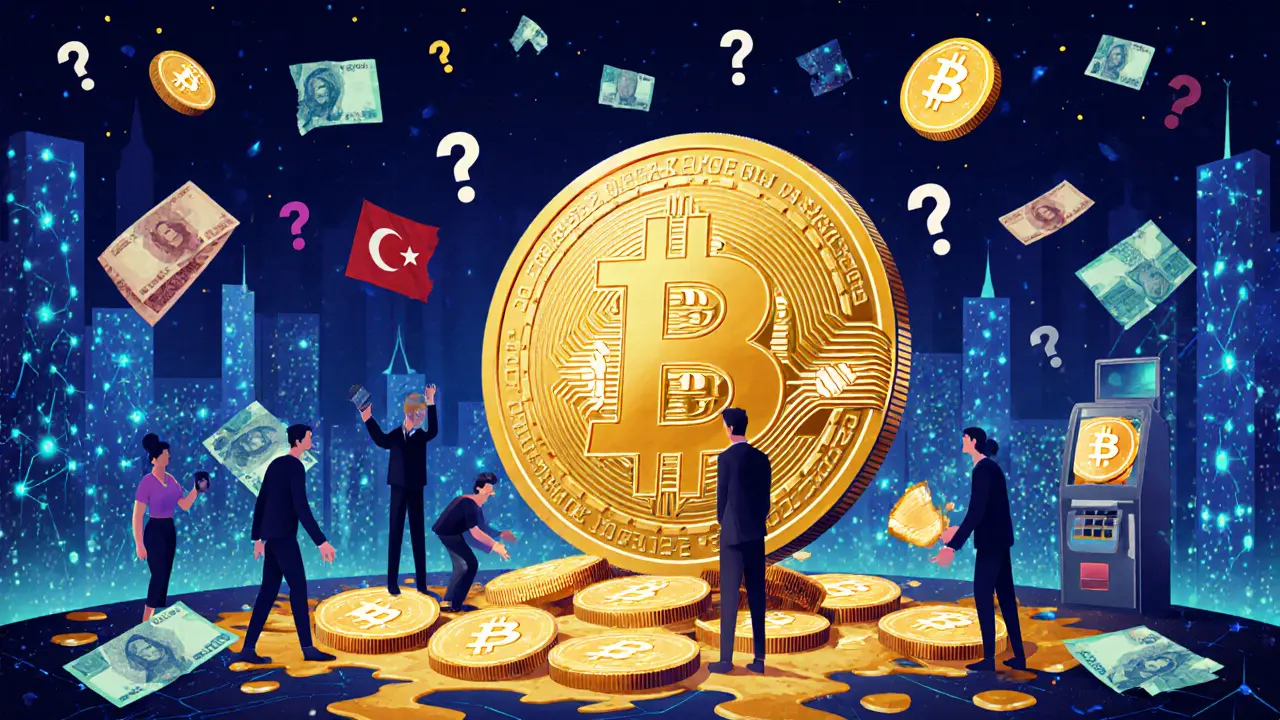
Turkey Crypto Payment Ban: What the 2021 Rules Really Mean Today
Turkey banned crypto payments in 2021 to protect its financial system from volatility and fraud-but allowed trading to continue. Today, the rules are stricter than ever, with licensing, identity checks, and platform blocks. Here's how it works and why it still matters.