USDT Venezuela: How Tether Keeps the Economy Running Amid Crisis
When your national currency loses value faster than you can spend it, you don’t wait for a solution—you find one. In Venezuela, USDT, a USD-backed stablecoin issued by Tether. Also known as Tether, it's become the de facto digital dollar for millions who can’t trust their own peso. It’s not a luxury. It’s survival. While the Venezuelan bolívar has seen hyperinflation reach over 1,000,000% in recent years, USDT holds its value. People use it to buy groceries, pay rent, send money to family abroad, and even pay for medical care. No bank account? No problem. All you need is a phone and a crypto wallet.
USDT in Venezuela isn’t just traded on exchanges—it moves through WhatsApp groups, local P2P markets, and informal networks. You’ll find vendors in Caracas accepting USDT for coffee. Students use it to pay for online courses. Families rely on it to receive remittances from relatives in Spain or the U.S., bypassing expensive wire services and government restrictions. Unlike traditional banks, which often freeze accounts or demand impossible paperwork, USDT transactions happen in minutes, with no middlemen. This isn’t speculation. It’s a daily reality for over 3 million Venezuelans, according to local crypto adoption reports.
What makes USDT work here isn’t just its price stability—it’s accessibility. Unlike Bitcoin, which can be volatile and slow to settle, USDT trades instantly on local platforms like LocalBitcoins and Paxful. People convert it to cash through trusted intermediaries, or use it directly to buy goods from merchants who’ve gone digital. The government doesn’t ban it outright—because they can’t stop it. Even state-run businesses now quietly accept USDT for fuel, medicine, and imported parts. It’s the only currency that doesn’t disappear overnight.
And it’s not just about money. USDT is a tool for autonomy. When banks shut down, when ATMs run dry, when inflation wipes out savings in weeks—USDT gives people control. It’s not perfect. There are scams, fake exchanges, and risky intermediaries. But compared to the alternative? It’s the least bad option. The posts below show how this plays out in real life: from people using USDT to buy food in Maracaibo, to how traders in Valencia avoid currency controls by swapping pesos for Tether on Telegram. You’ll see how it’s used in daily commerce, how it connects families across borders, and why it’s become more reliable than the central bank.
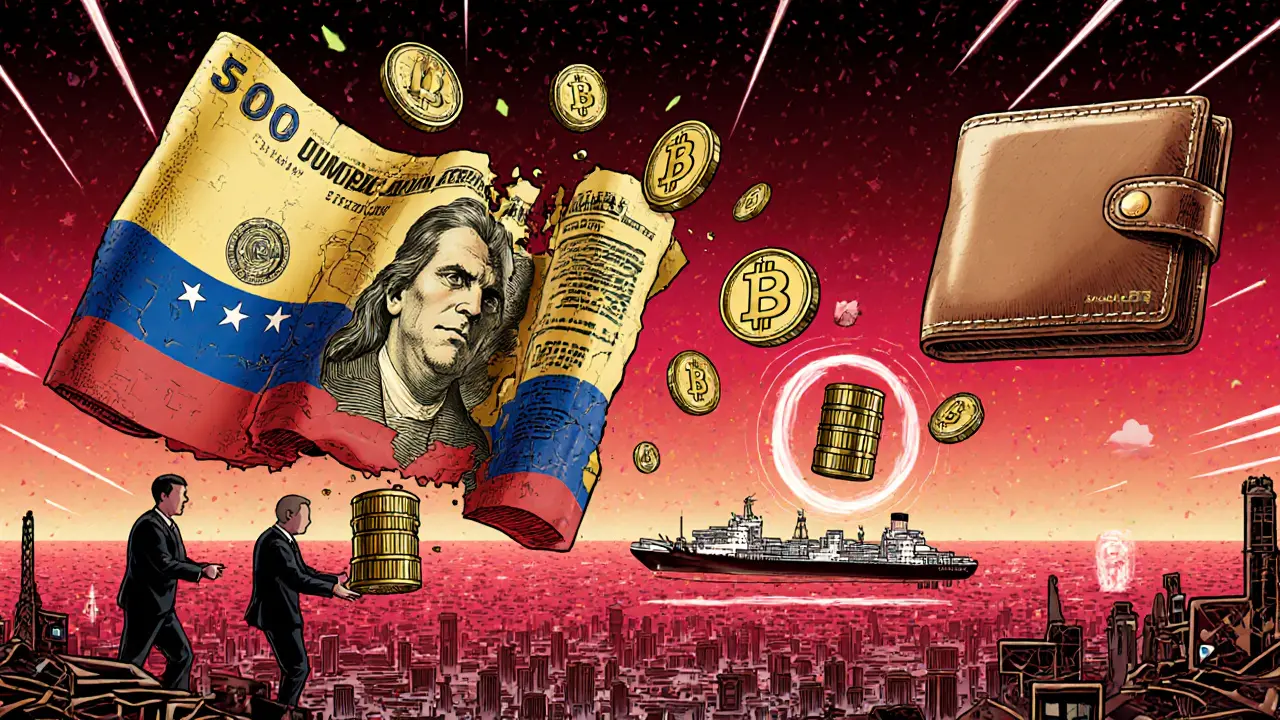
How Venezuela Uses Crypto to Bypass Sanctions
Venezuela uses cryptocurrency, especially USDT and the PETRO, to bypass U.S. and EU sanctions by turning oil exports into digital cash. State-controlled exchanges and crypto-laundering networks keep the regime funded while ordinary citizens rely on crypto just to survive.
Recent Post
-
How to Calculate Yield Farming Returns in DeFi
Jan, 29 2026