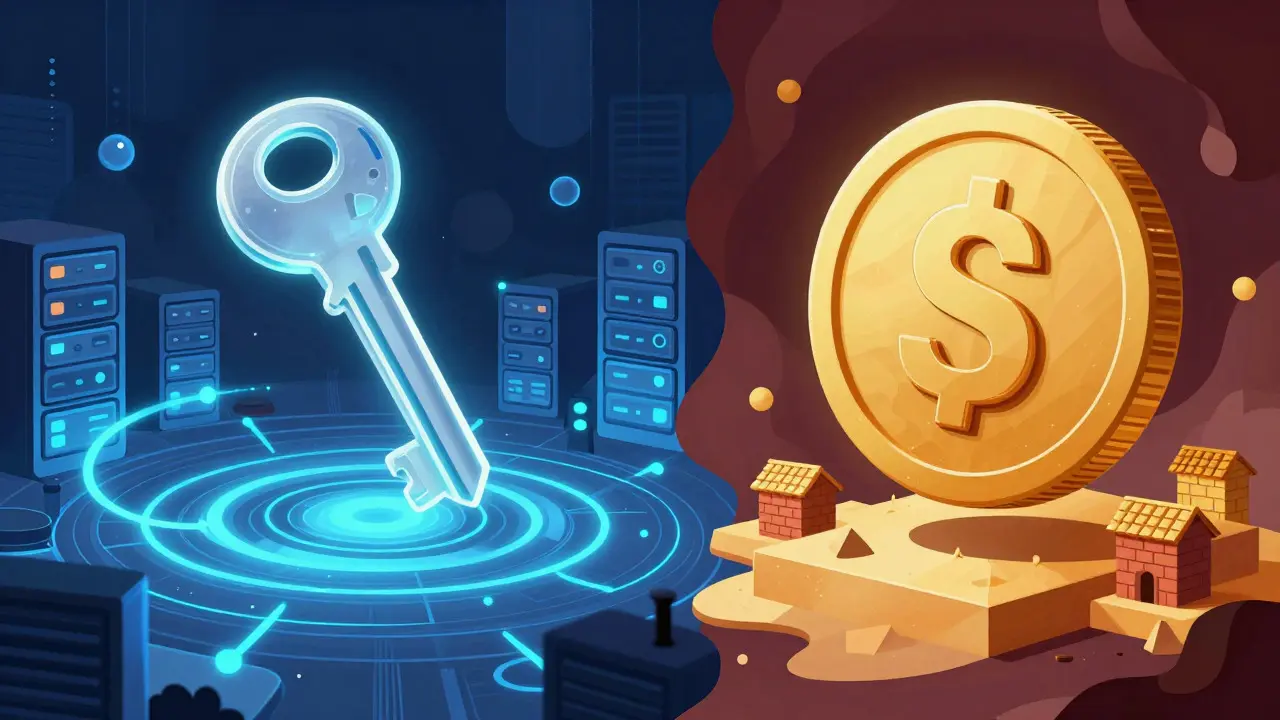
Confusion between utility and security tokens costs investors millions every year. While both live on the blockchain, they serve completely different purposes and face vastly different legal rules. Understanding the distinction is no longer optional; it's essential for anyone looking to protect their capital in the digital asset space.
Utility Tokens are digital assets designed to provide access to a specific product or service within a decentralized platform. They function like coupons or API keys. In contrast, Security Tokens are digitized versions of traditional financial instruments like stocks or bonds that represent ownership stakes. The line between them is drawn by the Howey Test, a legal standard used to determine if an asset is an investment contract.
Quick Summary / Key Takeaways
- Utility tokens grant access to services (e.g., storage, computing power) and are largely unregulated, leading to higher volatility but lower entry barriers.
- Security tokens represent ownership in real-world assets (equity, debt) and are strictly regulated, offering stability and dividend potential but requiring accredited investor status.
- Regulatory scrutiny has intensified, with the U.S. SEC reclassifying many 'utility' tokens as securities, resulting in billions in penalties.
- Security tokens are growing rapidly in institutional markets, while utility tokens dominate retail consumer applications.
- The choice depends on your risk tolerance: utility tokens for speculative growth and platform usage, security tokens for asset-backed yield and compliance.
Defining the Core Difference: Access vs. Ownership
At its heart, the difference comes down to what you actually get when you buy the token. If you purchase a Filecoin token (FIL), you aren't buying a piece of the company. You are buying the right to store data on their decentralized network. That is a classic utility token. It solves a technical problem: paying for computation or storage without using credit cards.
On the other hand, consider a tokenized share of a commercial building. If you hold this token, you might receive a portion of the rent collected from tenants. This is a Security Token. It mirrors a traditional stock or bond. The value isn't derived from using a software feature; it's derived from the underlying cash flow of the real estate. This distinction matters because it dictates how regulators view the asset and how much protection you have as an investor.
Many projects blur these lines intentionally or accidentally. A token might offer governance rights (voting on protocol changes) which feels like ownership, but if those votes don't directly impact profit distribution, it often remains classified as a utility asset. However, if the voting rights allow holders to influence decisions that directly increase their financial returns, the SEC may look at it very differently.
The Regulatory Landscape: Howey Test and MiCA
For years, the crypto industry operated in a regulatory gray area. That changed significantly after the U.S. Securities and Exchange Commission (SEC) applied the Howey Test to digital assets. Established in the 1946 Supreme Court case SEC v. W.J. Howey Co., this test asks three questions:
- Is there an investment of money?
- Is it in a common enterprise?
- Are there reasonable expectations of profits derived solely from the efforts of others?
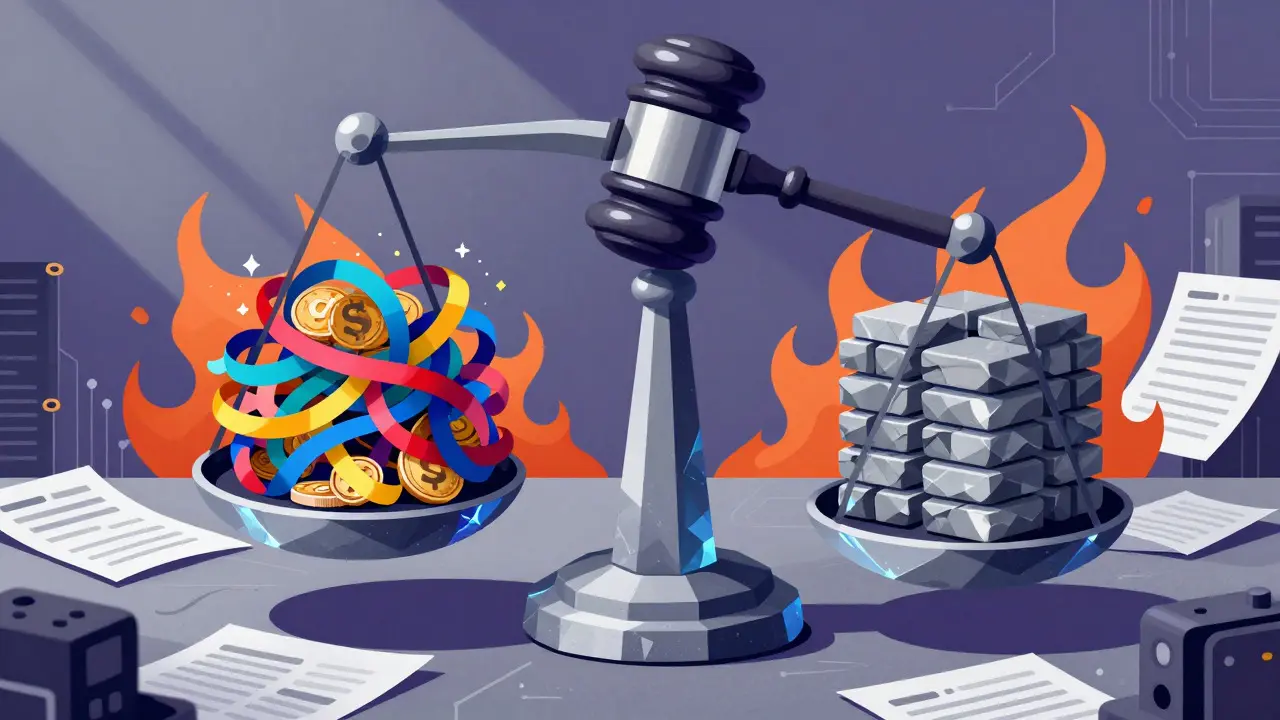
If the answer is yes to all three, the asset is likely a security. This framework has been the primary tool for the SEC to enforce compliance. In recent years, enforcement actions have shown that even tokens marketed as pure utilities can be deemed securities if investors were promised price appreciation based on the team's work.
Internationally, the European Union is moving toward clarity with the Markets in Crypto-Assets (MiCA) regulation. Effective December 30, 2024, MiCA creates a unified framework across EU member states. It explicitly distinguishes between 'utility tokens' and 'security tokens,' requiring the latter to be authorized under existing financial regulations. This shift aims to reduce the fragmentation seen today, where a token might be legal in Switzerland but illegal in the U.S. without proper registration.
| Feature | Utility Tokens | Security Tokens |
|---|---|---|
| Primary Purpose | Access to platform services | Ownership of assets/rights |
| Regulatory Status | Largely unregulated (varies by jurisdiction) | Strictly regulated (Securities Law) |
| Investor Eligibility | Open to public (retail & institutional) | Often limited to accredited investors |
| Volatility | High (speculative) | Moderate (asset-backed) |
| Typical Standards | ERC-20, BEP-20 | ERC-1400, ST-20 |
| Revenue Source | Platform usage fees | Dividends, interest, asset appreciation |
Technical Implementation and Standards
Beneath the hood, these two types of tokens require different engineering approaches. Most utility tokens follow simple fungible standards like ERC-20 on Ethereum. According to Etherscan data, over 92% of utility tokens use this standard because it’s straightforward: it tracks balances and allows transfers. There are no built-in restrictions. Anyone can send tokens to anyone else, anywhere in the world, instantly.
Security Tokens, however, need more complexity. They must comply with laws that change by country and investor type. This requires specialized standards like ERC-1400 or Polymath’s ST-20. These protocols embed legal parameters directly into the smart contract code. For example, a security token might have a 'whitelist' feature that only allows transfers to verified, accredited investors. If you try to sell your token to someone who doesn’t meet the income requirements, the smart contract blocks the transaction automatically.
This technical friction is why security tokens are harder to launch. A typical utility token ICO might take 4-6 weeks to develop and cost $50,000-$150,000. A security token offering (STO), by comparison, often takes 6-12 months and costs $500,000 to $2 million. The extra time and money go toward legal compliance, building accreditation verification systems, and integrating with traditional banking infrastructure for dividend payments.
Market Dynamics: Volatility vs. Stability
Price behavior tells a clear story about the nature of these assets. Utility tokens are highly volatile. Data from Messari Crypto Reports indicates that utility tokens exhibit roughly 3.2 times greater price volatility than security tokens. Median daily price swings for utility tokens hit 12.7%, compared to just 3.9% for security tokens. This high volatility reflects their speculative nature; prices often move based on hype, community sentiment, and broader crypto market trends rather than fundamental business performance.
Security tokens tend to be more stable because their value is tethered to real-world assets. If a token represents a portfolio of U.S. Treasury bills, its price will track closely with interest rates and bond yields. This makes them attractive to conservative investors and institutions who want exposure to crypto infrastructure without the wild price swings of Bitcoin or Ethereum. However, this stability comes with a trade-off: liquidity. Security tokens often have lower trading volumes. Average daily trading volume for security tokens is around $4.2 million per token, whereas utility tokens average $18.7 million. Finding a buyer for a large block of security tokens can be slower and more complex than selling a popular utility coin.

Who Should Choose Which?
Your decision should align with your investment goals and risk profile. If you are a tech-savvy user who wants to participate in new ecosystems, build apps, or use decentralized networks, utility tokens are likely your best bet. They offer low entry barriers and direct utility. You’re not just holding an asset; you’re using a product. Think of it like buying credits for a cloud service, except the 'cloud' is decentralized and the credits are tradable.
If you are an accredited investor seeking yield, diversification, and regulatory safety, Security Tokens make more sense. They provide transparent dividend distributions and tangible asset backing. For instance, platforms like Securitize offer tokenized funds that give access to private equity or real estate deals previously reserved for wealthy individuals. The downside is the barrier to entry: you typically need to prove you have a minimum of $200,000 annual income or $1 million net worth (excluding your primary residence) to qualify under U.S. Regulation D.
Institutional players are increasingly favoring security tokens. BlackRock’s BUIDL fund and Franklin Templeton’s OnChain U.S. Government Money Fund are prime examples of traditional finance giants entering the space. These firms prefer the compliance structure of security tokens because it fits neatly into their existing risk management frameworks. Meanwhile, retail investors continue to drive the demand for utility tokens, attracted by the potential for high upside in emerging technologies.
Frequently Asked Questions
Can a utility token become a security token?
Yes. If a utility token is marketed with promises of profit derived from the efforts of the issuer, regulators may reclassify it as a security. This has happened frequently, leading to enforcement actions. To avoid this, issuers must ensure the token's primary purpose is genuine access to a service, not investment return.
What is the main advantage of security tokens over stocks?
Security tokens offer fractional ownership, global accessibility (where permitted), and faster settlement times. Traditional stock trades settle in T+2 days, while tokenized shares can settle almost instantly on the blockchain. They also allow for automated dividend payments via smart contracts.
Are utility tokens safe to invest in?
They carry higher risk due to lack of regulatory protection and high volatility. Investors should research the project's technology, team, and actual utility. Unlike security tokens, there is no guarantee of dividends or asset backing, so value is driven entirely by adoption and speculation.
Which blockchain standards are used for security tokens?
Common standards include ERC-1400 on Ethereum and ST-20 on Polymath. These standards add features like investor whitelisting, transfer restrictions, and corporate action handling (like splits or dividends) directly into the token code.
How does the MiCA regulation affect token holders?
MiCA provides a clear legal framework for EU residents. It defines exactly what constitutes a utility token versus a security token. This reduces legal uncertainty for investors in Europe and ensures that issuers provide standardized disclosures, improving transparency and investor protection.



Kate Staab
August 19, 2026 AT 13:34Oh, the audacity of calling a speculative gamble a 'utility' just to dodge the SEC! It’s practically criminal how many people get scammed because they think they’re buying a 'coupon' when it’s actually a security in disguise. The moral hazard here is staggering; issuers profit from the confusion while retail investors bleed out.
It’s not just about money anymore, it’s about integrity. If you have to hide behind legal jargon to sell your token, maybe the product isn’t as good as you claim. We need stricter rules, not more gray areas. Until then, watch your wallet and question every 'access' promise that sounds suspiciously like a profit guarantee.
Rod Sidoroff
August 21, 2026 AT 01:19Most people reading this don't understand the nuance of the Howey Test anyway. They see 'token' and think 'money' or 'tech', missing the fundamental legal shift that defines asset class. Utility tokens are largely a relic of early crypto hype, whereas security tokens represent the maturation of the sector into institutional-grade instruments.
The volatility metrics cited are misleading if you don't account for liquidity depth. A 12% swing on a thin order book is noise, not signal. Real value accrues where compliance meets utility. Those who cling to ERC-20 utility coins are essentially betting on sentiment rather than fundamentals. It's an inefficient allocation of capital for anyone with a net worth exceeding $1M. Time to upgrade your portfolio structure or remain in the casino tier.
Jay Johhnston
August 21, 2026 AT 18:10Great breakdown. I appreciate the clarity on MiCA, especially for those of us operating across borders. It really helps to see the technical standards side by side too. Thanks for putting this together.
Niall O'Rourke
August 22, 2026 AT 12:55actually its all the same at the end of the day
just different words for the same speculation game. why do we need so many lawyers involved in selling numbers on a screen? it feels like we are overthinking the basics again. the tech does the work the law just gets in the way. but sure keep the whitelists if you want to play the rich man game
Jillian Groskreutz
August 22, 2026 AT 23:39You clearly haven't read the enforcement actions from the last two years! The distinction is NOT 'all the same.' It is the difference between a regulated asset class and a potential fraud scheme. Ignoring the Howey Test is not 'overthinking,' it is willful ignorance that leads to bankruptcy. And yes, the law IS getting in the way of chaos, which is exactly what it should be doing. Enjoy your unregulated mess until the next SEC lawsuit hits your favorite 'utility' coin.
Carmene Jackson
August 24, 2026 AT 15:49I feel like everyone forgets that for most of us regular folks, the 'security' stuff is just... inaccessible. Like, who has $1M net worth? So for the rest of us, utility tokens are the only real option even if they are risky. It’s kind of sad that the 'safe' options are locked away for the elite while we gamble on the volatile ones. But hey, at least we can use the platforms right?
Jennifer Ulmer
August 25, 2026 AT 12:33There is a philosophical angle here that gets missed. Utility tokens represent a shift from ownership to usage rights. It changes the relationship between the user and the platform. You are no longer a shareholder with a voice in governance, you are a customer with a key. This is a fundamental change in economic theory. It aligns incentives differently. The risk is higher, yes, but the barrier to entry is lower, which democratizes access in a different way. It is not just about money, it is about participation. The security model preserves the old power structures, while the utility model tries to flatten them. Both have merits depending on what you value more: stability or access.