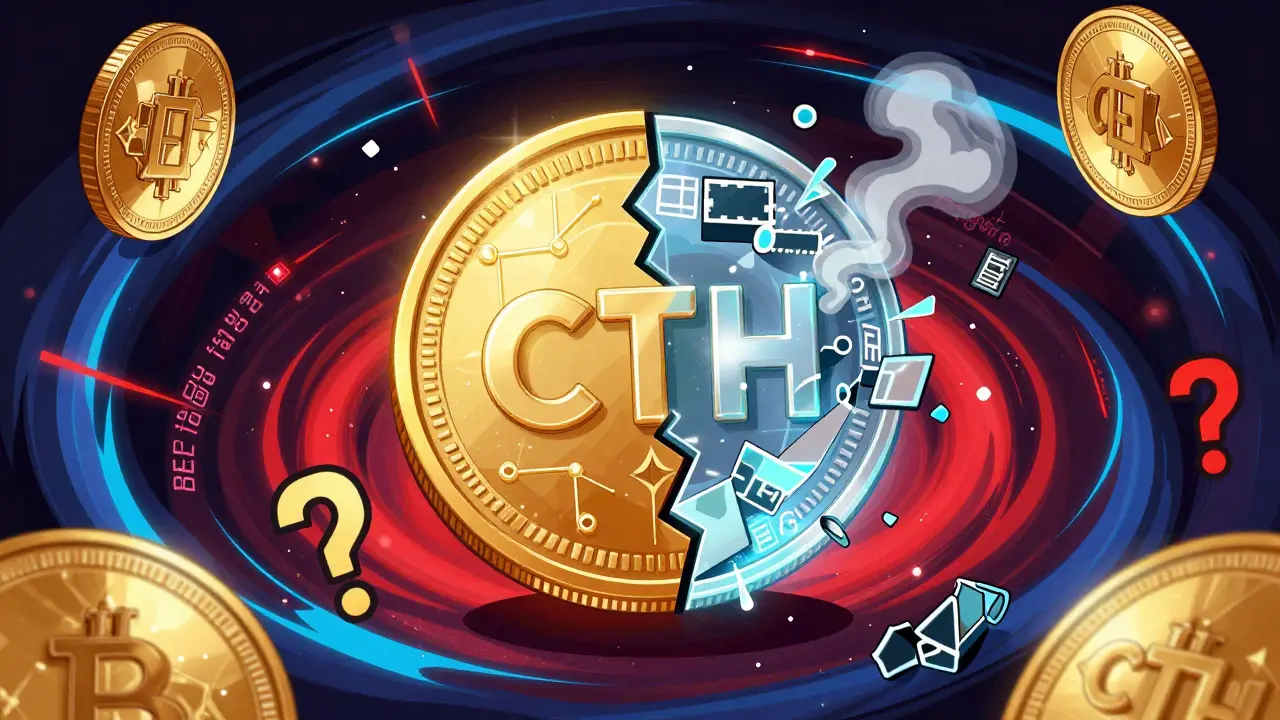
You’ve probably seen the ticker Changcoin (CTH) pop up on a tracker or in a group chat. It promises ultra-low fees and positions itself as a serious Layer 1 blockchain for Web3 and DeFi. But if you look closer at the data from mid-2026, things get messy fast.
The numbers don’t always match. One site says the max supply is 21 million; another claims it’s 10 billion. Liquidity is thin, meaning you might struggle to sell large amounts without crashing the price. And there are multiple tokens with the same name on different chains, which is a classic red flag for new investors.
This guide cuts through the marketing hype. We’ll look at what Changcoin actually is, why the data is so confusing, and whether it makes sense to put your money into it right now.
Key Takeaways
- Changcoin (CTH) launched its mainnet on August 1, 2024, aiming to be a scalable Layer 1 blockchain with near-zero transaction fees.
- Data is highly inconsistent: max supply is listed as both 21 million and 10 billion across different trackers.
- Liquidity is extremely low, with daily trading volumes often under $600, making it risky for large investments.
- Multiple BEP-20 tokens share the CTH ticker on BNB Chain, increasing the risk of buying the wrong asset.
- There is no clear information about the founding team or core developers behind the project.
What Exactly Is Changcoin?
To understand Changcoin, we first need to define what it claims to be. According to its official foundation and major aggregators like CoinMarketCap, Changcoin is a scalable Layer 1 blockchain network designed for Web3 applications, decentralized finance, and enterprise solutions.
In simple terms, a Layer 1 blockchain is the base layer-the actual chain where transactions happen and smart contracts run. Think of Bitcoin or Ethereum. Changcoin wants to join this club by offering something those giants struggle with: cost. The project markets itself on having average transaction fees of roughly 0.00000007 CTH per transaction.
Let’s put that in perspective. If one CTH token is worth around $5, that fee is about 0.00000035 USD. That is less than a fraction of a penny. For everyday micro-transactions or high-frequency IoT (Internet of Things) devices, this is theoretically perfect. You could send millions of transactions for just a few cents.
However, the definition gets blurry when you look deeper. While some sources call it a standalone coin, others describe it as a token built on existing networks like Ethereum or BNB Chain. This confusion isn't just semantic; it affects how you buy, store, and trade the asset.
The Identity Crisis: Layer 1 Coin vs. Multi-Chain Token
Here is where Changcoin gets tricky. In the crypto world, clarity is king. If a project can’t clearly explain where its token lives, you should be cautious.
CoinMarketCap lists Changcoin as a native Layer 1 coin. This implies it has its own independent blockchain, validators, and consensus mechanism. On the other hand, CoinPaprika describes CTH as a token based on Ethereum and BNB Blockchain. Furthermore, tracking sites like TheBitTimes have identified multiple smart contract addresses for "Changcoin (CTH)" on Binance Smart Chain (BSC).
Why does this matter? Because it creates fragmentation. If you buy CTH on PancakeSwap (which runs on BNB Chain), you are likely holding a BEP-20 token. If you try to use that token on a wallet expecting a native Layer 1 coin, it might not work. Worse, there are inactive or zero-price tokens with the same ticker deployed on these chains. One such token, deployed in July 2026, had a price of $0 and zero volume. Buying the wrong contract address is a common way beginners lose money in crypto.
| Platform | Classification | Max Supply Claimed | Liquidity Status |
|---|---|---|---|
| CoinMarketCap | Layer 1 Blockchain | 21 Million CTH | Low Volume (~$133/day) |
| CoinPaprika | Ethereum/BNB Token | Not Specified | Extremely Low ($34/day) |
| Crypto.com | Onchain Asset | 10 Billion CTH | Not Tradable on CEX |
| Dropstab | Cryptocurrency | 21 Million (implied) | Low Volume (~$546/day) |
Tokenomics: The Supply Discrepancy
When evaluating any cryptocurrency, supply dynamics are crucial. Scarcity drives value, but only if the scarcity is real and consistent. With Changcoin, the numbers tell two very different stories.
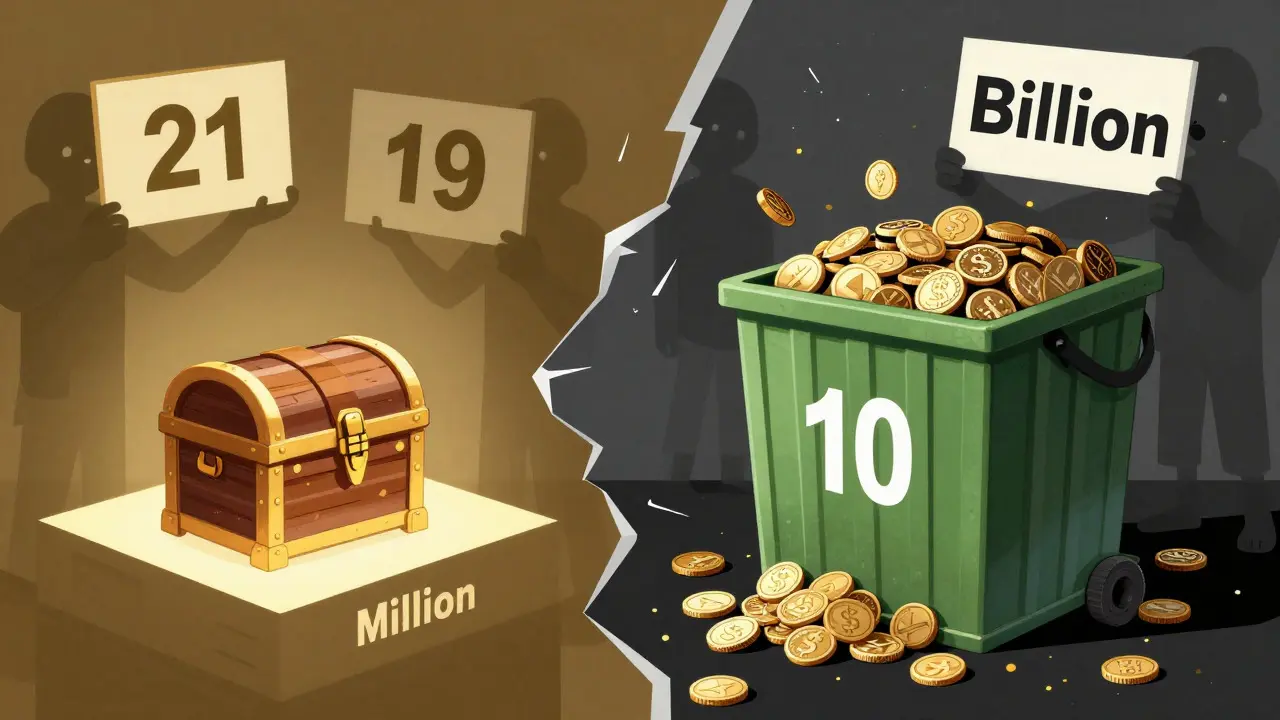
Most English-language aggregators, including CoinMarketCap, list a maximum supply of 21 million CTH. As of mid-2026, they report a circulating supply of roughly 8 million to 11 million tokens. This suggests a deflationary or capped model similar to Bitcoin’s 21 million cap.
However, the Crypto.com listing presents a stark contrast. It cites a maximum supply of 10 billion CTH. That is nearly 500 times larger than the 21 million figure. If the 10 billion number is correct, the token is far less scarce, and the current market capitalization would be vastly understated-or the price is artificially inflated due to low liquidity.
This discrepancy is a significant risk. Without an official whitepaper or audited code repository linking directly to the canonical supply schedule, investors are left guessing which metric is accurate. In mature projects, this data is uniform across all major platforms. Here, it is chaotic.
Market Performance and Liquidity Risks
Let’s talk about money. Can you actually buy and sell Changcoin easily? The short answer is: barely.
As of July 2026, Changcoin ranks outside the top 7,000 cryptocurrencies by market capitalization. Its market cap hovers between $35 million and $40 million, depending on the source. But market cap can be misleading when liquidity is this thin.
Daily trading volume is the key metric here. CoinGecko reported a 24-hour volume of just $133 in early July 2026. Dropstab showed slightly higher activity at $546 on late May. To put that in context, major coins like Solana or Cardano see billions in daily volume. With Changcoin, if you tried to sell $10,000 worth of CTH, you might wipe out the entire day’s liquidity and crash the price significantly.
Furthermore, Changcoin is not listed on major centralized exchanges like Binance or Coinbase for direct fiat trading. It is primarily traded on decentralized exchanges (DEXs) like PancakeSwap v3 on the BNB Chain. This means you need a Web3 wallet, knowledge of gas fees on BNB, and comfort with swapping tokens manually. It is not beginner-friendly.
Who Is Behind Changcoin?
In the crypto space, trust is built on transparency. We know Vitalik Buterin is behind Ethereum. We know Satoshi Nakamoto created Bitcoin (even if anonymous). But who is building Changcoin?
Surprisingly, almost no one public. The Changcoin Foundation website mentions an "active development team" and a "growing community," but it does not name any founders, CEOs, or lead engineers. There are no LinkedIn profiles linked, no GitHub commits attributed to specific individuals, and no interviews with leadership in major crypto media outlets.
This anonymity is common in early-stage projects, but it carries risk. If the team disappears, or if the project turns out to be a scam, there is no one to hold accountable. Established projects usually have doxxed teams (public identities) to build credibility. Changcoin lacks this layer of trust.
Is Changcoin Safe to Invest In?
Safety in crypto comes down to three factors: technology, team, and liquidity. Let’s grade Changcoin on each.
- Technology: The promise of sub-microcent fees is compelling. However, the lack of technical documentation regarding consensus mechanisms (Proof-of-Stake? Proof-of-Authority?) or block times makes it hard to verify security. Is it truly decentralized, or controlled by a few validators?
- Team: Anonymous. This lowers the trust score significantly compared to competitors with known developers.
- Liquidity: Very poor. Thin order books mean high slippage. You might buy at $5.00 but only be able to sell at $4.50 because there aren’t enough buyers.
Additionally, the existence of multiple fake or inactive tokens with the same ticker symbol increases the risk of user error. If you paste the wrong contract address into your wallet, you could end up with worthless tokens.
How to Buy Changcoin (If You Decide To)
If you’ve weighed the risks and still want to proceed, here is how you typically acquire CTH in 2026. Note that this process involves decentralized finance tools, not simple "buy" buttons.
- Set Up a Wallet: Since CTH trades heavily on BNB Chain, you will need a compatible wallet like MetaMask or Trust Wallet. Configure it to connect to the BNB Smart Chain.
- Get BNB: Buy BNB (Binance Coin) on a major exchange like Binance or Coinbase. Withdraw it to your MetaMask wallet address on the BNB Chain.
- Find the Correct Contract Address: This is critical. Go to a reliable aggregator like CoinGecko or CoinMarketCap and copy the official BEP-20 contract address for Changcoin. Double-check it against the official Changcoin Foundation social media channels.
- Use a DEX: Navigate to PancakeSwap v3. Connect your wallet. Paste the CTH contract address into the swap interface.
- Swap BNB for CTH: Set your slippage tolerance appropriately (likely 1-5% due to volatility) and confirm the transaction. You will pay gas fees in BNB.
Avoid buying from random links in Telegram groups or Twitter DMs. Those are frequently scams.
Future Outlook and Verdict
Changcoin launched less than two years ago, in August 2024. In crypto time, it is still a baby. It has the potential to succeed if it can deliver on its promise of ultra-low fees and attract real developers to build on its Layer 1 network. Use cases like micro-payments for content creators or IoT device communication could drive demand.
However, the current state is opaque. Conflicting supply data, anonymous leadership, and minimal liquidity make it a speculative asset rather than a stable investment. It is not yet suitable for institutional portfolios or long-term savings accounts.
For now, treat Changcoin as a high-risk experiment. Only invest what you can afford to lose, verify every contract address twice, and keep an eye on whether the team releases more technical details or audits in the coming months.
What is the maximum supply of Changcoin (CTH)?
There is conflicting data. Most sources like CoinMarketCap list a max supply of 21 million CTH. However, Crypto.com lists a max supply of 10 billion CTH. This discrepancy needs clarification from the official team before trusting any valuation models.
Is Changcoin a Layer 1 blockchain or a token?
It is described as both. The foundation claims it is a standalone Layer 1 blockchain. However, trading data shows it exists as a BEP-20 token on BNB Chain and potentially an ERC-20 token on Ethereum. Investors should verify which version they are interacting with.
Where can I buy Changcoin?
Changcoin is not available on major centralized exchanges like Coinbase or Binance for direct fiat purchase. It is primarily traded on decentralized exchanges (DEXs) like PancakeSwap v3 on the BNB Chain. You will need a Web3 wallet and BNB to facilitate the swap.
How much are the transaction fees on Changcoin?
The Changcoin Foundation advertises average fees of approximately 0.00000007 CTH per transaction. At current prices, this translates to fractions of a cent, making it one of the cheapest networks for micro-transactions if the mainnet performs as advertised.
Who founded Changcoin?
The founding team remains anonymous. Public listings and the official website refer only to an "active development team" without naming specific individuals, CEOs, or lead developers. This lack of transparency is a common risk factor in early-stage crypto projects.

Lisa Chong
July 22, 2026 AT 14:26The globalist elite are trying to flood the market with these fake digital assets to distract us from the real economic collapse happening in our banks. It is not an accident that the data is 'messy' as you say. It is a calculated move by the shadow government to devalue the purchasing power of the common citizen while they hoard gold and land. I have been watching the patterns since 2008 and this is just another layer of the matrix designed to keep us poor and confused. Do not let them trick you into thinking this is innovation. It is enslavement wrapped in blockchain jargon. They want you to lose your life savings so you become dependent on the state for survival. Wake up people. The supply discrepancy is proof of their incompetence or their malice, both are bad. We need to return to tangible assets like silver and wheat. This crypto nonsense is a tool of control.
Heather Austin
July 23, 2026 AT 17:39hey i actually looked at the contract addresses mentioned here and yeah its pretty sketchy. most legit projects have clear docs but this one feels like it was thrown together over a weekend. if you really want to play around with it make sure you use a burner wallet because losing access to your main funds would be super annoying. also the liquidity is basically non existent so dont expect to sell anything big without slippage killing you. i usually stick to eth or solana for dapps because at least the devs are known entities. but hey if you want to gamble a few bucks go ahead just dont cry when it goes to zero lol
Ran Tao
July 24, 2026 AT 08:39Oh look, another 'expert' telling everyone how to invest 🙄 You guys are so boring with your risk assessments. Where is the passion? Where is the drama? Changcoin is either going to moon or burn, and frankly, I prefer the excitement of uncertainty over your safe little ETFs. The anonymous team is a feature, not a bug! It means they aren't tied down by corporate bureaucracy. Plus, who needs transparency when you have vibes? ✨ If the founders wanted to be famous, they would be. They are building in silence while you all talk. I’m buying the dip right now because contrarians like me know that fear is the best time to enter. Don’t let your FOMO stop you from making millions. 🚀🌕
Kristy Morrow
July 25, 2026 AT 11:53the concept of value is a social construct anyway so why do we care about liquidity. changcoin represents the void where meaning used to be. it is pure potential energy waiting to be realized or destroyed. the discrepancy in supply is just a reflection of the dual nature of reality itself. light and dark order and chaos. you cannot pin down truth with numbers. the token is a mirror reflecting your own greed or fear. stop trying to analyze it with logic and feel it instead. the market is a temple and you are merely a pilgrim walking through the fog. embrace the confusion.
John Harman
July 25, 2026 AT 20:10Let’s get one thing straight, this isn’t rocket science, it’s basic economics 101. If a project can’t even agree on its own max supply between CoinMarketCap and Crypto.com, it’s garbage. Period. You don’t see Apple having two different share counts depending on which website you visit. That’s not 'innovation,' that’s negligence. And don’t get me started on the anonymity thing. In the US, we believe in accountability. If you’re hiding, you’re probably cooking the books. I’ve seen enough penny stocks to know this pattern. It’s a pump and dump waiting to happen. Save your money and buy something real.
Antony Lopez
July 26, 2026 AT 14:09Typical foreign scam token trying to infiltrate our markets. American investors deserve better than this obscure Layer 1 nonsense with no regulatory oversight. The SEC should have shut this down years ago. Why are we letting these unregulated entities operate freely while our domestic banks are scrutinized every day? It’s unfair to the hardworking taxpayer. The lack of a doxxed team is suspicious and likely indicates offshore operators avoiding US jurisdiction. Stick to Coinbase-listed assets if you want to support the American economy. This Changcoin stuff is just noise from overseas that adds nothing to our financial stability.
Kat Barr
July 27, 2026 AT 10:25I think it's really brave of the developers to try and create such low fees!! 💖 Even though the data is confusing, maybe they are still figuring things out? Every big company had a messy start, right? 😊 I hope they succeed because micro-transactions could help so many small creators out there! Just be careful and double-check everything okay? You've got this! 🌟 Don't let the haters get you down, sometimes the best opportunities are hidden in plain sight. Sending good vibes to the Changcoin community! ✨💪
Logan Edmison
July 28, 2026 AT 22:31i mean if you look at the history of money its always been chaotic. gold was just rocks until people decided it wasnt. paper money is just ink. so why is this any diffrent. the fact that there are multiple tokens with the same name is kind of funny in a way. it shows how decentralized the whole system really is. no central authority to tell you what is real. you have to trust yourself. maybe the 10 billion supply is the true one and the 21 million is a lie. or vice versa. it doesnt matter. the price will find its level eventually. just hold tight and wait for the other shoe to drop. or fly.